
READING, Pa. – During its Committee of the Whole meeting Monday night, Reading City Council heard a presentation on the city’s historic districts from former city planner Fritz Rothermel.
The presentation was timely as the city recently saw the resignation of all the members of the Historical Architectural Review Board, which has left the future of the HARB and the historic districts in a state of limbo.
Rothermel explained the genesis of the first historic districts began in 1976 when the city administration appointed several architects, historians and artists to a task force on the landmarks of Reading.
“This committee worked with the City Planning Bureau to conduct an architectural pilot study in the Penn’s Commons section of the city,” Rothermel said. “It indicated that a large percentage of the architectural inventory in that area was representative of federal and Victorian building styles and exhibited a high level of craftsmanship, brickwork, woodwork, art, glass and wrought iron detail.”
Rothermel said a core group of property owners along South Fifth Street got together to explore the creation of the Callowhill Historic District, which was formally established in October 1978.
With the creation of the district, Rothermel said the city approved a historic preservation ordinance and created a HARB.
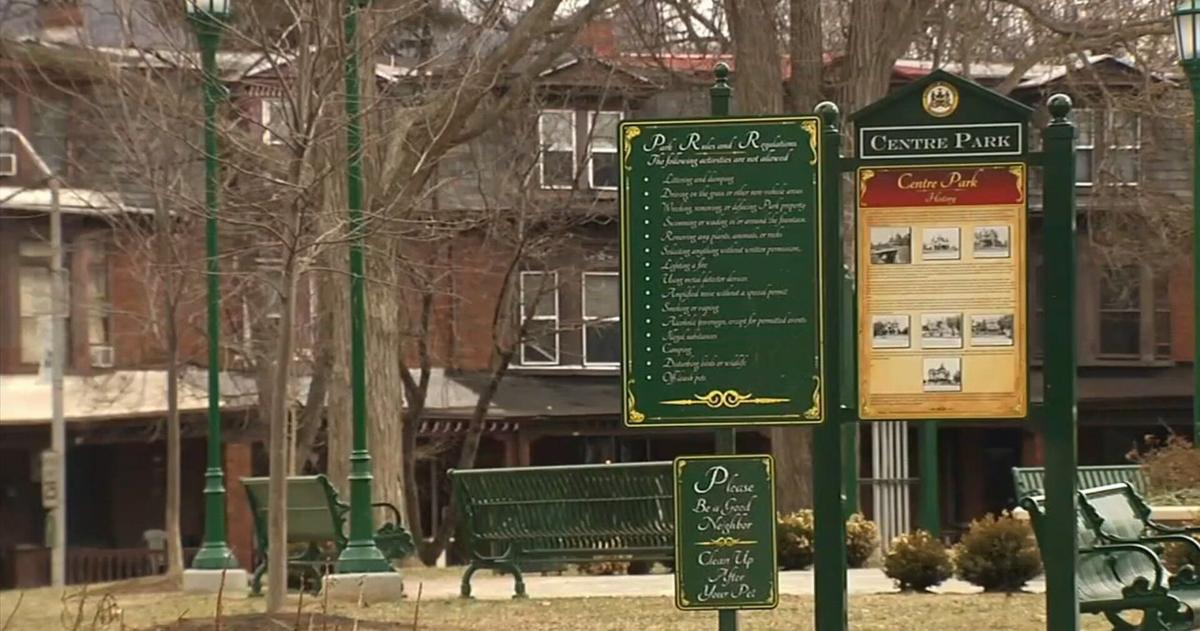
Property owners on South Sixth Street and along Laurel Street then supported the creation of the Prince Historic District in 1982, which was soon followed by the Centre Park Historic District.
The Penn’s Commons and College Heights districts are more recent additions.
While property values in Centre Park have increased considerably in value, Rothermel said the characteristics of the Callowhill and Prince districts appear to have changed significantly over the past 45 years.
“The demolition of the centerpiece landmark (the South Reading Market), deteriorating building conditions and unapproved, misguided improvements through the years have further reduced the number of structures contributing to the historical significance of Prince,” he said. “Likewise, some of the remote blocks of the Callowhill District have also experienced the lack of maintenance and unapproved modifications to render them less historically relevant.”
Rothermel recommended that council consider redefining the Callowhill District to the immediate blocks around Penn Street and to investigate the possibility of decertifying the Prince District.
“In my opinion, it seems unreasonable to require property owners and blocks that are no longer historically significant to follow the Secretary of the Interior’s guidelines for maintaining or making appropriate improvements to their buildings,” he said. “Besides benefiting owners, a reduction of the areas covered by the city’s preservation ordinance could also decrease significantly the workload of administration.”
“I would also suggest that some modification of some of the improvement guidelines to allow more reasonable repairs which do not compromise the overall historic character of any historic district, but would be beneficial to the property owners, especially with the cost of making repairs,” Rothermel said.
Councilmember Chris Miller said an important missing component to the current historical districts is education of the public and potential home buyers.
Miller also said he understands Rothermel’s comments about the Prince Historic District but added that he believes those properties are still worth preserving.
“The architecture here is not something you can find in the suburbs,” Miller said. “It is one of the things that is a carrot that if we choose to use it to dangle, to draw people into the neighborhoods, it can be a great asset.”
Council President Donna Reed said Rothermel’s recommendations do make sense.
“And it’s hard for me to say as someone who’s a strong believer in historic districts and preservation, but it makes sense with everything we have seen over the years,” Reed said. “I think we can find a middle ground.”
Council solicitor Michael Gombar said any changes to the historic districts would have to be done by ordinance.
Council did not discuss what its next steps may be in dealing with the absent HARB board.