
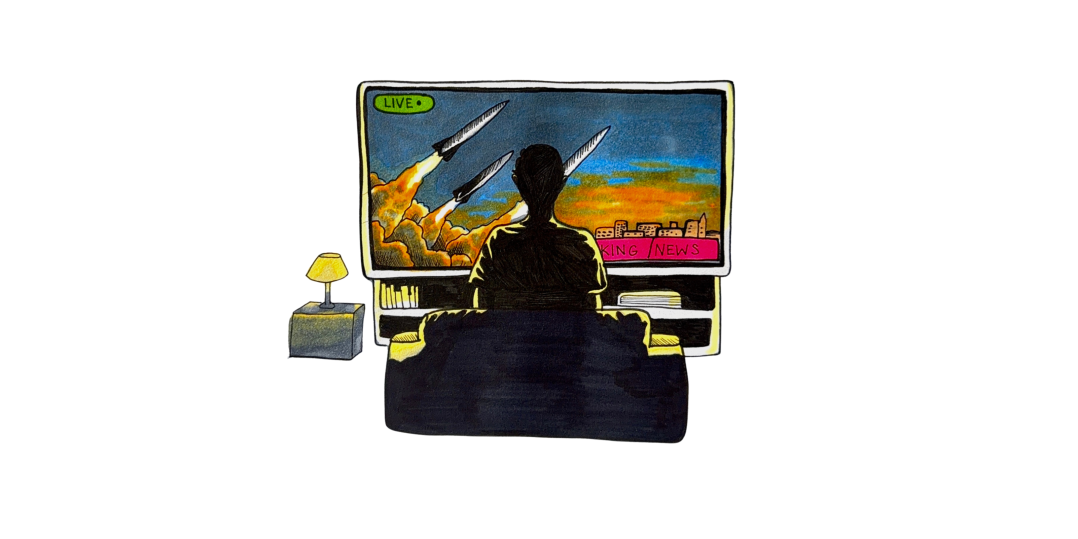
The scariest thing you can do in the midst of a war is not pay attention.
As Lehigh students, we owe it to ourselves not only to be aware of our country’s current state, but to actively educate ourselves. It’s not enough to scroll past headlines. We need to understand how this happened and what it means.
The U.S. is now at war with Iran.
On Feb. 28, the U.S. and Israel carried out a large-scale operation against Iran following rising regional tensions and escalating threats from President Donald Trump. The strikes targeted Iranian military and government sites, killing Supreme Leader Ali Khamenei and several senior commanders.
Since then, tensions have remained high. Iran has launched missile and drone attacks on U.S. targets in the region and warned of further retaliation, particularly against energy infrastructure. U.S. officials have responded with threats of additional strikes to keep the Strait of Hormuz open, increasing the risk of a wider conflict in the Middle East.
For many Americans, the most alarming part is how quickly everything changed. What began as another concerning headline turned into a war within weeks.
The Trump administration has framed the strikes as a necessary response to Iranian aggression and a move to protect American allies and interests. But that explanation hasn’t eased public concern.
Days ago, Trump ordered thousands of Marines to the Middle East, raising the possibility of a prolonged ground conflict. According to a Reuters poll, while two-thirds of Americans expected such a move, only 7% supported it.
American troops are already being injured and killed. The consequences of this war won’t be contained to the battlefield — they’ll ripple outward, affecting families, communities and future policy decisions.
Americans have every reason to be uneasy. Iran’s warnings of retaliation have heightened concerns about the safety of U.S. troops across the region, and continued strikes risk escalating into broader, more prolonged war.
At Lehigh, those fears feel distant. Classes continue, assignments pile up and conversations center on internships, exams and weekend plans.
That distance can be exactly what makes this moment dangerous.
It’s easy to treat war as background noise, but moments like these demand attention. Ignoring what’s happening doesn’t make it any less real — it only makes us less prepared to understand its consequences.
College students are often told we’re the generation that will inherit the political, economic and global consequences of today’s decisions. That idea can feel abstract until a moment like this forces it into reality.
Wars shape the future in ways that are impossible to predict at the beginning. They influence foreign policy for decades, reshape alliances and redefine the role of the U.S. in the world.
Most Lehigh students grew up during the later years of the wars in Iraq and Afghanistan. For many of us, those conflicts feel distant and ongoing, not something we watched begin.
This time, it’s different. We’re witnessing the start of a war in real time.
Paying attention doesn’t require having all the answers. Information is evolving, and new details emerge every day. But awareness is the minimum responsibility.
Students should be reading the news, asking questions and staying informed about what our government is doing in our name.
Right now, uncertainty defines this moment. No one knows how long this conflict will last or how far it might spread. What we do know is this: in the midst of a war, looking away isn’t neutrality — it’s neglect.