
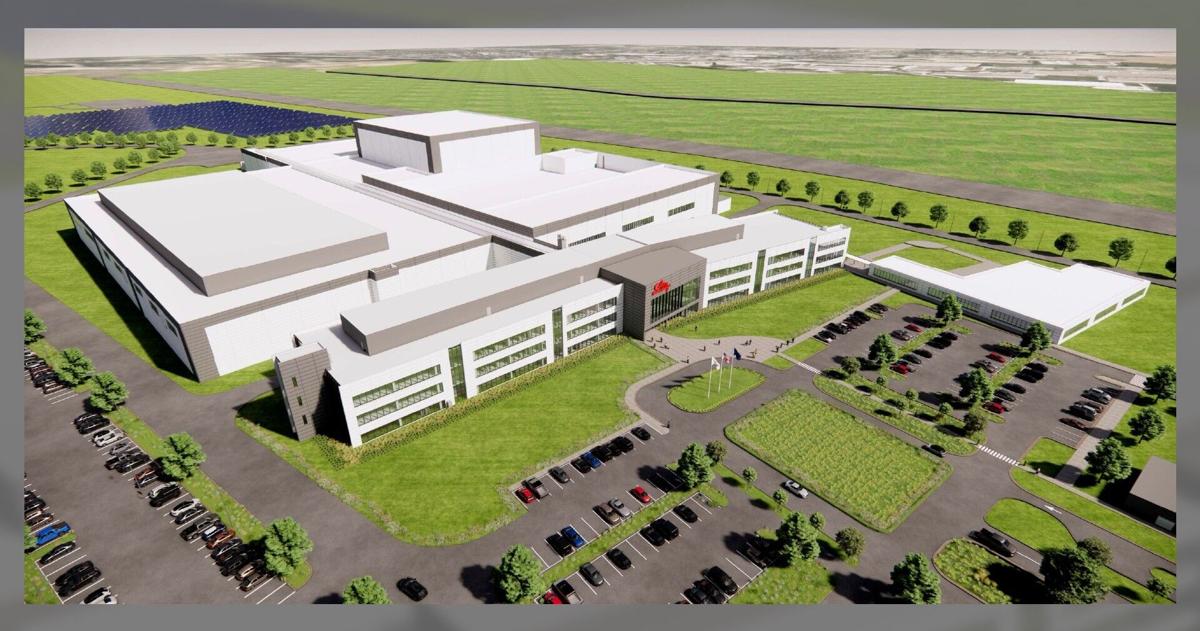
UPPER MACUNGIE TWP., Pa.- Eli Lilly’s plan to build a massive campus on farmland in Lehigh County has not raised many red flags with members of the Lehigh Valley Planning Commission (LVPC).
The agency reviewed the proposal as part of its Comprehensive Planning Committee meeting on Tuesday afternoon.
The project was first unveiled in January, with the pharmaceutical giant announcing it intended to build a multi-building, 925,000-square-foot complex to manufacture its injectable medicines.
The site is between Old Route 22 (Main Street) and I-78 in the Fogelsville area of Upper Macungie Township. In its review, the LVPC noted that the land is within a preservation buffer, meaning it’s a spot where agricultural preservation is preferred, but “factors may be present and capable of accommodating additional development,” such as access to public sewer and water, and proximity to major highways.
Also, the parcel is part of the township’s Limited Light Industrial District, and Eli Lilly’s proposed use is permitted by right according to the township zoning ordinance, the LVPC said.
In addition, planners said the project aligns with broader, state-level efforts to “attract major manufacturing investments and expand workforce training programs related to pharmaceutical manufacturing and advanced production technologies.”

A rendering of the proposed Eli Lilly and Company campus in Upper Macungie Township.
Eli Lilly and Company
“What we’re really looking at is how to make the ultimate project as good as it possibly can be,” said Jill Seitz, Lehigh Valley Planning Commission Chief Community and Regional Planner.
Seitz said the team reviewed the plans in an effort to seek opportunities to improve design or address potential impacts.
“We met with several external agencies in the township as part of that review to kind of coordinate any other permitting that may be involved with that development in addition to our review,” said Seitz.
The LVPC did have questions about the new vehicle traffic that would be generated by the project, noting that a traffic impact study provided by the developer didn’t align with its own numbers. Specifically, while Eli Lilly’s representatives estimated an average of 90 new daily weekday truck trips, the LVPC’s numbers showed 289 such trips.
One person from a neighboring municipality also raised concerns about traffic and environmental impacts.
“It’s not that we’re against this, this facility whatsoever. But we want, we will pay the ramifications of what will come out of this facility once it’s finished,” said the resident.
“The applicant should address how it was determined that only 90 trucks are anticipated to be generated per day,” planners wrote in their review.
Then there’s the question of how those trucks will get to the site. A new interchange at Adams Road and I-78 that’s less than a quarter mile away from the campus is in the planning stages but won’t be ready in time for the opening of the Eli Lilly facility, which is slated for 2031.
“There will be an interchange there that will help alleviate a lot of the traffic flows in that area,” said Seitz. “Those are in the preliminary and engineering stage right now.”
And, even with that interchange, it’s expected that nearby roads like Route 100, Glenlivet Drive and Old Route 22 will see a lot more traffic not just from trucks, but from Lilly’s permanent employees; the campus is expected to employ 850 people. “Maintenance and refinement of the transportation system nearby will become an important need as the manufacturing business begins,” planners wrote.
Finally, the LVPC asked the developer to clarify the location and number of on-site truck parking spaces: “Overnight or long-term parking spaces are a critical safety element for drivers and trucks as well as the community to provide safe and designated parking locations for drivers that may be not allowed to drive after working their allotted ‘hours of service’ to legally be allowed to drive.”
The Comprehensive Planning Committee voted to advance the review to the full LVPC without much comment from commissioners, although Chris Amato did inquire about the project’s financing.
Currently, the establishment of a Local Economic Revitalization Tax Assistance Act (LERTA) district is under consideration for the site. A LERTA is a tax abatement program that’s meant to spur redevelopment. In this case, the ten-year agreement would exempt 100% of the eligible assessment in the first year, with the abatement decreasing by 10% each year.
The LERTA must be approved by Lehigh County, Upper Macungie Township, and the Parkland School District.
The township has already given its blessing, but some members of Parkland’s school board expressed skepticism at a meeting last week. The issue will be discussed again next month.