
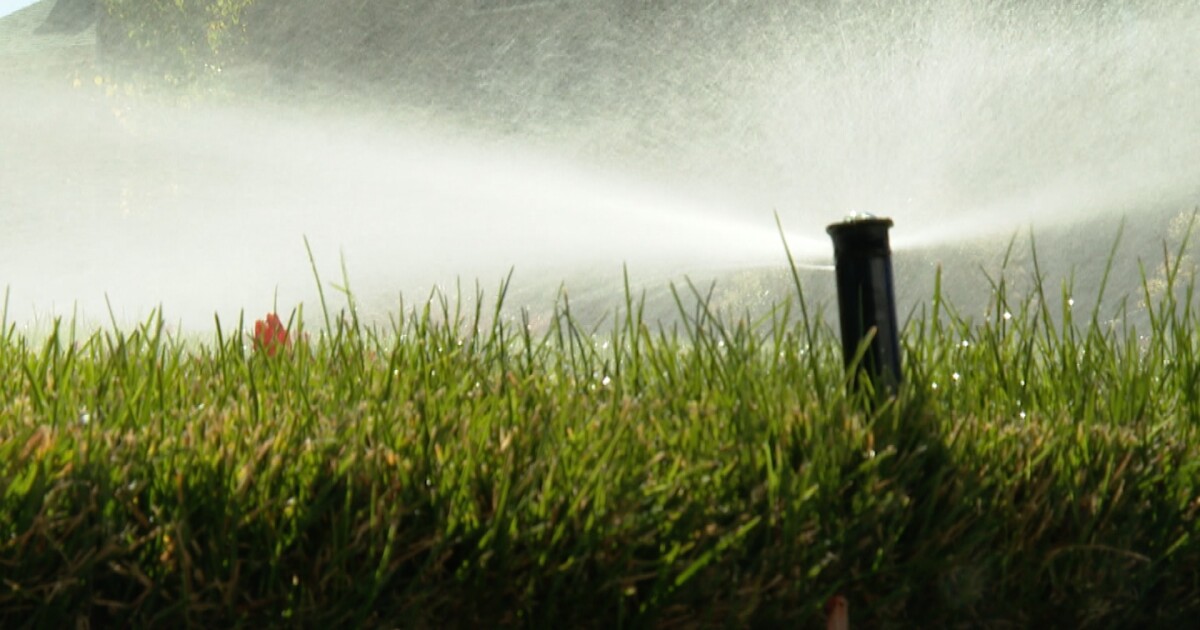
As Colorado has faced a historically warm and dry winter, many areas may soon be under water restrictions.
Denver Water, which serves 1.5 million people in the city and its surrounding suburbs, is considering Stage I water restrictions, which could go into effect March 25. If approved, it will be the first time that level of restriction has been in place since 2013, according to the utility. Other areas, such as Thornton and Erie, are already under restrictions.
Snowpack as of March 23 was at or near record-lows, according to Denver Water.
“In Denver Water’s decades of records for its watershed collection areas, as of March 23, Colorado River snowpack ranked the worst on record, and the South Platte River snowpack remains ranked at the worst,” the agency announced.
The utility depends on that mountain snowpack for its water supply, and said conditions “remain highly concerning.”
Here’s your guide to some of the restrictions proposed or in-place so far.
This list (in alphabetical order after Denver) was last updated Tuesday, March 24 at 3:40 p.m.
Denver
Denver Water restrictions also apply to Arvada, Littleton and Lakewood.
No restrictions in place yet — Denver Board of Water Commissioners is set to vote on proposed Stage I restrictions Wednesday, March 25.
Current level of water restriction: Currently considering Stage I restrictions. Restrictions could begin March 25.
What that means: If approved, lawn watering is limited to two days a week, with a schedule that will be published by Denver Water. No grass watering is allowed from 10 a.m. to 6 p.m. Trees, shrubs, perennials and vegetables can be watered by hand any day, but not between 10 a.m. and 6 p.m.
Restaurants can only serve water by request and hotels are limited in how often they can wash sheets and towels, unless a wash is requested by a guest.
The full rundown: More information on the proposed restrictions can be found starting on page 11 here.
Aurora
No restrictions in place yet, but restrictions could begin April 7.
Current level of water restriction: Considering Stage I restrictions. If approved, the restrictions begin April 7.
What that means: If approved, lawn watering is limited to two days a week, per the city’s water shortage response plan. Residences with addresses ending in an even number can irrigate on Thursdays and Sundays, and residences with odd-numbered addresses can irrigate Wednesdays and Saturdays. New lawn installations are not allowed. Watering gardens, trees, shrubs and perennials is still OK.
Restaurants can only serve water on request.
The full rundown: More information on restrictions and enforcement for each stage can be found here.
Denver7 coverage:
Boulder
No restrictions in place yet. The city’s website says it will decide whether to declare a drought and implement water use restrictions “on or around” May 1.
Erie
Current level of water restriction: Water Supply Shortage Response Level of 4 – Emergency.
What that means: All residential sprinklers are ordered off through the end of March, the town announced March 20. Most watering at town facilities and properties — such as parks and rec facilities — is also prohibited or limited.
The full rundown: Todd Fesseden, Erie’s director of utilities, said in a March 20 announcement that current water demands are typically not seen until late April, when the town receives its summer water allocation.
“If everyone uses irrigation systems now it will drain the system and cause a catastrophic water emergency,” he wrote in the March 20 announcement.
Get more details about restrictions at each stage here, or read Fesseden’s letter here.
Denver7 coverage:
Fort Collins-Loveland
No mandatory restrictions in place yet.
Current level of water restrictions: Voluntary watering schedule
What that means: Officials with the Fort Collins-Loveland Water District say even though they have no mandatory restrictions now, they advise residents to abide by watering best practices, including watering lawns no more than three days per week between 6 p.m. and 10 a.m. Residential addresses ending in an odd number should water Mondays, Wednesdays and Saturdays; those with addresses ending in an even number should water Tuesdays, Thursdays and Sundays.
The full rundown: More information on best watering practices can be found here.
Highlands Ranch
No mandatory restrictions in place yet.
Current level of water restriction: A drought watch began March 1.
What that means: Highlands Ranch Water says the watch means it wants its customers “to start being more water-wise,” as it aims to reduce water use by 5-10%. Once irrigation season begins in April, outdoor watering is limited to three days a week.
The full rundown: Find more information from Highlands Ranch Water on how to conserve water during a drought watch here.
Longmont
No mandatory restrictions in place yet.
Current level of water restrictions: The City of Longmont currently does not have any mandatory watering restrictions. Even so, city officials strongly encourage all residents to follow suggested voluntary watering restrictions in the interest of overall water conservation.
What that means: Longmont officials say even though they have no restrictions now, they advise residents to abide by watering best practices, including watering no more than 3 days per week between 6 p.m. and 10 a.m.
The full rundown: More information on best watering practices can be found here and here.
Thornton
Current level of water restriction: Stage I
What that means: Sprinklers are not allowed to be turned on until May, but hand-watering is allowed. Lawns should only be watered between 6 p.m. and 10 a.m. Trees, shrubs and gardens can still be watered as needed.
The full rundown: Get more information on restrictions and fines here.
Denver 7 coverage:
Denver7 will add to this list as we learn of more water restrictions. Know of one we missed or have an area you want us to look into? Email us at newstips@denver7.com.
Coloradans making a difference | Denver7 featured videos
Denver7 is committed to making a difference in our community by standing up for what’s right, listening, lending a helping hand and following through on promises. See that work in action, in the videos above.