
We’re almost at the end of October and violets are still blooming in the yard. To date, where I live in southern Northampton County, we’ve only had one overnight frost. In spite of that, though, a lot of summer annuals and weeds are dying.
Even big patches of normally hardy zinnias are looking sad. The only places where they’re still opening fresh flowers is where they’ve been protected by adjoining plants like 6-foot-tall sorghum.
For reasons I won’t go into, I wasn’t able to garden this summer like I normally do, but I’m OK now. So a big native spicebush plant out front got almost completely covered with mile-a-minute vines. Also known as Asiatic tearthumb because of the barbs on its stems, those vines are now covered with small blue berries.
Those vines, too, are now getting brown and dying, although any berries that fall from them or which get eaten and expelled by birds will germinate them again in the spring. And that means that come spring I’ll have a lot of weeding work to do.
Near this spicebush are several hybrid rosebushes, and every so often I’m still seeing a fresh rose or two. Every time I see one I think of it as “the last rose of summer” even though it’s already autumn.
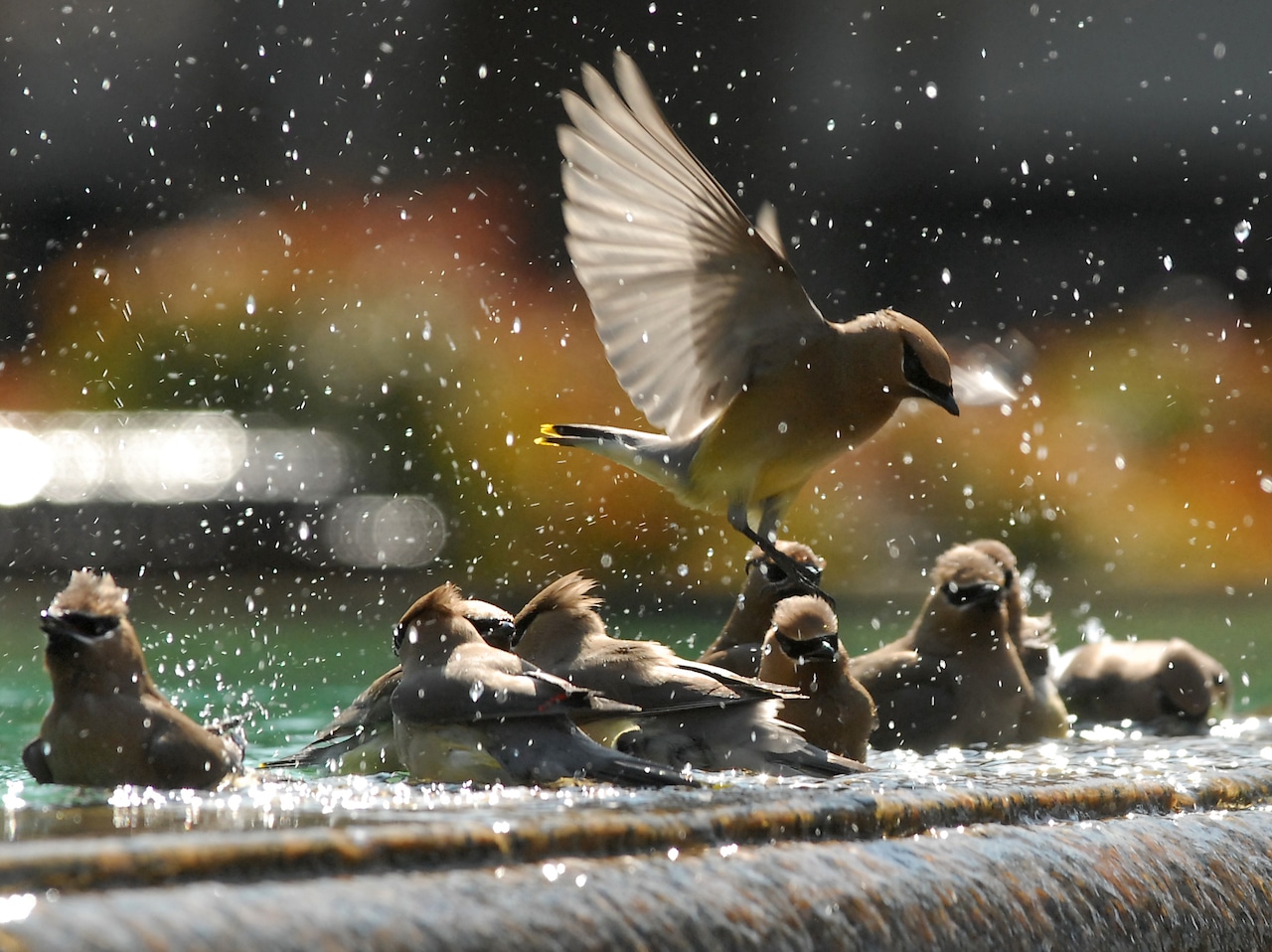
Recently a flock of cedar waxwings has been feeding all over this front yard area. Every so often some of them sit atop a bare tree near the spicebush, one of which has orange — not the normally yellow — tail tips. This occurs when the bird eats a lot of Morrow’s honeysuckle fruit and the red pigment gets into its tail feathers as they grow. Eventually, though, as the bird moves around the tail tips usually revert back to yellow.
On the subject of birds, even though almost all ruby-throated hummingbirds are gone from our area, you should still keep a few sugar-water feeders out if you have them. As happens in October and November most years, a rufous hummingbird recently showed up in a yard in a nearby Pennsylvania county.
Sandy Lockerman is an accredited hummingbird bander in the state, and she caught and banded this adult female rufous bird. Many years ago when I first got really involved with hummingbirds because it was an excuse to grow different flowers, no one knew that many Western hummingbird species go off course while migrating and end up in the East instead of the South.
At least seven different vagrant hummingbird species have been caught and banded in the state, and probably someday a different species may show up. These vagrants usually don’t stay around long, although occasionally one will actually winter here.
Whenever I look through my binoculars at the waxwings I can also see the pine cones on a Douglas fir tree along the driveway. Unlike most true firs, Douglas fir cones hang upside down like those of blue spruces also do. Someone gave me this unlabeled tree when it was 5 inches tall many years ago and I planted it just to thank them.
One day this past week I saw the first juncos of the year here in that fir tree. It was Oct. 21, the same date I first saw them last year.
If you purchase a product or register for an account through a link on our site, we may receive compensation. By using this site, you consent to our User Agreement and agree that your clicks, interactions, and personal information may be collected, recorded, and/or stored by us and social media and other third-party partners in accordance with our Privacy Policy.