
Welcome to Scott Wheeler’s 2026 rankings of every NHL organization’s prospects. You can find the complete ranking and more information on the project and its criteria here, as we count down daily from No. 32 to No. 1. The series, which includes evaluations on nearly 500 prospects, runs from March 9 to April 8.
After years as a bottom-of-the-league pool, the Penguins have transformed their group over the last two seasons and now have a respectable collection of prospects. They would have ranked a little higher had Ben Kindel not made the immediate jump to the NHL, too.
Their pool is still missing a premium ceiling-changing type, but they’ve created good depth for themselves and made more picks in last year’s draft (13, including three in the first round) than any other team.
2025 prospect pool rank: No. 20 (change: +4)
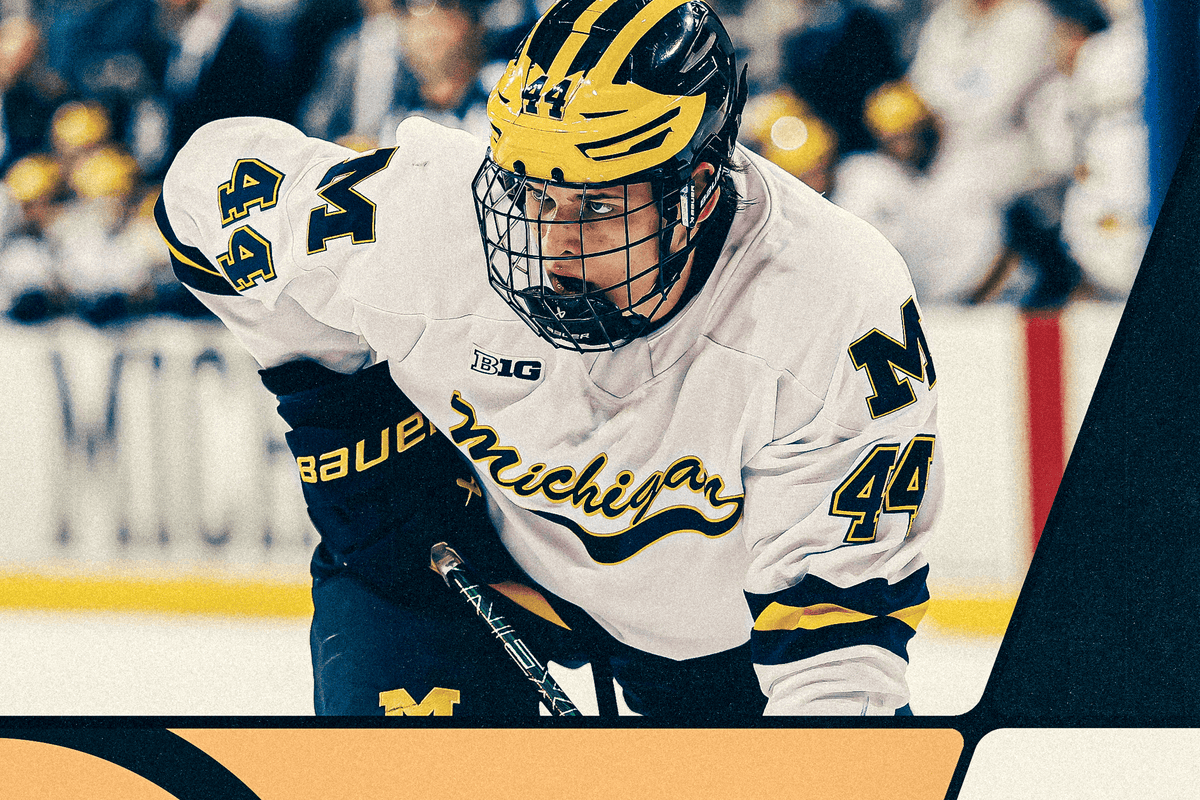
Tier 11. William Horcoff, LW, 19, Michigan (No. 24, 2025)
Horcoff is a big (now 6-foot-5) forward who has taken big steps in the last year or so. He wasn’t getting better at the National Talent Development Program and left after Christmas to join Michigan for the second semester last year. He then got off to a strong start with the Wolverines, and NHL Central Scouting ranked him No. 28 in North America at midseason and then No. 24 on their final list, signaling that he was a better player/pro prospect than the player we’d watched at the NTDP. He also returned to Team USA for U18 worlds and was a solid contributor in Texas.
After contributing and generating good shot attempt totals in his 14-15 minutes per game for Michigan last year, he has taken another big step in his first full season of college hockey this year as one of college hockey’s only 20-goal guys while playing 16 minutes per game. He had a disappointing World Juniors despite plenty of opportunity on the top line, though, and his below-average acceleration was noticeable there.
The son of Shawn Horcoff, William is strong and a better athlete than his below-average skating may indicate; he crushed testing at the combine and broke the long jump record. He’s a smart player who understands where to be, both in timing and routes. He can rip the puck — catch-and-release, one-touch, standstill, you name it — and finds open space in the offensive zone. He just needs to build some more pace. He can actually hustle and build a head of steam, it’s more just about getting quicker and playing quicker at times. He can look a little upright and heavy through his stride when he really has to come to a standstill, but he can drive down ice, forecheck and does a great job getting open in transition.
He’s also good on the net-front on the power play, and when he plays in the guts of the ice at five-on-five, he can make things happen and be a handful driving the net or planting himself there. He’s also physical and has some secondary skill. There are times when I’d like to see him play through contact and keep his feet moving more, but he’s progressing well in that area.
Pre-draft, I thought Horcoff was more talented than his statistical profile indicated and that with proper development at Michigan, he could emerge from college as a solid potential bottom-six pro player. That placed him as a second-rounder more than a first on my list, though, still. Today, I’ve upgraded that projection to a top-nine piece and first-rounder, so I was a little low on him in hindsight.
2. Harrison Brunicke, RHD, 19, Kamloops (No. 44, 2024)
Brunicke blew me away with his play at the Penguins’ rookie tournament in 2024 and was going to be on Canada’s World Junior team as an 18-year-old before he broke his wrist blocking a shot in practice. Brunicke garnered increased attention from NHL clubs as his draft season progressed, too, before hurting his shoulder on a late hit in late February of that year. That hit effectively ended his WHL season just as his momentum was really building. He returned to play at U18 worlds for Canada, though, and performed really well as an important top-six defender and particularly prominent penalty killer who was counted upon in defensive situations throughout the tournament.
Last season, after returning from injury, he was involved in everything the Blazers did and finished the year with 30 points in 41 games on a low-scoring team. At year’s end, he also registered four points in 12 combined regular-season and playoff games in the AHL. This season, after another strong camp, Brunicke started the year with the Penguins. And while he had some ups and downs, there were games where he looked like a solid NHL D as a teenager, and that kept him around until the World Juniors. He then got caught out of position and spun around in the D-zone a few times early in the tournament, and his minutes were reduced. He was also tried and then removed from the PP, which isn’t a natural role for him at that level. Since returning to Kamloops post-tournament, he has played 24 minutes per game for the Blazers and again made his two-way impact at that level.
His statistical profile doesn’t pop, but he has good size, a pro build, excellent skating and good enough instincts on both sides of the puck. He has shown a real willingness to join the rush and look for opportunities off the offensive-zone blue line in the last two years or so, playing a very active two-way style and recovering when he’s down ice with his skating. I think he has another level to find offensively — he has shown some skill on the puck, even if it’s not dynamic, and the skating is obviously legit. He can defend with his active stick, length and feet, though there are times where I want to see him play a little harder in man-to-man D coverage and be a little more aware in his own zone. He’ll stand up for his teammates, block shots, etc.; it’s more just about really battling out there consistently. He can lead exits and entries with his skating or an outlet, and has progressed very quickly since playing a depth role for the Memorial Cup hosts in his 16-year-old season. He has developed his poise and makes a great first pass.
The Penguins drafted him 44th, but he has looked like a late-first caliber of prospect since. He’s going to be a transitional, two-way No. 3-5 D in the NHL for a long time.
3. Rutger McGroarty, LW, 21, Wilkes-Barre/Pittsburgh (No. 14, 2022)
The pace of the pro game was clearly an adjustment for McGroarty early on last season, but he really began to figure it out in the second half and has continued to take steps this year. In the AHL, he has been a point-per-game player and has driven positive results.
McGroarty has always looked like a pro hockey player in most areas, other than his speed/pace at times. He’s also a charismatic leader who has worn letters all the way up, including for a Team USA that won gold at the World Juniors. He has energy and light about him that everyone talks about. You have to be careful not to put too much stock into the off-ice pieces of the puzzle (he’s also very strong and has had a pro build for a long time), but I think he’s a darn good player, and the pieces of the puzzle fit together nicely on the ice as well.
His skating doesn’t look the prettiest through his first few steps, but there’s some power when he gets going nonetheless. And his spatial awareness, reads and effort level help him avoid losing short races and being behind the play. He has great hands and feel on the puck as a passer. His finishing touch around the net is there, with a hard one-touch shot that leverages his strong frame to power through. He has always been a sneaky-good facilitator who passes the puck really well and can hold it.
He has particularly mastered the net drive into a high rotation away from coverage that brings him back to around the net. (He arrives in space with the right timing for his linemates, an important and underrated skill in today’s game.) And then when he gets there, he has the strength to shoot from bad postures/off balance. He always seems to put his shots into good locations (along the ice, low blocker, high short side) too. He’s dexterous. He’s a tone-setter who will track and finish his checks even if he doesn’t have the speed.
The ice normally tilts in his favor; he’s such a smart player. He can score, he works and he just understands where to be out there and how to put himself in positions to create offense. He reinforced his strong statistical profile from the NTDP at Michigan, where he was a point-per-game freshman and one of the top-scoring players in college as a sophomore despite a pretty severe injury in the fall (a broken rib and punctured lung). And he has now done it in the AHL.
If he can get a little quicker from the jump, he has all of the other makings of a legitimate top-nine forward who can play up and down a lineup with a variety of player types.
Tier 24. Bill Zonnon, LW, 19, Blainville-Boisbriand (No. 22, 2025)
Zonnon is a fourth-year QMJHLer who had 58 points in 68 games two years ago and broke 80 as a big-minutes forward who wore a letter for the Huskies in his draft year last season as one of the more productive forwards in the league. He also had a decent playoffs, leading the Huskies to the third round of the Q playoffs with a team-best eight goals and 16 points in 13 games. His post-draft season was delayed by an offseason knee injury, but he’s again a top player on a top team, now with the title-chasing Armada.
Zonnon plays a versatile game that impresses on and especially off the puck, where he keeps his feet moving, works, finds space, gets to loose pucks, forces turnovers and tracks. Nobody works harder. He can play both center and wing. He’s pretty fast, and he plays fast. He has a real B game, playing in bursts to apply pressure and win a ton of races and 50/50 pucks. He’s competitive and has a good stick on lifts and disruptions. He makes plays quickly and can be a menace on the forecheck. But he also has some vision, with an ability to find the secondary wave on the ice and get pucks off the wall and to the interior. His handling and skill aren’t dynamic, but he can make plays and execute when opportunities present themselves, and I’ve seen him push through plenty of holes in control.
I expect him to have a long, successful pro career and think he has middle-six upside and a depth floor in terms of an NHL projection because of the way he involves himself in the play.
5. Ville Koivunen, RW/LW, 22, Wilkes-Barre/Pittsburgh (No. 51, 2021)
Koivunen is an entertaining and gifted winger who was one of the more productive young players in Liiga (especially considering his June birthday) over three different seasons — though after he impressed in the first two games of the canceled World Juniors in Edmonton, he disappointed me in Halifax — and immediately became a top young producer in the AHL. He has also shown flashes of ways he can be successful in the NHL, though he hasn’t quite done it consistently enough to earn a full-time NHL job in the Pens’ top nine.
He can be a delight to watch with the puck on his stick when he’s playing confidently. He’s a crafty problem-solver whose game tilts toward offense; he has work to do to become a more reliable player defensively, although he can hang. He can manufacture offense in a lot of ways off the perimeter, whether that’s playing pucks into space with the perfect weight or baiting defenders into reaches so that he can cut past them. He can carve the offensive zone up as a dual-threat scorer and passer, and is comfortable with the puck even with guys on him and can play in small areas with his quick hands in tight. I’ve also seen him look quite effective taking pucks off the cycle to the interior (though not consistently), even though he’s more dangerous in open ice. I’ve seen him twist and turn away from good defenders.
Though he’s always going to be a little lean, he has also gotten to a playable weight: he was listed at 5-11 and 161 pounds in his draft year, and he’s now 6 feet and 184 pounds, which is up 12 pounds from just last year. I see potential top-nine upside with the right development plan. He may be a bit of an AAAA guy, though.
6. Sergei Murashov, G, 21, Wilkes-Barre/Pittsburgh (No. 118, 2022)
After impressing me at the Penguins’ rookie tournament in Buffalo in his first real action in North America in the fall of 2024, Murashov split time between the ECHL and AHL last year and was excellent at both levels. This season, his continued strong play in the AHL has earned him NHL looks over the more experienced Joel Blomqvist, too.
Murashov wasn’t one of the goalies on my 2022 draft board, but he was among the goalies I would have considered drafting, and he has played really well across years now. Before his successful jump to North America last season, he established himself as one of the best goalies in the MHL and impressed in spot starts in the KHL. He also played on the Russian Hlinka Gretzky Cup team that won the 2021 gold medal.
Murashov isn’t a big goalie, though he has grown a couple of inches and added weight to get to 6-2 and 185 pounds. He’s also quick and nimble on his feet, gets to a lot of pucks, stays with shooters one-on-one, has great hands and likes to challenge (like many Russian goalies are taught to). I like the movement, the skill, the way he anticipates plays and his tracking. When he’s dialed in, he’s tough to beat. He would have garnered more notoriety had he backstopped Russia at his World Juniors, too. He projects as a legit tandem goalie.
Tier 37. Owen Pickering, LHD, 22, Wilkes-Barre/Pittsburgh (No. 21, 2022)
Pickering’s puck play doesn’t jump out at you, and I felt No. 21 was a little too high for him, but he’s extremely intelligent and has a long, effortless skating stride atypical of a 6-5 defenseman, and those two things have kept him relevant. He has a smooth glide to his stride and through his pivots and backward crossovers, moving forward to backward with ease for a player his size. His point shot is hard enough to occasionally chip in. He’s still lean and has struggled to add muscle to his frame, but his two-way transition has worked in the AHL over his first two seasons (playing 19-20 minutes per game as a rookie last year and now 21-22, both to positive results) because of his first pass and skating ability. He hasn’t been able to be as effective in the NHL, though, at times looking a little weak —which is the way he looked in early Pens rookie tournaments and his first AHL stint at the end of the 2022-23 season before he figured out how he needed to play at that level.
He has an unremarkable game inside the offensive zone, and because he’s not a true stopper/shutdown type, he probably tops out as depth. His length, skating and character should carry him to an NHL career, though, even if that’s just with a No. 5-6 ceiling and No. 7-8 floor. He should be able to hold his own at five-on-five in the NHL long-term.
8. Joel Blomqvist, G, 24, Wilkes-Barre (No. 52, 2020)
Blomqvist is now in his third season in North America, and his career AHL save percentage through nearly 100 games is just below .920. After two strong seasons in Liiga (including one stellar one), Blomqvist became Wilkes-Barre’s starter and an All-Star as a rookie in the AHL, playing 45 games and posting a .921 save percentage. He followed that up by taking another natural step and splitting time between the AHL and NHL last year, where he was good enough to warrant an extended look in the second half. And while Murashov is the more impressive talent and his early numbers in the NHL haven’t been good, he has continued to play well in the AHL this year.
Blomqvist is a 6-3, 204-pound goalie who has added weight over the years and has a real foundation of reads, tracking and technique. And while I wouldn’t necessarily call him explosive as an athlete, he goes post to post and low to high well, tracks the play well and stays with pucks/gets to his spots before passes do so that he’s in control of his stance when the shot comes.
There are times when that can break down and he can look a little scrambled, or he’ll let a routine shot squeak through his body, or he’ll sit too deep in the net and get beat up high, but his game is pretty consistent on the whole. I’d qualify him as a technically sound goalie who does a good job squaring up on shots, making easy saves and anticipating play, even if there isn’t an elite quality in there.
He’s an NHL-quality goalie. If Murashov projects as a tandem guy, then Blomqvist fits in nicely as a No. 2/3 for them. Can the Penguins make both happy, and/or is Blomqvist good enough that they can eventually form a tandem together? Both of those seem like tricky things to execute.
Tier 49. Peyton Kettles, RHD, 18, Swift Current/Kelowna (No. 39, 2025)
Kettles is a towering right-shot defenseman who played a limited role on Team Canada at Hlinka two summers ago and then played a huge role as a 17-year-old D for Swift Current, often eating 25-plus minutes as one of the youngest players in the 2025 draft. (His September 2007 birthday meant he was just weeks away from 2026 eligibility.) The sixth pick in the 2022 WHL draft, Kettles’ statistical profile is a modest one after registering 15 points in 69 combined regular-season and playoff games as a 16-year-old and 16 points in 58 combined regular-season and playoff games last year. He lost the first half of this year to shoulder surgery but his production has ticked up in a small sample following a trade to the Memorial Cup hosts.
But Kettles is a physical, hard-to-play-against, at times mean player type who has some of the attributes a player of his size needs to become successful as a depth defenseman in the NHL. He moves well enough and flows going forward pretty comfortably for a player his size. He actually played the net-front on Swift Current’s power play as a defenseman pretty regularly, too. He has enough comfort on the puck, with some clear areas for his game to continue to develop both defensively and offensively, but also a good starting point and a late birthday that gives him plenty of runway. He has the package of physical tools that teams covet and time to develop them. He should model his game after a Brandon Carlo/Logan Stanley type and work toward that.
Look for him to be in the mix for Team Canada at next year’s World Juniors as well.
10. Cruz Lucius, RW, 21, Arizona State (No. 124, 2022)
After battling a wrist injury in his draft year, Lucius came on strong late with 12 points in his final 10 games at the program on a dominant “third” line with McGroarty. He then built on that with back-to-back seasons as the Badgers’ leading scorer (about a point per game) as a freshman and sophomore. After a transfer to Arizona State for his junior year last season, though, Lucius missed the first few months of the season due to injury and scored two goals in 19 games when he returned, but he has been their leading scorer as a senior this year.
Lucius is a patient playmaker who slows the game down and uses delays, lightly weighted passes and the attention he pulls into himself to create through layers for his linemates. Like his older brother Chaz, his skating, which pitchforks, is the primary concern with his projection. But he plays within the pace of play so well, problem-solves really effectively and has a sneaky quick and accurate release. He’ll ultimately be defined, though, by his ability to continue to wait for plays to develop and stay cerebral as the speed of the level around him ramps up. If he can, he has a chance to be a complementary playmaking winger. Some wonder if he’ll just be an AHL playmaker.
He has never lacked confidence and decisiveness in his game. He should get signed this spring, and then you go from there.
11. Tanner Howe, LW, 20, Wilkes-Barre (No. 46, 2024)
Howe was an interesting case study in his draft year. It was his third full season in the WHL and his fourth in part, and despite having been productive in the league even before his draft year — 69 points in 64 games as the league’s second-most productive under-17 player, and then 85 in 67 as the league’s fifth-most productive under-18 player — he still had to prove to people that he could do it as “the guy” because the player at the top of both of those prior lists was Connor Bedard, his frequent linemate. He was also largely unnoticeable in front of the NHL’s brain trust in Germany at the 2022 U18 worlds despite playing alongside Bedard, and again at a second U18 worlds in Switzerland, where he was given more of an opportunity as one of three returnees and was fine but unspectacular, eventually getting banged up and falling out of the top six.
He did play away from Bedard more than I think most people realize, including for stretches as the team’s second-line center behind him, and showed he could be successful in driving his own line in the WHL when he did. After replacing Bedard as the Pats’ captain, he then led a poor team in scoring by a hefty margin (his 77 points were 25 more than his nearest teammate) to demonstrate that he could create offense for himself and make his linemates better even when not surrounded by talent in junior.
Last season, after an injury and a bit of a slow start, he made Canada’s World Junior team, was fine in a go-getter/PK role without generating much offensively, and then got dealt to Calgary and registered 14 goals and 48 points in 43 combined regular-season and playoff games with the Hitmen. In that playoff run, he hurt his ACL, requiring surgery and delaying the start to his pro career.
Because of his average size, skill and skating, he was viewed as a second-rounder pre-draft. I have some questions about whether he has enough skill/offense to become a full-time NHLer, but there’s a path for him to get there because of his competitiveness.
There’s a lot to like about his approach and style. He’s by all accounts a good leader. You can see that competitiveness (and at times scrappiness) on the ice. He doesn’t wow you with his skill level for a player with his size, but he makes a lot of small-area plays of little 5-10-foot passes through feet and sticks under pressure. He always seems to be around the puck inside the offensive zone, he’s tenacious off the puck, finishes his checks and has well-rounded skill. He’s a better athlete than he gets credit for, too, and performs well in testing. I like him, but I don’t love him. He’s a hardworking player with fine skill, and that can take you a long way, but there’s also a chance he just becomes a third-line AHLer.
12. Mikhail Ilyin, LW/RW, 21, Cherepovets (No. 142, 2023)
Ilyin has quickly become a really positive story for the Penguins. He’s a fifth-round pick who went from scoring four goals in 28 MHL games two years ago to having three very productive seasons for a young player in the KHL with Cherepovets and earning an NHL contract. He led the league’s U19 skaters in scoring two years ago, finished third in U20 scoring last year and has been top two in U21 scoring all year this year on loan (he’s expected to come to North America at the end of the season). He has also achieved positive on-ice results on a middle-of-the-pack team.
It has been fun to watch him put it together because I didn’t think he had this in him in his draft year. He’s an average-sized, average-skilled player who just thinks the game at a high level. He finds soft spots in coverage and reads off his linemates. He’s not physical, but he works off the puck to put himself in good spots defensively and help out. His on-ice know-how, timing and understanding of spacing take over from there on both sides of the puck. Suddenly, he profiles more like a player with short-to-medium odds of becoming a complementary winger than the long shot I thought he was in his draft year. I do still want to see him score more and get to the guts of the offensive zone, but he’s good organizational depth at minimum. I considered ranking him a couple of spots higher here.
13. Chase Pietila, RHD, 22, Wilkes-Barre (No. 111, 2024)
Pietila played huge minutes for Michigan Tech (26-plus per game), wore a letter and contributed at both ends as a 6-2 righty, which allowed him to get signed after his sophomore year — rare for a defenseman drafted in the fourth round as an overager. He was a big part of a USHL title in Youngstown, helped Michigan Tech to a CCHA title as a freshman and was an all-situations player at lower levels. He has played 20 minutes per game to positive results as a rookie in the AHL this season and, a little to my surprise, has played some power play at the pro level as well.
Pietila is an ultimate competitor who plays and defends hard, makes his reads early and firmly both on and off the puck and plays the game with intention. His boots can look a little heavy at times, but he wins battles and engagements, he has a good stick and a hard point shot, he moves pucks quickly, and he has shown more and more poise on the puck this year. There’s a lot of pro quality and a lot of what teams look for in depth defensemen in his game. I thought about ranking him a couple of spots higher here as well. He might have a lower ceiling (No. 6-8), but he’s good organizational depth at his floor, too.
14. Joona Väisänen, RHD, 21, Western Michigan (No. 175, 2024)
Väisänen was my fifth-ranked overager in the 2024 draft after he made the jump from Finland’s U20 level to the USHL as one of the best defensemen in the league in his first year in North America, earning a job on the Finnish blue line at the World Juniors and a nod on the USHL’s first All-Star Team. He followed that up with a really respectable freshman year at Western Michigan, playing 20 minutes per game to positive two-way results, running the power play and winning a national title along with being named to the All-Tournament team. This season, he looked like one of the top D in the country at the start of the year before suffering a long-term injury in early November.
His game is driven by his on-ice intellect. He reads it at a high level — one which was at times even too advanced for his teammates this year — and makes smart plays all over the ice, steering his ice time with his efficiency. He’s an above-average skater with an understated competitiveness to him. His teams win his minutes, and he’s the type of player who will be better with better players as he progresses. He moves pucks with good timing and anticipation. He defends well and breaks up a lot of plays. His tools aren’t dynamic, and he’s average-sized (though he’s up to 6-1 and 190 pounds now), but I think there’s a path for him to play games in the NHL because of the way he understands the game.
15. Quinn Beauchesne, RHD, 19, Guelph (No. 148, 2025)
Beauchesne is a Hockey Canada darling who wore a letter for them and played top-four defensive minutes at both U18 worlds and the Hlinka, and has worn a letter and averaged 21 minutes per game for the Storm over the last two seasons. Last season, he played to half a point per game last year on a low-scoring Guelph team despite missing time after his leg swelled up from a charley horse injury. This season, he impressed in his first NHL camps this summer and fall.
There have been times when I haven’t seen what some others had, though. He’s a strong athlete who is physically developed and is, by all accounts, an honest worker. He defends well in-zone and competes. But I’ve also found he struggles under pressure and turns over his fair share of pucks. I find he gets beaten more than he should in transition if he wants to become a defensive, complementary depth partner at the next level, and I don’t know if he can become that as a 6-0 D without NHL offense to chip in with. After feeling like I was seeing bad samples of his games last year, I have liked him more in viewings this year, enough to include him here. He’ll be a big part of next year’s Guelph team when they host the 2027 Memorial Cup, which will be an interesting test for him against top competition to see where he is at the end of his junior career.
Honorable mentionsMac Swanson, C, 20, North Dakota (No. 207, 2024)
Swanson is a tiny but highly skilled center who was named USHL Clark Cup playoff MVP, USHL forward of the year and first All-Rookie team honoree in his junior career, but has predictably struggled to score and get to the inside through his first two seasons of college hockey. He finished third in the USHL in scoring (77 points in 55 games) and first in assists (51) and then stepped up big for Fargo in the playoffs pre-draft, leading the team in scoring with 17 points in 12 games, but was still one of the final picks of the draft because of just how hard it is for a 5-7/8 player to project up levels. Now he’s a sophomore at North Dakota, and while his vision on the power play and at five-on-five is still consistently useful for him, and he PKs for them a little too, he’ll need to find another level to get signed.
He’s not a physical or hard player, but he has extremely high-end hands and touch on the puck as a passer, and he can just flat-out make plays with his small-area skill and vision inside the offensive zone. Those who’ve watched him closely or worked with him over the years believe he’s going to be a highly productive college player as an upperclassman, too. But there are also questions about whether he’ll become more than an AHL playmaker. With players of his profile, it always takes continued production to force someone’s hand and then the right coach/development plan/organization to recognize it. Time will tell.
Melvin Fernström, RW, 20, Örebro/Wilkes-Barre (No. 93, 2024)
Fernström was one of the most productive players at the J20 level from 2023-25, led Sweden’s U18 team in scoring at worlds with eight points in seven games and had a fairly productive run in the SHL as an 18-year-old last year. He has hit a bit of a wall this season, though, and didn’t make Sweden’s World Junior team even though a year ago it looked like he would.
Below-average skating is his limiter. He’s decently strong (and still has more room to add muscle) and can stay over pucks and power through a variety of shot types, with a good one-timer and wrister. He’s dangerous on the flank on his off-side on the power play, but also does a good job hiding off coverage and finding gaps to get open in the offensive zone at five-on-five. He has one-on-one skill and can use it while moving, even with a bit of an awkward stride. He gets to rebounds and is hungry for offense. He has some craft. He shades away from sticks with the puck really well. I like the way he supports, tracks and gets the puck back defensively, as well as the way he protects and shields it against defenders offensively. He works hard enough and likes to mix it up … but also occasionally takes bad penalties. There’s a good shell to work with. Whether he ever has enough pace to be more than a second-line SHL/AHLer long-term is the question.
Zam Plante, C, 21, Minnesota-Duluth (No. 150, 2022)
Plante was one of the top forwards in the Minnesota high school circuit for a couple of years, became a top player in the USHL with Fargo, and has quietly become a top forward for the Bulldogs as a sophomore — and a little in the shadow of his younger brother, Red Wings prospect Max. Zam turned 21 at the end of August and is a talented, cerebral forward who battled shoulder issues earlier in his career (including two surgeries), which set back his NCAA commitment to Minnesota-Duluth. He and Max were a ton of fun to watch at Hermantown and have renewed that at Minnesota-Duluth, with Zam’s intelligent game complementing whoever he tends to play with, but really clicking with Max. He lacks the physical makeup of most pros, but I think he’s smart enough that he should become a good AHL player. He’s impressive at navigating around the ice and problem-solving.
Charlie Trethewey, RHD, 18, Boston U. (No. 73, 2025)
Trethewey is a head-scratching evaluation who I’ve had a tough time with. He started as one of the top 2007s at the program, even though his August birthday made him one of the younger players in the draft. He’s a standout athlete who has, in brief stretches, looked like a talented and confident right-shot defenseman with pro size, a big shot (his slap shot and wrister are both high-end), stability over his skates and some command of the game when he’s dialed in. But his game also often looks choppy, and his decision-making and execution with the puck aren’t nearly consistent enough. After starting on the power play at the program as a U17, he wasn’t on it as a U18. It was a down year for the NTDP, too, and Trethewey had the tools to distinguish himself but just didn’t take the steps forward that some thought he would coming into last year. He has averaged 12 minutes per game for BU as a freshman this year, though his results have been generally positive in a sheltered role.
He’s a relevant pro prospect because of his tools, but he’s going to have to show people more consistently that he can put it all together. He can sometimes attack, he can sometimes beat the first layer laterally in control, he defends hard (though his decisions/reads/timing need polishing), and there are pro attributes to his game that should be refined as he continues to get reps. He’s also very strong. His game lacks execution and doesn’t always seem buttoned up, though, and he can tend to look for the shot too much, raising concerns about his IQ. He has the potential to be a good college player if he develops, and he has the makeup to defend hard and firm, but there are a lot of ifs.
Kale Dach, C, 19, Calgary (No. 201, 2025)
Dach was one of the most talented and productive players in the BCHL last season, registering 100 points in 62 combined regular-season and playoff games for Sherwood Park, leading the league in assists and getting named a first team All-Star. He’s a Penn State commit who then made the jump to play for the Hitmen in the WHL this year and has been their leading scorer. He’s an undersized center by NHL standards (5-10, 165 pounds), but he has made progress in the faceoff circle (53 percent this year across significant volume).
Dach functions as a conduit for his teammates with his smarts, playmaking and sixth sense for spacing and timing as a distributor. He passes the puck at a high level, sees the play develop early, and understands how to slow the game down and distribute/pick apart coverage. He can run the flank on the power play. His skill level is legit in terms of his hands and touch. He’s a good skater. He’s not physical, but he competes hard enough. He’s going to have to continue to produce up levels to have any kind of chance, though, and I do wonder if he tops out as a second-line AHLer. But I thought he deserved a mention here.