
CLEVELAND, Ohio (AP) — Below Cleveland, in a subterranean world many surface dwellers don’t know exists, miners extract a crucial…
CLEVELAND, Ohio (AP) — Below Cleveland, in a subterranean world many surface dwellers don’t know exists, miners extract a crucial winter mineral — salt.
The Whiskey Island salt mine, owned by food giant Cargill, helps supply road salt across the Northeast and Great Lakes, where a colder, snowier-than-usual winter has driven demand. Many municipalities exhausted supplies that typically last through spring, said Cargill spokesperson Emily Tangeman.
“Our teams have been working overtime since September to support customers across the snowbelt,” Tangeman said, noting that early, persistent winter weather boosted demand across the industry.
The mine beneath Lake Erie, one of the world’s largest, produces 3 million to 4 million tons (2.7 million to 3.6 million metric tons) annually, although that can fall short of demand in especially harsh winters.
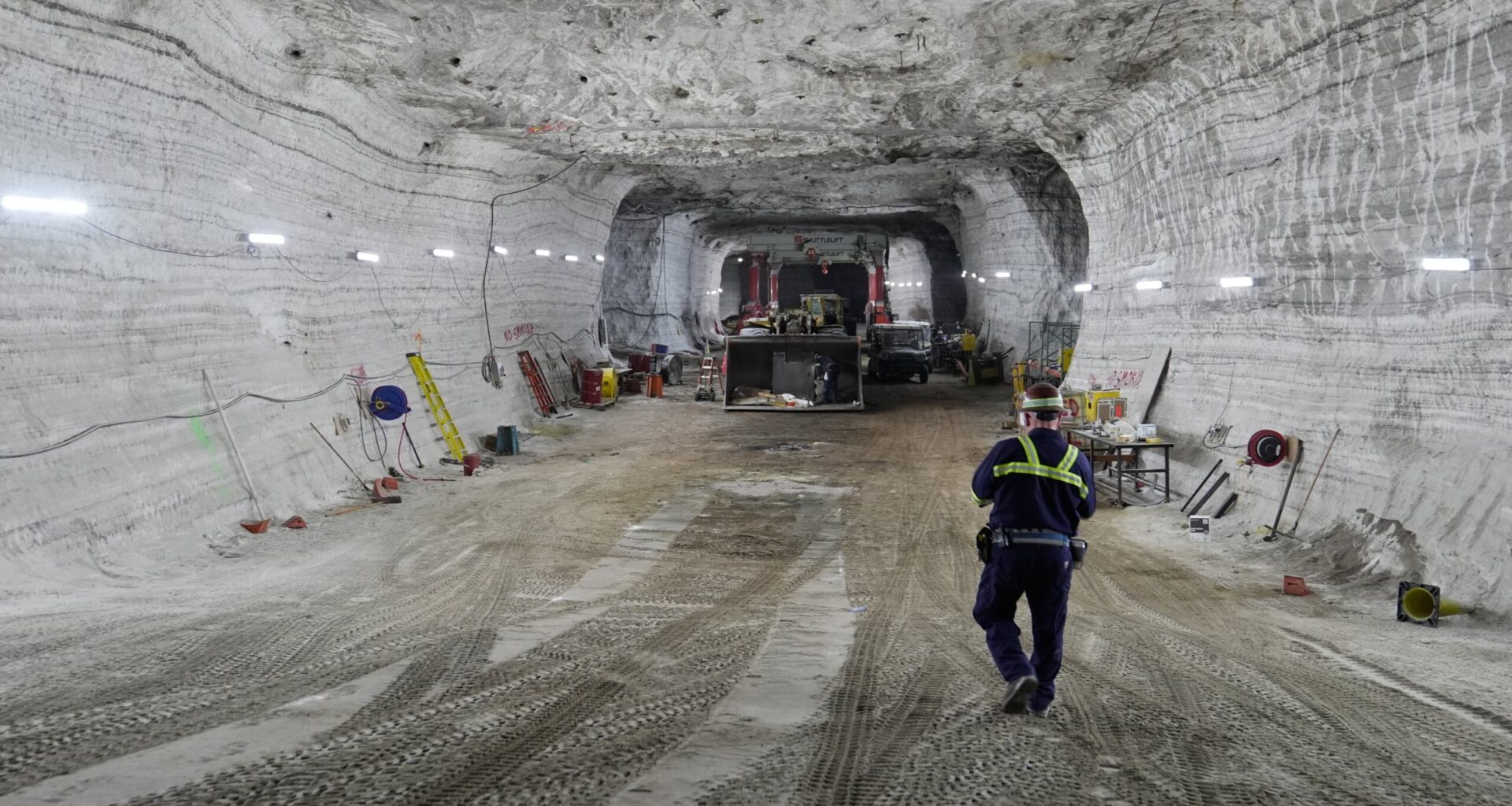
Located 1,800 feet (549 meters) underground, it’s accessed from Whiskey Island, an industrial area on the shore right beside downtown Cleveland. The mine opened in the 1960s and operates year-round, with salt extracted by drilling and blasting through vast tunnels formed from an ancient inland sea that dried up millions of years ago.
Inside, the mine is a maze of roughly rectangular caverns with chalky white walls and ceilings that extend for miles. It’s dimly lit and often pitch-black beyond the glare of headlamps and floodlights. Heavy machinery and conveyer belts rumble as small ATVs whisk miners around.
Maintenance superintendent George Campbell said operations are continuous, with downtime used for upkeep and repairs to keep production steady. Cargill said it is prioritizing shipments to ensure salt reaches the areas of greatest need as winter lingers in some regions. Frequent smaller storms also increase usage, Tangeman said, requiring repeated salting and creating logistical challenges.
A return to harsher conditions across the Eastern U.S. meant some cities — including Boston, Bangor, Maine, and Ithaca, New York — shivered through their coldest seasons in more than a decade. And winter weather is still not over in some parts of the country, so it’s not over in the Cleveland mine, either.
Campell said there’s still decades of salt left to be mined.
“I think that we have enough reserves to continue to keep people working for a long time,” Campbell said.
___
Whittle reported from Portland, Maine.
Copyright
© 2026 The Associated Press. All rights reserved. This material may not be published, broadcast, written or redistributed.