
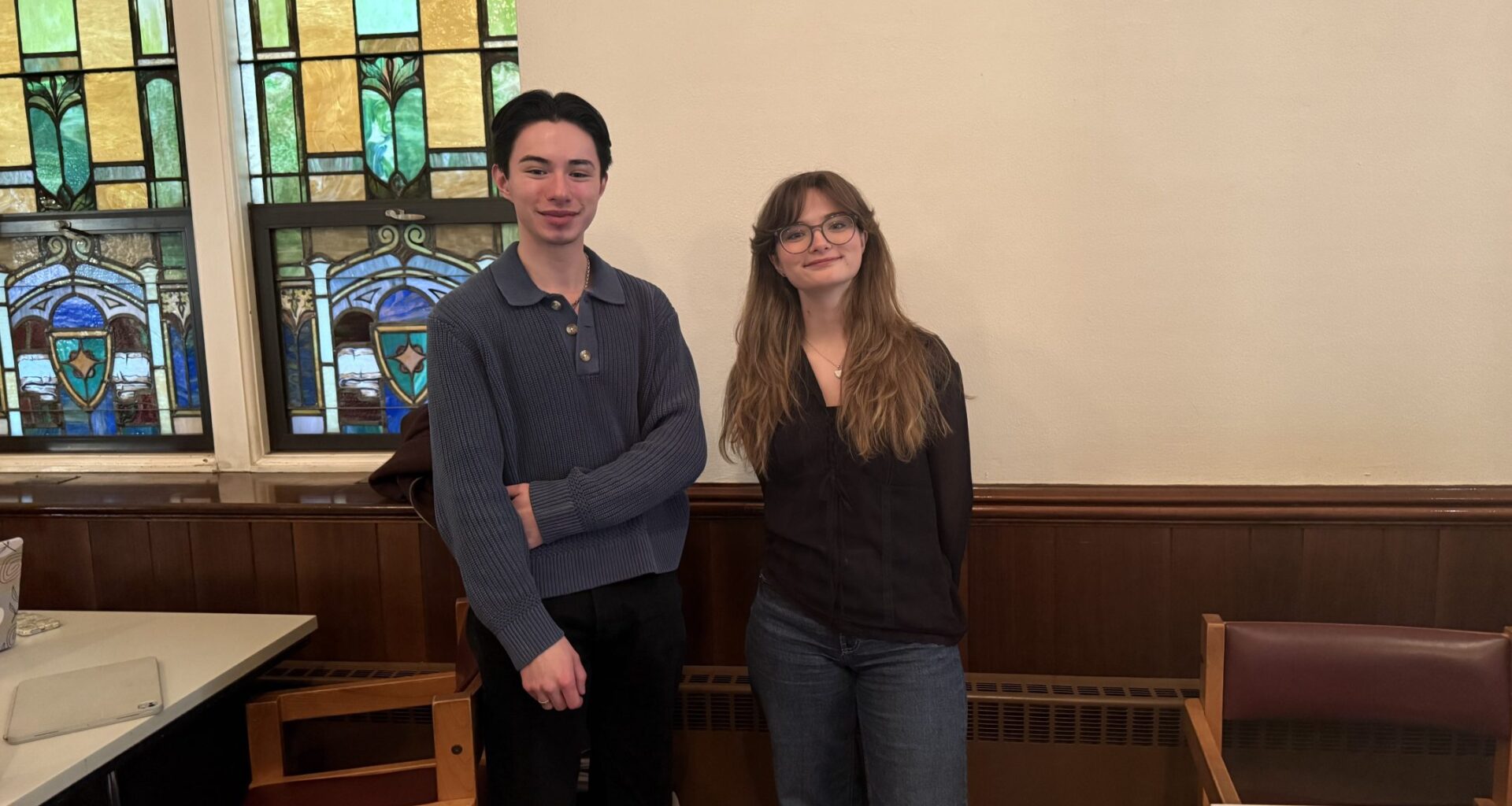
On Tuesday afternoon, a discussion on policy accountability brought together students and speakers to examine how policies that hold police accountable are created.
The event, held in Packard Laboratory, was organized by Lehigh College Democrats and Students for Progressive Action and Community. It was part of a broader effort to increase student engagement on policy issues and expand conversations beyond traditional forms of political participation.
The discussion featured Paula Sen, assistant defender and co-lead of the Police Accountability Unit at the Defender Association of Philadelphia, and Becky Mer, a policy analyst in the unit. Both speakers outlined how their work identifies patterns of misconduct and drives systemic change through litigation and policy reform.
The Policy Accountability Unit, founded in 2016, works within the Defender Association to track police behavior, analyze data and litigate cases involving misconduct. The unit examines broader trends in policing and their effects on defendants throughout the legal system.
Much of the conversation centered on how accountability is pursued through a combination of legal strategy and long-term policy work. Mer said data collection and casework allow the unit’s attorneys to identify repeated issues and present those findings in court.
“We will track police, gather data, analyze data and then litigate cases in court for defender clients in order to try to affect some sort of system-wide change,” Sen said.
That process, she said, is intended to address isolated incidents within the system. By identifying patterns across cases, the unit works to challenge misconduct in a way that can help individual defendants and lead to systemic change.
Mer expanded on this approach by emphasizing the importance of examining the systems in which officers operate. Her work focuses on analyzing trends across cases and designing policies aimed at addressing the system.
“I think in our team, we, again, think about that systemic lens of things,” Mer said. “It’s not just the acts of one police officer. What system is the police officer operating in? How does that impact our clients?”
One example discussed during the presentation was the “Driving Equality” law in Philadelphia, which limits traffic stops for certain low-level violations. The policy was developed after the unit identified racial disparities in traffic stops and used that data to advocate for reform.
While the law reduced the number of stops overall, Sen and Mer said disparities have persisted. The example served as a case study in how policy change can address some issues while leaving others unresolved.
Sen and Mer also pointed to the role of collaboration in advancing these efforts, and said policy changes require coordination between legal teams, advocacy groups and lawmakers. The work of the unit, they said, involves courtroom litigation that can shape how accountability is enforced within police departments
Andreas Marangos, ‘26, said Lehigh College Democrats have been trying to host events beyond traditional advocacy.
Throughout the event, students engaged with the topic by asking questions and reflecting on how the issues discussed relate to their own views on policing.
Rory Butler, ‘28, said the presentation reinforced the idea that police accountability is an ongoing challenge.
“You want to believe the police officers are always doing their best, but, unfortunately, police officers are just like the rest of us, and they make mistakes all the time,” Butler said. “We know that police misinformation and malfeasance are going on every day, and it needs to be held accountable.”
Other students described the discussion as an opportunity to better understand how accountability operates within the system.
Joshua Haas, ‘28, said the discussion shifted how he thinks about accountability within government systems.
“It kind of made me look at it from more of an internal perspective rather than my external point of view I’ve already had,” Haas said. “It deepened my interest in how police accountability works within government systems.”
He added that while local efforts such as the Police Accountability Unit play an important role, broader support is necessary to expand their impact. Haas said accountability efforts would benefit from increased funding and attention at the state and federal levels.
The event also included a Q&A portion, where students raised concerns about transparency, enforcement and the effectiveness of current accountability mechanisms.
To conclude the hourlong discussion, students were encouraged to examine how policy accountability works in practice.