
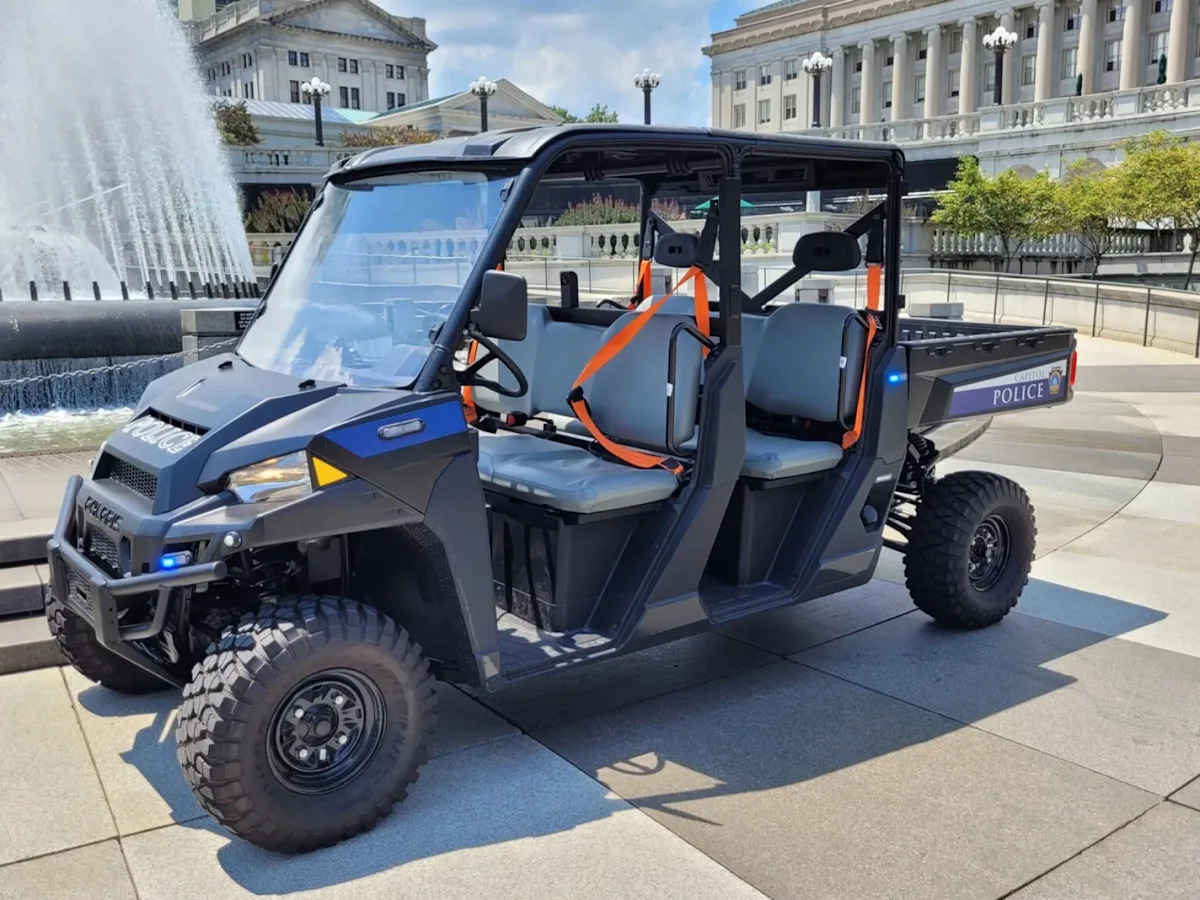
Pennsylvania’s bravest are out here hauling 275-pound injured hunters through mountain forests on foot, and when they finally buy a perfectly good off-road rescue vehicle to handle exactly that kind of chaos, the law says they can only drive it on a public road for two miles. Two. Miles.
Nick Campbell, chief of the Blain Volunteer Fire Company in Perry County, knows this frustration all too well. His department covers 130 square miles of rugged terrain, including chunks of the Tuscarora State Forest, and recently acquired a UTV (that’s a Utility Task Vehicle, for anyone who spends more time in a sedan than in the woods). The thing can crawl through dense forest, haul patients in a Stokes basket, carry water to fight brush fires, and reportedly will not even crack five miles per hour unless everyone is buckled up, which frankly is better safety compliance than most people achieve on the 405 freeway.
And yet, under current Pennsylvania law, the moment Campbell’s crew needs to cross a public highway to get to an emergency, they are either capped at that two-mile window with lights and sirens blazing, or they have to hook up a trailer, load up the UTV, strap it down, drive out, unload it, and THEN respond. Campbell estimates that process burns 10 to 15 minutes of response time. In an emergency, that is not a minor inconvenience. That is the difference between a good outcome and a bad one.
Pennsylvania Lawmakers Are Listening, But the Finish Line Is Still Fuzzy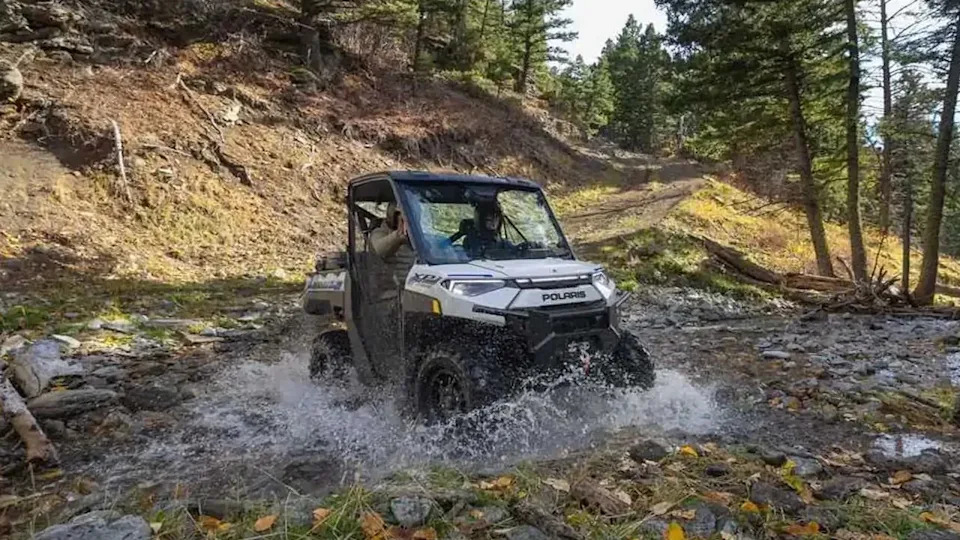
Image Credit: Polaris.
The state House Transportation Committee held a hearing this week on two bills, House Bill 297 and House Bill 2233, both of which would extend that two-mile road limit for emergency responders. Progress! Except, according to Captain Lance Carlen of the Central Bucks Regional Police Department, neither bill goes far enough.
His argument is pretty straightforward: police, fire, and EMS agencies should be able to use UTVs on public roads for ANY official duty, not just when the sirens are already screaming. Think crowd control at a festival, or clearing a snow-clogged path to a home so an ambulance can even get close. Right now, the law treats these vehicles like they are livestock, not lifesaving tools.
There is also the insurance angle. Pennsylvania currently has no mechanism to license off-road vehicles for road use, which means the moment a volunteer firefighter rolls beyond the legal limit, the department is operating in a liability no-man’s-land. Campbell put it plainly: if something goes wrong out there, they are not covered. That is a rough position to put people in who are already volunteering their time to carry 275-pound strangers through the mountains.
One more wrinkle worth mentioning: Campbell’s department has a training course for their UTV, but the driver’s license requirement means his Amish volunteers cannot participate. That is a level of regulatory irony that practically writes itself.
The committee did not vote on anything Tuesday, but Rep. Ed Neilson signaled the conversation is far from over. For Campbell and the volunteers of Blain, that is encouraging, though probably not as encouraging as it would be if the law just let them drive their $35,000 rescue vehicle to an emergency without a 15-minute pit stop first.