
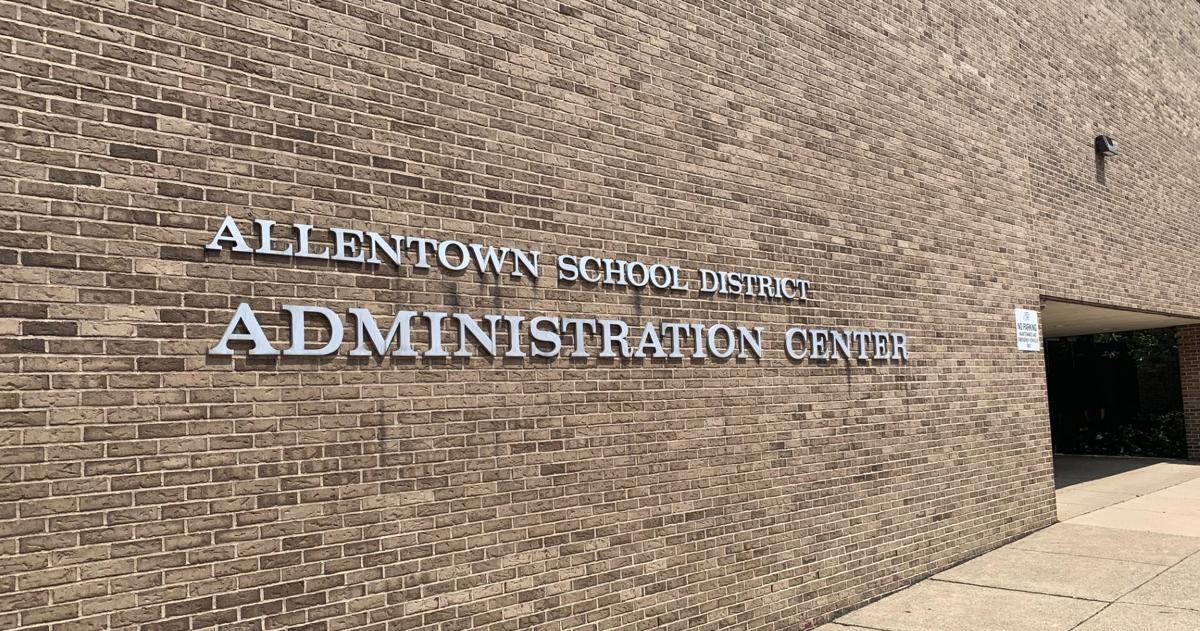
ALLENTOWN, Pa. – The Allentown School District Board of Directors heard an update Thursday on district spending, budget priorities and long-term facility needs.
PFM Financial Advisors presented information on the district’s $511.6 million preliminary 2026-27 budget, along with projections for capital improvements and potential tax scenarios.
Interim Chief Financial Officer Jeffrey Cuff said the district is financially stable in the short term but faces facility challenges.
“We’re in good financial shape for the next couple of years if everything stays constant; it’s the resources that we’re going to require to upgrade the facilities that we have to start planning for,” Cuff explained.
“Our district capital plan identifies significant facility needs that require careful prioritization and sustainable funding strategies,” Cuff said.
Cuff said 12 district schools are more than 100 years old.
“Our buildings are so old we don’t have an alternative, frankly,” Cuff said.
Superintendent Carol Birks said the district is “fortunate” that the buildings have been able to withstand heavy use.
“But in that regard, we’re on borrowed time,” Birks said.
“We’re at a critical juncture where we have to do something. Many of these repairs need to be done immediately,” she said.
Putting off repairs and maintenance can result in a school coming offline and also makes the district less competitive, Birks said.
“Our students deserve more than hot dogs; we need to give them lobster. They deserve the best,” she said.
Cuff said the district must remain competitive with charter schools.
“We have to compete with them, and furthermore, our students deserve it,” Cuff said.
According to PFM Advisors, the district has committed $147.7 million to projects that include the new K-8 building, Sonia Sotomayor Elementary School modular classrooms, the Family and Community Resource Center, and the Union Terrace land purchase.
They presented two potential tax scenarios for funding future capital projects.
A 2.9% annual tax increase would support about $363 million in capital funding, while a 3.9% increase would support about $485 million.
“Absent faster growth in state funding, maintaining current commitments in future years will eventually require intervention either through additional budget cuts or tax increases,” the advisors said.
Cuff also presented on projected district revenue.
Overall, the district projects that 70% of its funding will come from the state, 25% from local sources and about 5% from federal sources in 2026-27.
According to Cuff, the district is projected to see an overall 6.2% increase in total revenue in 2026-27 compared with the 2025-26 budgeted revenue.
Local revenue is projected to increase 1.8%, while state revenue is expected to increase 8.3%, to roughly $362 million in 2026-27, up from $333 million in 2025-26, Cuff said.
Federal revenue is expected to remain flat at about $23 million.
The district is also expected to receive roughly $185 million as a result of the Fair Funding Lawsuit. Allentown School District was one of six districts and others that challenged Pennsylvania’s public school funding system as unconstitutional; the court agreed, ruling it fails to provide adequate and equitable education.
Allentown School District was awarded an “Adequacy Gap” of roughly $185 million, of which the district has received 22% and is scheduled to receive 33% in 2026-27.
Cuff said the Adequacy funding is not guaranteed.
“Right now, it’s been beneficial. It’s worked; it’s helped us immensely. We have to continue to advocate for it,” Cuff said.
Major cost drivers for the district include contractual salary increases, charter school tuition payments and debt payments for future projects, Cuff said.
Charter school payments are projected to reach $111.8 million in 2026-27, up from $96.5 million projected for 2025-26, reflecting about a 15% annual increase, Cuff said.
Districts must pay tuition for each resident student attending a charter school, and payments are automatically deducted from state subsidies if not paid.
Districts are also required to provide free transportation for charter students within a 10-mile radius and must follow the charter school’s calendar and bell schedule.
“These requirements can increase logistical complexity and transportation costs,” Cuff said.
Charter schools also receive a flat special education tuition rate based on the district’s average special education spending per student rather than the actual cost of services provided, which can create cost disparities when services are less expensive.
Overall, Cuff said charter school payments place pressure on district programs, staffing and resources.
Resource survey
ASD officials also released the results of the quarterly resource survey provided to members of the learning community, where they can report any classroom needs that present barriers to learning.
According to Jennifer Ramos, deputy superintendent/chief of schools, the survey was sent to 1,200 professional employees, of which 65% responded.
According to Ramos, nearly 100,000 pencils have already been delivered, with 7,000 boxes of tissues and 1,200 sanitizer wipes distributed following the survey.
An order for 4,000 headphones — critical for state testing — is also in the process of being delivered. Staff also asked for furniture, Ramos said.
Bullying, cyberbullying policy
In other business, the school board held a first reading of a bullying and cyberbullying policy.
The district is considering updates to its policy that prohibit bullying by district students both on school grounds and, in some cases, outside school when it disrupts the learning environment.
The policy defines bullying as intentional electronic, written, verbal or physical acts that are severe, persistent or pervasive enough to interfere with a student’s education, create a threatening environment or disrupt school operations.
Students are encouraged to report incidents to school administrators, who must investigate complaints and take corrective action when allegations are substantiated. Consequences may range from counseling and loss of privileges to suspension, expulsion or referral to law enforcement.