
Three things became crystal clear during the 2025 development year: The colossal warehouse boom is over, the era of the hyperscale data center has arrived, and the Lehigh Valley’s development market is strong and diversifying.
That’s the short explanation of a very complex development market that is changing rapidly.
In 2025, while many regions across the nation saw a development slowdown, the Lehigh Valley Planning Commission reviewed nearly 1,000 development-related plans between Lehigh and Northampton counties. Some clear trends emerged and can be found in our recently released 2025 Annual Report at lvpc.org.
Housing proposals have dipped nationwide, largely due to inflation and interest rates. While these are factors here, new residential developments continue at a rapid clip. Nearly 5,900 new housing units were proposed last year, the third-most in nearly two decades. That’s good news as we try to dig ourselves out of a 9,000-unit housing shortage. With lack of residential inventory, especially homeownership products, costs are being driven-up and making it too expensive for many to build a future in the Lehigh Valley.
For only the third time in that period, twins and townhomes outnumbered single-family homes, and for the eighth consecutive year, apartments — nearly 3,500 of them — are easily the most proposed housing type. After decades in which the single-family home dominated this region’s proposals, today’s residential landscape is more diverse, and it’s clear that developers are looking at different types of housing and even smaller homes, providing more options for everyone.
If all of these units are developed, it will go a long way to easing our shortage, but it generally takes 2-5 years to get projects through the approval, engineering and construction phases, and with the region projected to add roughly 4,500 new residents a year, we know reducing this shortage is going to be a decade-long battle.
It’s why we’ll soon release our Lehigh Valley Housing Supply and Attainability Strategy, along with our partners Lehigh County and the Urban Land Institute. It provides a menu of achievable ways to increase housing supply at appropriate income levels and in locations that support the needs of everyone.
The nonresidential side is changing even faster. We reviewed 10.8 million square feet of space, and just as had been the case the past seven years, industrial development dominated the development landscape. However, after a decade marked by million-square-foot industrial mega-buildings, we not only saw fewer warehouse proposals, but the ones we reviewed were typically in the 100,000- to 300,000-square-foot range. In the past decade, warehouses made up more than 90% of all industrial development, but last year it covered barely more than half. With Valleywide warehouse vacancies creeping above 10% in the fourth quarter of last year, the days of building new giant warehouses is done.
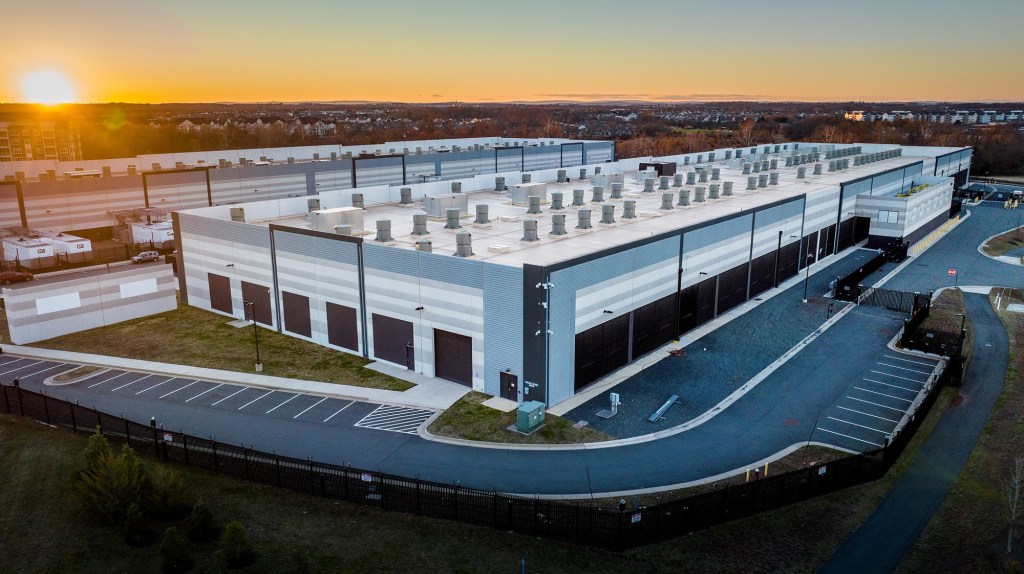
But the end of one era is the beginning of the next and the hyperscale data center has taken the mega-warehouse’s place. These are the facilities that process data every time you search the web, use your car’s navigation, send a photo or stream a movie. Like warehouses that host products from your favorite brands, hyperscale data centers keep your Netflix stream from buffering forever and forever.
Two were proposed in recent months, totaling 7.3 million square feet, and several others are in the works. These complexes are even bigger, but unlike the two dozen mega-industrial complexes we saw built since 2015, the multi-billion-dollar investment needed to build these hyperscale data centers means we’ll see a handful built soon but, as artificial intelligence takes a great hold on our day-to-day lives (and it will), they will become more and more commonplace.
Watch closely as each hyperscale data center is proposed because we are already seeing that most are moving through the regulatory review process on “spec” or speculation. This means that landowners, especially industrial property owners, are proposing million-plus-square-foot of hyperscale data center development, as new uses in existing industrial buildings or part of existing industrial developments. Some are being proposed for farmland, too. But spec development proposals advertise to Wall Street, real estate investment trusts and even known data center owners, like Meta and Amazon Web Services, that land and buildings are available for this type of development.
The easiest way to look at it is it’s a pre-approval process, end-users unknown. It’s the current “gold rush” all across the U.S. and even the world, because if a hyperscale data center chooses your property, the developer will make millions off the development, and many more than if it is a warehouse, or even a typical manufacturing facility.
This is exactly why the LVPC partnered with Lehigh County to update the Industrial Land Use Guide. Our first guide, with Northampton County, focused on the warehouse boom around the COVID-19 pandemic. We have elevated the issues associated with hyperscale data centers and other new and emerging industrial uses by providing training to all Lehigh Valley local governments, Greater Lehigh Valley Chamber of Commerce, American Society of Highway Engineers, American Planning Association – Pennsylvania, National Association of Regional Councils, community members and more to come. Both guides are available at lvpc.org and expect that you’ll hear more about the issues associated.
All-in-all, the goal is not to get caught flat-footed, like many communities were during the warehouse boom. At the end of the day, whatever the flavor of the boom, it will have multigenerational consequences. Not planning for change means your community and our region won’t be able to effectively manage or eliminate externalities, making us less livable and economically competitive. Balance in everything is always the goal, especially if the Pennsylvania Municipalities Planning Code prohibits local governments from outright banning specific land uses or what we call LULUs (locally undesirable land uses).
What I find just as interesting is that commercial and public/quasi-public development remains strong. Each saw more than 1.3 million square feet of space proposed last year. On the commercial side, that came in the form of banks, car washes, convenience stores, service centers and hotels. In the public/quasi-public category, it meant hospitals, medical offices, school expansions, and police and fire facilities. All of those are the markings of a strong and diverse development economy. It’s all a good indicator of why the Lehigh Valley’s gross domestic product of $57 billion is more than two states and why we’re now a net importer of workers. Nearly 5,000 more people come into the region to work each day than leave it to find work in other places.
All of this points to a simple truth: the Lehigh Valley’s growth story is strong and resilient.
If you look at 2025 overall, the days of a single development type dominating the landscape appear to be fading, even if we still face challenges from specific land use types, like hyperscale data centers. Instead, what we’re seeing is a more balanced mix of housing, industry, commercial activity and public investment. That diversity matters. Regions that rely too heavily on one sector can be vulnerable when markets shift. The Lehigh Valley, by contrast, continues to evolve.
Growth is never automatic, and it’s never effortless. It requires thoughtful planning, strong partnerships with our 62 municipalities, and a clear understanding of the data that shapes our future. Housing must become more attainable. Infrastructure must keep pace. And communities must equip themselves with the tools to guide development in ways that strengthen neighborhoods and protect quality of life.
If 2025 told us anything, it’s that the market will keep changing. Warehouse development is cooling and existing industrial developers are retooling. Data centers are on the rise. Housing types are diversifying. But the underlying story remains the same: people and businesses continue choosing the Lehigh Valley.
Next time you belly up to bar at your favorite neighborhood haunt, you can argue if it’s all for the better or not. You are among friends, so keep calm, and remember change is the only constant.
This is a contributed opinion column. Becky Bradley is executive director of the Lehigh Valley Planning Commission. She can be reached at planning@lvpc.org.