
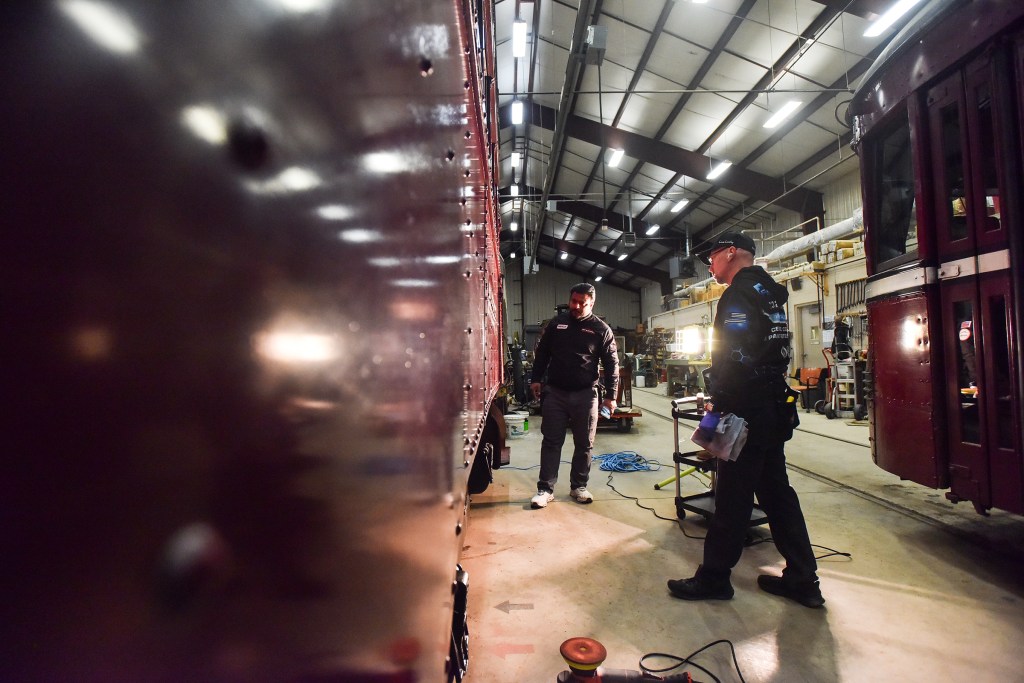
A historic trolley is receiving a top-to-bottom detailing ahead of this year’s excursion season in Scranton.
The 1926 Red Arrow Line trolley car will be ready in time for this weekend’s Easter Bunny excursions and will then continue to provide a rail experience to visitors from April to October, sponsored by the Electric City Trolley Museum Association.
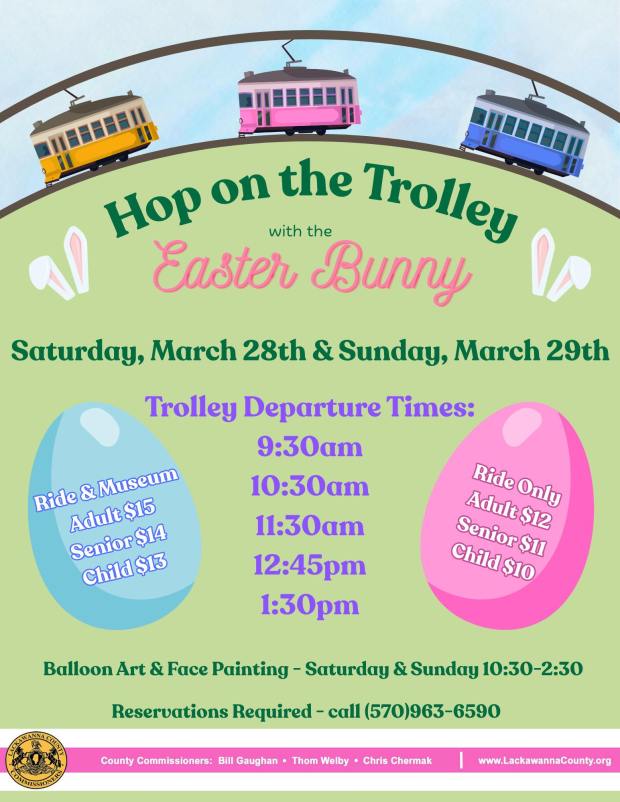 Easter Bunny Trolley Ride scheduled (SUBMITTED)
The trolley was built 100 years ago by the J.G. Brill Co. and served Philadelphia and its suburban areas for more than 40 years.
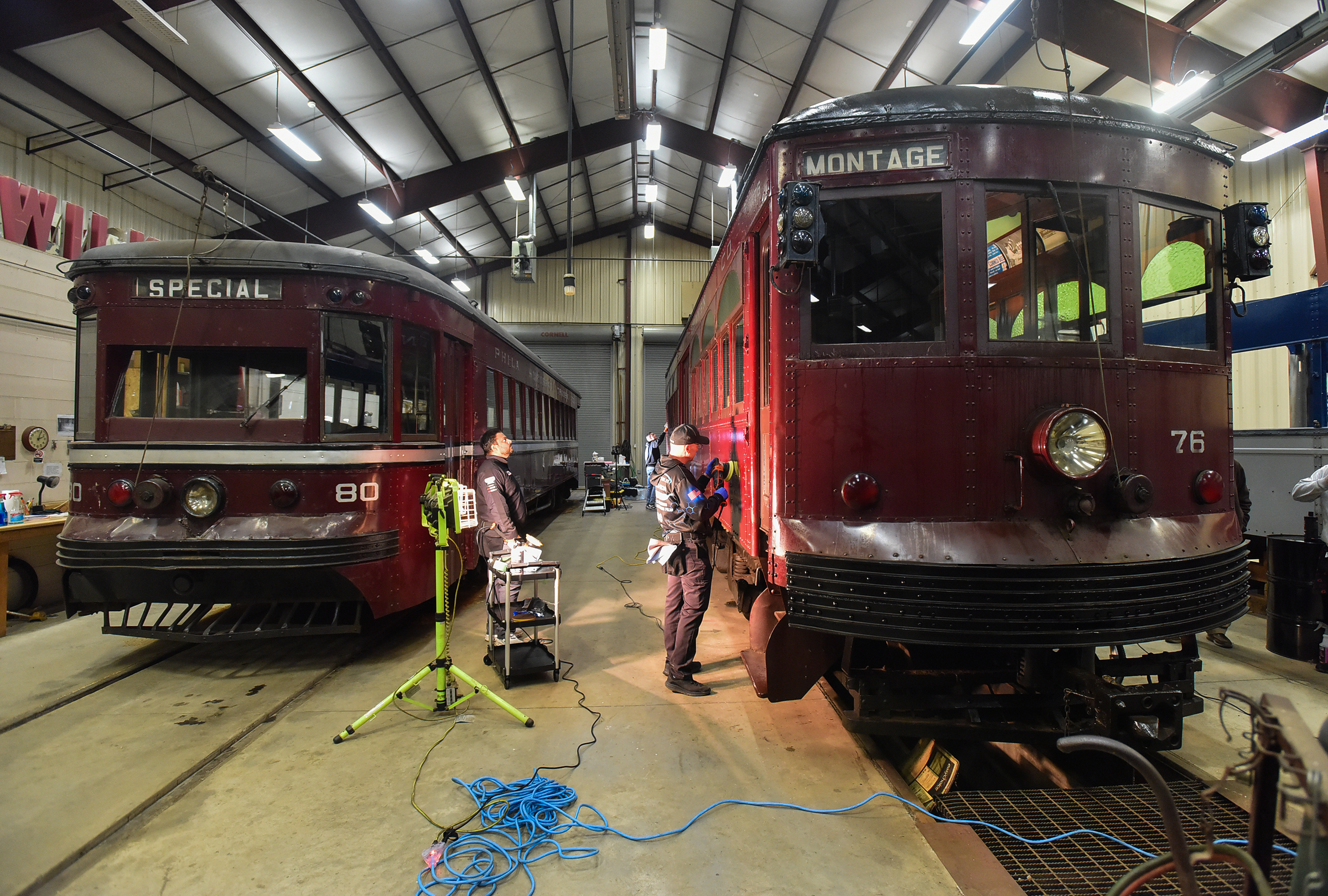
Detailers Bobby Weiner and Merlin Abraham work on restoring a 1926 Red Arrow Line trolley car in the Electric CIty Trolley station near PNC Field in Moosic Wednesday, March 25, 2026. (SEAN MCKEAG / STAFF PHOTOGRAPHER)

New Jersey-based detailers Merlin Abraham and Bobby Weiner work on a 1926 Red Arrow Line trolley car in the Electric CIty Trolley station near PNC Field in Moosic Wednesday, March 25, 2026. (SEAN MCKEAG / STAFF PHOTOGRAPHER)
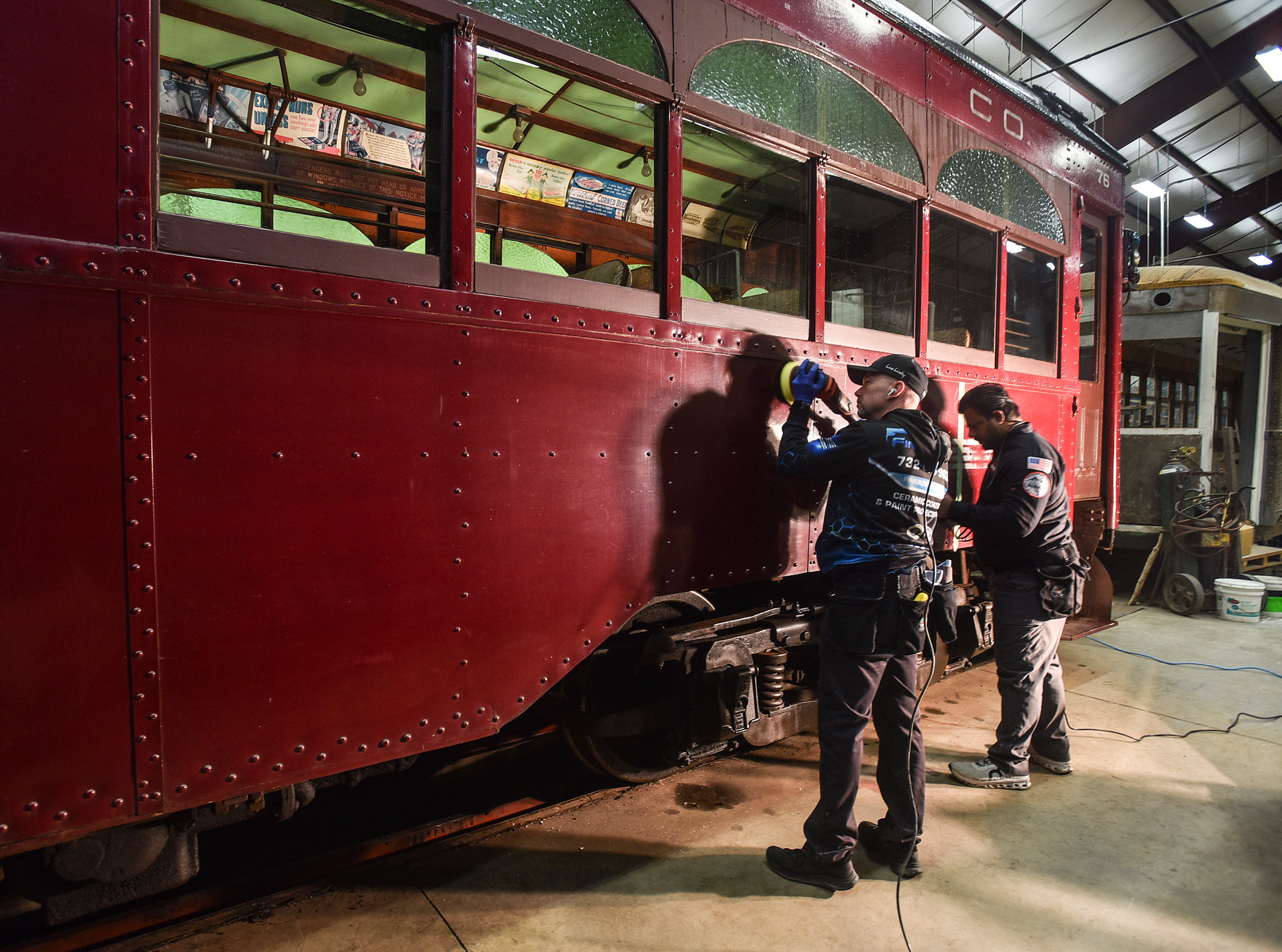
Bobby Weiner, owner of Finer Details in Long Branch, NJ, and Merlin Abraham, owner of Let’s Detail in Union Township., NJ, work on restoring a 1926 Red Arrow Line trolley car in the Electric CIty Trolley station near PNC Field in Moosic Wednesday, March 25, 2026. (SEAN MCKEAG / STAFF PHOTOGRAPHER)
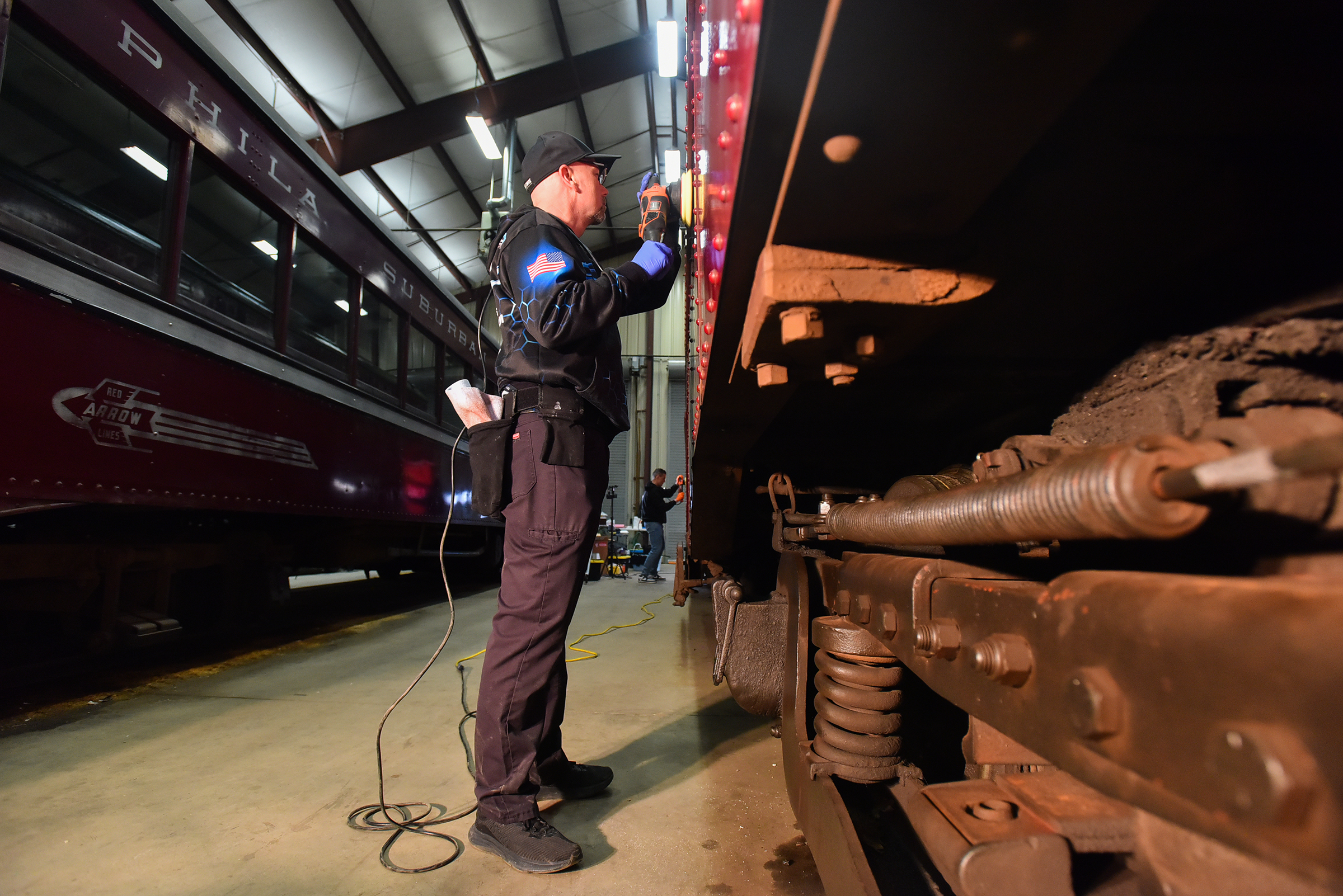
Bobby Weiner, owner of Finer Details in Long Branch, NJ, works on restoring a 1926 Red Arrow Line trolley car in the Electric CIty Trolley station near PNC Field in Moosic Wednesday, March 25, 2026. (SEAN MCKEAG / STAFF PHOTOGRAPHER)
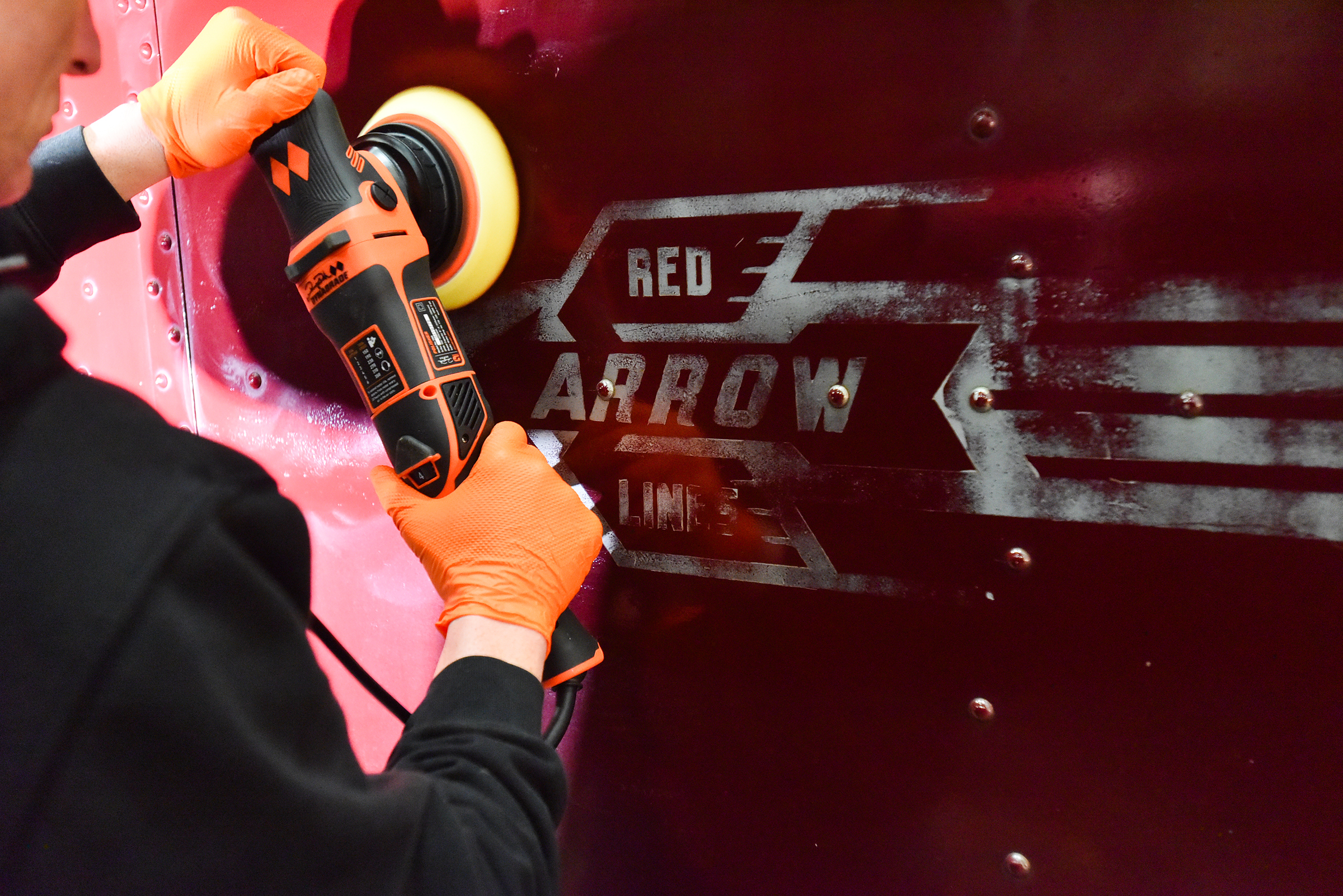
Detailer Michael Delaney, of Roseland, NJ, uses a rotary buffer to polish the 1926 Red Arrow Line trolley car in the Electric CIty Trolley station near PNC Field in Moosic Wednesday, March 25, 2026. (SEAN MCKEAG / STAFF PHOTOGRAPHER)

The interior of the 1926 Red Arrow Line trolley car in the Electric CIty Trolley station in Moosic Wednesday, March 25, 2026. (SEAN MCKEAG / STAFF PHOTOGRAPHER)
Show Caption
1 of 6
Detailers Bobby Weiner and Merlin Abraham work on restoring a 1926 Red Arrow Line trolley car in the Electric CIty Trolley station near PNC Field in Moosic Wednesday, March 25, 2026. (SEAN MCKEAG / STAFF PHOTOGRAPHER)
Thomas Oleski, of Deluxe Detail, worked with professionals from the Detailing Mafia and the International Detailing Association to help the Electric City Trolley Museum restore the car.
Together they cleaned, painted and polished the trolley and then sealed their work with ceramic coating — an update that should last from five to 10 years.
“We carefully polished the trolley, but we started first by removing the oxidation, contamination, stains, and surface imperfections, restoring depth and clarity to the finish while preserving its character,” Oleski said, “Once corrected, we sealed it with a top tier ceramic coating to lock in the shine and guard against the elements moving forward, and preserving history.”
The trolley, which holds about 60 people, is disabled accessible.
Oleski’s interest in the restoration goes well beyond the professional. His own children, ages 6 and 1, are especially looking forward to the Easter Bunny ride aboard the trolley.
The ride, he said, will be a throwback to simpler times focused on family and community.
John Sheerin, of the Electric City Trolley Museum, serves as a motorman aboard the trolley and is always ready to provide riders with inspiration and information about the trolley system.
In 1920, for example, there were 4.1 million passenger rides by trolley between Scranton and Wilkes-Barre, Sheerin said.
Those numbers dwindled as the automobile and bus system became more popular.
Electric trolley service ceased in Scranton at 10:18 p.m. on Dec. 19, 1954, when the last Scranton Transit car ran over the Green Ridge Suburban route.
The last car was packed with riders eager to be a part of history, and crowds along the route were so thick the run was described as the “slowest since the days of the two-wheel ox carts,” according to Times-Tribune archives.
The next morning, buses, already in use on other routes, picked up the slack left by the termination of trolley service.
Both Oleski and Sheerin feel bad that those days are long past. The trolley system, they said, brought people together, making travel a community experience.
Continuing impact
Sheerin points out two trolleys, including the 1926 Red Arrow Line car, which quietly travel between Scranton and Moosic, continue to have an impact on their riders and reflect their history.
This year, the trolleys will run Thursday through Sunday, at 10:30 a.m., noon, 1:30 and 3 p.m. The one-hour ride takes riders along the historic Laurel Line on one of two trolley cars.
Visitors will journey parallel to Roaring Brook, past the historic Scranton Iron Furnaces and through the Crown Avenue Tunnel. At 4,747 feet long, it’s one of the longest interurban tunnels ever built.
Inspiration and information
Sheerin is always ready to provide information and inspiration to his passengers.
For several years, he served as a trolley conductor. After the COVID-19 pandemic, he transitioned into the role of motorman or driver.
He points out details along the journey that add context and color to the story of trolley travel.
For example, a motorman’s seat is akin to a bicycle seat and designed for function, not comfort. So, after an hourlong ride, he’s likely to prefer standing.
When the conductor is ready to move, he pulls a signal rope twice, resulting in two beeps that can be heard by the motorman, who in return rings twice, acknowledging he heard the signal.
If the conductor needs the trolley to stop, he simply rings the bell once and the motorman immediately stops the trolley.
Sheerin recalled a day in September 2004 that he was chatting with a Ukrainian couple as he drove the trolley — the day after Ukrainian President Volodymyr Zelenskyy had visited the Scranton Army Ammunition Plant in Scranton. They were shocked to learn Zelenskyy had so recently visited the area. But the couple’s visit to Scranton had nothing to do with ancestry or politics: Fans of “The Office,” they were here for a tour of the city that provided the setting for their favorite television show.
But there are also times when Sheerin finds the tourist experience frustrating.
Sometimes he’ll give a look to the seats behind him and see nearly every passenger of every age looking down at their cellphones.
“It’s sad that they’re not looking out the windows, seeing and learning,” he said. “And it’s both children and adults that are doing it.”
In addition to the upgrade to the outside of the trolley car, the inside of the historic car is also original, has been maintained and upgraded over the last two decades during which the Electric City Trolley Museum Association has operated it.
Sheerin looks forward to excursion season as an opportunity for families to get out and experience a restored vintage trolley, offering a glimpse into Northeast Pennsylvania’s rich rail heritage.
More information about upcoming excursions or other opportunities at the museum can be found online at ectma.org.