
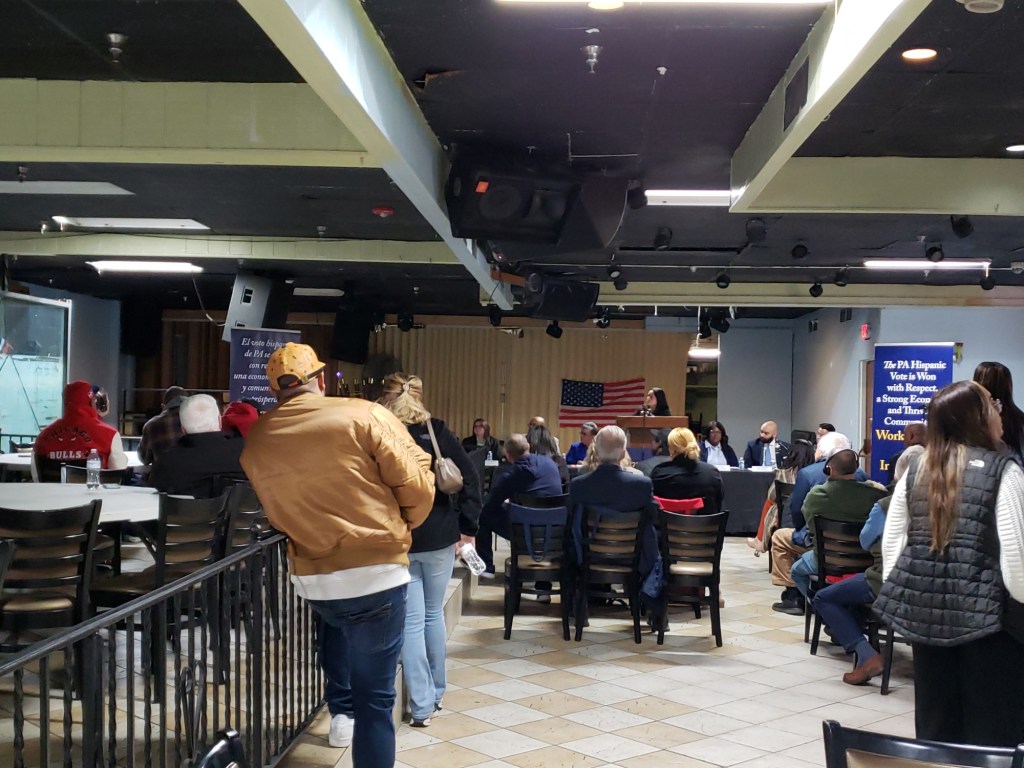
A bipartisan immigration proposal was the focus of a town hall in Reading where community leaders, elected officials and residents gathered to discuss what supporters call a long-overdue step toward stabilizing the workforce.
The town hall at Jet Set, 118 S. Ninth St., marked the first stop on a nationwide bipartisan advocacy campaign promoting the Dignity Act of 2025.
The bill, introduced in Congress last year by U.S. Reps. María Elvira Salazar, a Florida Republican, and Veronica Escobar, a Texas Democrat, would tighten border security while giving some undocumented immigrants already living in the U.S. a way to legally work and avoid deportation if they pass background checks, pay taxes and meet other requirements, according to information distributed at the meeting by U.S. Rep. Chrissy Houlahan’s office.
Houlahan, a Chester County Democrat who also represents part of Berks County, cosponsored the bill along with 19 other Democrats and 20 Republicans.
Organizers said the proposal is a practical way to address economic needs in communities like Reading and Berks County where many key industries, including agriculture, rely on immigrant workers.
“Immigrants are not just part of the story,” moderator Isamac Torres-Figueroa told the audience. “They’re essential to our economic stability and growth.”
Panelists said the bill is not a sweeping pathway to citizenship but rather a phased approach after decades of stalled immigration reform.
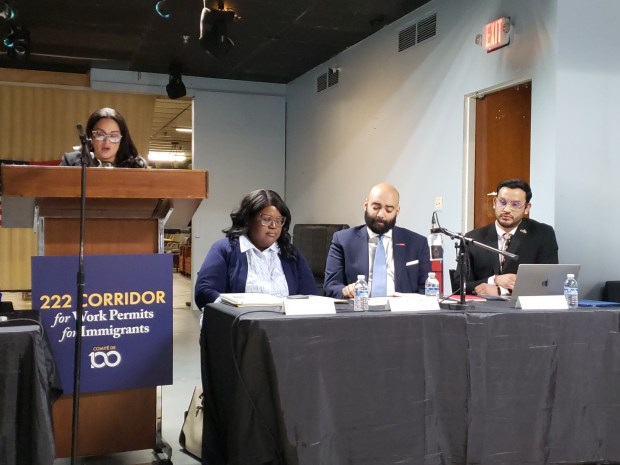 Moderator Isamac Torres-Figueroa, left; Tasha Isaac, a representative of U.S. Rep. Chrissy Houlahan’s office; City Managing Director Jack Gombach; and Enrique Sanchez of the American Business Immigration Coalition, speak Wednesday at town hall at Jet Set, 118 S. Ninth St. The event marked the first stop on a nationwide bipartisan advocacy campaign promoting the Dignity Act of 2025. (MICHELLE LYNCH – READING EAGLE)
Tasha Isaac, representing Houlahan’s office, said the legislation offers a route to legal status where few options currently exist.
“The reality is there isn’t anything in place right now,” Isaac said.
Provisions of the bill would allow certain immigrants, including so-called Dreamers — those who were brought to the U.S. as children, went to school here and live here — to obtain conditional legal status that could lead toward permanent residency over time, explained Enrique Sanchez of the American Business Immigration Coalition.
For Sanchez, who was brought to the United States as a 2-year-old and grew up here, the issue was personal.
He was able to obtain work authorization through the Deferred Action for Childhood Arrivals, or DACA, program, a 2012 policy protecting from deportation eligible undocumented young adults who came to the U.S. as children.
That document changed the trajectory of his life, he said.
“That work permit truly meant the difference of being able to continue a career and go on to higher education,” he said.
He and other panelists emphasized labor shortages and the role undocumented workers already play in sustaining businesses.
Sanchez said employers across industries are struggling to find workers, despite a sizable undocumented population already embedded in communities.
“When we have people who are already in our communities,” he said, “it is so important to provide them with the ability to legally work.”
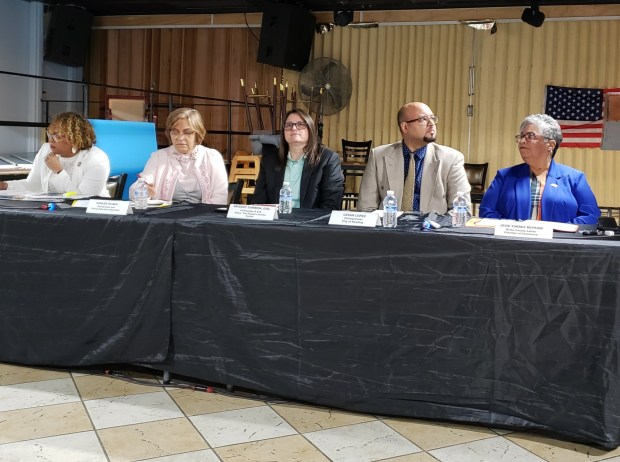 State Rep. Johanny Cepeda-Freytiz, left; business owner Sunilda Tejada; Immigration attorney Bridget Cambria, founder and executive director of ALDEA – The People’s Justice Center; business owner Cesar Lopez; and Josephine Torres-Boykins, executive director at Berks County Latino Chamber of Commerce, speak Wednesday at a town hall highlighting the Dignity Act of 2025. (MICHELLE LYNCH – READING EAGLE)
Local business owners echoed that thought.
Cesar Lopez, who is developing a senior care facility in Reading, described hiring challenges, saying the bill would help stabilize businesses and families.
Sunilda Tejada, also a local business owner, pointed to potential ripple effects, saying that without immigrant labor, particularly in agriculture, consumers could see rising food prices and supply disruptions.
The bill drew criticism from state Rep. Johanny Cepeda-Freytiz, a Democrat, who questioned whether the legislation lives up to its name.
“We all agree the system is broken,” Cepeda-Freytiz said. “But what I see is a system that says you can stay, you can work, but you have to pay thousands of dollars and even then, you may never truly belong here. That’s not dignity. That’s a transaction.”
Her concerns centered on the cost burden placed on immigrants and the absence of a clear, guaranteed path to full legal status or citizenship. The proposal could result in a tiered system, she said, where dignity is conditional on the ability to pay.
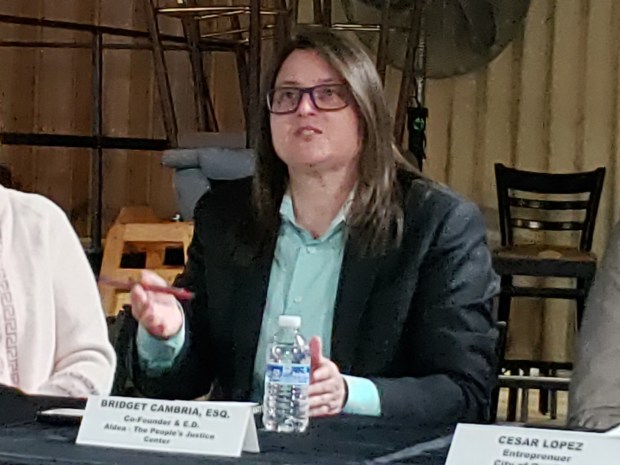 Immigration attorney Bridget Cambria, founder and executive director of ALDEA – The People’s Justice Center, speaks Wednesday at a town hall meeting focused on the Dignity Act of 2025.
(MICHELLE LYNCH – READING EAGLE)
Immigration attorney Bridget Cambria, founder and executive director of ALDEA – The People’s Justice Center, agreed the bill is not perfect but said it is still needed.
Work authorization, Cambria said, is often the first step toward stability. It allows immigrants to work legally, obtain identification and contribute more openly to the economy, although it does not guarantee protection from deportation.
“This act is in no ways perfect,” she said, “but it starts a conversation.”