
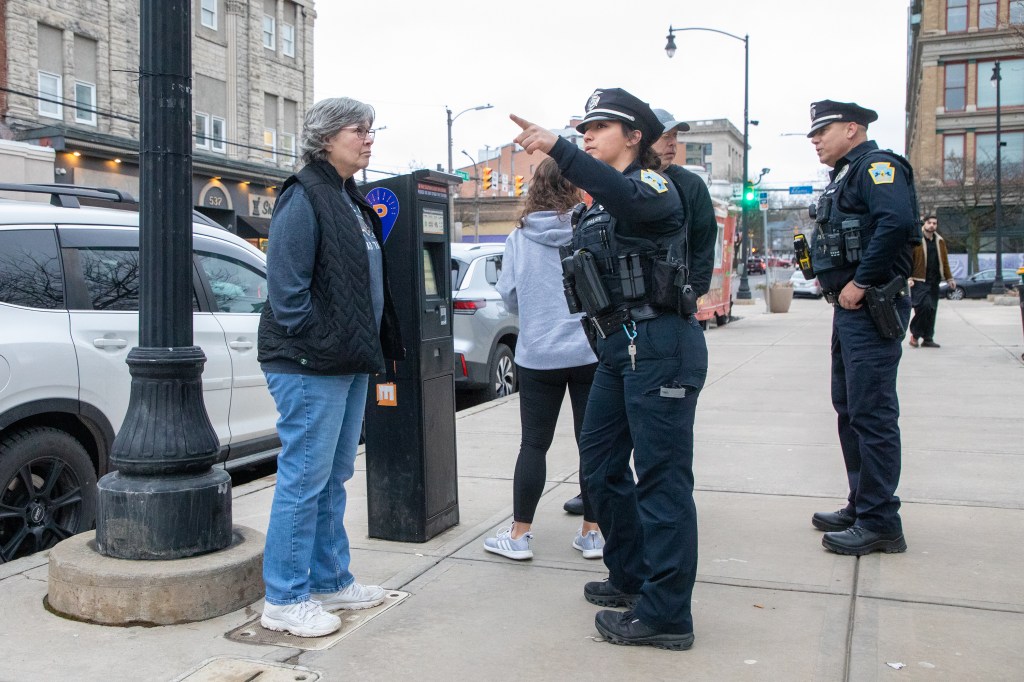
On a recent Friday evening, Scranton police officers Olivia Muchal and Kyle Kemp, patrolling the streets of downtown, came upon a friendly family in need of help.
There from York to attend a basketball tournament at the University of Scranton, they couldn’t decide where to eat. Muchal and Kemp jumped in with suggestions.
Burgers? Chef von & Mom.
Thai food? Thai Thai.
Pub fare? The Backyard Ale House.
They explained there were a variety of places both downtown and in nearby neighborhoods offering both American and ethnic foods.
Charlotte Disney, whose granddaughter attends the university, was grateful the downtown area, near the university, has a strong and supportive police presence. The two officers pointed out their very presence downtown deters crime.
And, as they were talking with others on Courthouse Square, the two were also hyper alert to what was going on around them. And when a minor road rage incident broke out at Linden Street and North Washington Avenue, they responded.
Kemp, who’s been on the force for over over 20 years, said crime in downtown has dwindled since he first patrolled there in the early 2000s.
At that time, bar brawls were more common and officers could expect to break up a fight during a downtown shift. Now those fights are more of the exception than the rule, he said.
The department is also responsive to special events and busy times in the downtown area.
For example, more officers are dispatched to the area of Courthouse Square during weekend nights.
When the community changes, the department adapts to those changes, Kemp said. For example, following the pandemic, the “new normal” is for people to wrap up their evenings out sooner, so businesses close earlier.
That means more people are heading home at about midnight. Officers respond accordingly, aware of the traffic that is likely to be heading out of town.
Because Muchal and Kemp have been on the downtown beat for several years, residents have come to know and trust them. People are comfortable greeting them and sharing any concerns with them.
Community policing results in less crime, they said.
Police: Wilkes-Barre downtown is a neighborhood
When Wilkes-Barre police lieutenant James Sheridan visits Abide coffee shop on West Market Street in the morning, he doesn’t always know what he’s going to order.
He trusts the baristas there to make recommendation and might even ask another customer for a suggestion that goes beyond simply “coffee regular.”
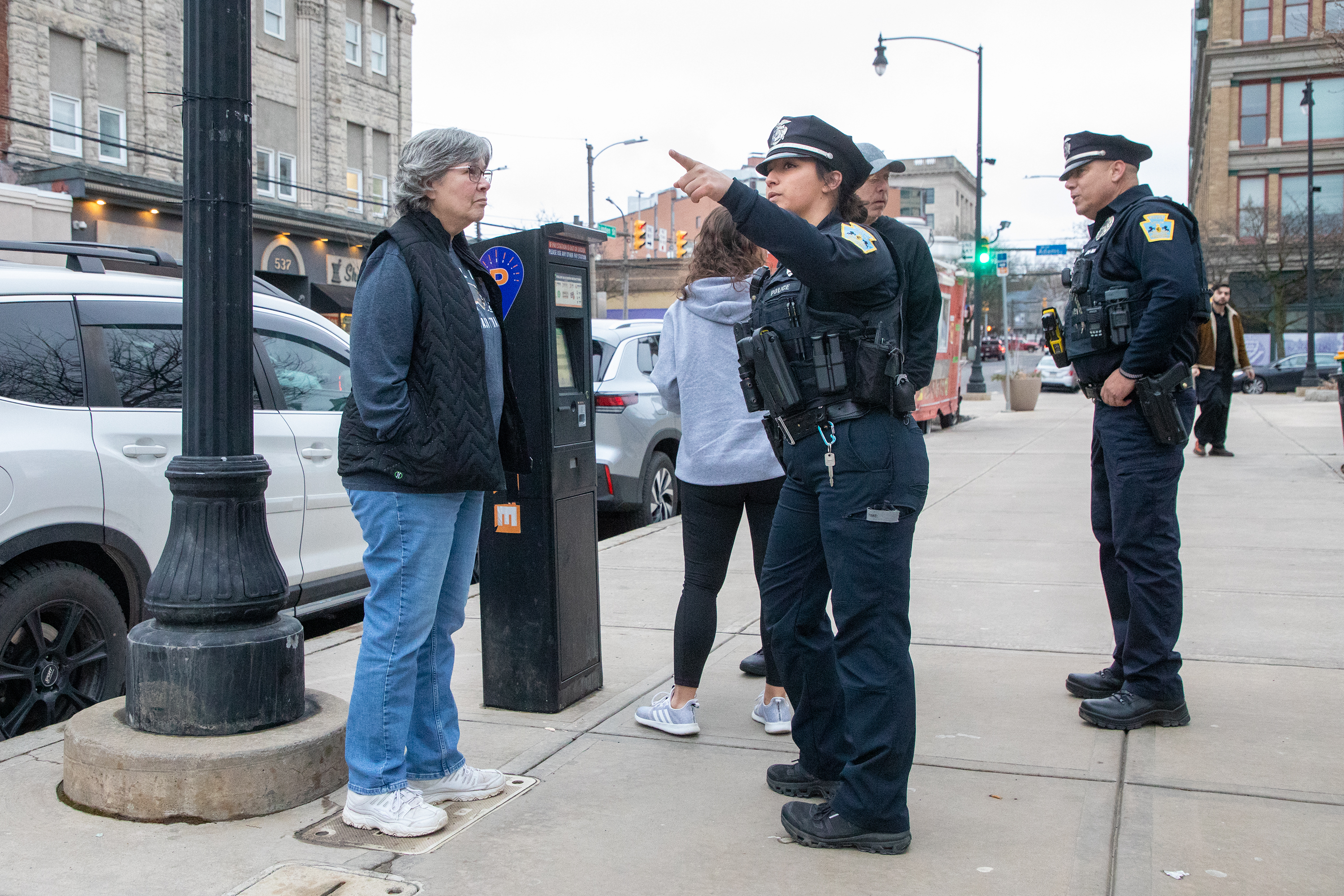
Patrol officer Olivia Muchal gives directions to Charlotte Disney in downtown Scranton on Friday, March 06, 2026. (REBECCA PARTICKA/STAFF PHOTOGRAPHER)
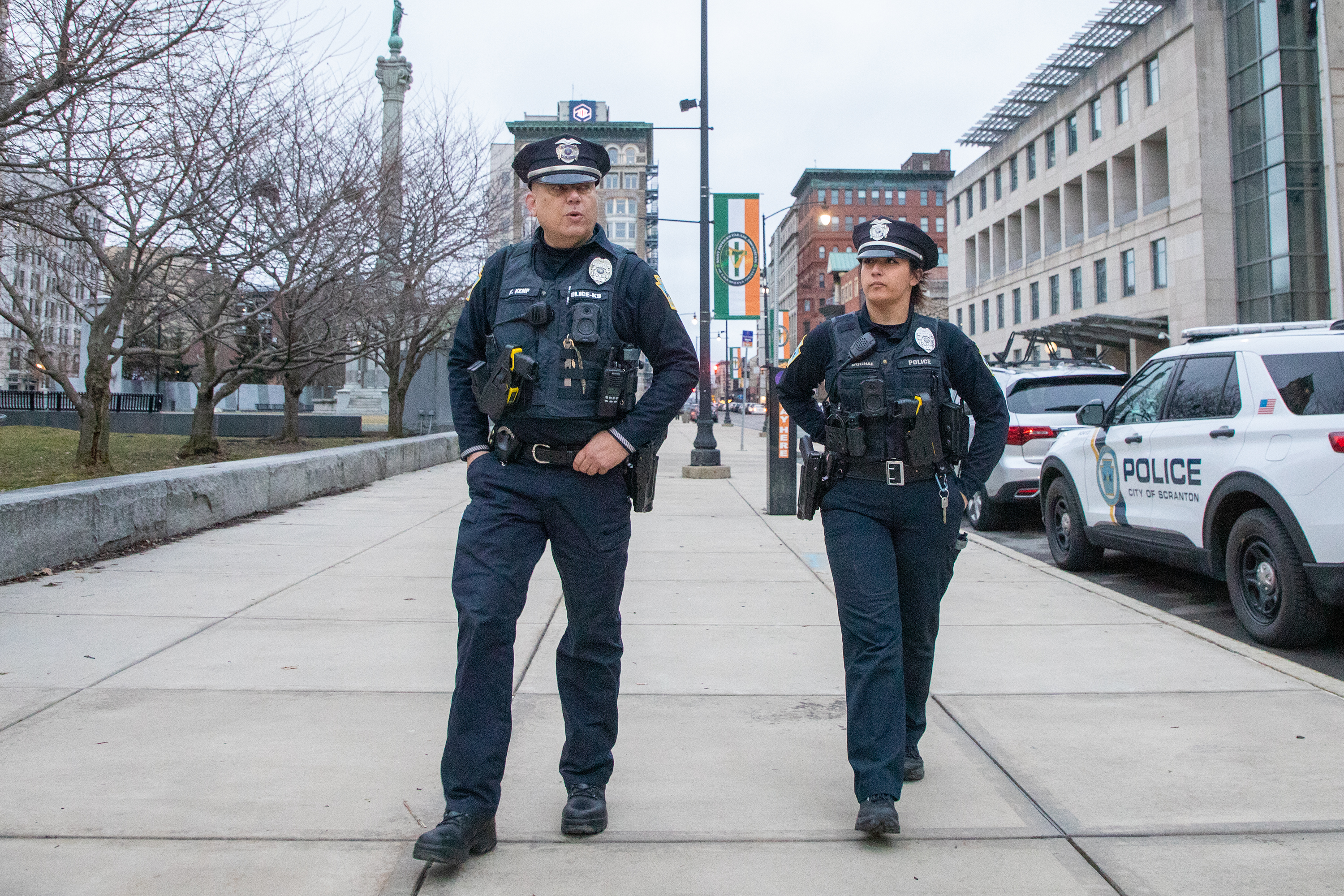
Patrol officers Kyle Kemp and Olivia Muchal walk Courthouse Square in downtown Scranton on Friday, March 06, 2026. (REBECCA PARTICKA/STAFF PHOTOGRAPHER)
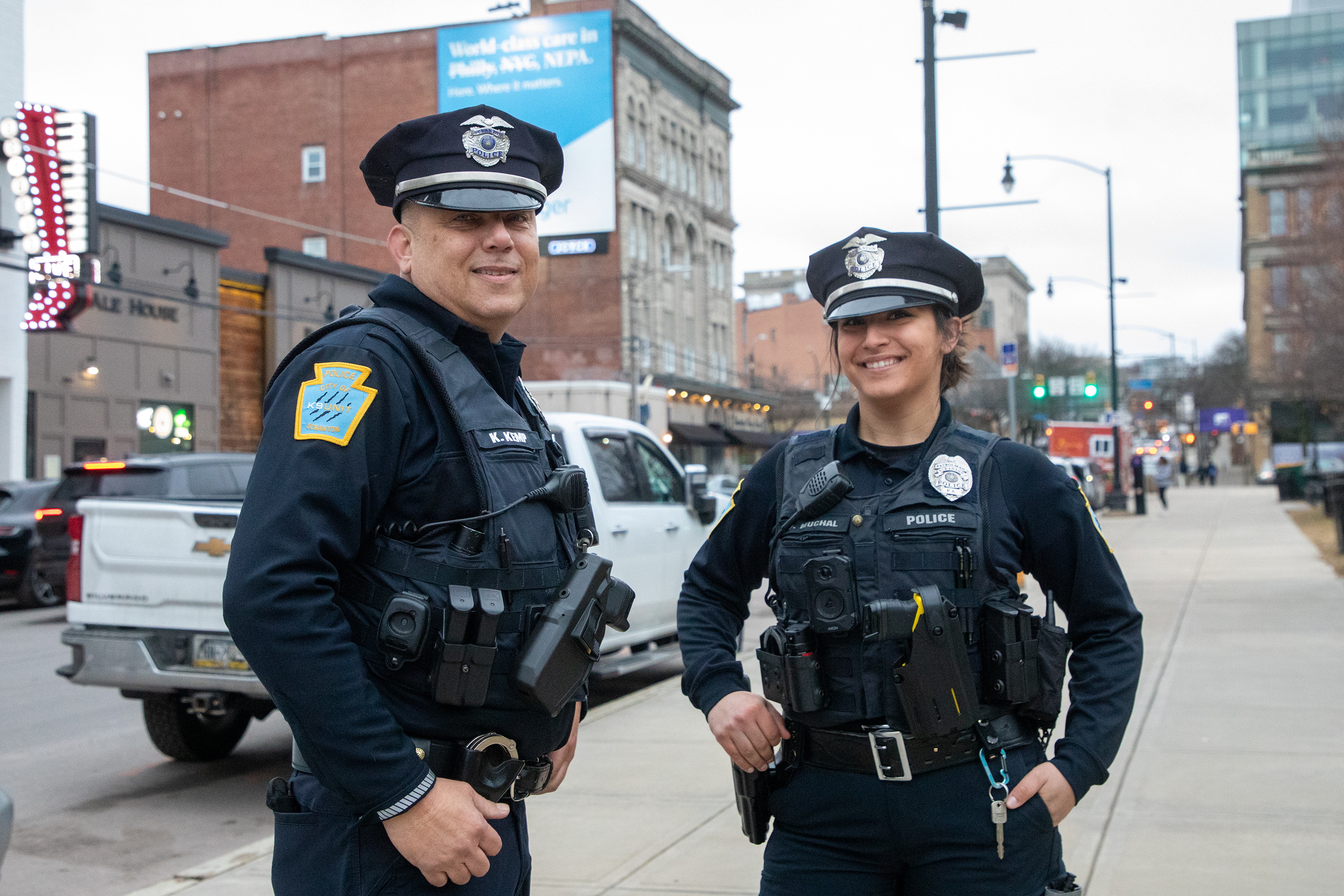
Patrol officers Kyle Kemp and Olivia Muchal in downtown Scranton on Friday, March 06, 2026. (REBECCA PARTICKA/STAFF PHOTOGRAPHER)
Show Caption
1 of 3
Patrol officer Olivia Muchal gives directions to Charlotte Disney in downtown Scranton on Friday, March 06, 2026. (REBECCA PARTICKA/STAFF PHOTOGRAPHER)
And, just as Sheridan, a community police officer, trusts people in the downtown to ensure he is on top of the latest coffee trends, they also trust him and his department for support and safety.
Not only does Sheridan enjoy the daily visits to the shop, its also part of his mission to ensure the reputation of the city conforms with reality.
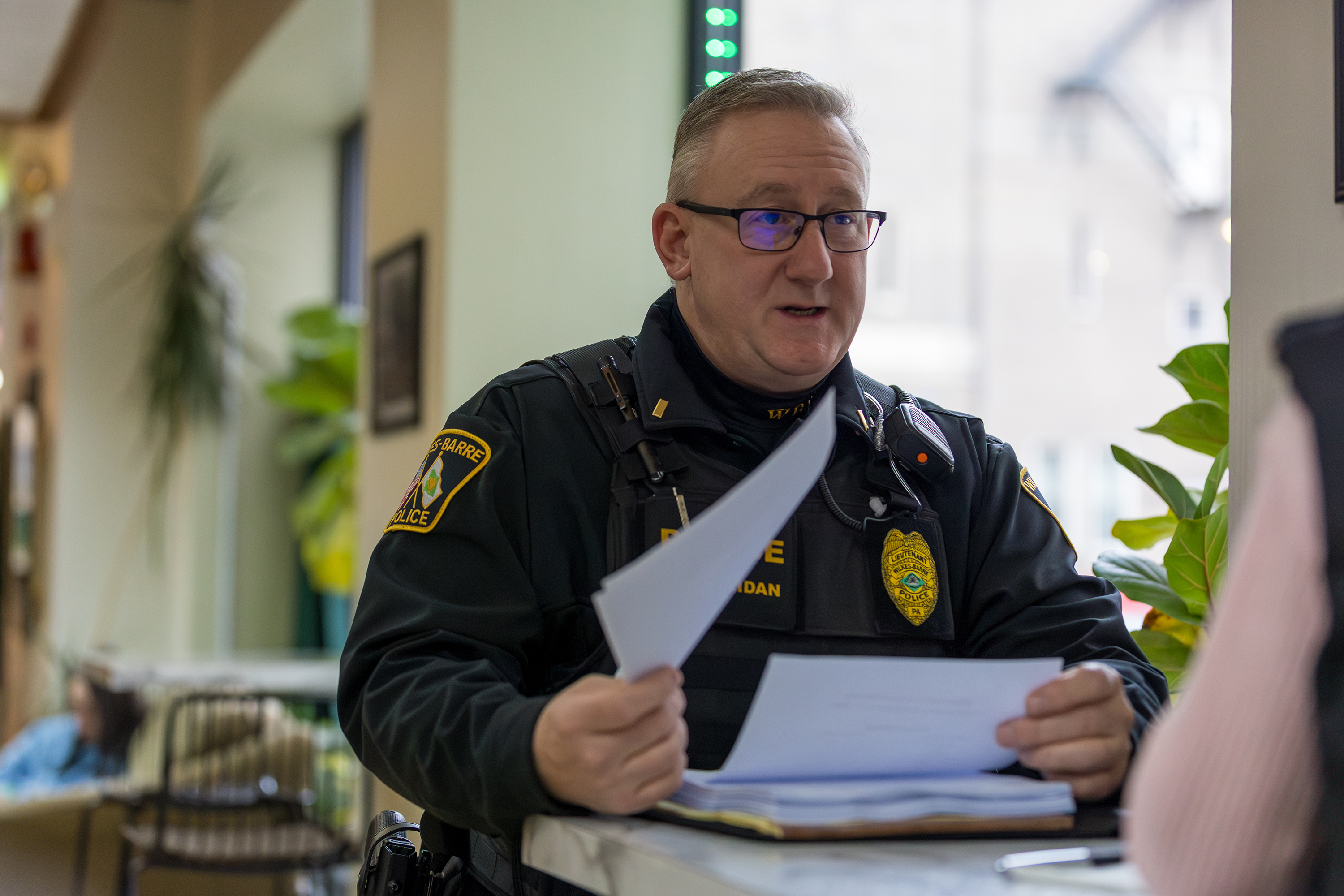
Wilkes-Barre City Police Sergeant James Sheridan attends an interview at Abide Coffeehouse in downtown Wilkes-Barre on Tuesday, March 3, 2026. (JASON ARDAN / STAFF PHOTOGRAPHER)
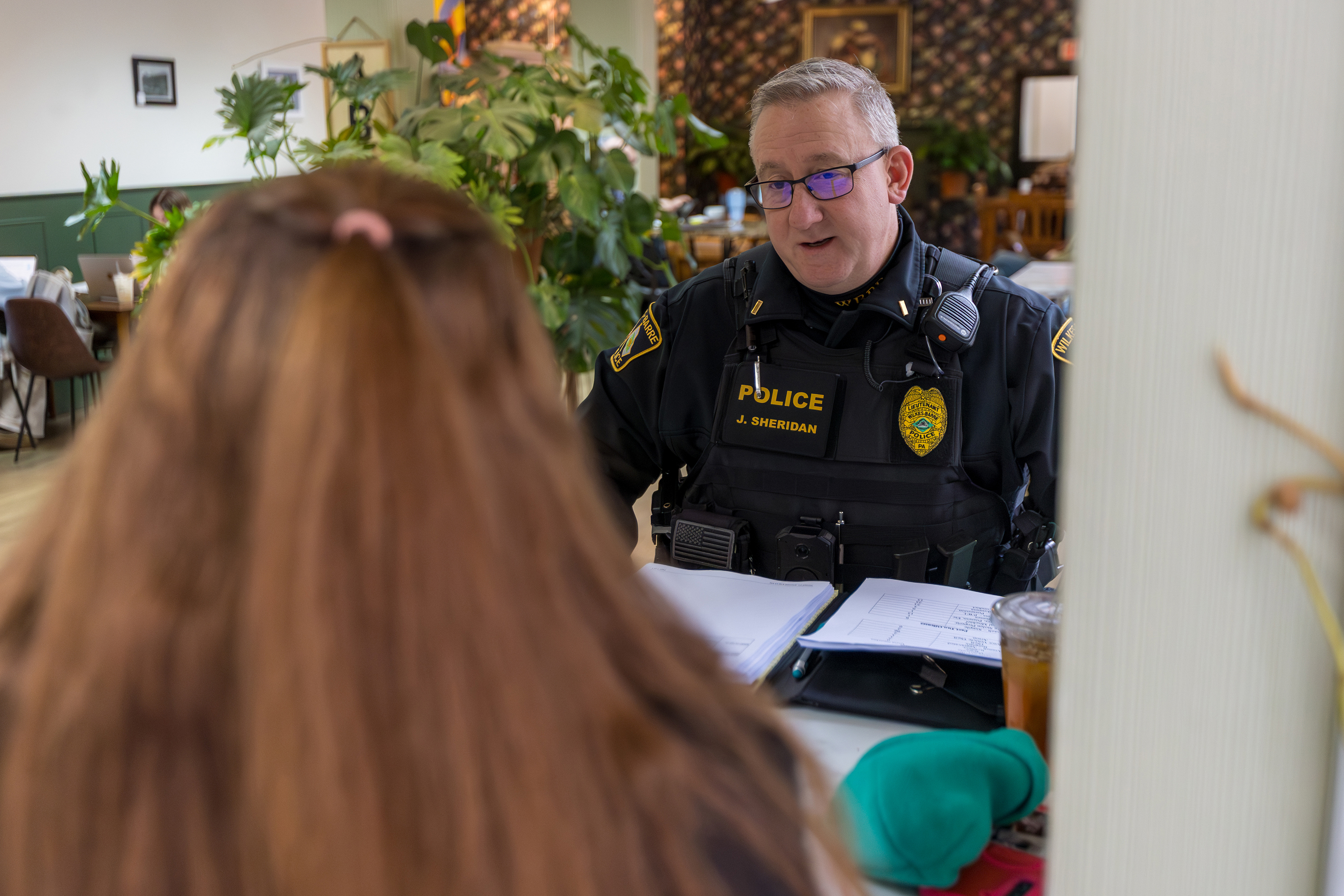
Wilkes-Barre City Police Sergeant James Sheridan attends an interview at Abide Coffeehouse in downtown Wilkes-Barre on Tuesday, March 3, 2026. (JASON ARDAN / STAFF PHOTOGRAPHER)
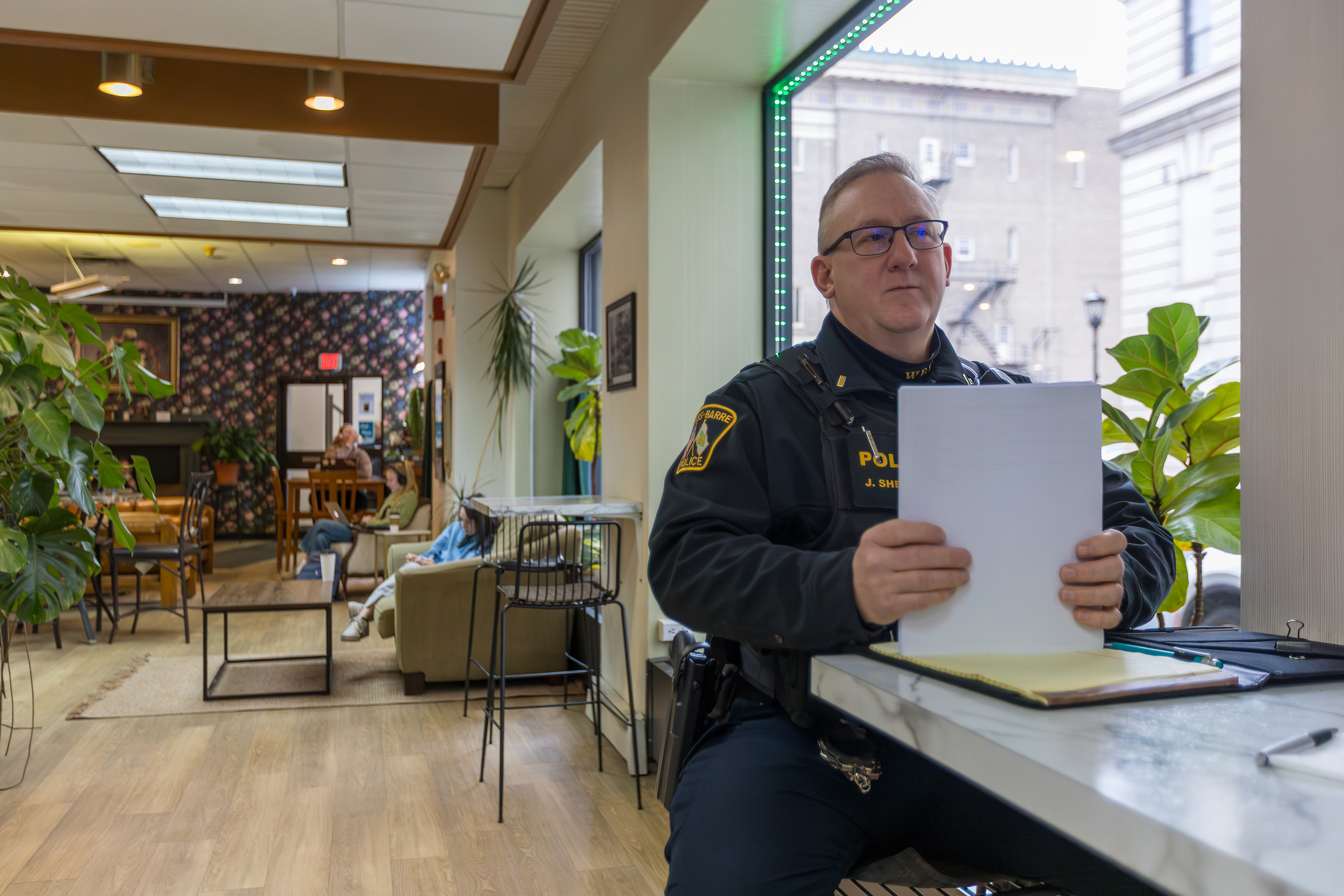
Wilkes-Barre City Police Sergeant James Sheridan attends an interview at Abide Coffeehouse in downtown Wilkes-Barre on Tuesday, March 3, 2026. (JASON ARDAN / STAFF PHOTOGRAPHER)
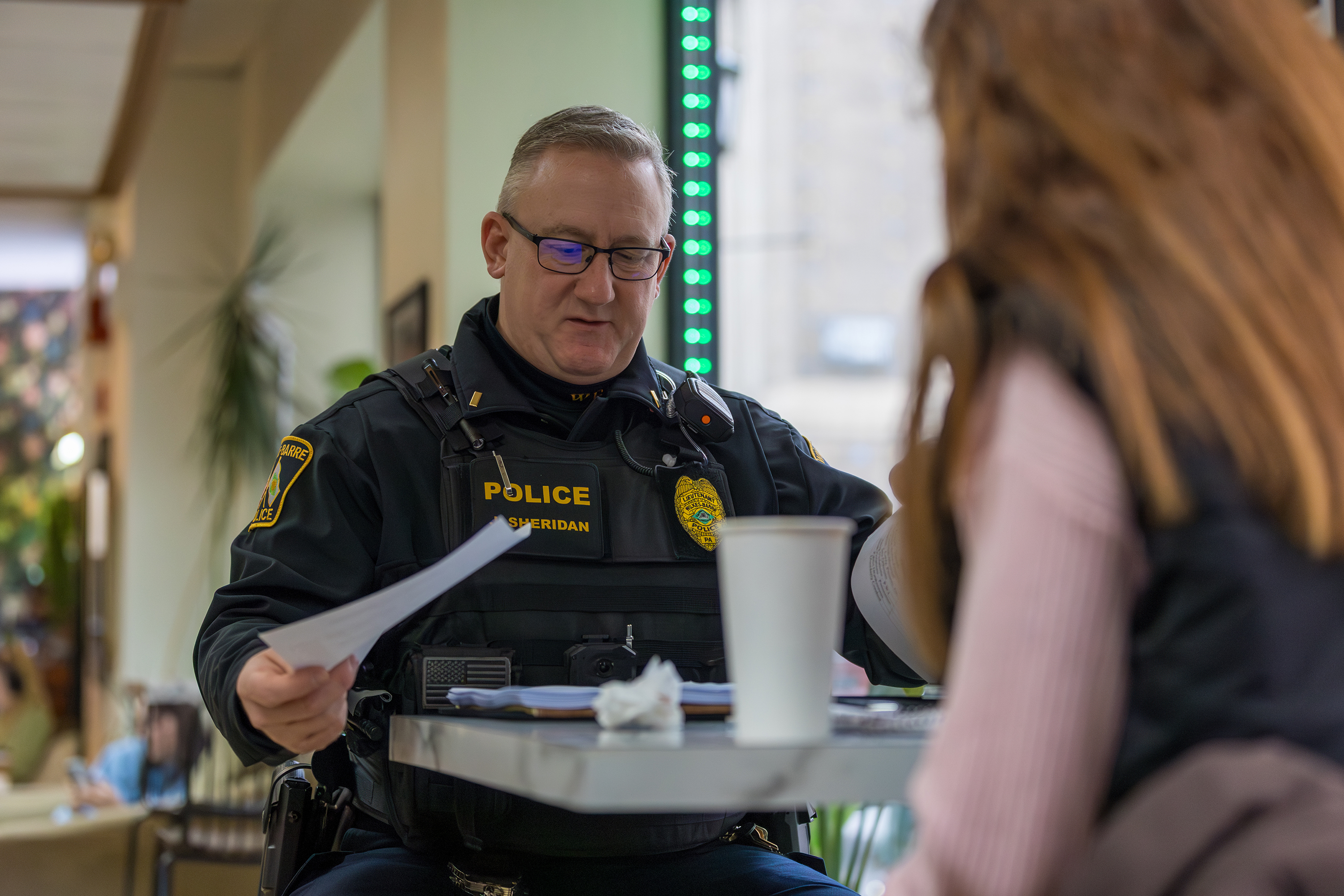
Wilkes-Barre City Police Sergeant James Sheridan attends an interview at Abide Coffeehouse in downtown Wilkes-Barre on Tuesday, March 3, 2026. (JASON ARDAN / STAFF PHOTOGRAPHER)
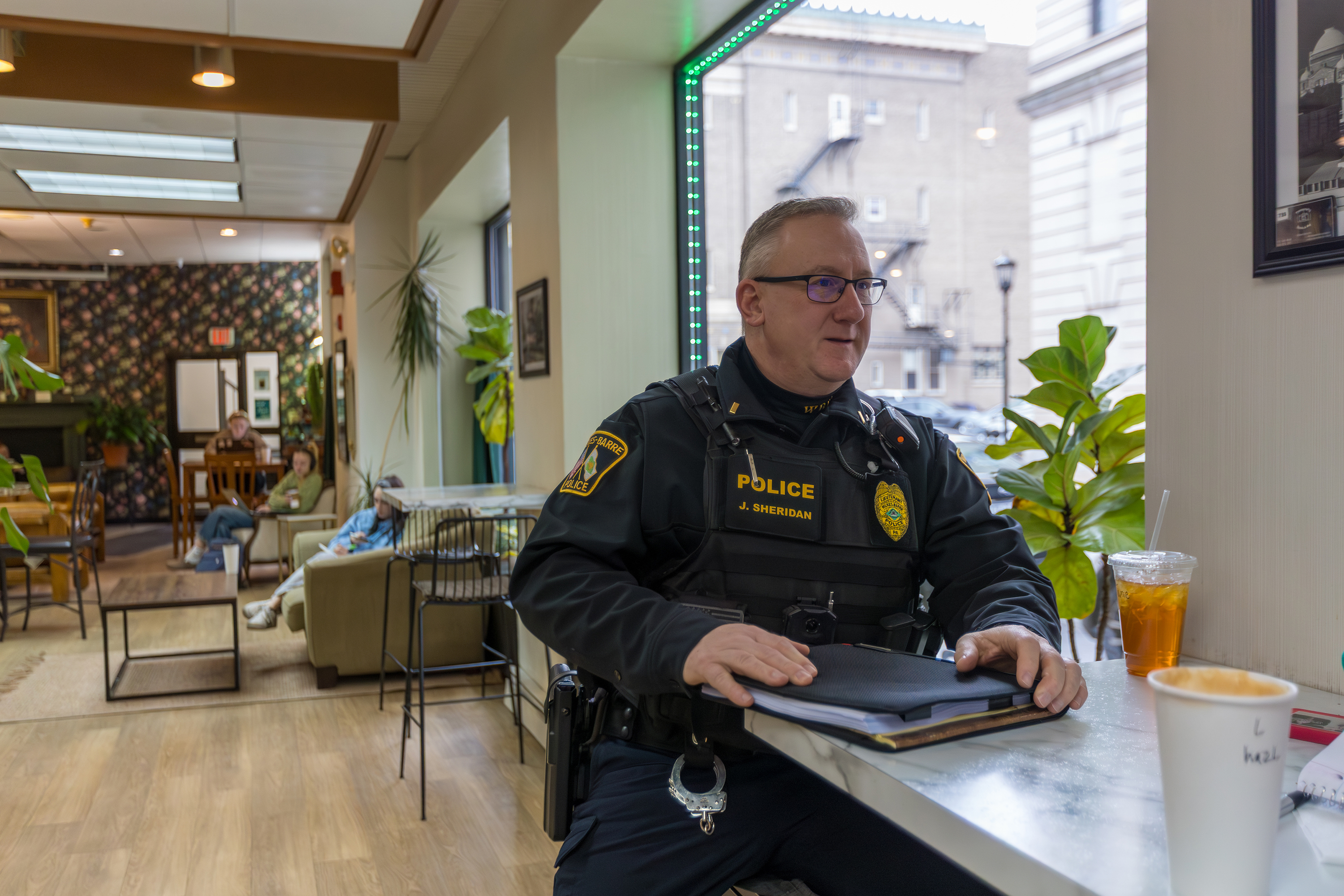
Wilkes-Barre City Police Sergeant James Sheridan attends an interview at Abide Coffeehouse in downtown Wilkes-Barre on Tuesday, March 3, 2026. (JASON ARDAN / STAFF PHOTOGRAPHER)
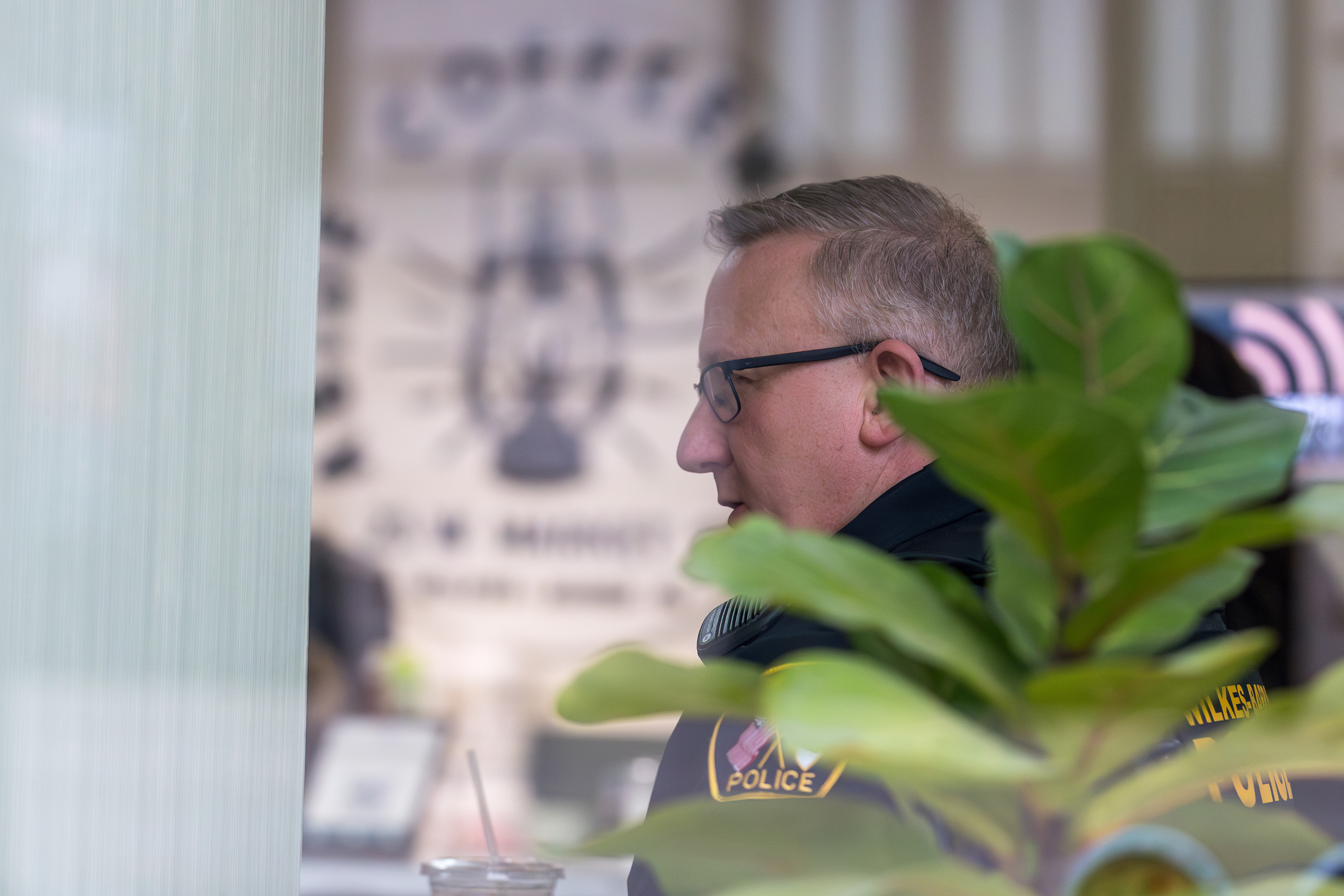
Wilkes-Barre City Police Sergeant James Sheridan attends an interview at Abide Coffeehouse in downtown Wilkes-Barre on Tuesday, March 3, 2026. (JASON ARDAN / STAFF PHOTOGRAPHER)
Show Caption
1 of 6
Wilkes-Barre City Police Sergeant James Sheridan attends an interview at Abide Coffeehouse in downtown Wilkes-Barre on Tuesday, March 3, 2026. (JASON ARDAN / STAFF PHOTOGRAPHER)
Sheridan points out that Wilkes-Barre is a city that offers everything from eateries, to shopping opportunities, to entertainment and beyond.
When it comes to crime, he said, residents and visitors certainly need to be aware of their surroundings, but they can safely spend an afternoon or evening “on the town” and be completely safe.
Officers are on hand to assist residents and visitors as they make their way through downtown area.
The bulk of crime is non-violent, including such offenses as retail theft.
Other crime is more often between individuals who know each other, rather than specific to the downtown, Sheridan said.
‘Be aware of your surroundings’
Scranton Police Chief Thomas Carroll encourages residents and visitors to be aware of their surroundings while they make their way through the downtown area to enjoy local eateries, nightspots and special events.
He points out that although the population in downtown Scranton has increased in the last few years, crime has not.
“The majority of the incidents SPD responded to were non-emergent in nature with half of the more than 14,000 incidents being generated by the police department itself,” he said, of crime in the downtown over the last three years. “These proactive policing efforts are not all criminal enforcement. These are community engagement functions to build trust and maintain community safety.”
Carroll said the department is responsive to periods of time during the day or week when downtown is especially busy on the weekend or during special events.
At those times, additional officers are dispatched.
The department also uses a mobile command center, a vehicle from which officers can oversee an event or specific area, with access to cameras and other information.
Cameras are a game changer, Carroll said.
“When you put an officer on the street, he can see one, two layers in the crowd. But a camera adds extra eyes and makes it possible to look for anomalies and behavior pattern changes in the crowd,” he said.
This summer when La Festa Italiana come back to the downtown, the department’s technology equipment will use their mobile response unit to provide oversight and incident management for the large crowd gathered on Courthouse Square.
Not only does the unit allow them to fight crime, it also increases their presence in the community, making residents feel safe and sending the message to criminal that they are not welcome.
Both Sheridan and Carroll say with an increasing numbers of apartment dwellers downtown, the area has more of a “neighborhood” feel.
Officers out on the street aren’t just responding to crime, they’re building relationships, Carroll said.
“We’re not waiting for a call. We’re not reactive. We’re proactive,” Carroll said. “We’re out meeting people, talking to businesses in the downtown. Engagement is number one, we want people to trust us.”
Carrol said the department wants people to trust its officers and know that any concerns they have will be addressed.
“That in itself opens up a dialogue, which has been very effective in reducing crime, specifically for the downtown,” he said.
Downtowns as neighborhoods
Zubeen ‘Saeed, founder of Building Blocks Learning Centers, visited Abide recently for a work meeting and stopped to chat with Sheridan.
Wilkes-Barre’s downtown is truly a neighborhood of both business owners and residents, she said.
“We’re creating our own narrative,” she said. “The city isn’t simply a collection of building and businesses. We’re a community.”
Sheridan said his department also works with such organizations as Volunteers of America, the Church on the Square and the Keystone Mission to provide assistance to the unsheltered who may find themselves spending part of their day on the square.
The great majority of unhoused people who spend time at the square aren’t panhandling or committing crime, they’re simple sitting on one of the benches there and enjoying some shade or sunshine.
The situation is the same in many cities, Sheridan said.
For example, in New York City, where people from Northeast Pennsylvania visit often, there’s a significant homeless population that doesn’t detract from the energy or safety of the city, he said.
The chance of being a victim of violent crime in downtown Wilkes-Barre is next to nothing, he said. For example, during fee concerts at Public Square for the last several years, officers made an average of less that one arrest per event, he said.
In addition, Wilkes University and King’s College are both located in Wilkes-Barre’s downtown area. Wilkes has its own police department and King’s has an Office of Campus Safety and Security.
Wilkes-Barre police are available to assist if needed, but that is rare, Sheridan said.
Instead his officers often see college students and sometimes their parents out for a bite to eat at Rodano’s or buying dorm decor at Boscov’s.
Like Wilkes-Barre, downtown Scranton is becoming a neighborhood filled with many retirees and young professionals. Police officers provide both safety and support.
“If you’re in trouble or have a concern, look for a policeman,” Sheridan said.
Officers from both cities agree that regular patrols and community interactions downtown help deter problems before they start and allow officers to connect with people who are visiting or spending time in the city.