
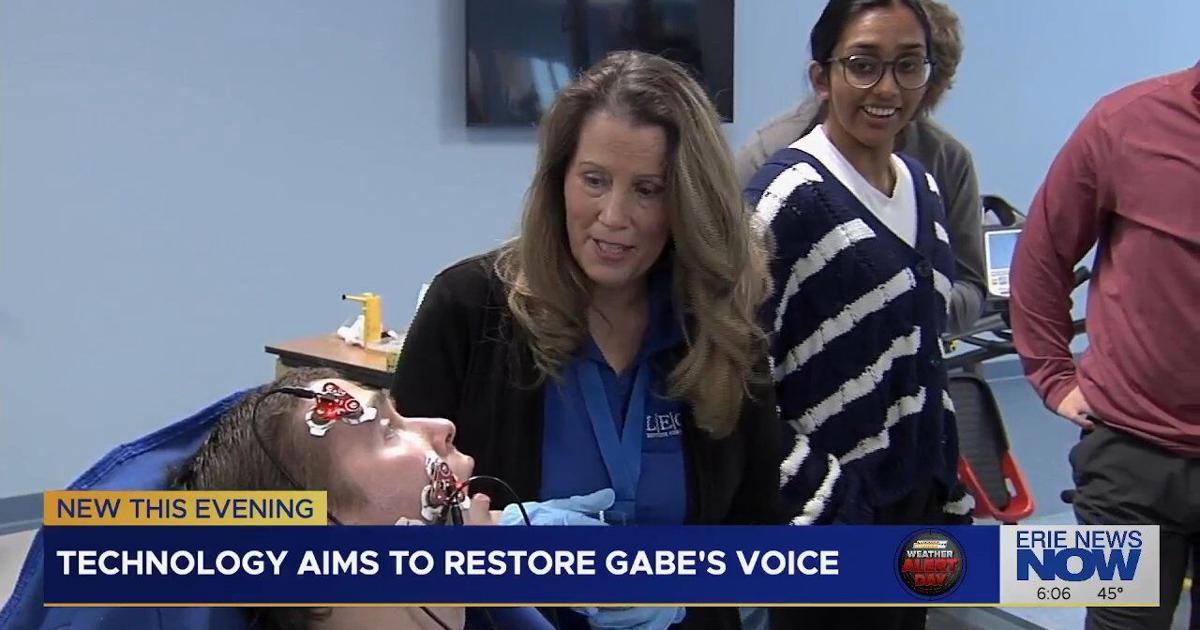
Penn State students are working to change lives through cutting-edge technology, developing AI tools that could give a voice back to those who’ve lost it. At the heart of this mission is one local man, Gabe Brown, whose life changed forever just two hours into his honeymoon. While in Jamaica, Gabe slipped, fell, and hit his head. After waiting more than seven hours for care, he was left in a coma.
Nearly two years later, Gabe is improving and fully aware mentally, but he is still unable to speak. That’s where Penn State’s new interdisciplinary program comes in. Built by students in AI software and biomedical engineering, the team is developing sensor-driven technology designed to interpret what Gabe’s brain wants to say but cannot. Remarkably, Gabe himself, who holds a master’s degree in software engineering, is actively participating in the project.
In early testing, the team used the technology on themselves, and in recent weeks, they have spent hours analyzing data—including information from LECOM. Supported by university and alumni funding, students who have spent months developing the program say the work is life-changing not only for patients like Gabe but for themselves as well.
If successful in connecting his brain signals to intended speech, the AI technology could potentially recreate Gabe’s voice, using sources such as old voicemails, school projects, and even wedding vows. Last year, this story received recognition from the Pennsylvania Association of Broadcasters, and on Thursday, the team will be heading to Harrisburg to provide an update on Gabe’s condition. They will also highlight a new development: a bill his doctor and wife are bringing before state representatives, aiming to advance it to the state level.
Through this groundbreaking collaboration, there is hope that Gabe may one day find his voice again—bringing his story full circle and demonstrating the transformative power of technology, determination, and community.