
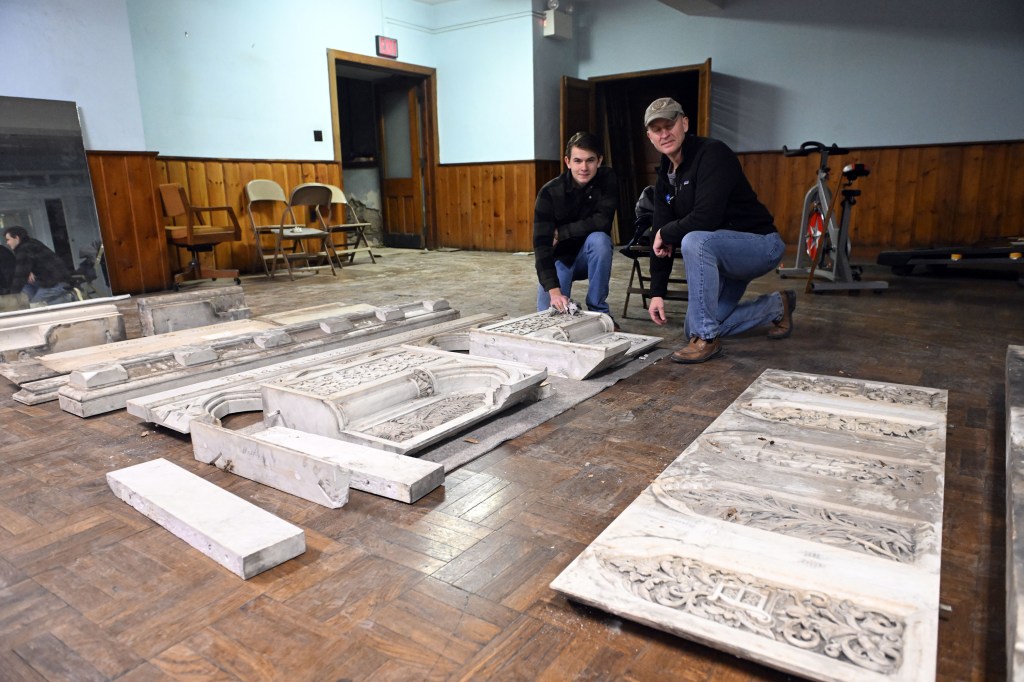
Local history runs in the Shuman family.
Alan Shuman of the Shuman Development Group owns and has restored a number of significant historical Reading properties, most recently proposing to develop the long-vacant site of the former Farmers’ Bank on the northwest corner of Fifth and Penn streets.
His son Alexander has taken a keen interest in researching the history of the buildings.
There aren’t many Berks County 16-year-olds who can name check George M. Meiser IX, the local historian who has written and illustrated with his wife, Gloria Jean, 25 volumes of the “Passing Scene” history books.
The elder Shuman recently acquired the former First United Church of Christ at Reed and Washington streets, a building that has occupied that space since 1832 with a congregation that dates to before the Revolutionary War with land granted to Conrad Weiser from Thomas and Richard Penn.
The congregation at First UCC dissolved in 2017, and the building had changed owners several times.
Alexander was ready for some exploration.
He was cleaning out an obscure recess in the vast church basement when he made an extraordinary discovery.
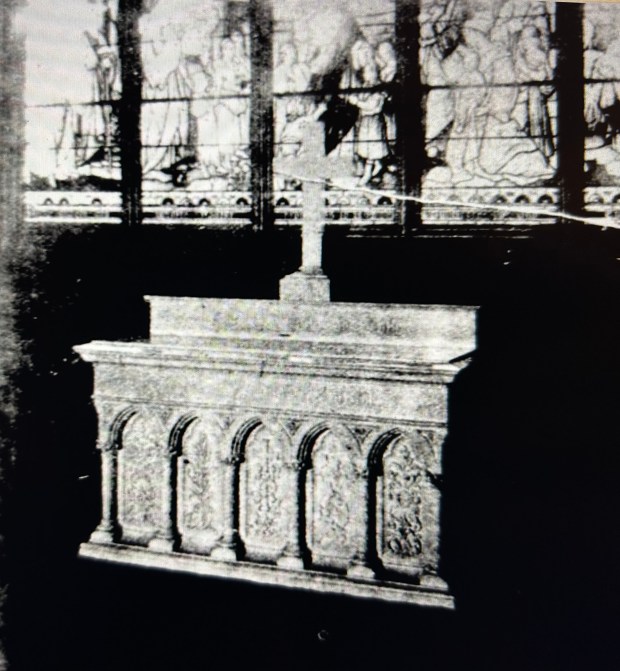 The altar carved in marble by Reading sculptor Herman Strecker for Second Reformed Church is shown in a Reading Eagle photograph from April 3, 1898. (BILL UHRICH/READING EAGLE)
“A little, shiny piece of white marble caught my eye in the corner under some cardboard, and I lifted it up and found a piece of intricately carved marble,” he said, standing over his discovery that was brought out into the light and spread across the basement floor. “I lifted it out, and under it, there were a dozen more pieces of incredibly beautifully carved marble.”
Tracing history
And so began a trip down a historical rabbit hole.
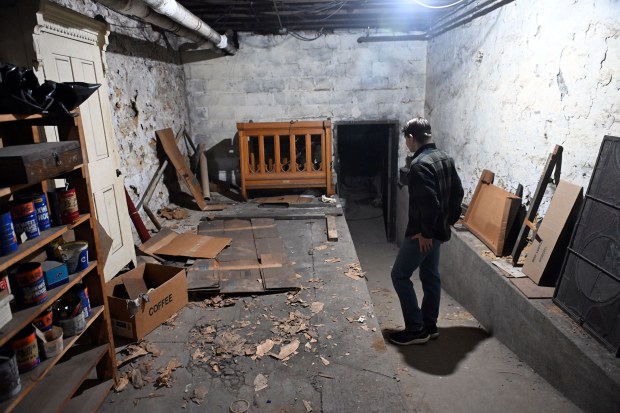 Alexander Shuman, 16, discovered a disassembled marble altar that had lain for decades covered in cardboard and boards in a recess of First United Church of Christ, Reed and Washington streets. (BILL UHRICH/READING EAGLE)
Alan posted photographs of the discovery on social media and received responses from several people who were familiar with what the Shumans had — a marble altar that once adorned the front of Second Reformed Church in the first block of South Sixth Street and had been disassembled and taken to First UCC when Second Reformed was sold in the early 1980s to Hopewell Mennonite Church.
Here’s where the story takes a “Twilight Zone” turn, or if you prefer in the Reformed tradition, some Predestination.
In 2017, a heavy snowfall began to buckle the walls of the former Second Reformed, and the Hopewell congregation was unable to afford the repairs.
Alan Shuman stepped in and acquired the building, stabilized it and restored the interior, creating a nondenominational wedding venue that he renamed the Baer Chapel after Reading Railroad President George F. Baer, who was a major donor to the church building when it was constructed in the 1890s.
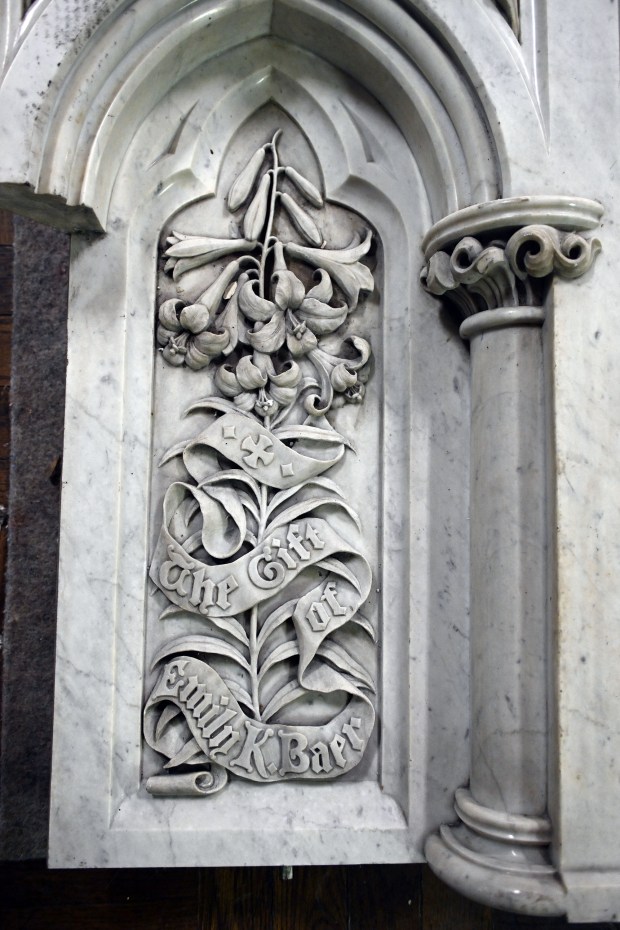 A marble altar in Second Reformed Church at Sixth and Cherry streets was created by Reading sculptor Herman Strecker in 1897 and dedicated to Emily K. Baer, the wife of Reading Railroad President George F. Baer. (BILL UHRICH/READING EAGLE)
Two names are carved on the marble altar that had lain untouched and undiscovered for decades in the First UCC basement.
The first is prominently displayed on the front of one of the marble panels: “The Gift of Emily K. Baer,” the railroad president’s wife.
The second name is carved out of sight on one of the bottom back panels: Herman Strecker.
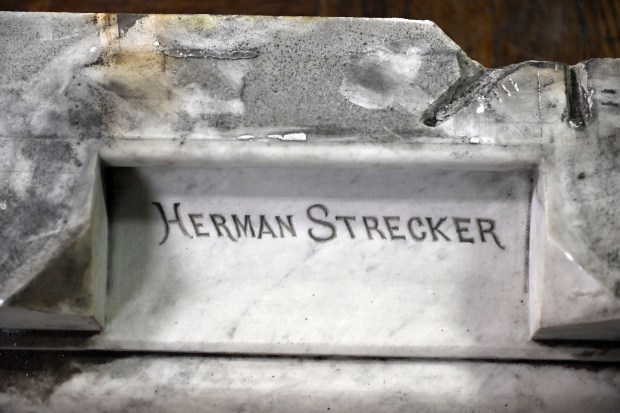 A marble altar in Second Reformed Church at Sixth and Cherry streets was created by Reading sculptor Herman Strecker in 1897. (BILL UHRICH/READING EAGLE)
Strecker was one of the peculiar geniuses who arose in the rapidly industrialized Reading of the 19th century.
Herman’s father, Ferdinand H. Strecker, was trained as a sculptor in Europe and emigrated to Philadelphia, where Herman was born in 1836. The family moved to Reading in 1846. After Ferdinand Strecker died in 1856, Herman succeeded his father in the trade, according to a July 1946 biography co-written by Strecker’s daughter Eloise in the Historical Review of Berks County.
Herman became interested in natural history through his American-born mother and studied at the Academy of Natural Sciences in Philadelphia. He was awarded a doctorate by Franklin and Marshall College for his work in entomology.
Crossing paths
Herman was a man of many contradictions.
Rough and profane, he labored in the stoneyards with curses ringing out with the sound of the hammer and chisel by day, but by night he retreated to the top floor of his home in the 1300 block of Mineral Spring Road and worked with the most fragile specimens of butterflies and moths that he accumulated from his travels and his correspondence with entomologists from around the world.
He became America’s foremost entomologist of the 19th century and was an influence and mentor to Levi Mengel, the founder of the Reading Public Museum.
Mengel, too, developed an interest in butterflies and moths and wasn’t much older than Alexander when he approached Strecker at his stoneyard at Sixth and Elm streets and asked him to teach him about entomology.
“One day,” Mengel wrote in his unpublished memoir archived at the Berks History Center, “I mustered up sufficient courage to go to Mr. Strecker’s place of business and try to introduce myself.”
Dr. Strecker had a reputation for gruffness and for being ill humored, Mengel wrote in a bit of understatement.
“I was afraid of him.”
Strecker was skeptical that Mengel was serious but agreed to grant him one hour of his time.
That time Strecker granted him proved to be a turning point in Mengel’s life, leading to a friendship and mentorship with the mercurial Strecker that led to Mengel’s own career as an entomologist and museum founder.
Strecker’s contradictions can also be seen in the religious iconography he sculpted, much of which can be seen in Charles Evans Cemetery.
Foremost among them is the marble crucifixion sculpture at the Heston-DeLong plot.
A Reading Eagle article from Dec. 15, 1897, notes that Strecker was in the process of installing the altar at Second Reformed and spent more than a year sculpting it.
Strecker died in 1901, making Alexander’s altar undoubtedly one of the last major pieces that he created.
Strecker is buried in Charles Evans Cemetery in the shadow of one of his most prominent monuments, the Grand Army of the Republic statue at the cemetery’s Civil War memorial.
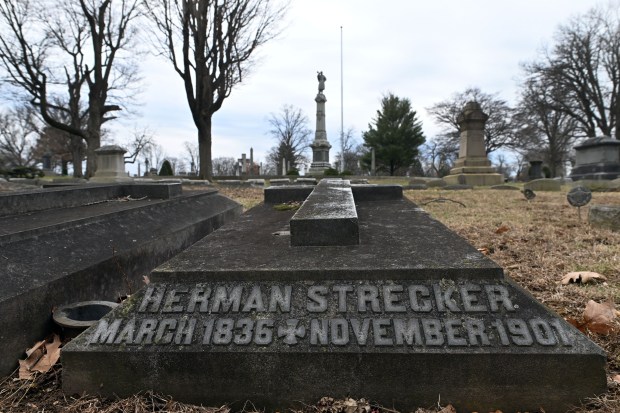 Reading sculptor Herman Strecker is buried in Charles Evans Cemetery in the shadow of his Grand Army of the Republic Civil War memorial. (BILL UHRICH/READING EAGLE)
After his death, Strecker’s collection of more than 300,000 varieties of butterflies and moths, 300 of which Strecker described that were new to science, was packed in an entire railroad car and shipped to the Field Museum in Chicago, where it formed the basis of that institution’s natural history collection.
Back in the basement of First UCC, Alan and Alexander look over and marvel at the find and are making plans for its restoration and display.
“We have 85 or 90 percent of it here,” Alan said. “And the good news is that other than the column capitals, we have all the other intricate, carved pieces. I’ve seen lots of marble carvings, and I’ve seen some of this quality, but really, it’s as high a quality as you could get anywhere.”
Alexander has taken an interest in researching the history of Reading churches, particularly the German Reformed houses of worship that his father has been instrumental in preserving.
And he has acquired a unique appreciation of Herman Strecker’s artistry as he has labored over the intricate marble carvings, tracing the work with toothbrushes as he cleans the decades of accumulated dust and grime from the pristine marble.
“It’s felt like Indiana Jones uncovering treasure,” Alexander said, referencing the hero of the action-movie franchise.
It may not be the grail that Indiana Jones once sought, but Alexander’s altar is certainly a holy relic of Reading history.
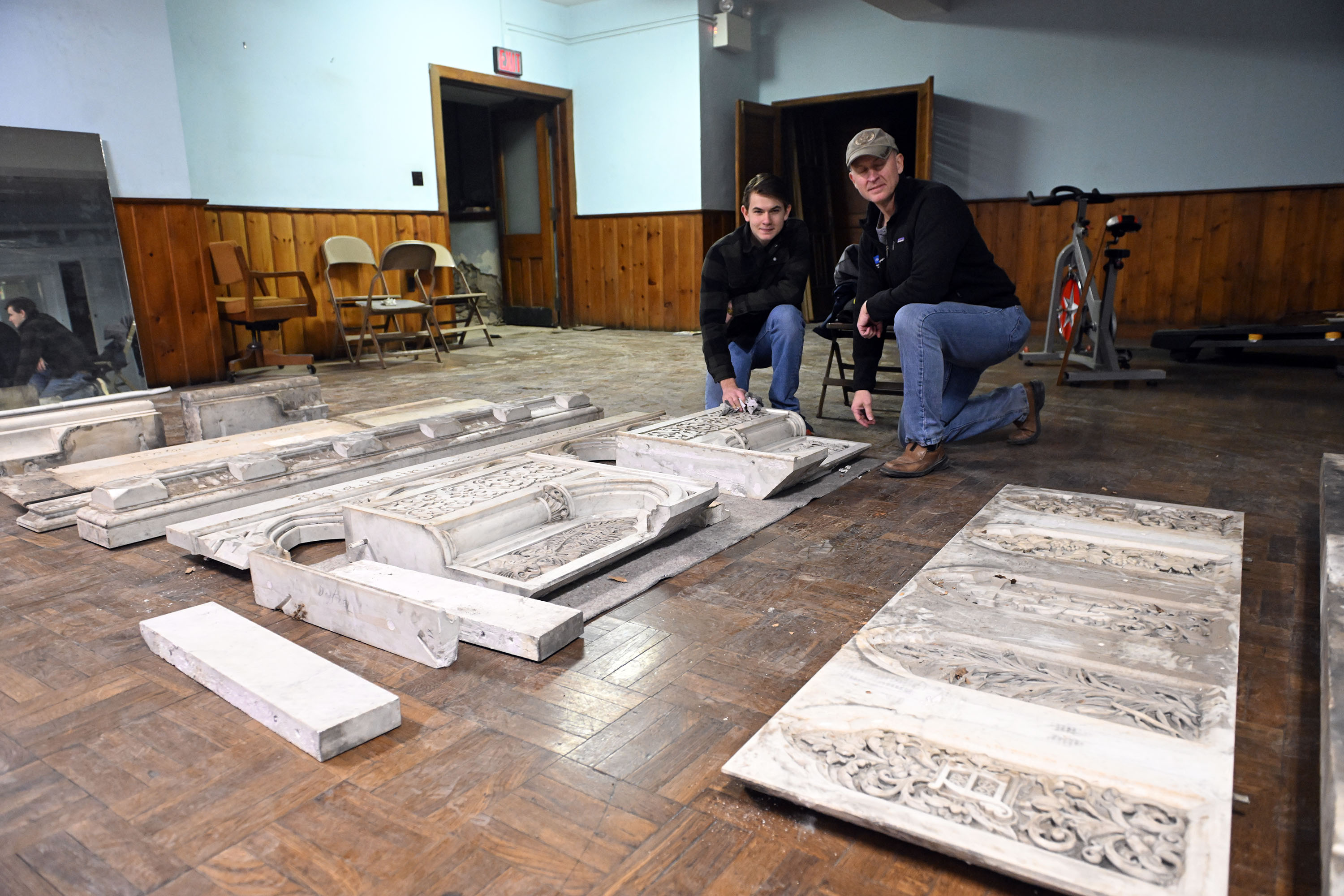
Reading developer Alan Shuman, right, and his son Alexander, 16, with a disassembled marble altar that Alexander discovered in the basement of the former First United Church of Christ, Reed and Washington streets. (BILL UHRICH/READING EAGLE)
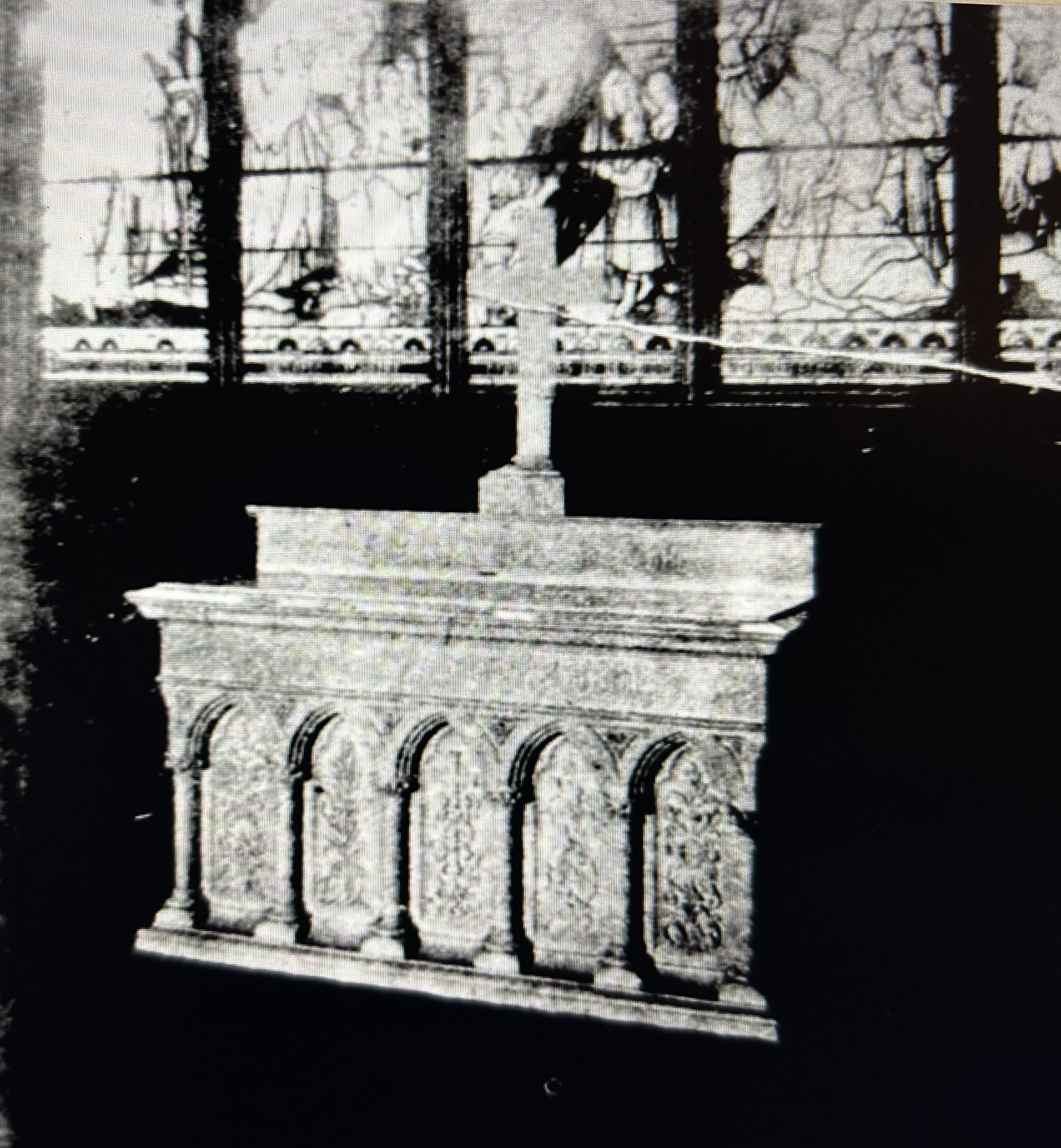
The altar carved in marble by Reading sculptor Herman Strecker for Second Reformed Church is shown in a Reading Eagle photograph from April 3, 1898. (BILL UHRICH/READING EAGLE)
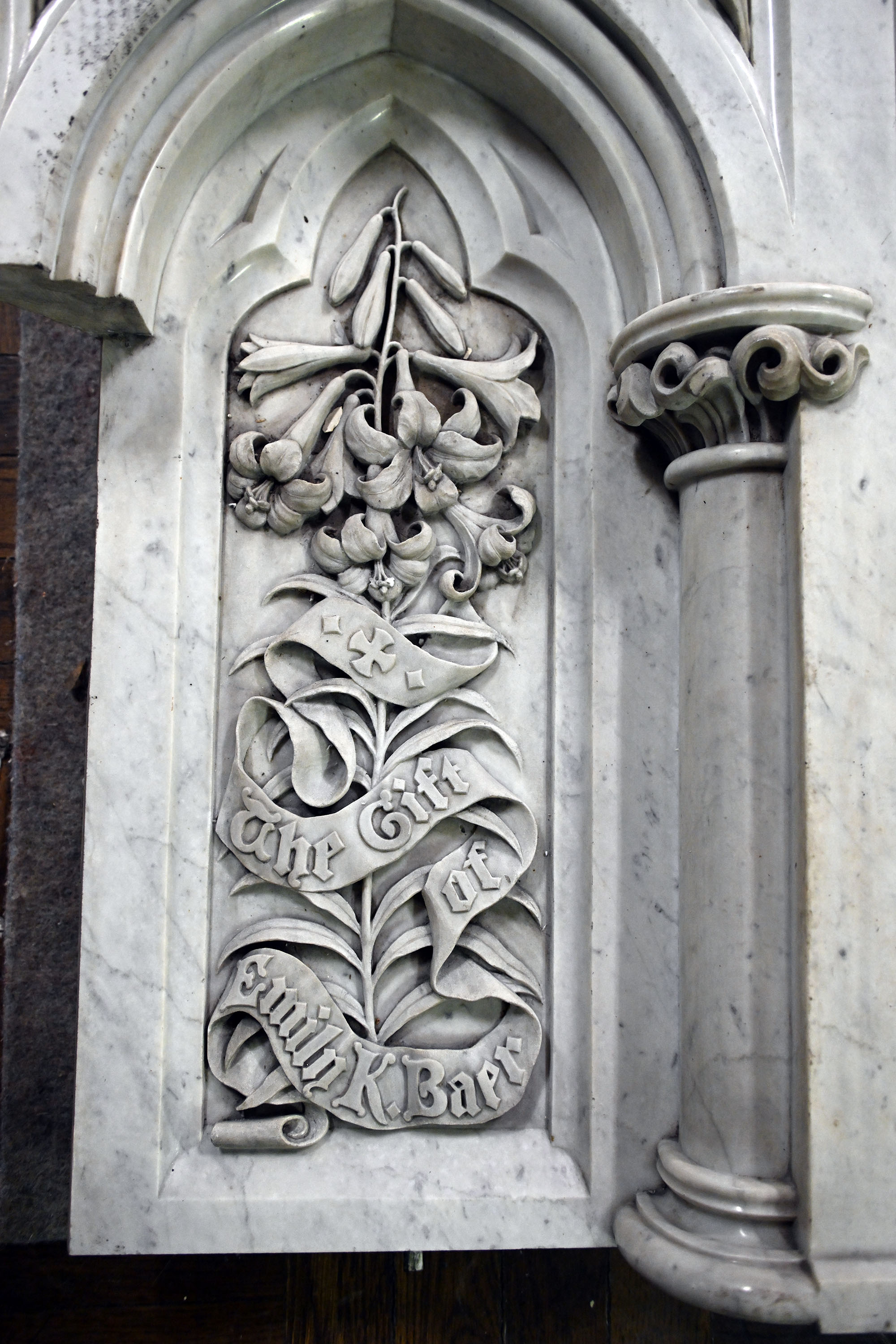
A marble altar in Second Reformed Church at Sixth and Cherry streets was created by Reading sculptor Herman Strecker in 1897 and dedicated to Emily K. Baer, the wife of Reading Railroad President George F. Baer. (BILL UHRICH/READING EAGLE)
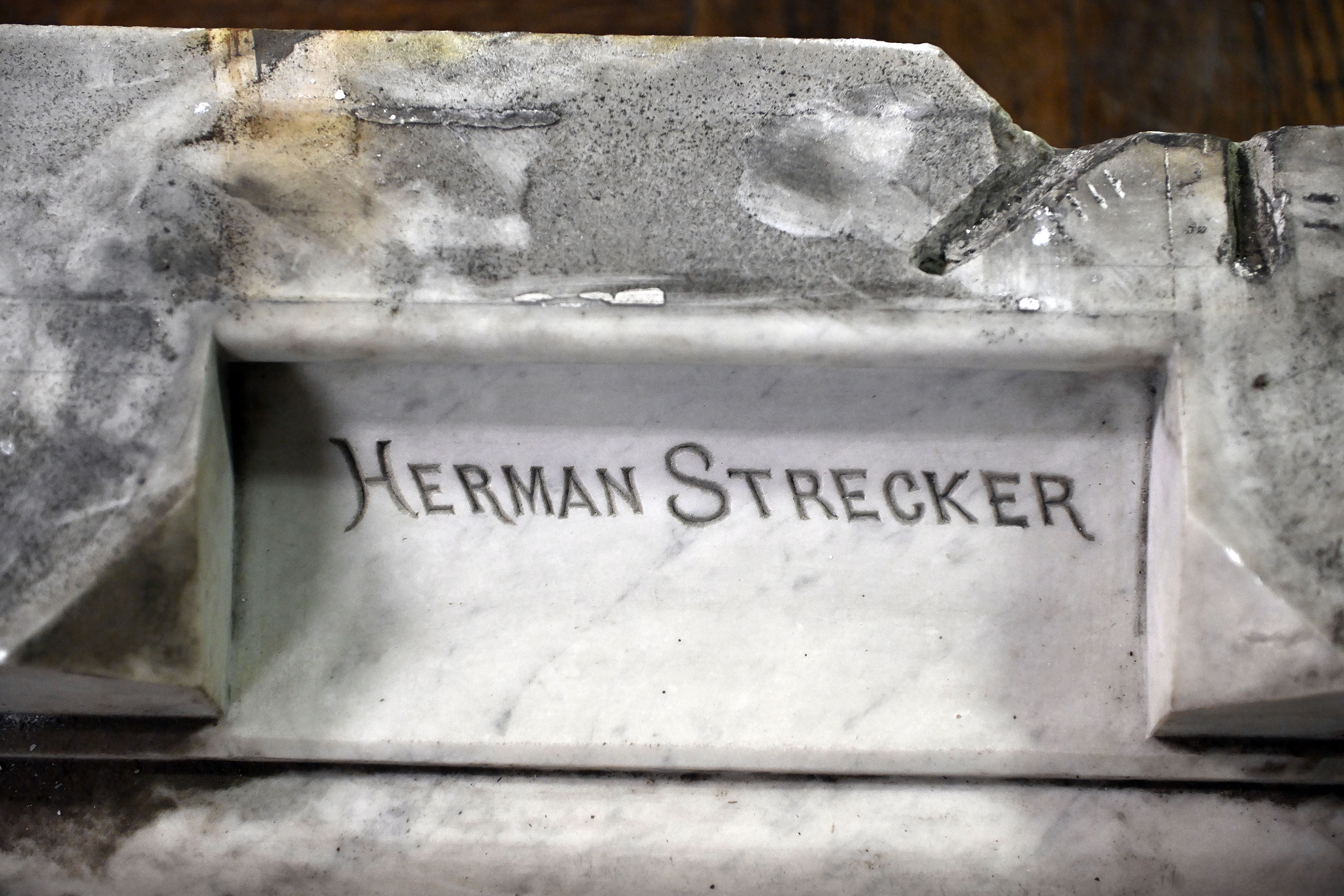
A marble altar in Second Reformed Church at Sixth and Cherry streets was created by Reading sculptor Herman Strecker in 1897. (BILL UHRICH/READING EAGLE)
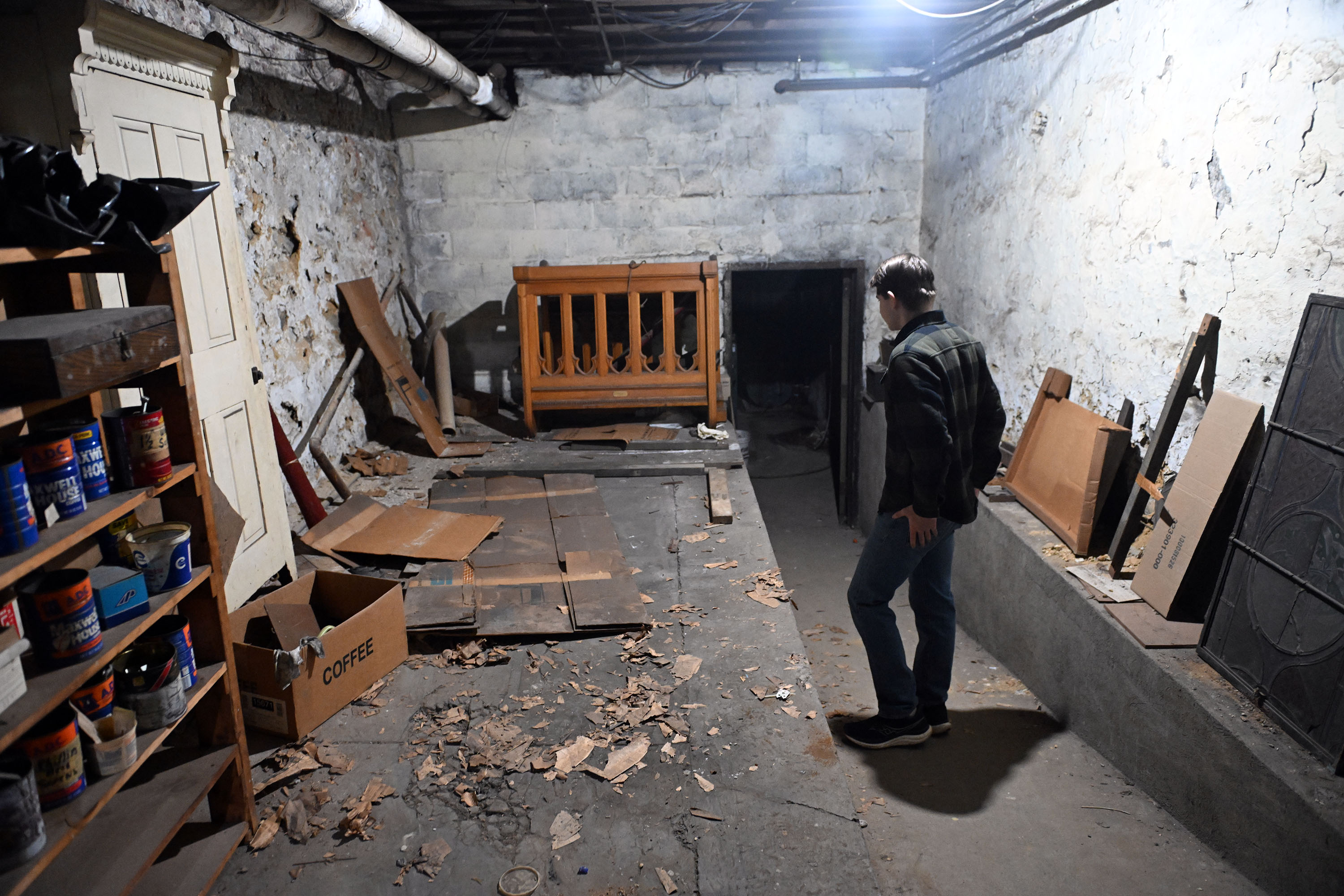
Alexander Shuman, 16, discovered a disassembled marble altar that had lain for decades covered in cardboard and boards in a recess of First United Church of Christ, Reed and Washington streets. (BILL UHRICH/READING EAGLE)
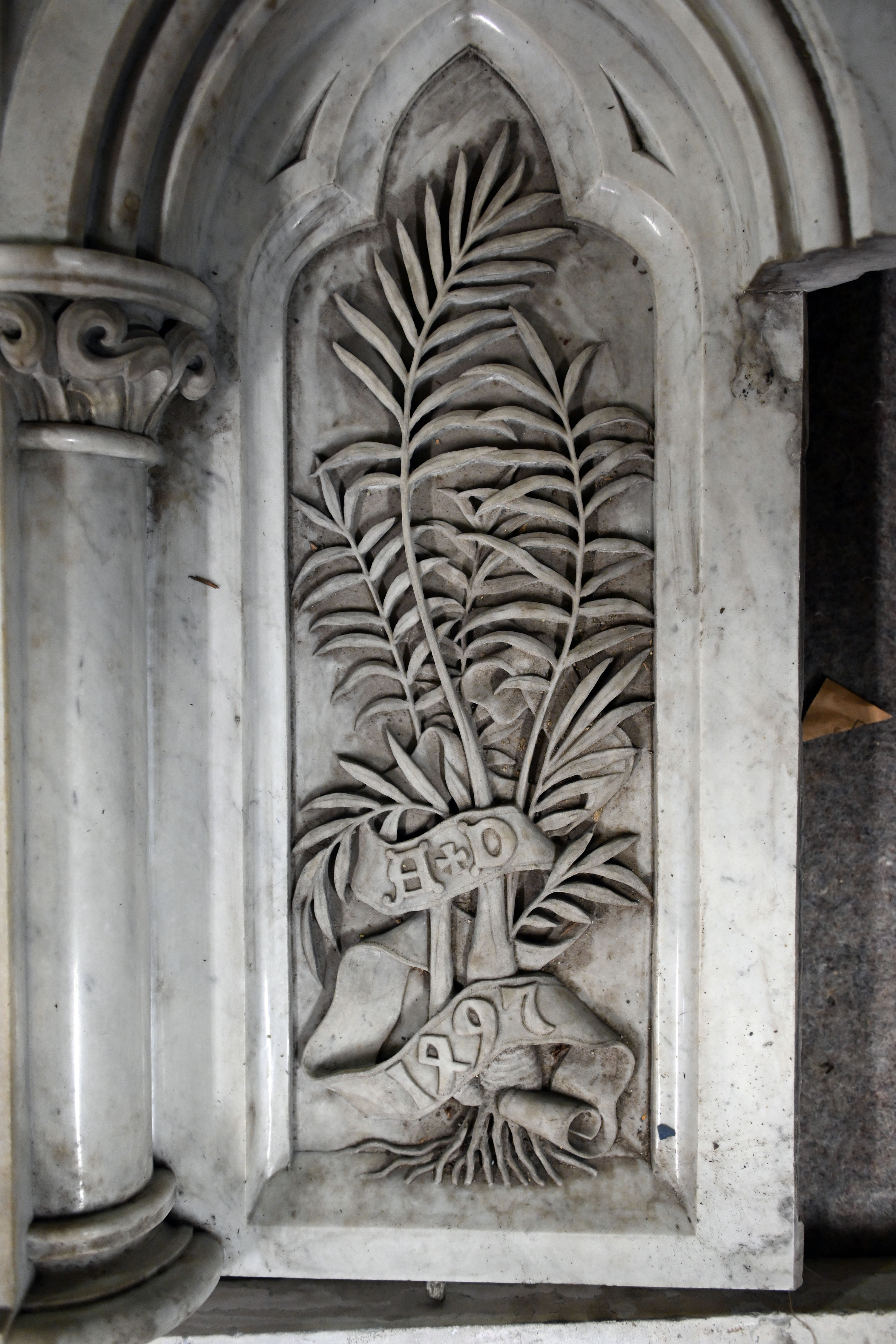
A marble altar in Second Reformed Church at Sixth and Cherry streets was created by Reading sculptor Herman Strecker in 1897. (BILL UHRICH/READING EAGLE)
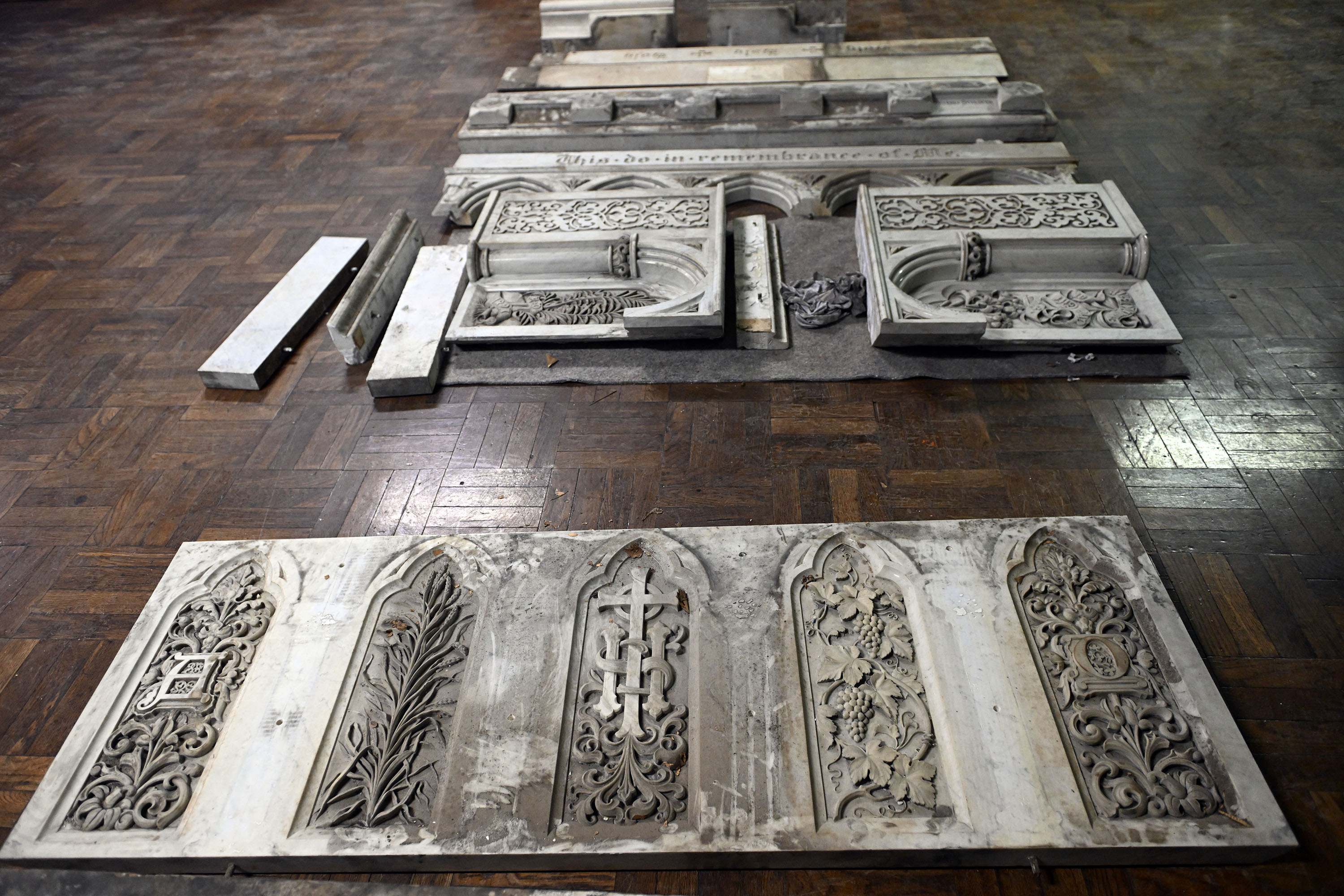
A disassembled marble altar created by Reading sculptor Herman Strecker in 1897 and dedicated to Emily Baer, wife of Reading Railroad president George F. Baer, was recently discovered in the basement of the former First United Church of Christ, Reed and Washington streets. (BILL UHRICH/READING EAGLE)
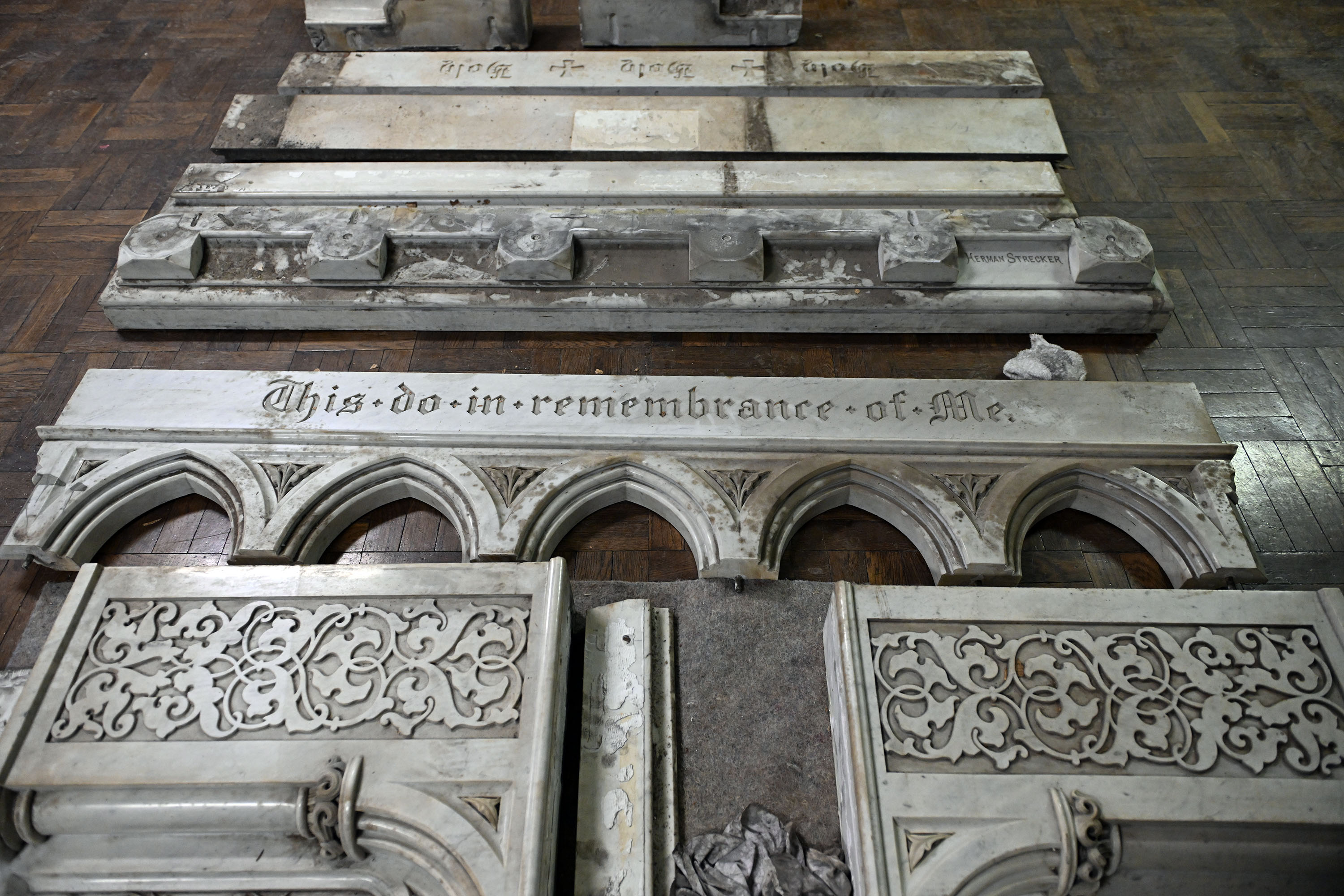
A disassembled marble altar created by Reading sculptor Herman Strecker in 1897 and dedicated to Emily Baer, wife of Reading Railroad president George F. Baer, was recently discovered in the basement of the former First United Church of Christ, Reed and Washington streets. (BILL UHRICH/READING EAGLE)
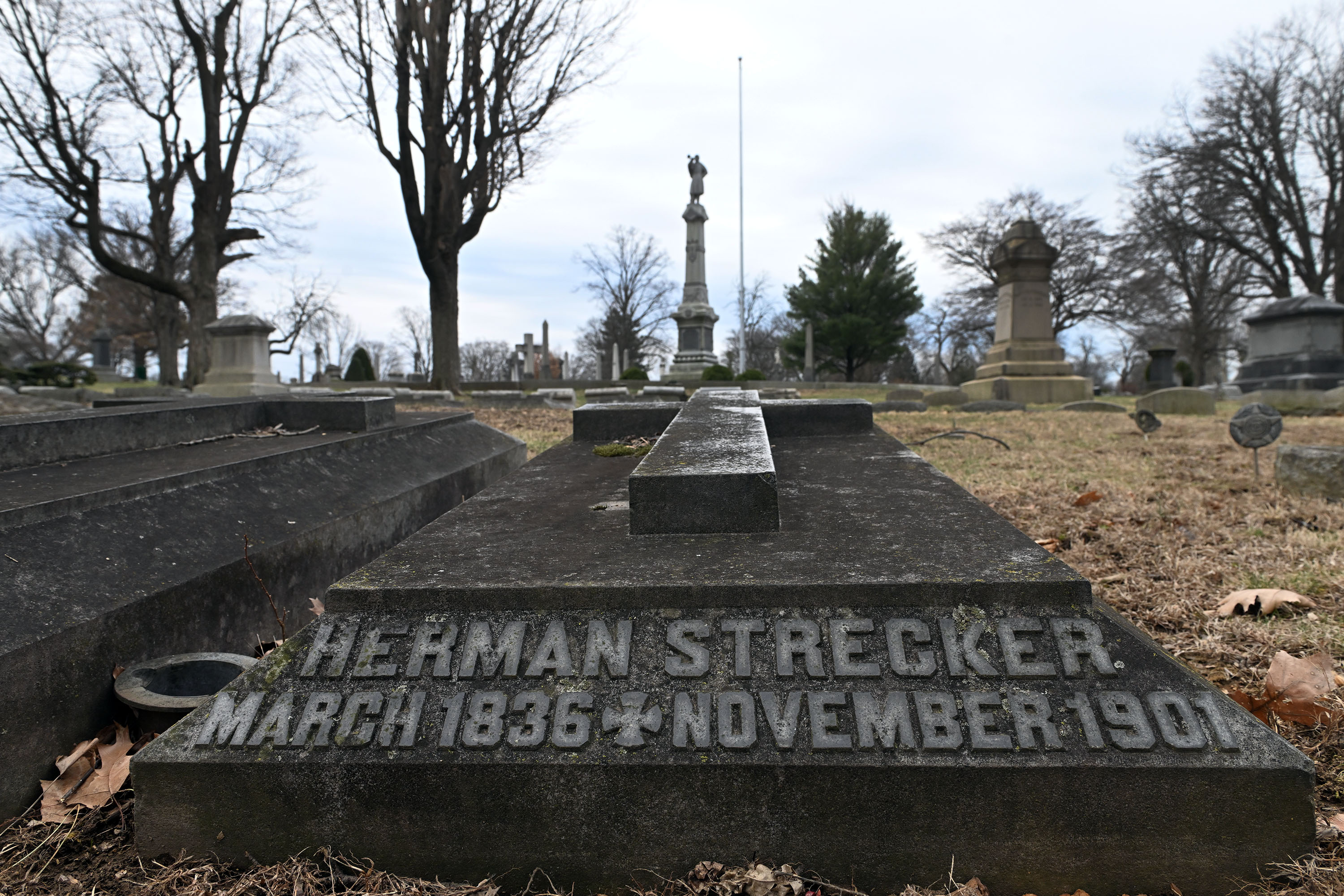
Reading sculptor Herman Strecker is buried in Charles Evans Cemetery in the shadow of his Grand Army of the Republic Civil War memorial. (BILL UHRICH/READING EAGLE)
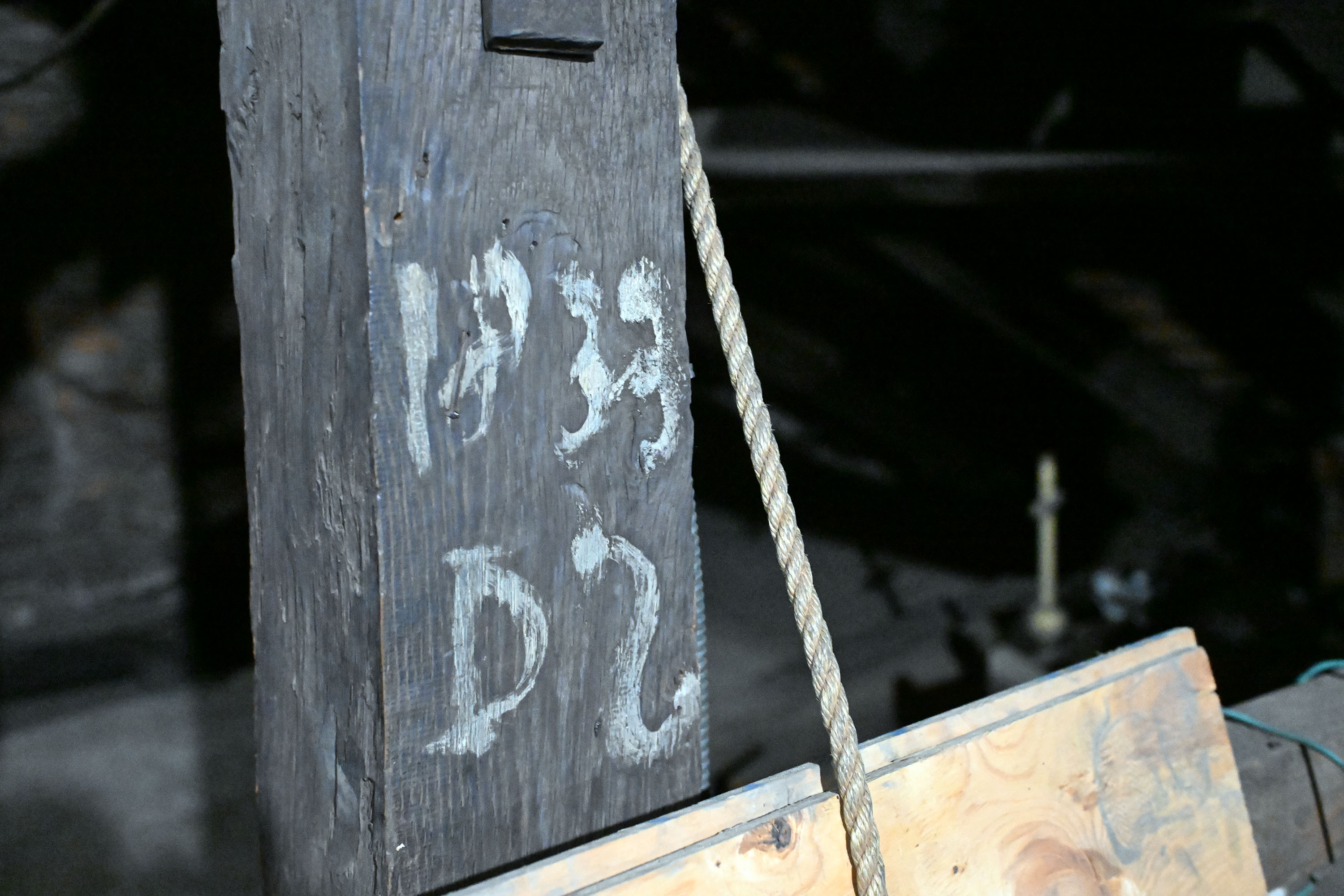
An inscription dated 1833 is in the attic of the former First United Church of Christ, Reed and Washington streets. (BILL UHRICH/READING EAGLE)
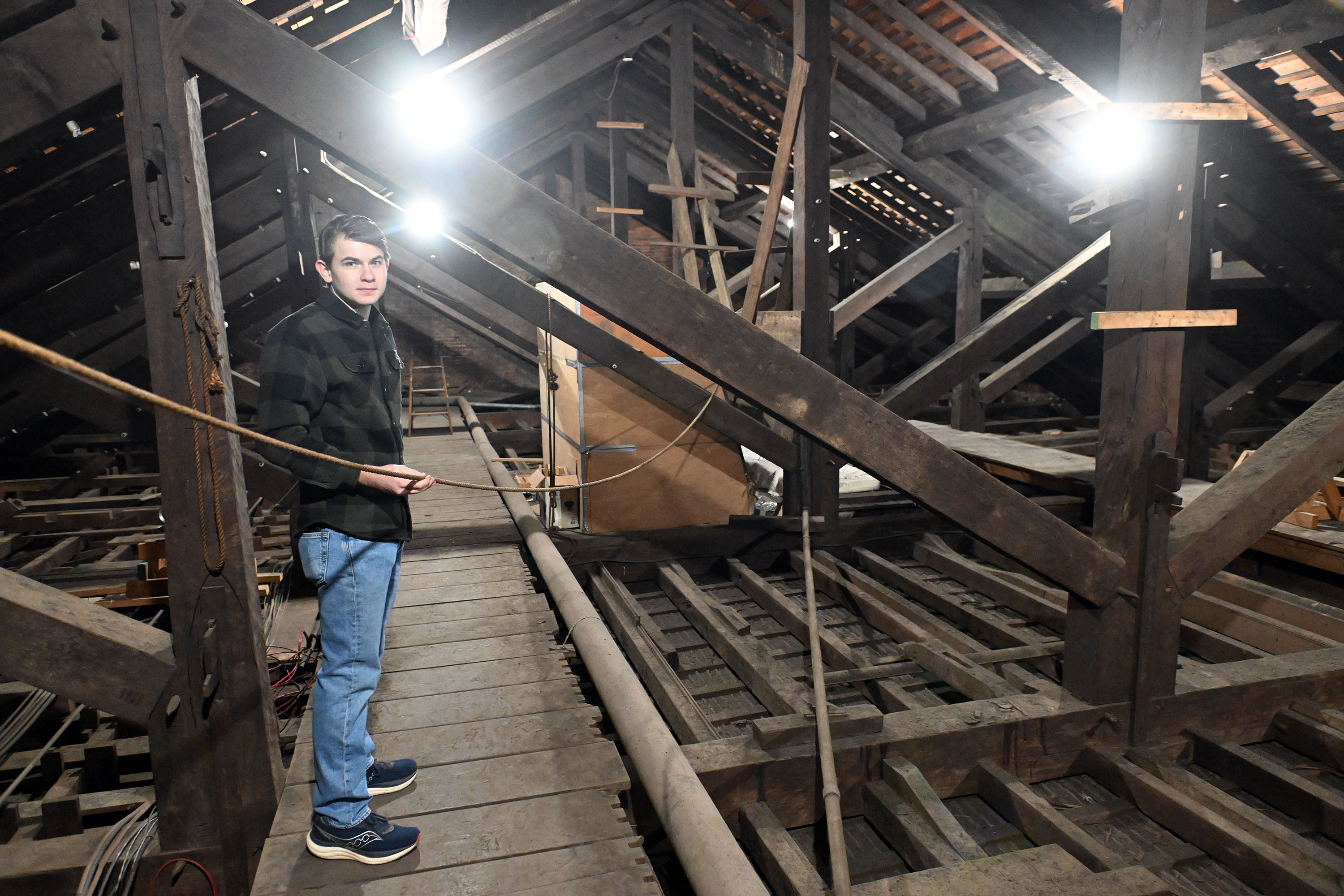
Alexander Shuman, 16, stands in the attic of First United Church of Christ, Reed and Washington streets. (BILL UHRICH/READING EAGLE)
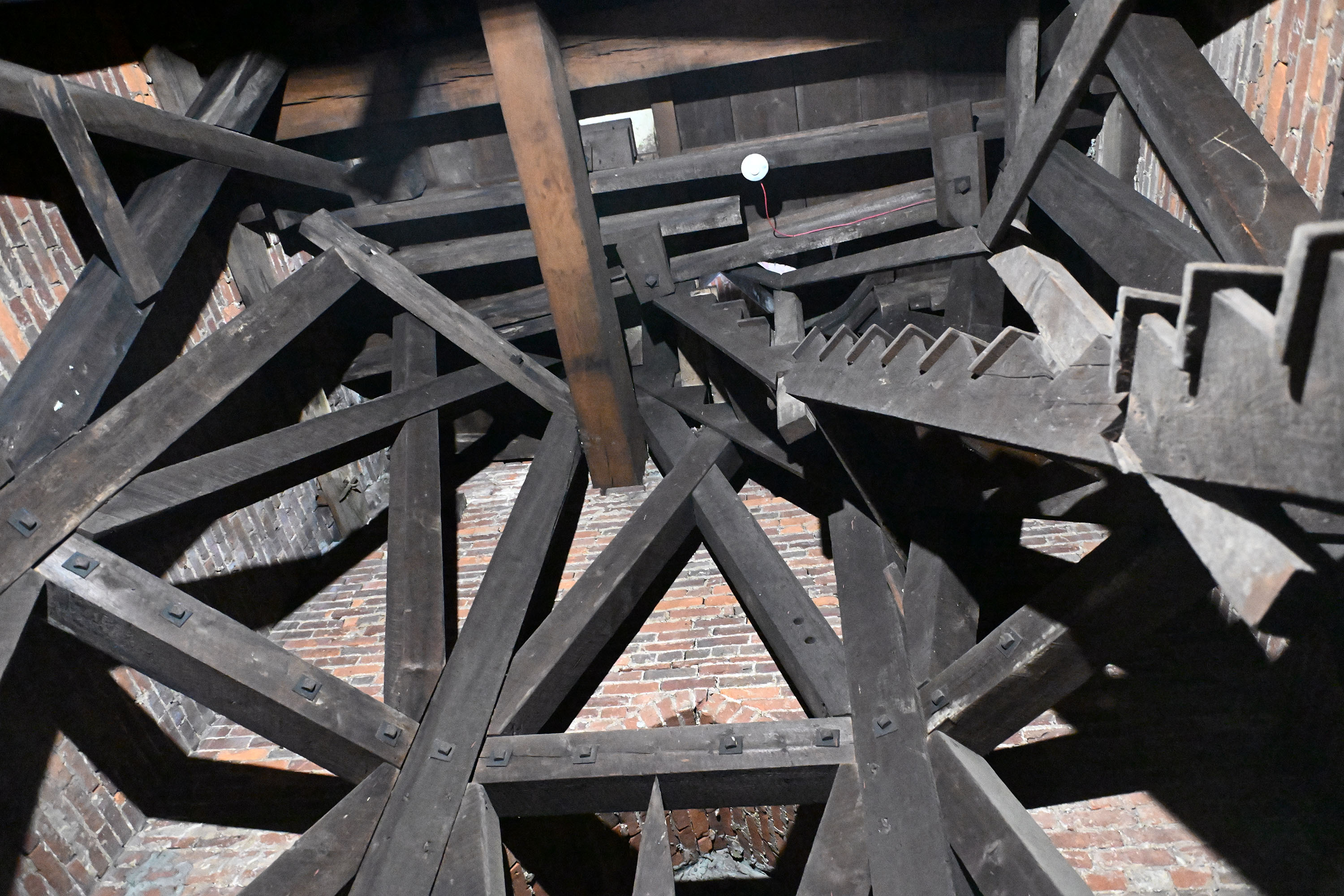
The stairway leading up through the steeple of the former First United Church of Christ, Reed and Washington streets. (BILL UHRICH/READING EAGLE)
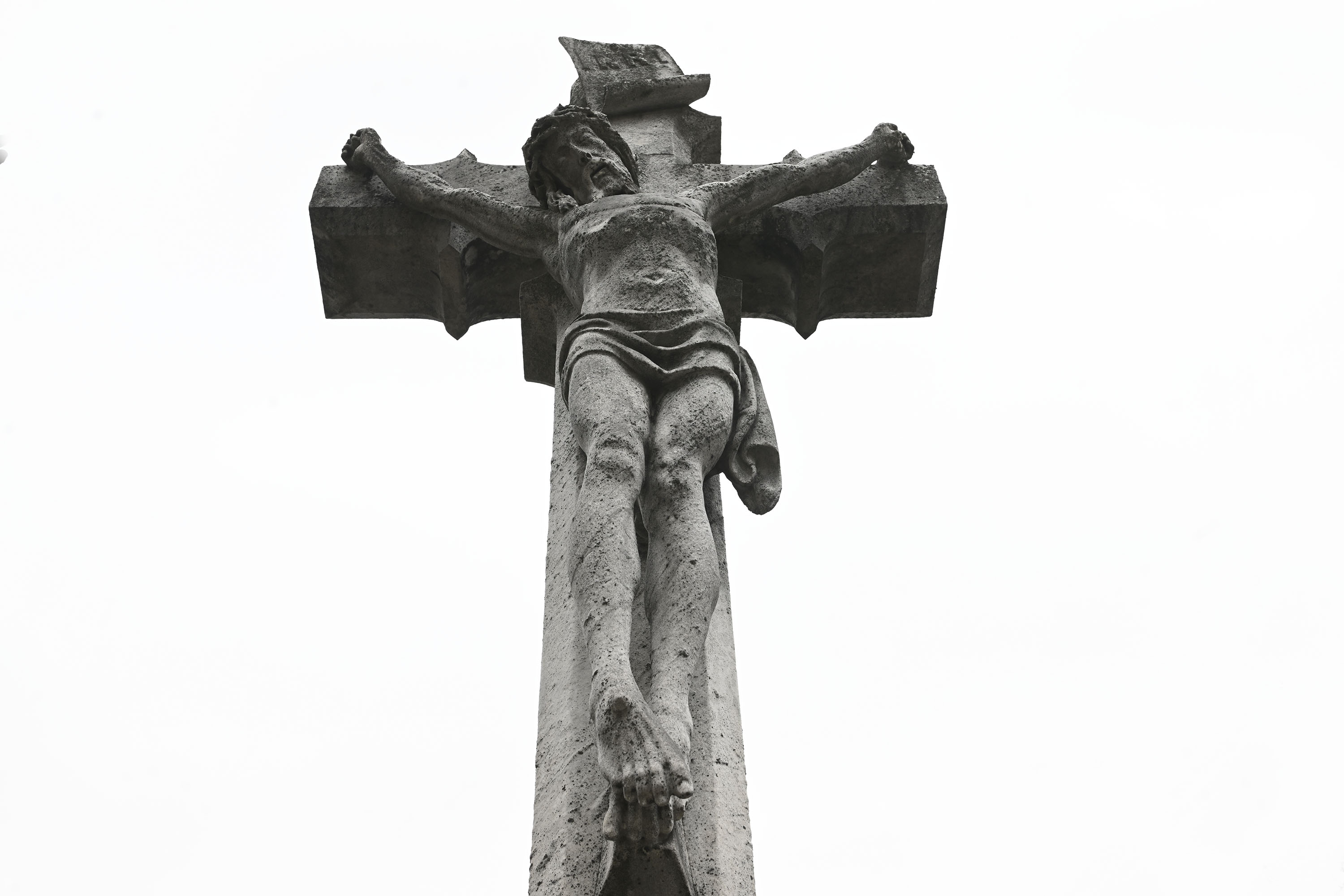
A marble crucifixion at the Heston-DeLong plot in Charles Evans Cemetery was created in the nineteenth century by Reading sculptor Herman Strecker. (BILL UHRICH/READING EAGLE)
Show Caption
1 of 13
Reading developer Alan Shuman, right, and his son Alexander, 16, with a disassembled marble altar that Alexander discovered in the basement of the former First United Church of Christ, Reed and Washington streets. (BILL UHRICH/READING EAGLE)