
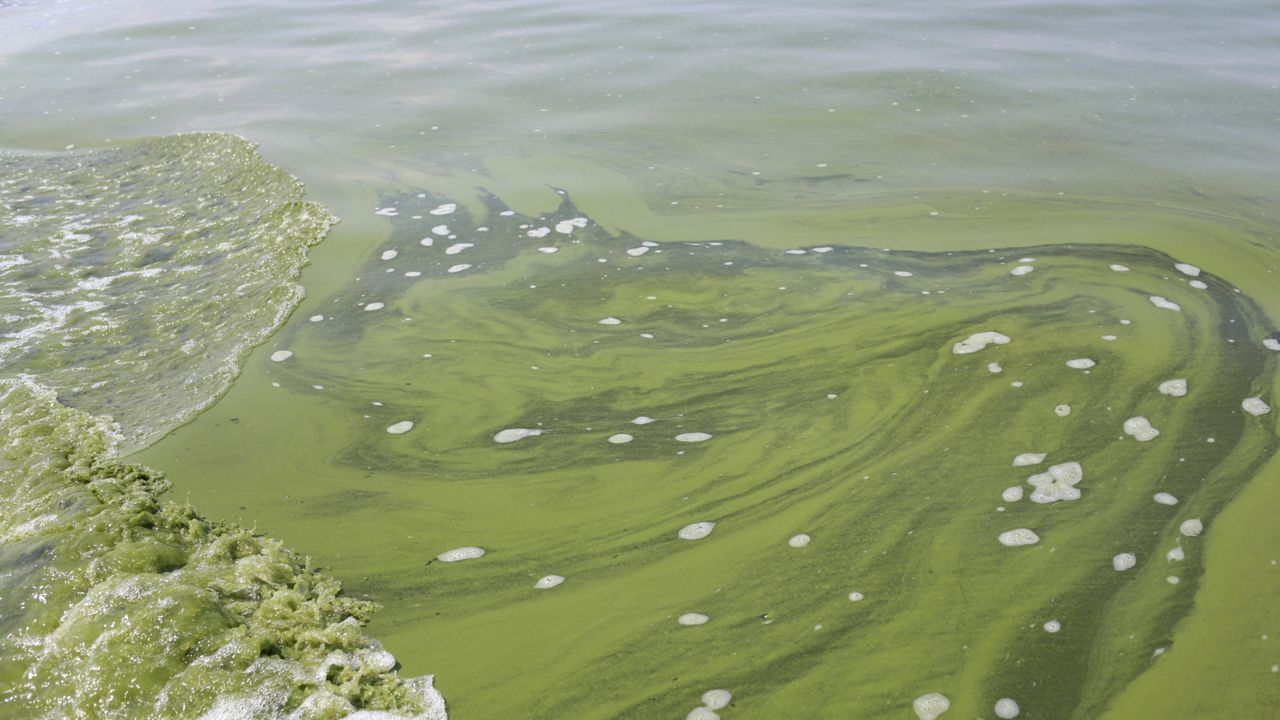
TOLEDO, Ohio — Each summer, many people find themselves swimming, boating or just enjoying the Lake Erie waters.
But one issue has been recurring and getting worse: algal blooms.
To study the effects that blooms have on people living near the lake, the University of Toledo is asking individuals to participate in an ongoing study.
What You Need To Know
Harmful algal blooms are described as patches of excessive algae growth
They’re known for producing cyanobacteria
While it’s known that the bacteria can make people sick, a study is working to see if the toxins can get into bodies by breathing in the air

Harmful algal blooms are described as patches of excessive algae growth, and when they’re seen in freshwater, they’re producing cyanobacteria — the blue-green algae, according to the University of Michigan.
The toxins they produce can harm ecosystems, wildlife and even humans, and they’ve been reported across all 50 U.S. states, including all five of the Great Lakes.
While it’s known that the bacteria can make people sick, The Great Lakes Center for Fresh Waters and Human Health and The University of Toledo is conducting the Great Lakes Aerosol Monitoring Research (GLAMR Study) to see if the toxins can get into bodies by breathing in the air.
Eligibility for participation
Individuals must meet the following criteria:
Be 10 years of age or older
Live, work or recreate near or on Lake Erie in Lucas, Sandusky or Ottawa counties
Be willing and able to do study activities, including lung function tests
Individuals with recent history of heart attack, chest, eye or abdominal surgery, collapsed lung or those with tuberculosis (TB) are not eligible to participate
What participants can expect
UToledo said participants will meet with staff members from the study multiple times, approximately April through December.
Participants will be expected to do the following:
Complete symptom surveys
Perform simple lung function tests, which involve breathing and/or blowing hard into testing devices, both at the University of Toledo Health Science Campus and at home
Record time spent outdoors
Additionally, optional activities could include:
Provide nasal swabs and nasal brushings
Provide blood and urine specimens
Provide breath samples
UToledo said researchers will help participants by training them to collect the information and samples above. The only expected cost of participating in travel expenses going to the University of Toledo Health Science Campus for study visits.
For those who are interested, UToledo asks that individuals call (419) 383-6761. More information can be found here.