
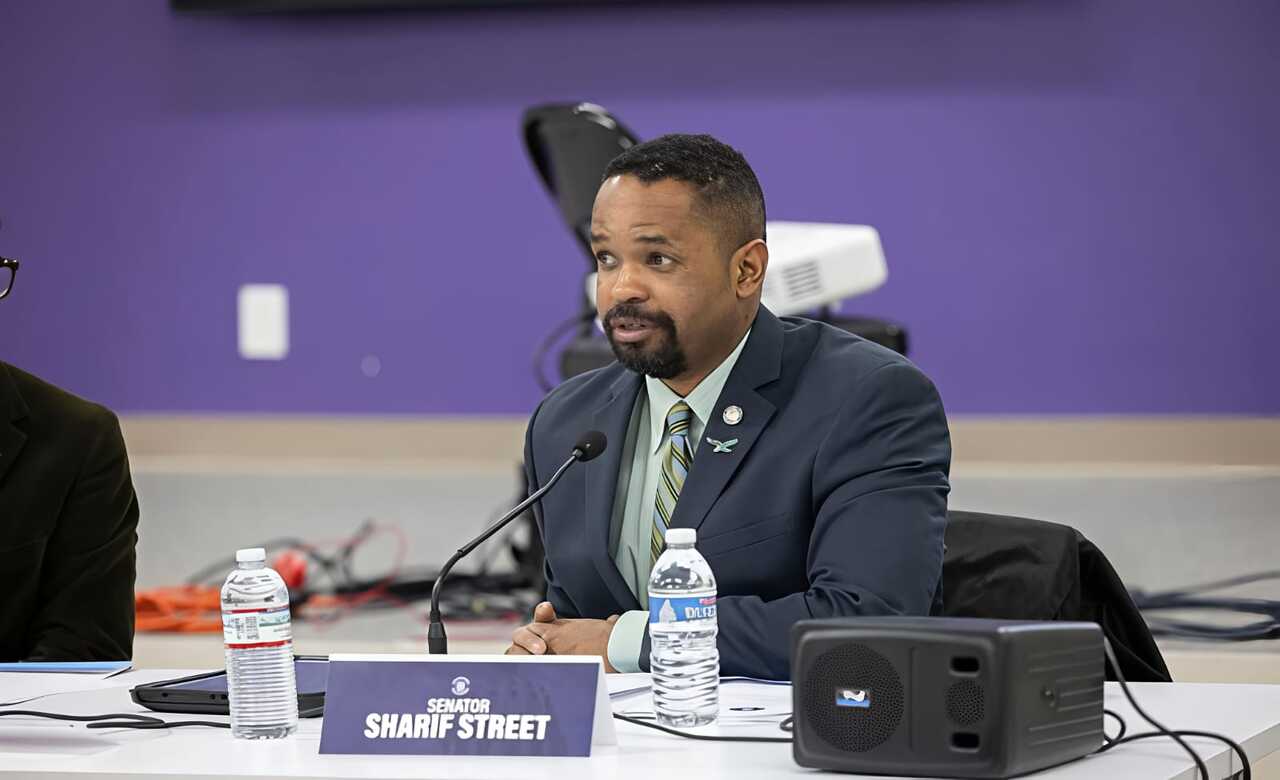
The public endorsement of Philadelphia’s Black clergy of State Senator Sharif Street is far from a minor symbolic gesture. In a city where politics, faith, and community organizing have long been intertwined, this alliance represents a clear signal of power consolidation at a decisive electoral moment for Pennsylvania’s Third Congressional District.
The scene, at the Church of God in Christ in Mount Airy, was more than a press conference it was a demonstration of political style. Religious leaders representing nearly 100 congregations formally backed Street, highlighting not only his legislative track record but also his consistent presence in some of North Philadelphia’s most vulnerable communities. This historically influential religious bloc has played a key role in mobilizing Black voters, particularly in primary elections where organized turnout can determine candidates.
Street, a sitting state senator and chair of the Pennsylvania Democratic Party, has built his political profile on a combination of grassroots activism and legislative strategy. His name is familiar to voters: he is the son of former Philadelphia mayor John F. Street, a figure who shaped the city’s political landscape in the early 2000s. Yet rather than relying solely on that legacy, Sharif Street has developed his own agenda focused on structural challenges affecting his district.
One of the pillars of his record has been expanding access to healthcare. Street played a key role in implementing Pennie, the state’s health insurance marketplace created under the Affordable Care Act. Since its launch, more than 1.1 million residents have gained medical coverage, many for the first time. In a state where racial health disparities remain profound with higher rates of chronic illness and reduced access to care in Black communities this expansion has been significant.
In addition, the senator has been an active advocate for funding safety-net hospitals such as Temple University Hospital and Einstein Medical Center. These institutions serve low-income populations and have faced increasing financial pressure in recent years. Street has pushed for the allocation of millions in state funding to prevent cuts and ensure the continuity of essential services.
On public safety, his approach aligns with modern public health strategies. Rather than focusing exclusively on punitive measures, he has promoted investment in community-based violence prevention programs. Under his leadership, the state has directed hundreds of millions of dollars to grassroots organizations working on conflict mediation, early intervention, and support for at-risk youth. This model has gained traction in cities like Philadelphia, where gun violence remains a persistent concern.
Affordable housing is another central pillar of his agenda. Philadelphia faces a growing housing crisis, with rising rents and limited availability of affordable units. Street has advanced initiatives to expand access to quality housing, including incentives for low-cost development and assistance programs for first-time homebuyers. He has also supported rent stabilization policies and funding for housing rehabilitation in historically marginalized neighborhoods.
Beyond policy and data, however, the clergy’s endorsement is grounded in a less tangible but crucial factor: trust. Street has cultivated sustained relationships with religious leaders, attending community events, participating in local initiatives, and maintaining open channels of dialogue. In communities where churches function as social, political, and cultural hubs, that proximity carries significant weight.
In this context, Black clergy act not only as spiritual leaders but also as political organizers. Their support sends a clear signal to voters about who they view as a reliable ally in defending community interests. As several leaders at the event noted, their endorsement is based on “tangible results and consistent presence.”
This backing also carries strategic implications. In a district with a high concentration of Black voters and a strong tradition of organized political participation, clergy support can translate into a decisive advantage. It not only mobilizes voters but also shapes the electoral narrative, positioning Street as the candidate of community continuity against potential challengers.
At the state level, Street’s influence is further amplified by his leadership within the Democratic Party. As party chair in Pennsylvania, he has played a key role in coordinating campaigns and building coalitions, particularly in recent election cycles where the state has remained a national political battleground.