
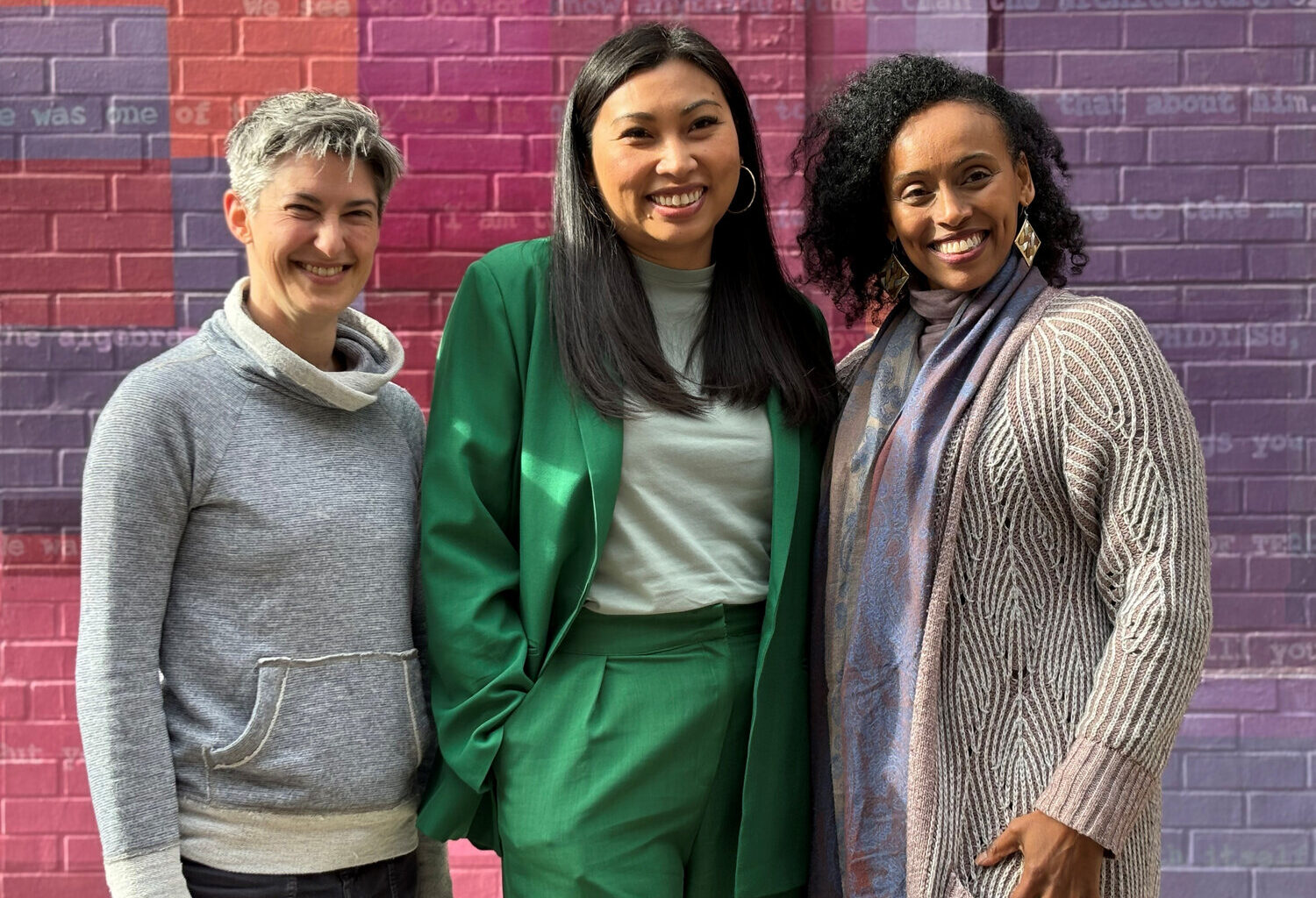
InterAct Theatre Company continues its Philly Cycle with ‘Seng’s Hair Salon,’ a tense, intimate drama set in a South Philadelphia salon where a Southeast Asian family grapples with a mysterious, deadly outbreak. Featuring three generations, the story explores responsibility, advocacy, and what it truly means to care for one another as the crisis unfolds.
Written by Lao American playwright Saymoukda Duangphouxay Vongsay and developed in partnership with Laos in the House, VietLead, and the Cambodian Association of Greater Philadelphia, ‘Seng’s Hair Salon’ highlights Southeast Asian communities in Philadelphia and the often unseen labor that sustains them.
Vongsay recently spoke with Metro about the real-life inspirations behind the play, the importance of third places, and why Southeast Asian stories matter now more than ever.
‘Seng’s Hair Salon’ is set inside a family-owned salon in South Philadelphia. What drew you to that setting?
First, I loved that it was three generations of beauticians taking care of their community for nearly four decades. Second, there’s a lot of poetry going on in a salon. We seek out the sanctuary of a salon when we want change in our lives. This could look like a haircut when we want to let go of the past, or getting a balayage because we’re ready for the next season of our life.
While I was there one afternoon, there were overlapping conversations amongst clients and stylists. I was juggling two different conversations simultaneously, trying to learn as much as I could. From the stories shared with me by the family, it became clear how their hopes, fears, and ideas shaped their salon. Their stories informed the fictional Seng’s Hair Salon.
The salon serves as a gathering place for the neighborhood. Why are “third places” like this so important, especially in immigrant and refugee communities?
I’m a former refugee and identify as part of the .5 generation of new Americans. I have always been intrigued by third spaces, the informal economy, and creative entrepreneurship. I grew up in the Twin Cities (Saint Paul and Minneapolis). Our family often went to North Minneapolis for dinners and weekend hangs with my Aunt Vong. In the late ‘80s to mid-90s, she operated a hair salon in one of the bedrooms. Her specialties were perms and the ‘Asian layers’ cut.
The salon’s clientele often spilled out into her living room and would pass the time by gambling, gossiping, sharing intel about job openings, bragging about their kids, selling goods, and advising each other on navigating government systems. They didn’t always speak the same language, which meant it forced them to learn each other’s languages and to practice their English. When we talk about entrepreneurship, we often forget about the small, informal, unofficial businesses. Barriers have always existed for people to access information, resources, and the ‘right’ papers. Home salons, like the one my aunt operated, provided multiple services to her community: self-care, social engagement, mutual aid, and more.
This work was commissioned as part of The Philly Cycle at InterAct Theatre Company. What does it mean to you to contribute a story that’s rooted in Philadelphia?
I’m from Minnesota, where there’s a strong Southeast Asian community. We have charter schools, immersion school, our people are in elected office, the mayor of Saint Paul is a former refugee and a Hmong American woman. We have nonprofits in just about every sector you can imagine, a thriving artists community, and the nation’s leading Hmong American writers call MN home.
I also deeply love Philadelphia and consider the city one of my artistic homes. There have been consistent cultural and artistic exchanges between our cities. Prior to the Philly Cycle, I had worked with the Asian Arts Initiative and Laos in the House, and VietLead helped me with an ICE-related matter. I presented a reading of my ‘Kung Fu Zombies’ play as part of an Asian American theater festival here, and participated in the Smithsonian’s Refugee Poetics convening in 2018.
I have had a decades-long relationship with this beautiful city and feel honored that my MN-based ass was handed this gift. I loved learning about the Southeast Asian communities here. I marvel at the SEA Market and how that’s just one example of community empowerment and collaboration. I see the nuances, similarities, differences, challenges, and wins between our cities. I made sure my play reflected that and uplifted what is unique to the SEAs in Philadelphia.
How did collaborating with groups like Laos in the House, VietLead, and the Cambodian Association of Greater Philadelphia influence the development of the piece?
I can’t imagine working on this project without LITH, VietLead, and CAGP. They are the stewards, caretakers, and multipliers within the Southeast Asian and Asian American communities here. Our first meal together to kick off the Philly Cycle felt like I was returning to my cousins. We talked about our lives, our families, our communities, the stories we want told about us. We talked about the saturation of ‘escaping the war’ stories and trauma porn. We talked about our shared histories and imagined what our stories will be 50 years from now.
We wanted to center Southeast Asian American experiences in the ‘now’ and what can be possible in the future. Our communities are complicated, nuanced, and rich, and our stories need to reflect that. Everyone around the table was also super into Asian horror, superstition, and the stories rooted in our Buddhist upbringings. On my field trips (curated and organized by our Philly Cycle partners) to various families, businesses, events, and places of worship, I met community members who shared with me the kind of stories that they’d like to see. People wanted heart, humor, and horror. I’ve been working hard to give them that.
Much of your work focuses on amplifying refugee voices through poetry, theater, and cultural production. In what ways does this play continue that mission? What conversations do you hope it sparks for audiences?
I only write stories that center on Southeast Asians while also using pop culture and my personal interests to inspire the work. Our stories are not prevalent in curricula, popular culture, public discourse, and in the arts — especially American theater. I’ve made it my mission to signal boost our communities’ stories. When we get to tell our stories, our fuller humanity is better understood by others. I don’t mind getting super specific, inserting cultural inside jokes, and universally shared beliefs in my plays because I know that other Southeast Asians will just ‘get it’.
I believe that audiences appreciate cultural specificity and authenticity. I love planting small invitations for audiences to find out more on their own. I love celebrating our differences. We like to talk about diversity a lot and that’s great, but our differences are also what make us beautiful. I’m Buddhist and I grew up loving ‘Fiddler on the Roof’ and ‘A Christmas Caro’, and even though I didn’t know certain things, I made sure to go find out for myself so I can have a deeper appreciation for those characters’ journeys.
For audiences who may not be familiar with Lao or Southeast Asian American communities in Philadelphia, is there anything you hope they take away from this family and their story?
Please make a Southeast Asian friend, support the community’s businesses, organizations, and causes. Engage in our cultural production like books, music, films, and plays. Ask for more resources to be allocated to SEA artists, businesses, and community initiatives. Don’t be a gatekeeper — help bring down barriers. Speak up for us and when you can, be a second voice for us when we call out injustice or have a cool idea.
Learn our histories. Asian American history is not a big part of American curricula; we are often snippets in the history books, so please get to know us. I hope that more plays centering Southeast Asian characters get produced in Philadelphia. I hope my play inspires more Southeast Asians to become storytellers, too. I want them to do better than me and to thrive. I hope Philadelphia will support them.
‘Seng’s Hair Salon’ will be on stage at The Proscenium Theatre at The Drake, 302 S. Hicks Street, from April 17 to May 10. For tickets and more information, visit InterActTheatre.org.