
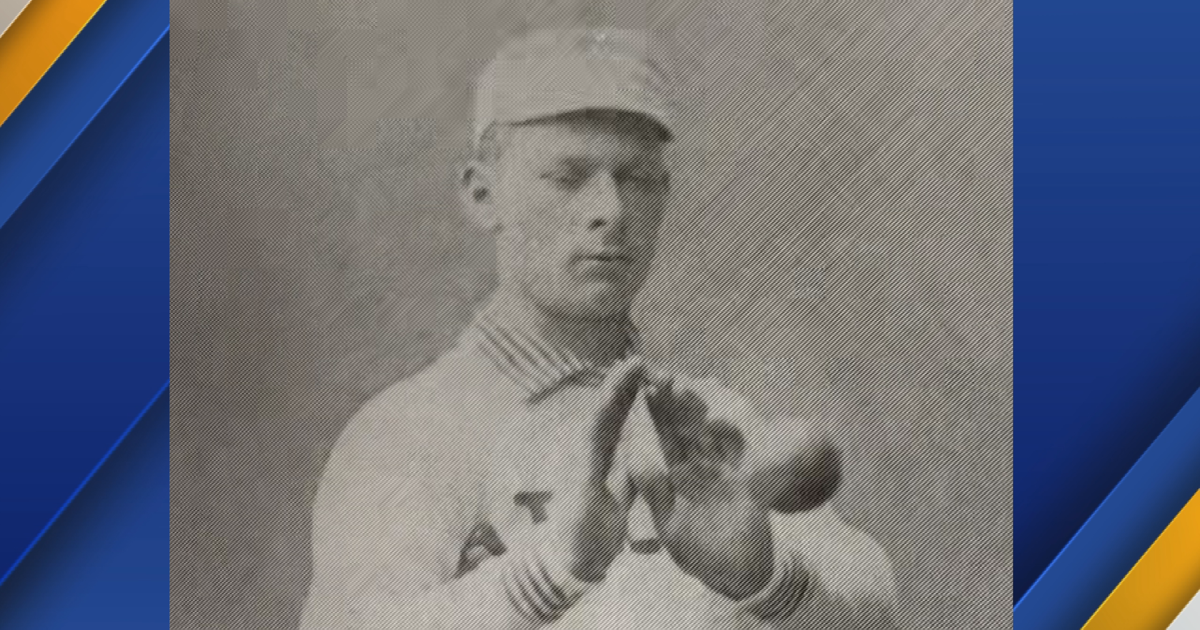
If you were to ask any Pittsburgh Pirates fans to name the most notable Buccos of all time, they probably would come up with the names of Honus Wagner, Roberto Clemente, Willie Stargell, or Bill Mazeroski. They probably would not come up with the name of Lou Bierbauer, a slugging second baseman from Erie.
I’m posing that question to Abby Spohrer, who now lives in Erie. She grew up in Hermitage in Mercer County. Her grandmother is a Cleveland Guardians fan.
“But the rest of my family are all Pittsburgh fans and Pirates fans,” she tells me. Just anything Pittsburgh really.”
Abby has no idea that a player from Erie was responsible for the Pirates being named the Pirates. I ask her if she would like to know the story of how the Pirates got their name.
“Of course, she answers. “I would love to know about some Pittsburgh lore.”
The saga of Lou Bierbauer is documented in a book called The Pirates Reader. It’s a collection of stories written about the Pirates by baseball writers throughout the years. According to writer Alfred H. Spink, Lou played for the Philadelphia Athletics in the late 1800s. He was a fan favorite in Philadelphia. However, he chose to play in a newly formed league in 1890. That league disbanded after one year. Players were supposed to return to their old teams. However, according to Spink, the manager of the Pittsburgh Alleghenys, Ned Hanlon, traveled to Erie in the depth of winter to sign Lou. The story claims that Lou had a shack on the Presque Isle peninsula and that Hanlon crossed the icy bay on foot during a snowstorm to secure Lou’s contract.
Ray Bierbower currently works at Presque Isle. He is related to Lou and is impressed with the danger Hanlon went through to sign his ancestor.
“Definitely would be a risk, but a risk that they were apparently willing to take to sign Lou to a contract,” Ray tells me with a laugh.
The Philadelphia Athletics were angry. They believed the Pittsburgh team stole Bierbauer. Philly newspapers began calling the team “Pirates.” The name stuck. Lou played for the Pirates for six seasons. He died in 1926. His gravestone can be seen at Erie Cemetery. Despite Lou’s contribution to Pittsburgh sports history, it is not a big attraction for Pirates fans.
“It’s not super popular because a lot of people are not aware of Lou,” says Becky Weiser, Marketing Specialist at the cemetery. “We get some visitors for Sam Jethroe here, for Lou on occasion.”
Lou Bierbauer is nicknamed “The Godfather of the Pirates.” because of his role in the naming of the team. Lou returned to Erie after his retirement from baseball. According to Spink’s article in The Pirates Reader, Lou took a job as a molder at Jarecki Manufacturing Company.
Lou Bierbauer, from Erie. The Pirates would not be the Pirates without him.