
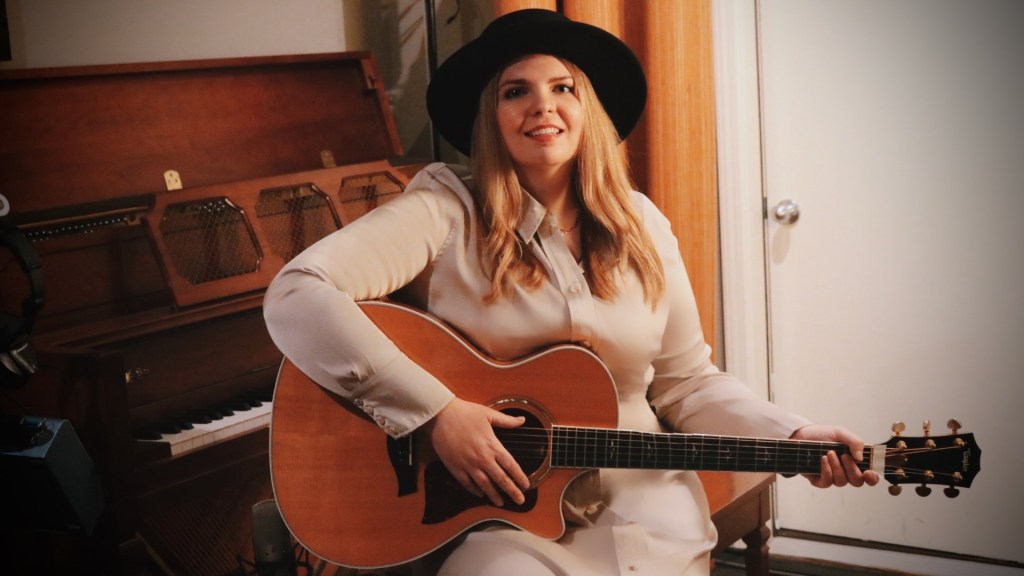
A traumatic brain injury at age 14 changed the trajectory of Cristabelle Braden’s life.
The injury happened when, at a youth group game, her head slammed against a cement wall before bouncing off the floor. Her brain swelled up and she needed an emergency CT scan. Overnight, the Southern Lehigh student went from straight A’s to struggling in school and being held back. Even walking became a struggle.
Now 32, the Lehigh Valley native, singer-songwriter and podcast host runs the nonprofit Hope Survives, dedicated to helping people with brain injuries navigate their new lives.
Every year, about 2 million people in the U.S. experience a traumatic brain injury, with nearly 69,000 dying from the injuries and hundreds of thousands hospitalized. Children make up nearly a quarter of all traumatic brain injuries, and about 2% of Americans live with a disability caused by a TBI, according to the University of Pennsylvania.
Braden said that due her brain injury, her memory of that time is spotty, but in the weeks and months after, her well-being declined. The right side of her body began to atrophy; while she could use her right arm and right hand, her dexterity deteriorated. She experienced vision issues, headaches and balance issues.
She said that her balance issues led to her falling and suffering more brain injuries, further compounding her problems
She isn’t unique in this regard; someone who suffered a TBI is at much higher risk of another TBI. TBIs also put people at significantly higher risk of dementia, seizures, depression, suicide, diabetes, obesity, high cholesterol, stroke, hypertension and coronary heart disease, according to the Brain Injury Association of America.
Braden said her injury altered her sense of identity, something she sees with many others.
“Suddenly, they can’t work the same job or their relationship with their spouse or family has shifted and they don’t know who they are. And so that’s really a lot of what we’re trying to help with Hope Survives and our work today,” Braden said.
Braden said she went from being among the top students in her class to struggling with reading and needing extra time. She had to relearn basic things like how to get dressed and how to take a shower.
For some people, Braden added, a TBI can make mental health issues worse or lead to new ones.
“It magnifies what was already underneath and takes away all your filters,” Braden said. “So if somebody’s already an angry person when they have their brain injury, they’re going to maybe be even more amplified, and have a hard time keeping themselves in check and navigating that.”
Finding relief through song
Braden experienced damage to her frontal lobe, the part of the brain that rules over impulse control and emotional regulation, which led to her struggling with her emotions. At first, she appeared on the outside to have no emotions; her expression was constantly blank and she struggled to express any feelings. Later, she lost her ability to control her emotions and would have temper tantrums or begin crying seemingly out of nowhere
She had trouble communicating her feelings and emotions to people, so she turned to songwriting and began playing piano again for the first time since she was a child. Then her parents bought her a guitar and a neighbor taught her a few chords.
“I could write lyrics and sing about the hard feelings and the complex emotions that I was dealing with, which now I know it was really identity loss. Like when your cognition changes from a hit to the head, it affects your identity because all the things you could do before you can’t do anymore,” Braden said.
From there, the trajectory of her life began to change. Though she still lived with the disabilities from her head injury, she began posting her music online. In 2012, she created a social media page called Hope After Head Injury. A community formed and in 2014, she started her first support group for people with head injuries. She began singing publicly and posting more videos, which led to her being invited to speak at conferences and events.
She said that during this whole time, she was still dealing with the effects of her brain injury. Though she was receiving treatment, it wasn’t what she needed. That wouldn’t come until 2019, when she went to the Functional Neurology Center in Minneapolis. She said everything started to change for her then. Thanks to treatment there, she was able to walk without looking at her feet, her vision was corrected and her balance improved.
Braden went back to school and got bachelor’s degrees in music and religion and a master’s in theology. And she started Hope Survives in 2024 to help others.
She still has more hills to climb, though she said. One is getting her driver’s license.
Hope Survives
While her life is looking up, Braden expressed some frustration that it took so long for her to get to this point.
“I believe if someone had the same injury now that I had 18 years ago, they would get much better treatment and have their issues identified. But it was about 10 years before I even got vestibular therapy,” Braden said. “It took me a long time to get the right treatment. It took my family a long time to find the right resources, which is why I’m passionate about helping other people find them sooner.”
Braden said that, fortunately, more is now understood about traumatic brain injuries and more continues to be discovered. The body of research on concussions and TBIs is deeper and there are more treatment options than even a decade ago.
The protocol for treating someone immediately after a concussion has changed, as well, and now includes physical and occupational therapy, cognitive rehabilitation, neurological treatments, mental health support and preventative treatments to prevent comorbidities. Detecting TBIs is also easier; there are blood tests capable of doing so.
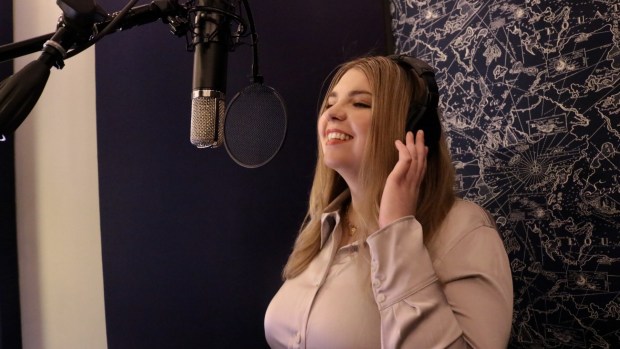 Cristabelle Braden is a Southern Lehigh graduate who suffered a traumatic brain injury as a teenager. A singer-songwriter, she started the nonprofit Hope Survives to help others with brain injuries. (Michael Rapak/Contributed photo)
Resources and treatment options exist. It’s just about connecting people to them, she said. And the motivation to connect people with resources, as well as the large support community she formed, is what motivated her to start Hope Survives.
“We focus on connection, understanding and practical support. We serve the people living with brain injury and the families who walk alongside them and we create spaces for people,” Braden said.
Hope Survives offers online support groups, educational webinars and creative workshops such as a brain injury-friendly painting class, creative writing and poetry. Braden said engaging in creative pursuits helps with neuroplasticity, the ability of the brain to restructure, change and heal from injury.
She said it serves people across the country and even internationally. And the scope of its work goes beyond traumatic brain injury to provide support to people with other forms of brain injury, such as stroke, brain tumors, oxygen deprivation, drug overdoses and long COVID.
She said that in the future, the nonprofit wants to offer in-person programs such as retreats. It plans to continue to expand as the human understanding of brain injury grows.
“The brain is so complex because it is the command center of your body, right? So it can affect every system in your body,” Braden said. “You can’t see a brain injury on the outside. But a brain injury will knock off so many systems in your body and can cause so many long-lasting effects for people. And it’s very hard to pinpoint exactly what it is, but more and more research is coming out. There’s so much hope for people to be able to find help and treatment in ways that weren’t available even 10 years ago.”