
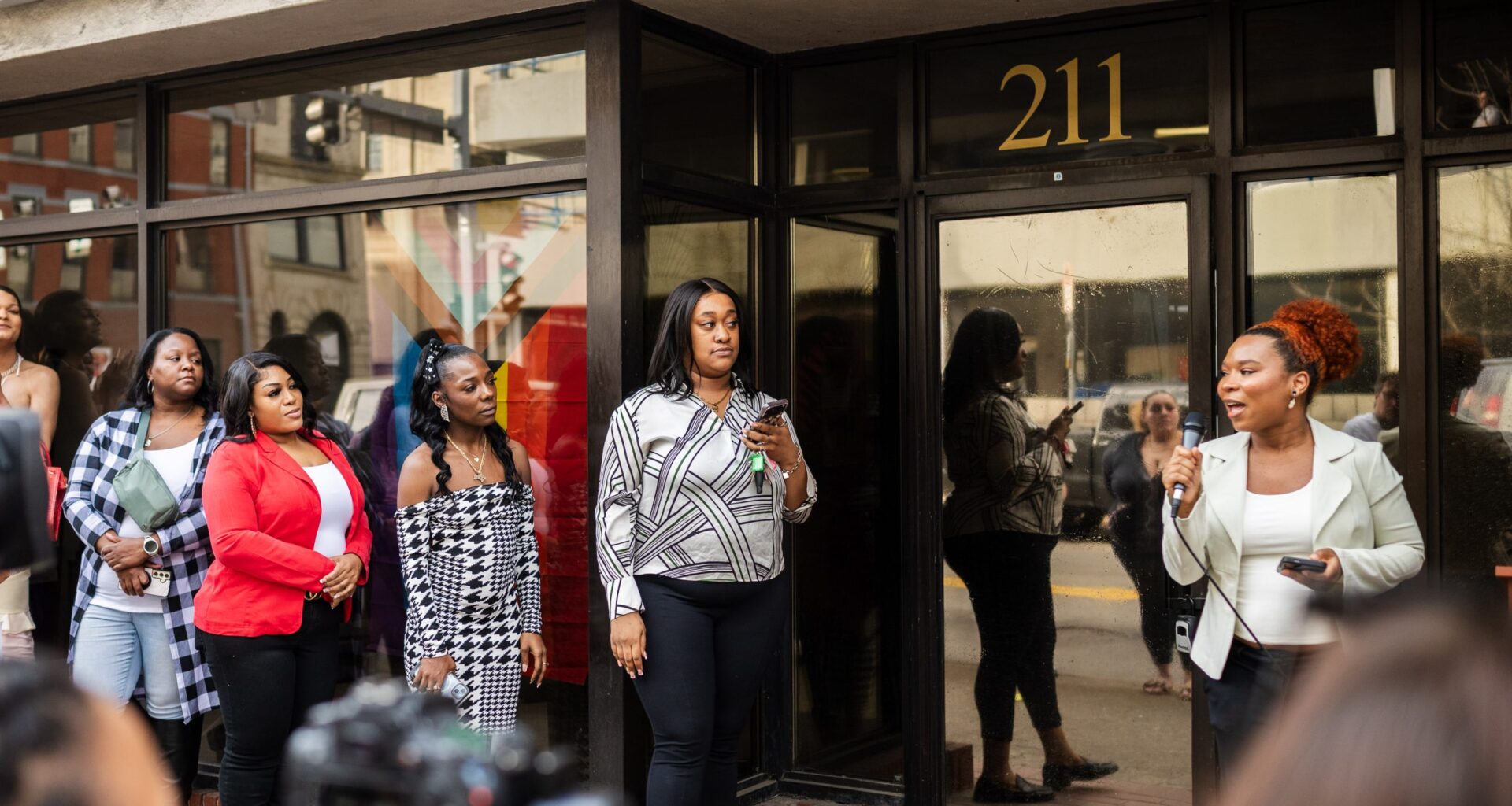
Downtown’s newest community resource center is tailor-made to help Black transgender people in Pittsburgh. Its amenities and services are all-encompassing: showers, laundry services, a food pantry, clean spaces for rest, behavioral health support and housing access among them.
For Ciora Thomas, the founder and executive director of managing nonprofit SisTers PGH, the opening symbolizes a landmark decades in the making.
“I started the organization when I was a teenager — like 16, 17,” Thomas says. “I was homeless, I was living right down here in Point State Park with other homeless Black trans girls, and I started to understand that there was a need that wasn’t being fulfilled within other spaces in Pittsburgh.”
The space, called The Stonewall Inn Pittsburgh, opened Tuesday, March 31. Its name is a direct reference to The Stonewall Inn, a National Historic Landmark and gay bar in New York City known as the site where the gay rights movement began in 1969. The Stonewall Inn Pittsburgh has no actual affiliation to the New York bar, though, aside from the associated sense of liberation for LGBTQ+ folks, Thomas says.
The opening coincides with International Transgender Day of Visibility, which raises awareness of the discrimination transgender people face and celebrates their contributions to the world.
Thomas calls it “a sanctuary for trans folks to find sustainability and resources and family.”
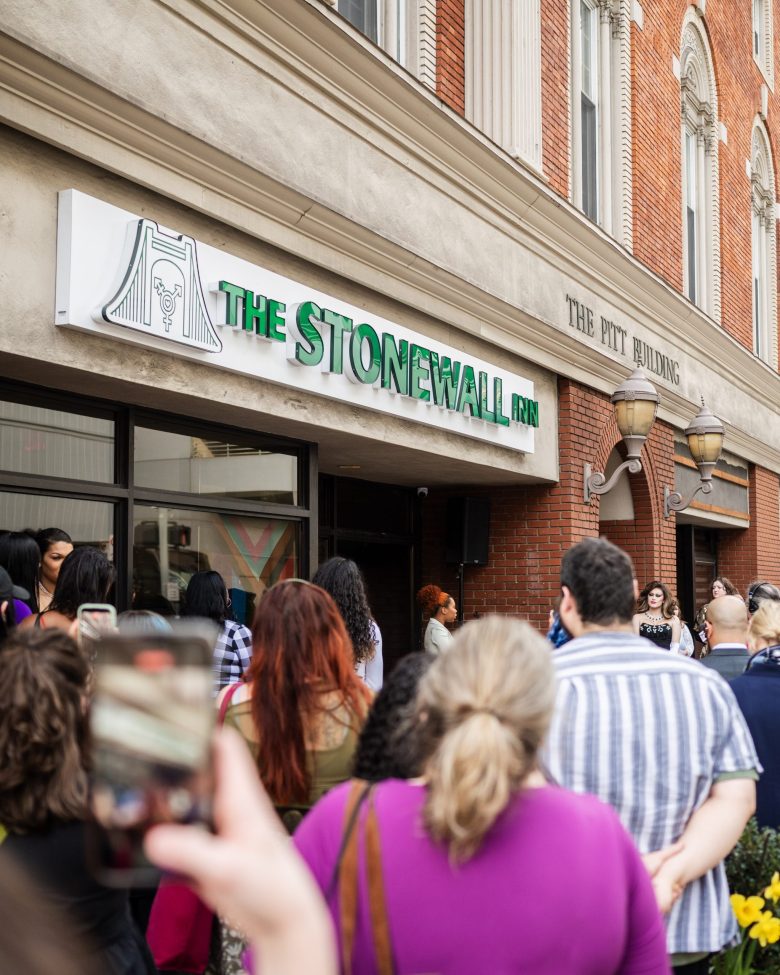 Pittsburghers gather for the grand opening of The Stonewall Inn Pittsburgh. Photo by Ava Grace courtesy of QBurgh.
While this expansive iteration of The Stonewall Inn Pittsburgh is new, SisTers PGH’s work in the city is not.
Last summer, SisTers celebrated its 15th anniversary and was recognized by Gov. Josh Shapiro as “Pennsylvania’s longest-running Black, trans, woman-led nonprofit.”
Its two staple programs, Project T and Monica, both provide access to units of affordable housing for trans people of color, while simultaneously connecting them to internal and external mental health, physical health and labor resources — the same services provided by former drop-in centers in Squirrel Hill and Swissvale and the new Stonewall Inn Pittsburgh.
Even though SisTers PGH has successfully operated in other neighborhoods, Thomas says the goal was always to have a centrally located resource hub.
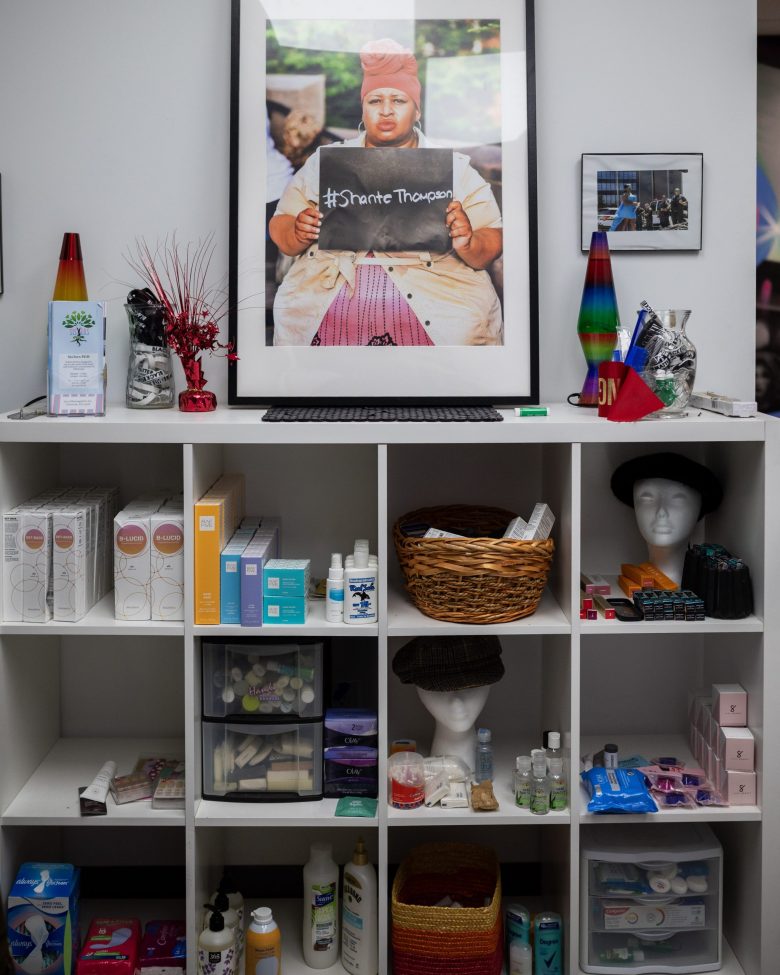 Beauty, hygiene and personal care items at The Stonewall Inn. Photo by Ava Grace courtesy of QBurgh.
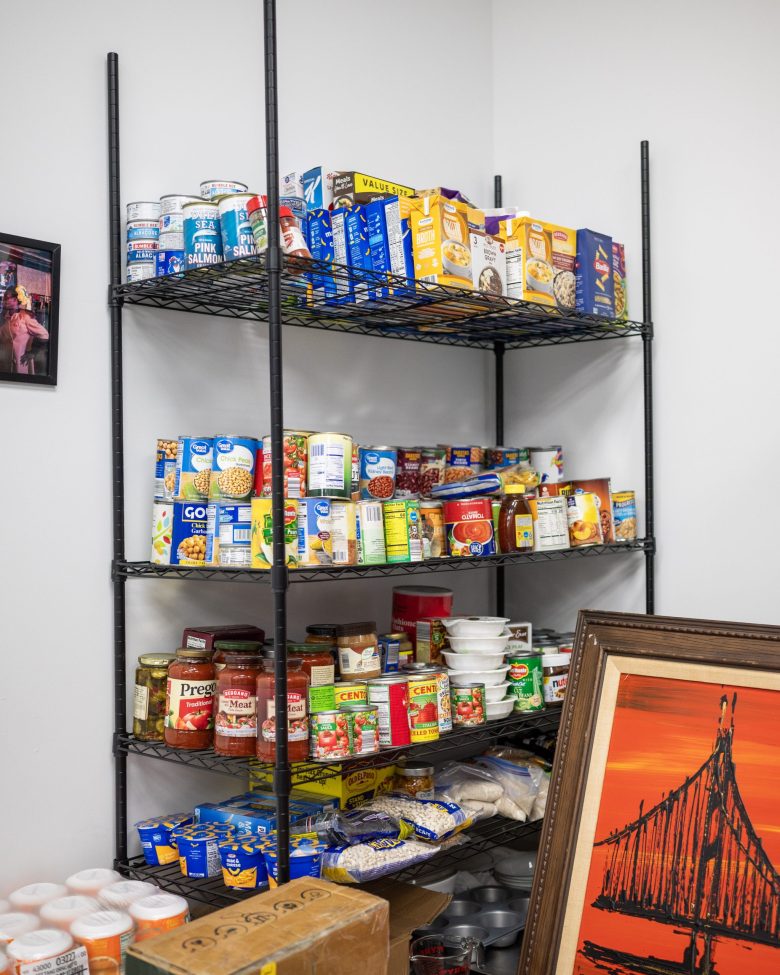 A food pantry available for community members in need. Photo by Ava Grace courtesy of QBurgh.
Moving Downtown wasn’t easy. Many spaces for sale weren’t financially within reach, Thomas says. Those that were often required even more money to renovate.
When SisTers moved its headquarters to Smithfield Street’s Emerald City — a coworking space that uplifts Black entrepreneurs and professionals through education and professional development opportunities — last April, co-founder Khamil Bailey showed Thomas the vacant storefront next door.
“When I saw it, I was just like, ‘This is it,’” she says. “There was an abundance of trans people who were homeless down here working, and we would make our way through the city. It’s just like a full-circle moment to be able to, now, provide services and resources for our community and connect them to these long-term housing options.”
One key feature that sets The Stonewall Inn apart from other drop-in centers is its “radical rest room” — a single plush bedroom within the resource center meant for short-term recovery.
“I don’t think folks know how liberating sleeping actually is, especially when you’re transient and moving everywhere,” Thomas says. “Folks can come, sleep and talk to our therapist, whose office is right next door.
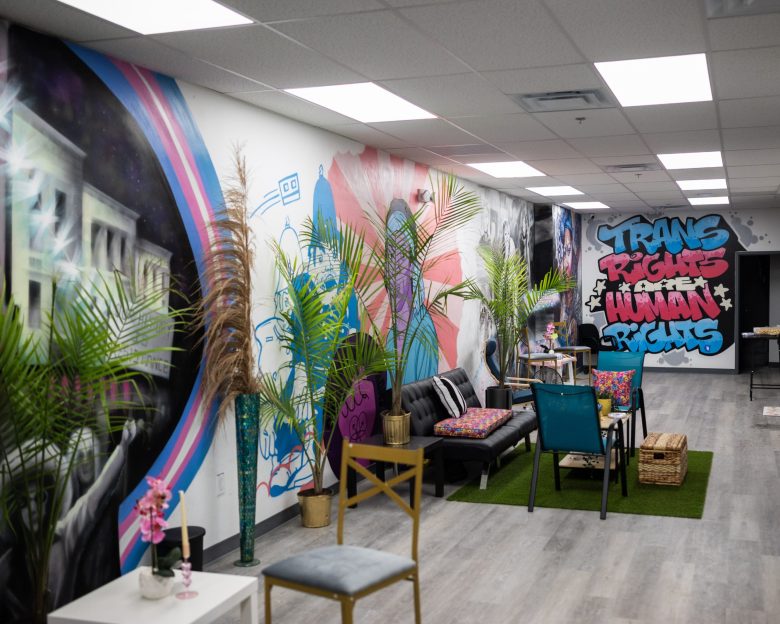 Inside The Stonewall Inn Pittsburgh, Downtown. Photo by Ava Grace courtesy of QBurgh.
“All those things are good for the soul.”
The full build-out cost between $200,000 and $250,000, Thomas says. While the work earned some grant support, including a $100,000 grant from the Heinz Endowments, Thomas says SisTers’ biggest asset — financial and otherwise — is the community that supports its work.
“One of our biggest donors is the community,” Thomas says. “That’s why we are able to have a general operating pool of funds like we do, is because the community — not just in Pittsburgh and Allegheny County or the state of Pennsylvania, but around the world — is donating to this little organization in Pittsburgh.”