
Philadelphia’s food culture is certainly something to celebrate. But behind the city’s acclaimed restaurants and Michelin-starred chefs is a quieter reality: Many Philadelphians are struggling with nutrition-related disease.
Heart disease remains the leading cause of death in Philadelphia, and the city has the highest prevalence of diabetes among the nation’s 10 major cities. These conditions don’t develop overnight. They take shape over years, driven by a complex mix of factors, including access to healthy food, socio-economic barriers, chronic stress, and daily habits around how people shop, cook, and eat.
Which is exactly why prevention must start early.
March marked National Nutrition Month, an especially important time to recognize the barriers that make healthy eating challenging for too many. In Philadelphia, community organizations work year-round to build those habits early with the help from federally-funded programs like Supplemental Nutrition Assistance Program (SNAP), and SNAP-Ed, which supports evidence-based nutrition education for low-income communities.
This work matters in a city where nearly 20 percent of residents live below the poverty line, and more than 472,000 rely on SNAP benefits to help put food on the table. For many families, cooking is a daily budget calculation. When groceries are already stretched thin, experimenting with unfamiliar fruits and veggies — and risking the waste that can come with it — is a risk most households can’t afford.
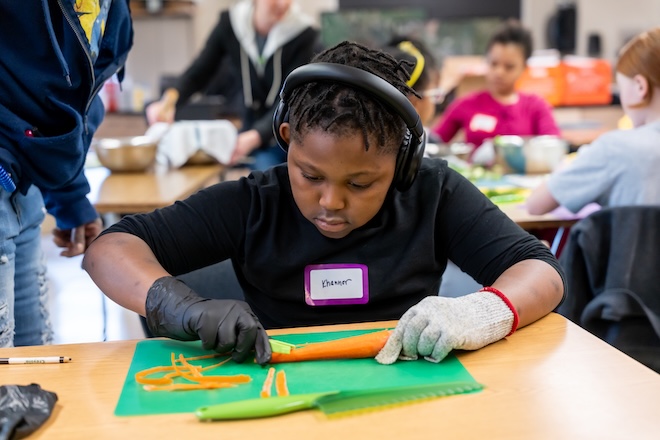 Kids learning how to prepare carrots
And that support now faces an uncertain future.
Federal budget cuts have eliminated SNAP-Ed entirely, putting thousands of programs, including many serving Philadelphia students at risk. With funding disappearing, far fewer residents — especially students — will have access to the cooking and nutrition education that helps build healthier habits early in life.
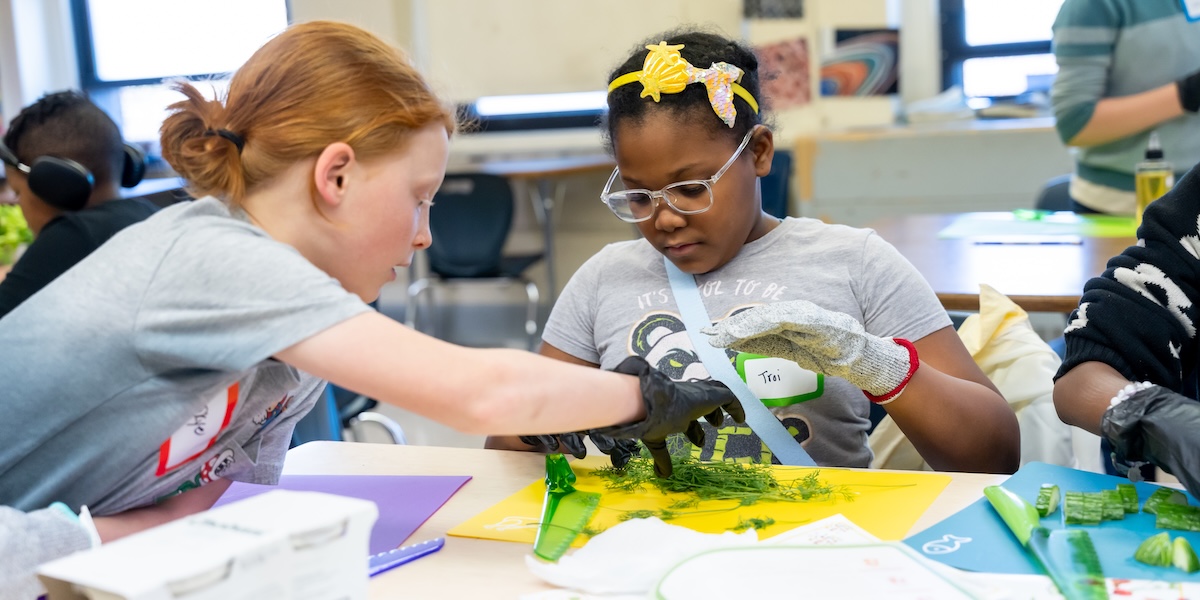
At Vetri Community Partnership (VCP), we see firsthand what happens when people are given the chance to cook. Since our inception, VCP has hosted nearly 2 million nutrition education-related experiences through SNAP-Ed programs, out-of-school Vetri Cooking Lab (VCL) classes and community cooking events for all ages.
In these classrooms, students learn how to chop vegetables, season simple ingredients, and turn affordable foods into a full, satiating meal. The skills themselves may seem basic, but the shift in mindset and behavior is life-changing.
Sixth-grader Pepe, who has participated in SNAP-Ed since kindergarten, started making homemade tortilla chips. When her mother asked one of our educators for a black bean and corn salsa recipe to add more fiber to the dish, Pepe eagerly helped, trying ingredients she previously avoided. Later classes on reading nutrition labels and measuring sugar soon reshaped how the whole family thought about what they eat.
From our experience, advice alone rarely changes how people eat, but hands-on cooking builds the confidence and ability to turn ingredients into real meals.
Pepe’s story is one of so many we see and hear of every day. When a young person realizes they can cook something themselves, food stops being abstract advice and becomes something they can do. From our experience, advice alone rarely changes how people eat, but hands-on cooking builds the confidence and ability to turn ingredients into real meals.
Research also supports what we see in our programs every day. A 2024 study published in the Journal of Nutritional Science evaluating VCL found that students significantly increased their cooking knowledge and confidence. Higher cooking confidence was associated with an 81 percent greater likelihood of positive changes in eating behavior, including a greater willingness to try new foods, an important step in building healthier eating patterns.
These lessons matter most when they happen early. Food habits begin forming in childhood, which makes schools one of the most powerful places to build the skills and confidence that shape how people eat for the rest of their lives. When young people learn how to cook, those habits often travel home with them, influencing how their entire families cook and eat together.
Without programs like SNAP-Ed, many Philadelphia students will lose one of the few opportunities they have to develop those skills. The consequences may not appear immediately. But over time, fewer cooking skills today will translate into higher rates of the same diet-related diseases our city is already struggling to address.
For local organizations like VCP, the stakes are also operational. SNAP-Ed has historically accounted for roughly one-third of our funding, supporting educators, classroom programming, and community engagement. Without federal support, nonprofits must rely far more heavily on private donors and cost-based programs to sustain their work. While we’ve launched new programs to help bridge this new gap, philanthropy alone cannot replace the scale or stability of federal investment, meaning fewer schools served, fewer families reached, and fewer prevention opportunities across our city.
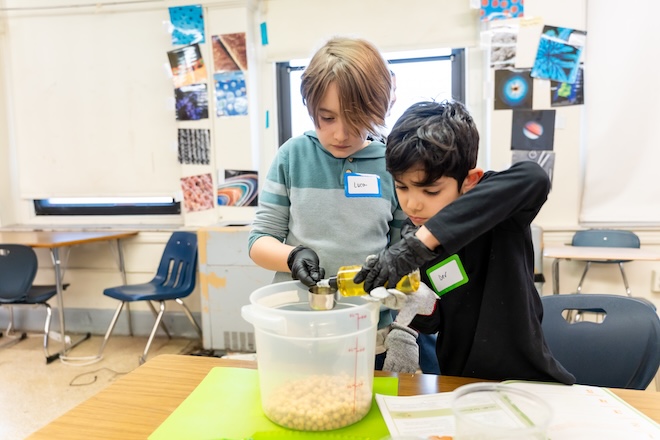 Learning how to cook
This impact extends far beyond any single organization. SNAP-Ed has supported nutrition education, cooking instruction, grocery-shopping guidance, and healthy lifestyle programs for thousands of Philadelphia residents each year, helping families stretch already limited food budgets while improving long-term health outcomes. In statewide terms, this has represented nearly $30 million in Pennsylvania alone.
Improving public health requires more than treating disease after it appears. It requires investing in prevention. Teaching young people how to cook may be one of the most practical and overlooked forms of prevention we have. At a moment when federal leaders are cutting the very programs that make this education possible, protecting these opportunities in any and every way we can must be part of the conversation.
If we want healthier communities in Philadelphia, we need to start by bringing cooking into all of our schools.
Residents who believe nutrition education matters can help ensure it remains a priority by urging local and state leaders, as well as philanthropic institutions, to invest in prevention-focused programs that equip families with the skills to cook and eat. Our community already recognizes the value of this work. But sustaining it will require continued support, whether by attending ticketed classes, donating, or volunteering time to these organizations.
With Philadelphia’s world-renowned food culture, childhood nutrition should be part of that legacy too.
Maddy Booth is the CEO of Vetri Community Partnership (VCP), an organization that provides nutrition education through cooking. VCP is a contracted local partner of Pennsylvania SNAP-Ed to improve the likelihood that families eligible for SNAP benefits can make healthy food choices within a limited budget.
The Citizen welcomes guest commentary from community members who represent that it is their own work and their own opinion based on true facts that they know firsthand.
 MORE ON HEALTHY FOOD FOR PHILLY