
ALLENTOWN, Pa. — Within a cemetery, graves carry their own story. What’s buried beneath Edna Brill’s is almost beyond belief.
“Under my mom’s name is Kaytek,” said Sam Brill.
It was Edna’s favorite childhood story.
“It was about a little boy who had these magical powers to basically fight evil. And for her, it was her nom de guerre, as we say,” Brill said.
As a 9-year-old, Edna was given a gun and fought for the Polish resistance in Warsaw during the Nazi occupation in World War II.
“History records what happened to children. There are very few stories of what children did, what Jewish children did to survive,” said Janet Brill.
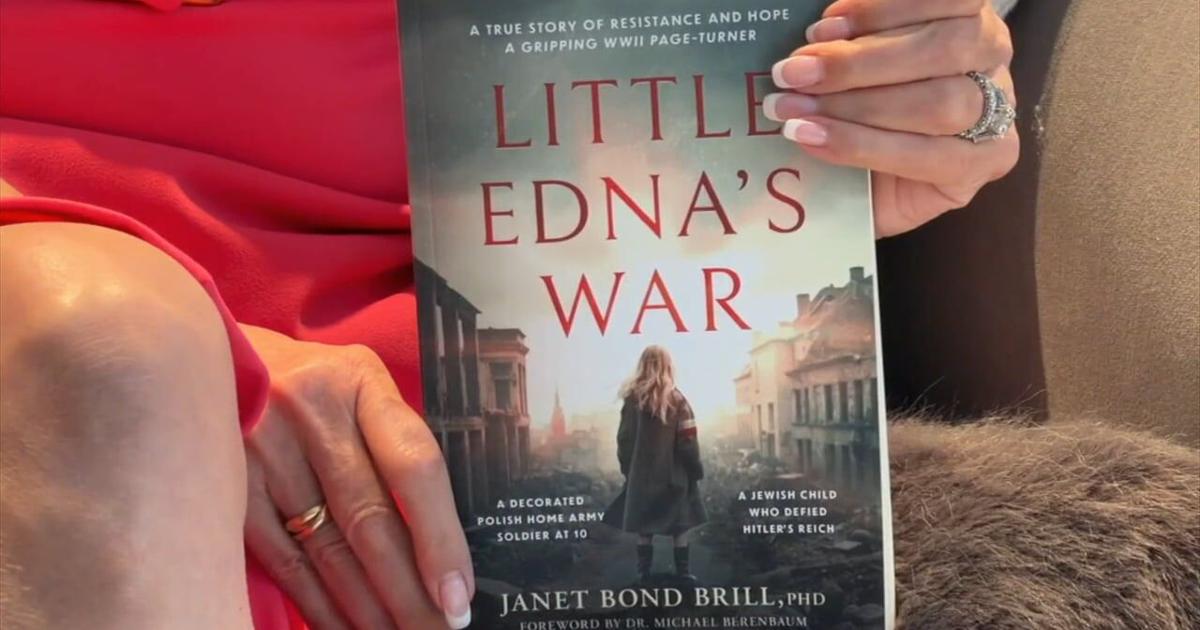
In her book “Little Edna’s War,” released on International Holocaust Remembrance Day, Edna’s daughter-in-law, Janet Brill, details the disbelief of Edna’s childhood.
“Edna’s first act of resistance was sneaking through the holes in the Warsaw Ghetto wall and actually performing with her sister on the Aryan side so they could get money,” she said.
Through extensive conversations with Edna, Brill tells how Edna and her older sister, Miriam, took the names of two dead Catholics; the pair survived by street performing on the Aryan side of the city.
How stealing, smuggling, and living on the edge of death led to Edna, at 10, earning a Cross of Valor from the Polish Home Army.
“She was wounded by a grenade, and she had shrapnel. She used to show us; she still carried shrapnel in her body throughout her life,” Brill explained.
In 1946, Edna was one of 15 honored by Pope Pius XII for defending Christian Poland, with the pope never knowing Edna was Jewish.
Resilience then emerged from resistance, taking shape in the Lehigh Valley.
“I would see Edna as a person who was well-dressed, always with a smile on her face, always with an exuberance for life,” said friend Richard Hertzberg.
Brill and her husband, Harry, who has a similar story of heroism in the Holocaust, moved to Allentown in 1966. The pair had two sons, assimilating into high society.
“We had a very unique relationship. I like to dance. Edna likes to dance. And so, we would always find the opportunity to dance at any of these functions,” Hertzberg said.
“Could you stand in front of a Gestapo Nazi that murdered your family and puts a gun to your head and said, ‘Sing’? I mean, who could do that?” Janet asked as we walked down her New York City street.
“Edna,” 69 News reporter Bo Koltnow said.
For Sam, a mother shaped by war became a shield for normalcy.
“I’m her legacy; my brother, who passed away not too long ago, her legacy; the grandchildren,” Sam said.