
Sign up for Chalkbeat Philadelphia’s free newsletter to keep up with the city’s public school system.
Eighth graders Alexis Rodriguez and Dominic Wolbert spent the week before a recent Philadelphia Board of Education meeting getting ready.
They had taken hours to write their speeches and get feedback on them from their teachers at Stetson Middle School. They had overcome some nerves and discomfort.
When their names were called to speak at the March meeting, they looked directly at the school board members and told them: Don’t close our school.
“Stetson for me was a place where I could learn, and grow, and befriend people who I hold very close to me,” said Rodriguez, 14. “Phasing out our school is to crush the feeling of safety and belonging.”
With their testimony complete, the two middle schoolers ducked out of the board meeting around the two-hour mark to grab chips and soda from the vending machine. It was still a long night ahead, with dozens of other students, teachers, and parents signed up to speak out against the closures.
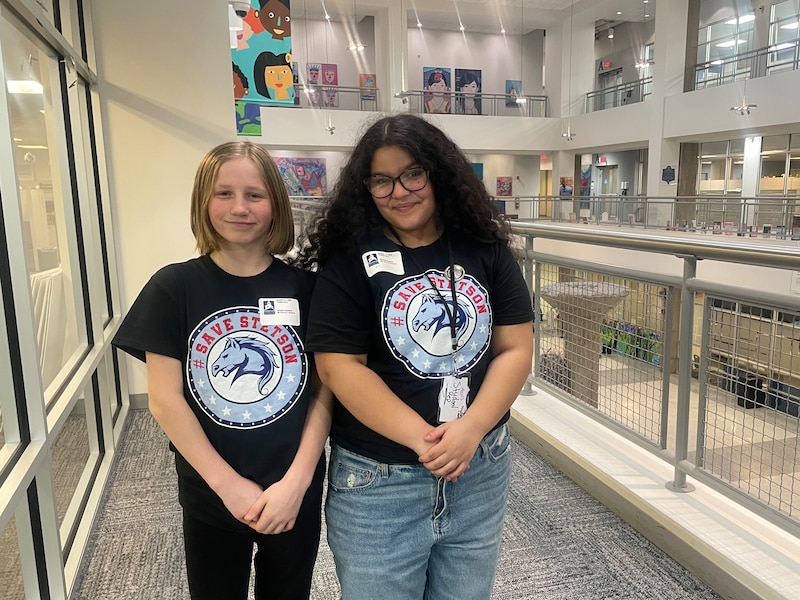 Stetson Middle School students Dominic Wolbert (left) and Alexis Rodriguez practiced their speeches to the Board of Education before giving their public testimony at a recent town hall meeting. (Rebecca Redelmeier / Chalkbeat)
In the months since Superintendent Tony Watlington released his proposal to close 18 schools, students have been front and center in the fight against the plan. Kids as young as 6 have testified at school board meetings. High schoolers have planned walkouts, analyzed district data, and built relationships with members of the City Council to try to push change. Some students spent part of spring break attending a training on how to organize against the closures.
Watlington has said the plan will mean all students go to class in quality buildings and have more access to desirable programming, like AP classes. The $2.8 billion proposal also includes modernizing more than 100 schools.
Students Chalkbeat spoke with said they didn’t regularly attend school board meetings or keep up to date with local political decisions. But the school closure debate was one that mattered to them and mobilized them. Some said working together to fight the school closures has forged new deep bonds within the schools. Others said it made them question why it seems students and families have so little say in school decisions.
We’re here to help.
Every day, Chalkbeat Philadelphia reporters are answering your questions, following the money, and digging into what’s happening in the city’s public schools. Keep up with our free newsletter, delivered every Wednesday and Friday morning.
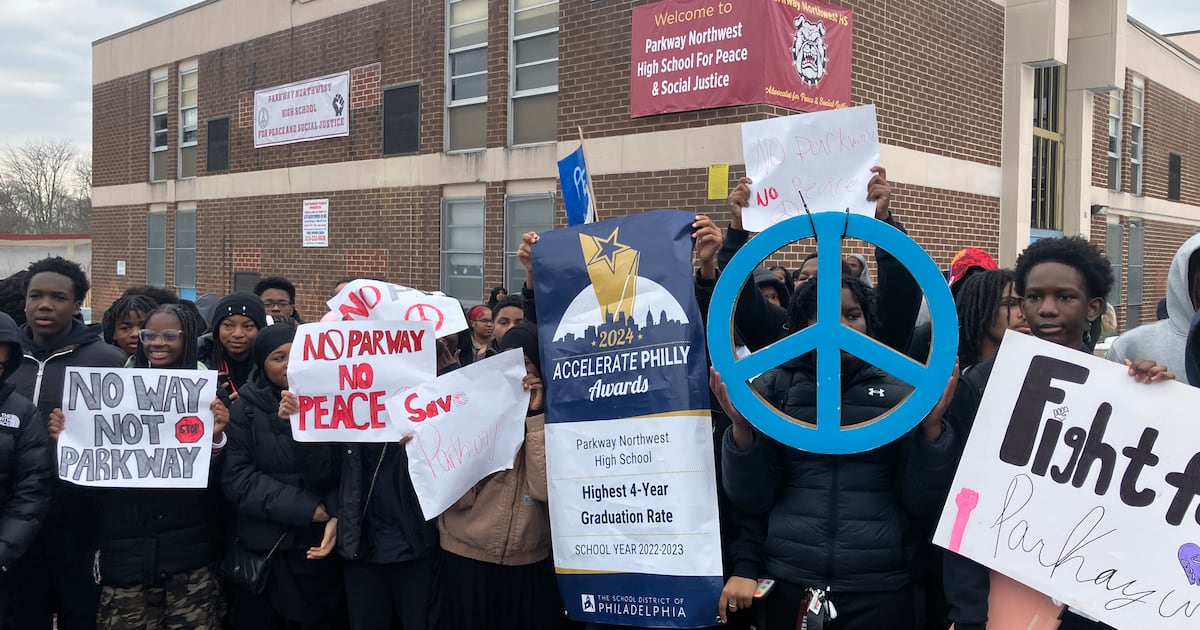
Qeni Corinaldi, a senior at Parkway Northwest High School for Peace and Social Justice, said the proposal to close his school got him wondering about who has power over schools in the first place.
“It went from, ‘Oh, my school’s being shut down’ to ‘I’m going to learn more about it,’” Corinaldi said.
After he spoke to teachers and friends, attended a school board meeting, and did some research, he had questions. Why did the mayor get to decide who was on the school board? How did Watlington get his position? Why did it seem that Watlington and the school board were in sync, if they were supposed to be separate entities?
When he realized how much power was concentrated in the hands of just a few people, he was shocked. “The power structure is not what democracy is all about,” Corinaldi said.
Students overcome nerves to publicly criticize school closures
The board will make the ultimate decision about which schools close, but they have not yet said when they will vote. In the meantime, students are pulling every lever they can to try to push the board to make changes.
At Lankenau Environmental Science High School, students have helped organize an event showcasing the school’s programs and ties to the 400-acres of natural land surrounding the campus. At Parkway Northwest, students led a roundtable discussion with Councilmember Cindy Bass to share their perspective on the closure process.
Parents and teachers have helped younger kids get involved too.
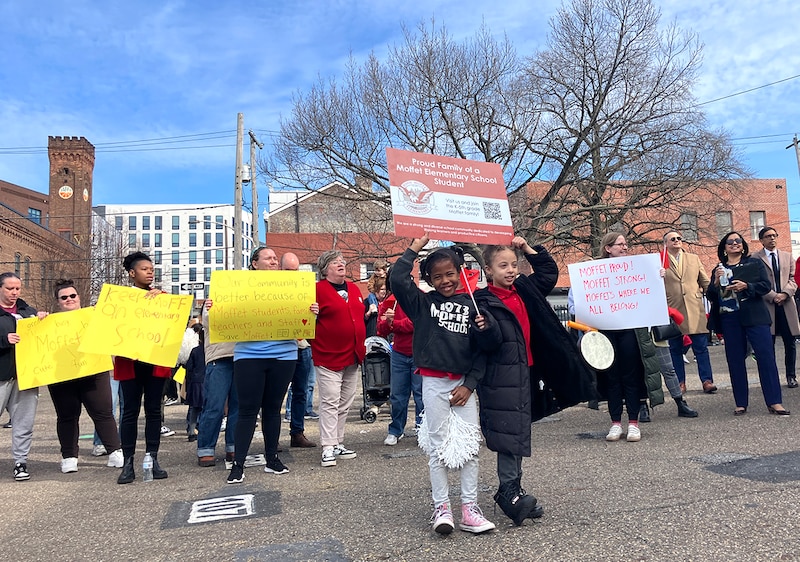 Students at John Moffet School in Philadelphia rally on Wednesday, March 25, 2026, to oppose the district’s plan to change their school from an elementary school to a middle school. (Carly Sitrin / Chalkbeat)
At a rally outside John Moffet Elementary School, which the district wants to turn into a middle school, 9-year-old Morgan Chism had a simple question about the plan: “Why do I have to walk a mile just to get to school?”
Chism’s grandmother, Brenda Riggins, said he had been raising questions about who makes decisions about education ever since Moffet parents started organizing people against the facilities plan.
Riggins said Chism has always been a civically engaged kid — he would prefer to watch cable news and not cartoons, she said — but this moment has gotten him to ask questions about the deeper issues of inequality that plague the city. Even if he doesn’t fully understand the depth of them yet.
Another Moffet parent, Lina Ahmad, said her son Yahya was really sad about the change planned for the school. But speaking up to try and spare the school has given him new energy, she said.
At the rally, Yahya was too small to see over the podium but spoke confidently about his love for his school. “I don’t want to move,” he told the crowd of parents and teachers. “The school is actually one of the best schools. I don’t want to leave.”
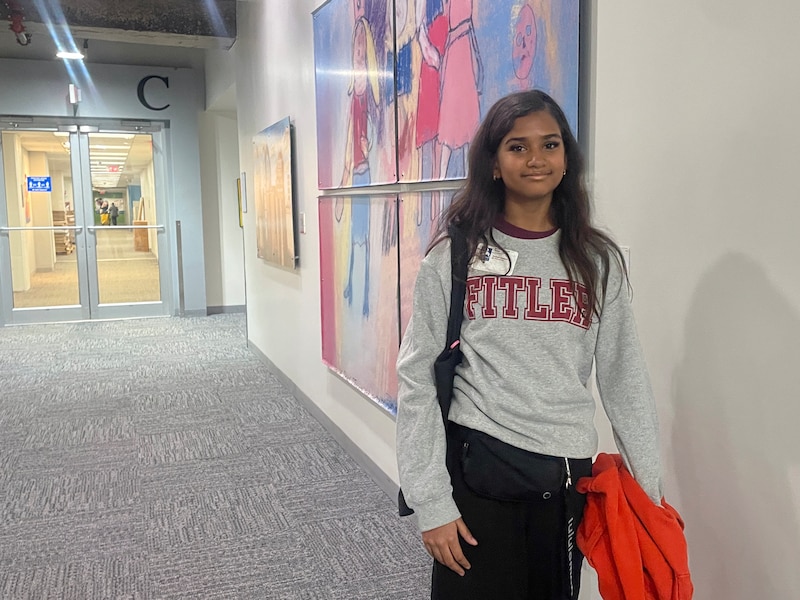 Fitler Academic Plus 8th grader Ana Urena testified at a recent school board meeting to urge the Board of Education not to close her school. (Rebecca Redelmeier / Chalkbeat)
Ana Urena, an eighth grader at Fitler Academics Plus who testified at the board’s recent town hall meeting, said she was nervous about speaking in front of the crowd. But she realized that the decision at stake was one that could lead to thousands of students losing their schools. “That’s what really motivated me to do it,” she said.
She said she hopes that by sharing her perspective, the board will put student voices front and center.
“When I’ve heard the board speak, when I hear the adults that have the power to fix this, all I hear is money. Billions of dollars, millions of dollars. It doesn’t matter,” Urena said. “I don’t hear the students.”
Chalkbeat Philadelphia Bureau Chief Carly Sitrin contributed to this story.
Rebecca Redelmeier is a reporter at Chalkbeat Philadelphia. She writes about public schools, early childhood education, and issues that affect students, families, and educators across Philadelphia. Contact Rebecca at rredelmeier@chalkbeat.org.