
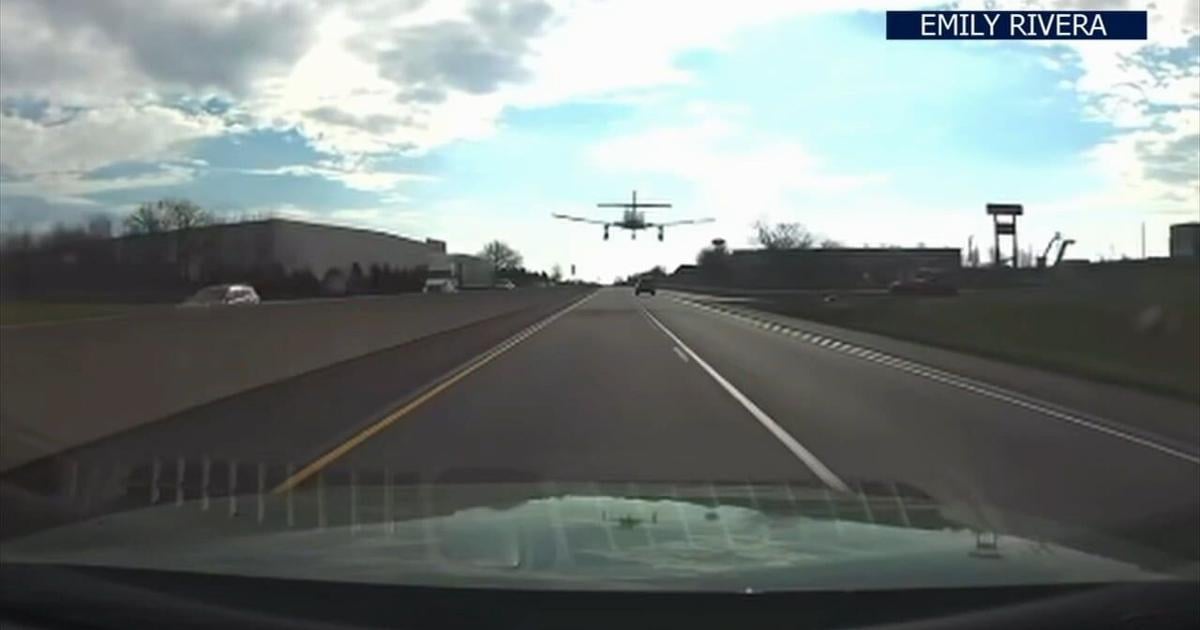
WEISENBERG TWP., Pa – Air traffic control audio captured the moment a plane made an emergency landing on I-78 in Weisenberg Township Saturday morning.
“In that area of the highway is the best I got,” said air traffic control.
“Okay. We’ll do it,” said the pilot.
The pilot can be heard telling air traffic control his plane had partial power.
“It looks like you’re descending, are you not able to hold up?” air traffic control asked.
“Uh negative,” the pilot responded.
“The highway is just off your right,” said air traffic control.
“Yeah, I don’t want to land on the highway,” the pilot responded.
“The pilot, I would say, did a fantastic job in this situation,” said Caleb Cawley, a Lehigh Valley-based certified flight instructor. “You know, he was trying to glide to Queen City, realized that that wasn’t going to happen, so again the highway became his best option,” said Cawley.
He said in an emergency like this, pilots go through a checklist to get engine power back. The ABCD checklist comes next.
“Which we pitch for our best air speed, so that would give us our best glide to get to a place that’s safe and in the most amount of time possible. And then we look out around us, and we look pretty much as far as we can see to try to find our best place to land,” said Cawley.
He said if an airport is not around, the highway is one of the better options.
“But if it’s rush hour, what if there’s a lot of traffic on the highway? You then can’t put the plane down there, so where else can you go? A corn field is certainly one, so you know landing in a field somewhere or a grassy area, some sort of open space that is not obstructed by any obstacles,” said Cawley.
Cawley said he thinks the pilot was able to keep calm because he relied on his training.
“This pilot in this situation relied on the emergency procedures that he’s practiced time and time again and was able to remain calm and collective during this pretty crazy situation,” said Cawley.
The Federal Aviation Administration is investigating the emergency landing.