
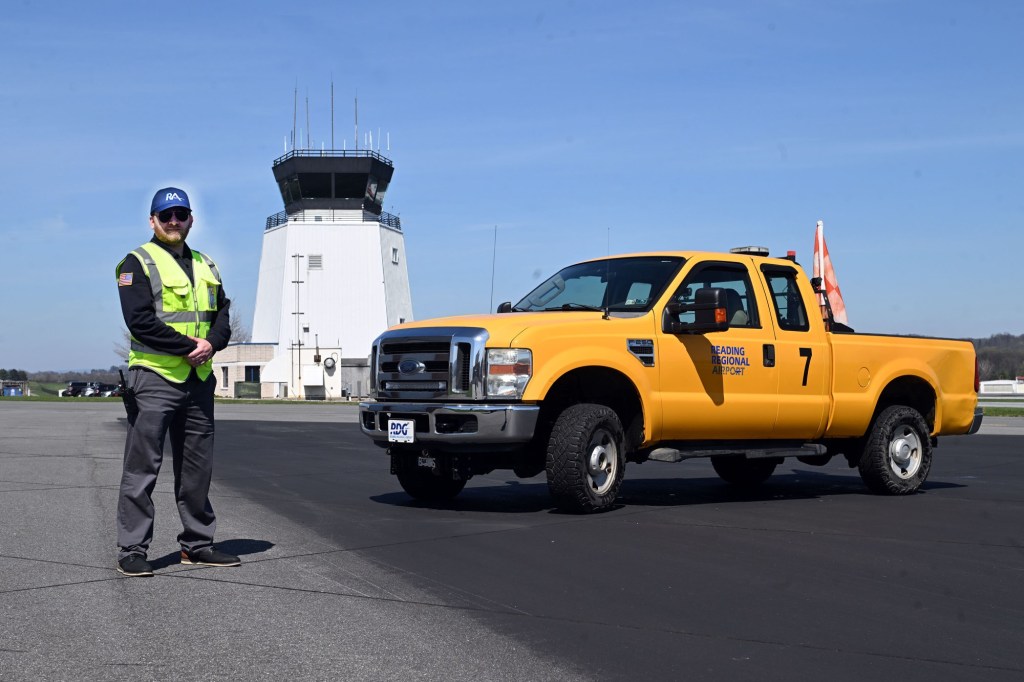
The Reading Regional Airport is on a federal list of more than 150 airports nationwide with “hot spots” for potential aircraft collisions on the ground.
But airport officials say the inclusion is no cause for alarm, explaining that its purpose is to shed light on potential safety concerns and find ways to mitigate them.
The FAA created the list for commercial and general aviation airports in 2022 to improve awareness of safety measures on the ground.
The government agency defines a hot spot as “a location on an airport movement area with a history or potential risk of collision or runway incursion, and where heightened attention by pilots and drivers is necessary.”
“It is easier for users to safely navigate on the airport surface if they are aware of the hot spots,” the FAA states on its website. “Proper planning helps avoid confusion by eliminating last-minute questions and building familiarity with known problem areas.”
Five other Pennsylvania airports appear on the FAA hot spot list: Philadelphia International Airport, Harrisburg International Airport, Pittsburgh International Airport, Capital City Airport and Williamsport Regional Airport.
The most recent report was released in the wake of a crash that occurred last month, when an Air Canada Express jet collided with a Port Authority fire truck at LaGuardia Airport in New York. Two pilots were killed and dozens were injured.
Here’s what the list said about the Reading airport:
• Hold lines on Taxiway B for Runway 31 and 36 can be confusing due to close proximity.
• Area along Taxiway H from Taxiway D to Runway 18, hold line not visible from the air traffic control tower.
• Area along Taxiway A from terminal ramp to Runway 36, hold line not visible from the air traffic control tower.
• Maintain vigilance, confusing taxiway configuration near adjacent ramp.
Zackary Tempesco, Reading airport director, said identifying these hot spots is part of its safety program along with other requirements through the FAA. He said his team works to improve these areas through training, communication and project development.
“Reading Regional Airport participates in training throughout the year specifically aimed at increasing safety on airport operations surfaces,” he said. “This includes individual training and group training through Runway Safety Action Team meetings.”
Tempesco said hot spots are reviewed continually with vehicle and aircraft operators to reduce risk, adding that when funding allows the airport will work with the FAA to mitigate each area of concern if possible.