
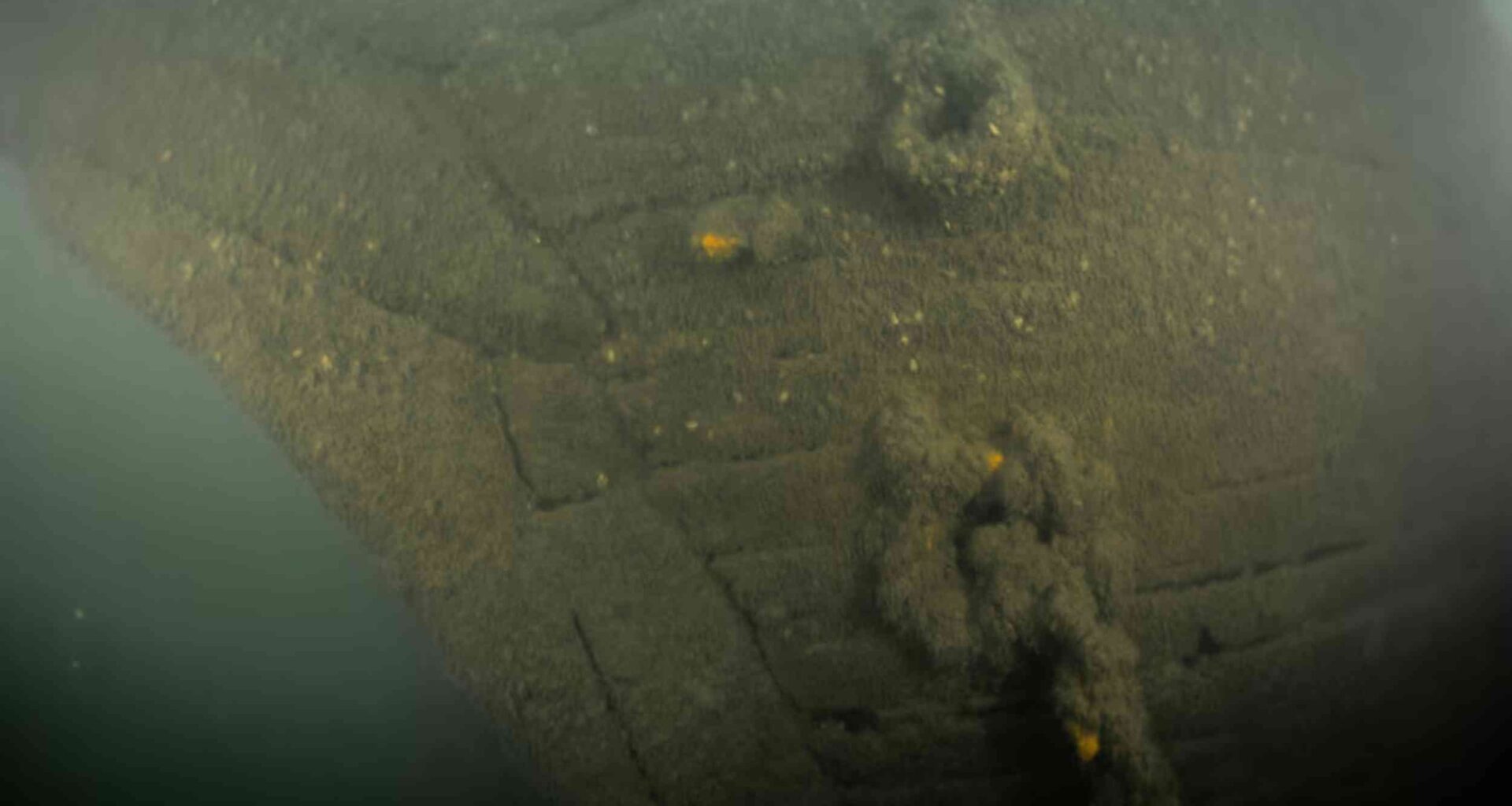
Researchers have identified a shipwreck in Lake Erie as the Clough, a stone-carrying vessel that disappeared in 1868 after its cargo shifted during a storm.
That identification resolves a 158-year mystery and restores a lost crew to the historical record of a region built on Great Lakes commerce.
Identity found in debris

On the lake bottom, the preserved wreckage and cargo matched the details of a single missing vessel from the historical record.
Carrie Sowden at the National Museum of the Great Lakes linked the site to a ship called the Clough by matching its construction and stone load to documented accounts.
Those features narrowed decades of speculation down to one ship that was lost shortly after its launch.
That conclusion places the wreck within a specific historical event, providing a clearer account of how and why the vessel was initially lost.
Stone, storms, and a sealed fate
Built in Lorain, Ohio, in 1867 to haul stone, the Clough was not a passenger ship, but a workboat serving the markets of the Great Lakes.
Sailors called it a bark, a three-masted ship with mixed square and fore-and-aft sails, built specifically for heavy commercial runs.
During the final storm, a large wave crashed upon the deck load, and water came aboard faster than pumps could clear it.
Just 14 months after launch, the vessel was gone, and only one crew member survived the wreck.
The journey from quarry to shore
The ship was named after Baxter Clough, a quarry owner from Amherst, Ohio, who supplied stone across the region.
Baxter Clough was moving raw material for an area that was building roads, breakwaters, mills, and fast-growing towns.
In Amherst, west of Cleveland, local quarry history notes that he built docks and a railroad to move stone efficiently.
His business model explains why the wreck caused so much damage, because waterways moved sandstone cheaper than wagon traffic could.
The ship’s short life lives inside a larger industrial story with wider, historical context.
Reading between wreckage lines
Confirming the wreck was indeed Clough took more than examining old wood, because the team had to match physical clues with written records.
Early passes with side-scan sonar, a tool that maps the lake floor with sound, first flagged the site for closer and more rigorous observation.
Hull size, rigging clues, and the stone load narrowed the answer until only one missing vessel still matched the description.
Once those pieces lined up, the wreck ceased to be anonymous, and a long long-running question was finally answered.
Clear evidence in cold waters
Lake Erie did not leave the Clough untouched, but fresh water can preserve wood and iron longer than saltwater.
Across the Great Lakes, the National Oceanic and Atmospheric Administration (NOAA) estimates about 6,000 historic shipwrecks remain underwater, each one a fragment of commerce and risk.
NOAA says the properties of cold, fresh water helps to maintain wreckage sites that are among the best preserved in the world.
That environment explains why a 19th-century workboat could remain unseen for so long and still contain and preserve decisive evidence.
Persistence beneath the surface
Cleveland Underwater Explorers (CLUE) had searched for this wreck for years, and the search grew after founder David VanZandt died in 2024.
His colleagues decided that finishing the identification would honor him, rather than leaving the site nameless and unfinished.
Each observation added measurements, photographs, and record checks, transforming the loss of their founder into meaningful discovery.
This changed the tone of the discovery of the wreckage, made part memorial, and part research milestone.
An underwater burial site
Seven people died here, knowledge that kept the wreck from remaining a mystery.
Divers felt sober upon their returns, knowing that the wreck marks the burial ground of the majority of the crew.
Records preserved the numbers, but the site itself made those deaths harder to treat as old statistics.
The human aspect of loss from the Clough differentiates it from becoming just another entry in a wreck catalog.
History as public knowledge
Toledo’s museum brought the discovery ashore through a temporary exhibit that shows the identification process.
“This discovery represents both a significant chapter in Great Lakes maritime history and a meaningful continuation of David VanZandt’s legacy,” said Sowden.
Instead of treating the wreck as a lucky find, the display follows the process of mapping, comparing, and confirming.
That public version matters, because discoveries like this last longer when specialists turn private evidence into shared local memory for the public.
Countless stories remain underwater
A singular confirmation of a wreck doesn’t close the story of the lake, and several Lake Erie wrecks remain unidentified.
NOAA’s broader count shows the scale below the surface, and CLUE says new targets keep appearing.
Every identification needs records, repeated visits, and patience in cold, low-visibility water where small details are paramount.
That means the next answer will probably arrive the way the Clough did – slowly, carefully, and through patient processes.
The study is published in the National Museum of the Great Lakes.
—–
Like what you read? Subscribe to our newsletter for engaging articles, exclusive content, and the latest updates.
Check us out on EarthSnap, a free app brought to you by Eric Ralls and Earth.com.
—–