
Call me an analog stick in the digital mud, but I can conceive of no better setting for learning about invasive data center development than an old-school “data center.”
About 75 curious and rightly concerned citizens turned out Monday evening at the Valley Community Library in Peckville for an informational update hosted by Stop Archbald Data Centers, the grassroots group leading the resistance against the annihilation of Archbald in service to the so-called “AI boom.”
Founders Tamara Misewicz-Healey and husband Justin Healey and other members of Stop Archbald Data Centers did their best to relate the enormous scope of the invasion but also inspire hope in citizens whose past experience with outside exploiters suggests that resistance is futile. These people do their homework, paying particular attention to basic math.
The numbers are staggering: 51 buildings each the size of a Walmart Supercenter; massive new power infrastructure including a power plant and miles of lines; hundreds of diesel generators; thousands of gallons of diesel fuel; millions of gallons of fresh water siphoned away daily; environmental devastation; toxic emissions and noise pollution linked to cancer and other diseases; and devastating declines in property values.
It was clear that some in the crowd were hearing the grim details for the first time. Grimaces and expressions of shock and awe rippled across many faces in the room. The stakes are existential, but Stop Archbald Data Centers organizer Janessa Bednash rightly insisted that this is no time to give up hope.
“I know this is a lot; it’s very overwhelming, but I just want to make sure that everybody still has hope as we’re going through this,” she said. “I know that a lot of people say that there’s nothing that we can do, that it’s a done deal, but as we’ve already said, not one of these proposals has been approved at this point. And as far as Archbald goes, we are simultaneously a cautionary tale on what not to do with your zoning, and in my opinion, also a gold standard on what to do from a community opposition standpoint.”
The crowd responded with hearty applause. I was thrilled to see retired Lackawanna County Judge Tom Munley in the room. He’s a dear friend and a personal hero of mine who also happens to be one of the most respected and trusted voices in the Midvalley.
“I’m gonna get educated on this stuff,” he told me, “and then I’m gonna get involved.”
Jeffrey Lake, the political newcomer and Clarks Summit resident challenging incumbent state Sen. Marty Flynn, D-22, for the Democratic nomination in the May 19 primary, expressed support for moratoriums on data center development like the one proposed by state Sen. Rosemary Brown, R-40. Lake said a pause in development would allow time to “really understand” the harms and benefits and preempt avoidable tragedies like the abandoned Kerr-McGee wood treatment plant, which poisoned the water and people of Avoca for years after it was closed. In 2003, the now-defunct oil company settled a lawsuit with more than 1,000 plaintiffs. Settlement amounts were kept confidential, and the company accepted no blame.
“For those of you who have been around for a while,” Lake said, “I don’t think we want another Kerr-McGee.”
Neither does state Rep. Kyle Mullins, D-112, who told the plain truth about what state officials like him and Rep. Kyle Donahue, D-113, are up against while trying to craft legislation that protects communities within the framework of a state constitution designed to protect the interests of industrial exploiters.
“I haven’t seen the language in the moratorium bill in the Senate,” he said. “I would imagine that’s because they are trying to find out how you can legally write it to pass constitutional muster. … None of this is easy, but none of what you’re doing is easy, either.”
Easily the most succinct, straightforward appraisal of the data center invasion was uttered by Jessup resident Bonnie Urzen.
“Even if all of these things were built in industrial zones (such as along the Casey Highway),” she said, “this is just too much.”
Bonnie’s observation is plainly true and an understatement for the ages. If all or even most of the planned projects are eventually approved, Archbald and much of the Midvalley will cease to exist as its residents know it. That would be so even if the development was confined to industrial properties along the Casey Highway. The toxic byproducts of data centers spread far beyond their physical footprints.
Even the construction of 51 libraries — the most reliable, least invasive “data centers” humanity ever conceived — each the size of Valley Community Library would be “too much” for such a small community to absorb.
It’s just too much.
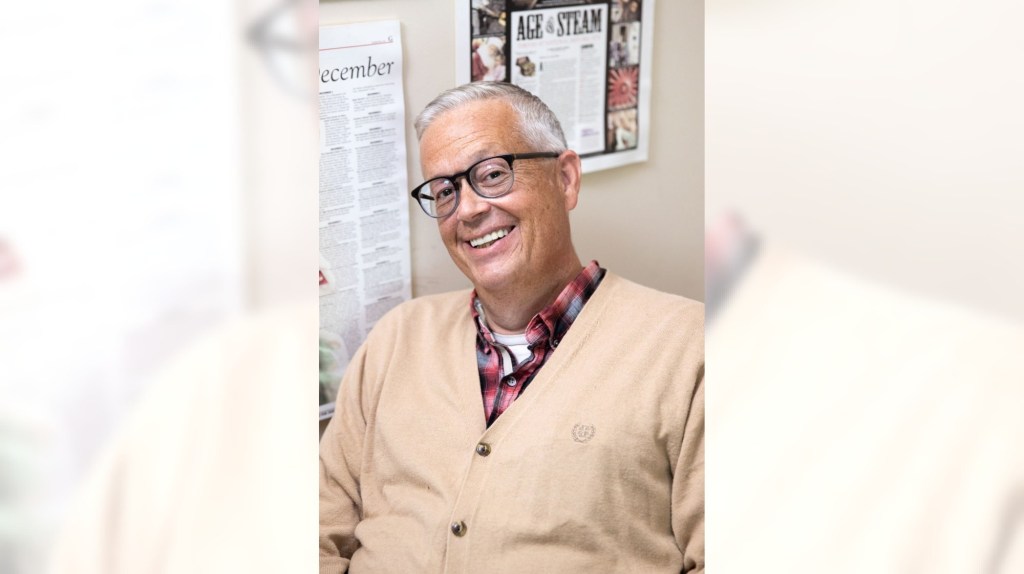
CHRIS KELLY, the Times-Tribune columnist, is a lifetime beneficiary of public libraries. Contact the writer: ckelly@scrantontimes.com; @cjkink on X; Chris Kelly, The Times-Tribune on Facebook; and @chriskellyink on Bluesky.