
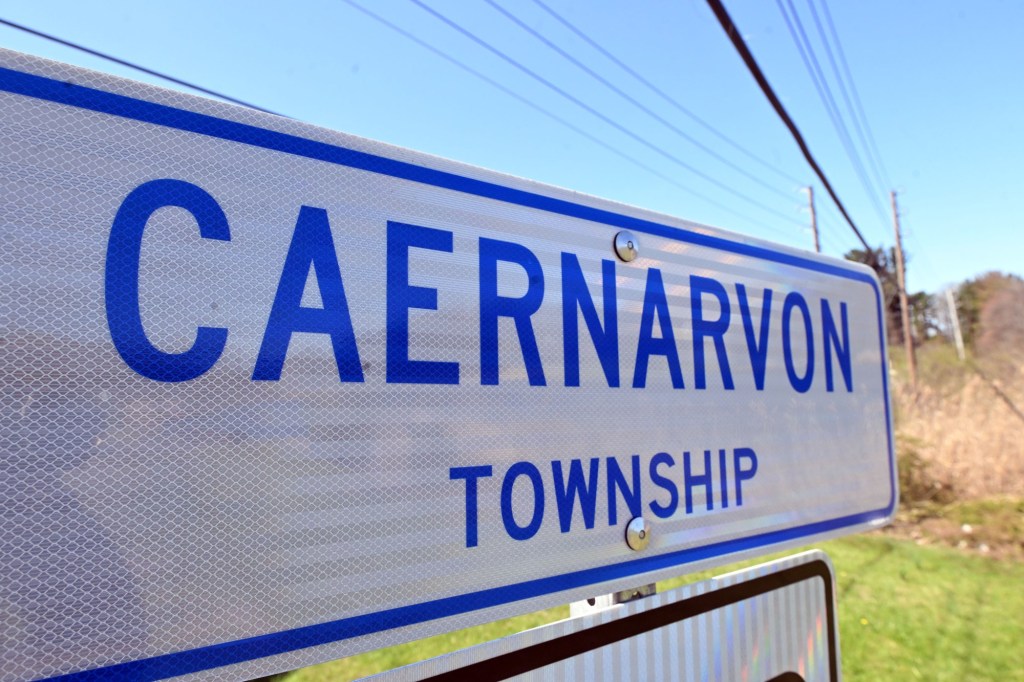
Monet Raths has no shortage of concerns about the possibility of data centers coming to Caernarvon Township.
At a planning commission in March, Raths and other residents said data centers are known to siphon from the local energy grid and water supply, create noise pollution and harm the environment.
“While we may be opposed to them, we understand they are a reality,” Raths told the planning commission. “We know they are coming, and we can’t say no. But respectfully, nobody wants them across from their house.”
Data centers contain the mass of hardware used to power cloud computing and artificial intelligence services.
Depending on its size, a single data center can use as much electricity as tens to hundreds of thousands of homes. And keeping its servers cool could mean one center consumes as much water daily as several thousand to 50,000 people, according to the Lincoln Institute of Land Policy.
A complex issue
Jeff Vickers, planning commission chairman, said the realities of modern living complicate taking a clear stance for or against data centers.
“The reality is, every one of us order from Amazon, Walmart, eBay,” Vickers said. “That all goes through a data center. So to say we don’t want data centers period is a little farcical at this point. We’re too far into the game. But we’re not saying we want them (either).”
Vickers and other planning commission members empathized with the concerns being raised. They said they don’t want residents to shoulder the burden of increased electricity costs, have their wells dry up or be faced with the constant humming that the centers produce.
That was the reason for Caernarvon’s special planning commission meeting March 17 — to begin the process of establishing rules to protect residents from data centers’ harms.
Officials noted the spread of data centers is a new phenomenon. It’s so new that Pennsylvania and Berks County have yet to fully establish data center guidelines.
State and county response
On March 24, the Pennsylvania House of Representatives passed H.B. 1834, the first state legislation attempting to regulate data centers. It would require data centers to cover the full cost of grid upgrades, transmission and reliability needs, use renewable resources such as wind and solar to power operations, and pay into energy assistance and clean-energy funds.
The legislation has moved to the Senate for further consideration.
Other bills have been proposed, including one by state Sen. Katie Muth, a Chester County Democrat who also represents parts of Berks and Montgomery counties. Her legislation would place a three-year moratorium on data center development to give municipalities time to draft rules.
Another bill by Greg Rothman, a Cumberland County Republican, aims to establish Pennsylvania as a premier destination for data center development and establish a “regulatory sandbox” where industry leaders could work with state agencies to remove “unnecessary and outdated regulations” surrounding AI and data centers.
The Berks County Planning Commission is in the process of establishing guidelines for municipalities looking to regulate data center development and plans to vote on the planning advice at their meeting in April, according to Ashley Showers, executive director.
Lack of guidance
That lack of guidance — along with relatively few legally tested examples of established guidelines — leaves municipalities with a limited frame of reference when establishing rules, Caernarvon officials noted.
“No municipalities are experts on these facilities,” Vickers said. “Everyone is shooting into the dark, trying to figure it out, with a little bit of knowledge.”
Municipalities legally cannot refuse developers who come forward with viable plans.
“You still have (use) by right,” Vickers said. “So we have to have something (in place) that moderately controls it.”
Caernarvon planners didn’t finalize their draft of a data center ordinance at the meeting in March, but officials read over sample ordinances established in communities outside Berks.
They suggested a few new rules, such as establishing a 1,000-foot buffer between any data center and nearby residential properties and requiring centers to use a “closed loop” system that would recycle water for cooling.
Caernarvon officials noted the township has yet to receive any plan applications for data centers.
The scramble to regulate data centers is taking place in a number of Berks municipalities with the remote rural and industrial space preferred by data center developers working through their own rules.
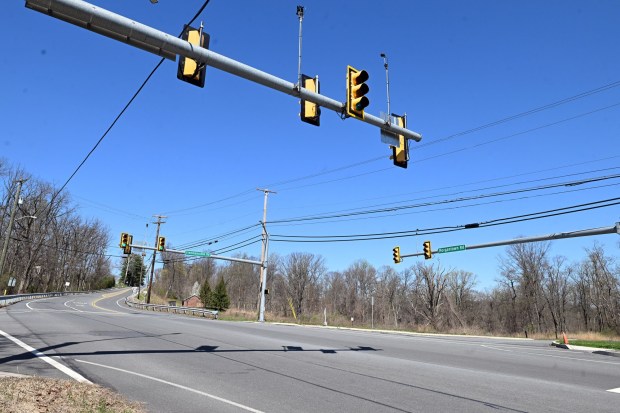 Land formerly proposed for a warehouse site along Freemansville Road and Route 10 in Cumru Township may be a site for future data center development. (BILL UHRICH/READING EAGLE)
Cumru proposal
In March, Cumru Township became the first municipality in Berks to advance a data center ordinance for advertising, with a vote on final approval slated for April.
“Data centers commonly use large-scale backup power supplies and require large-scale cooling systems that, if not properly installed and maintained, can create noise, air quality and other environmental concerns,” Cumru’s rules state.
In addition to limiting data center development to an area around the former Titus Station, the draft rules set forth sweeping limits on noise, water and energy use and establish monitoring and enforcement mechanisms for those limits.
Some highlights include:
• Requiring screening and berms to limit visual and noise impacts.
• Setting a maximum height of 50 feet, or 80 feet with commissioners’ approval.
• Setting decibel limits for day and nighttime hours and requiring sound studies to confirm adherence.
• Requiring developers to cover the cost of any water, electric or sewer usage beyond what can be supported by existing systems.
• Requiring developers to prove that their utility usage won’t affect water supplies, cause outages, or otherwise harm public health and safety.
• Requiring an environmental impact study, adequate emergency access and a plan for handling and disposing batteries and other hazardous materials.
• Requiring facility owners to decommission the facility within a year after it stops being used as a data center.
Cumru officials noted that no data-center plans have been formally submitted. In late 2025 there were talks with a developer about a possible data center on 171 acres at Route 10 and Freemansville Road, next to the Flying Hills development — where a warehouse had been proposed — but data centers would not be permitted there if the rules pass.
Other municipalities working on new rules
South Heidelberg Township aims to advertise new data-center rules in April and adopt them in May or June, according to Sean McKee, township manager.
The rules would permit and regulate data center development in the I-3 industrial district, an area bordering Sportsman Road and Hospital Road, according to a zoning map posted online.
South Heidelberg’s rules set similar noise and height limits to Cumru’s. They require landscape buffers along property lines and require developers to conduct an environmental and community impact study and lay out how they plan to meet their data center’s water and electricity needs.
McKee did not answer a question about whether township officials are aware of any data center proposals in the community.
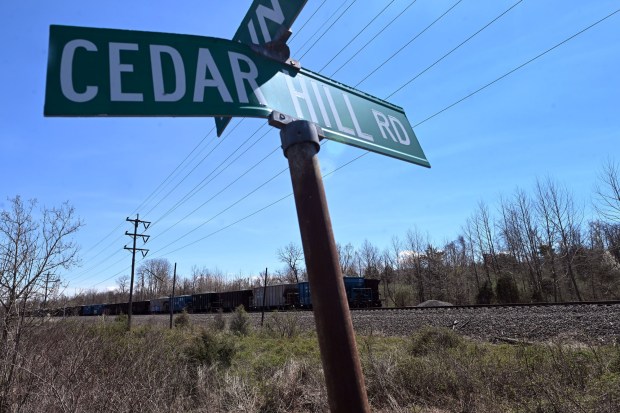 A plot of land totally 350 acres at Cedar Hill Road and Route 724 in Robeson Township may be rezoned from residential to industrial for the construction of data centers. (BILL UHRICH/READING EAGLE)
Robeson Township is working its way through a data center draft ordinance.
“It’s been at the planning commission and back to our solicitor and engineering,” Supervisor Timothy Bitler said in March. “We’re going to keep plowing ahead with it.”
In 2025, developers Grande Construction Group, Spring Township, told township officials that they had an agreement with Motus Development, Wyomissing, to explore developing data centers on 350 acres at Route 724 and Cedar Hill Road. There has yet to be a formal submission of those plans, officials said at a meeting in March.
Bitler said that without a data center ordinance, data centers usually would be regulated by industrial zoning rules.
“Data centers are relatively new,” he said. “Generally speaking, in a township, if you have something that is not (yet) planned for, essentially by default those (things) can only be located in an industrial district.”
The Cedar Hill Road plot is zoned residential. Officials told developers in 2025 that they could seek rezoning.
A Change.org petition opposing the Cedar Hill data centers has 70 signatures. Petitioners argue building a center there would destroy forest areas that host numerous species, threatening the area’s fragile ecosystem.