
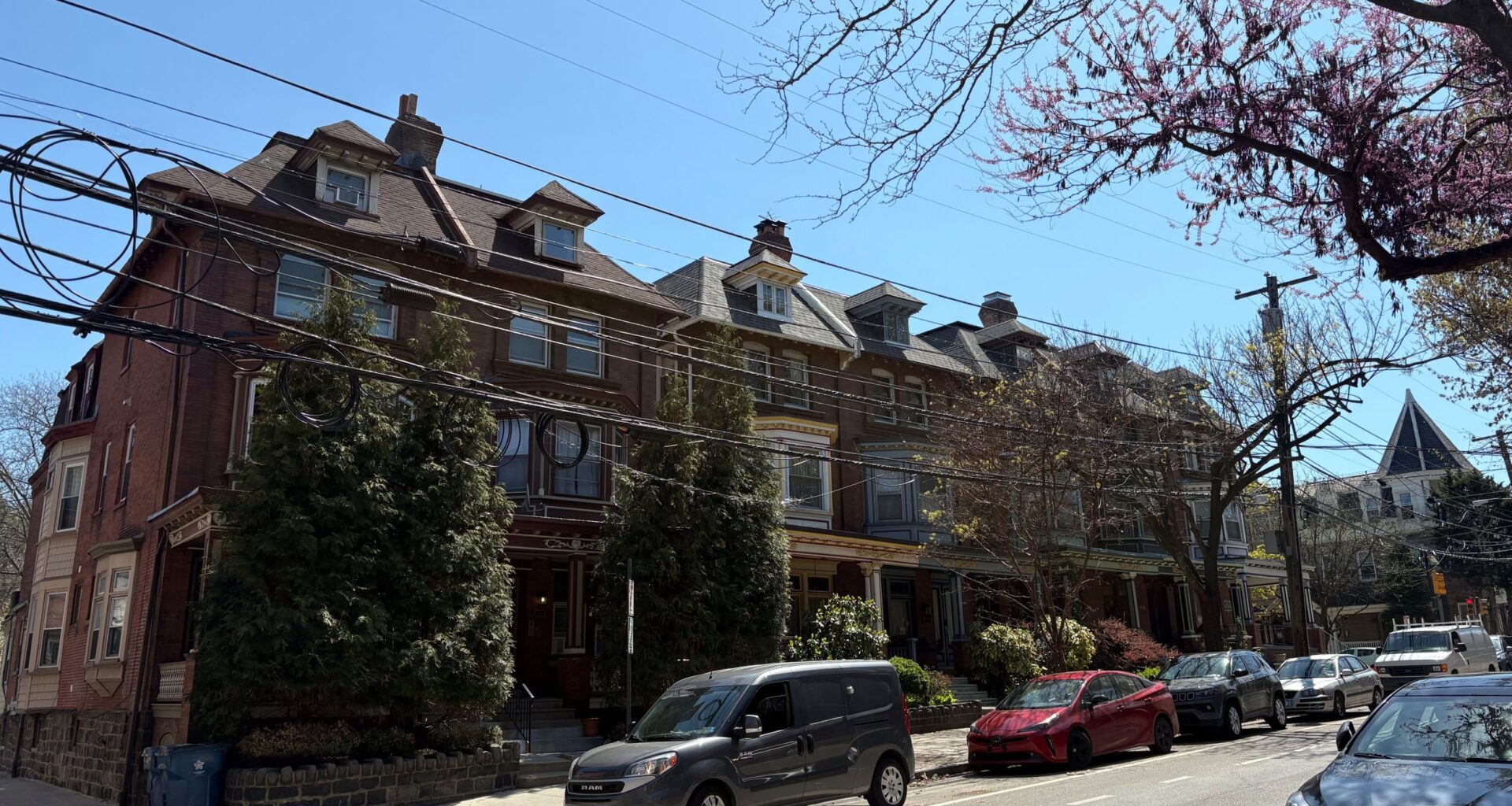
Philly founders are applying AI and open data to both sides of the housing equation: figuring out where to build and helping residents keep the homes they already have in an aging market.
Philadelphia faces a variety of housing challenges, including an older housing stock, creating an ideal market for two separate entrepreneurs to launch their housing tools. Technologist Rajesh Tripurneni built the Zip Scoring Algorithm, an open-source tool that identifies neighborhoods with potential for housing investment, and Schola Eburuoh recently launched Fixa, a platform to help homeowners address maintenance issues and connect with reliable contractors.
While the teams are not affiliated, they both represent ways that startups are trying to help people make more informed decisions about housing, from both the real estate side and the homeowner side.
“We’re thinking about how to support people to not leave to sustain the places that they’re living in, and what they need to know to take care of what they have.”
Schola Eburuoh, FIXA
“It’s not just about the data, right? It’s about what you do with the data,” Tripurneni told Technical.ly. “A potential investor could look at it and make use of it in driving real-time decisions.”
The Zip Scoring Algorithm helps realtors, developers and investors better understand the neighborhoods they are building in and gives them a better chance of building and selling a home people will want to live in.
The properties with strong investment potential, however, are not always in great shape.
Most of the city’s housing stock is decades old, with 60% of homes built before 1960, including 40% that were built before 1939, according to the city’s Housing Opportunities Made Easy dashboard. Almost 40% of homeowners have serious repair needs.
Older homes require ongoing repair and maintenance. Over 14,000 housing units in Philly are missing a complete kitchen or all necessary plumbing, per a report from the Housing Initiative at Penn. As of May 2025, over 40,000 properties were deemed vacant, sealed or in below-average condition.
That is where Fixa is applying its tech: to give homeowners the resources they need to advocate for themselves and maintain the places they live.
Making data and information accessible helps both parties make better financial choices that hopefully lead to longer-term stable housing. When all stakeholders understand this data — both real estate professionals and homeowners — there’s a better chance of rejuvenating those properties that otherwise wouldn’t be suitable for people to live in.
“Small problems can become really large problems and become a financial crisis for people,” Eburuoh said. “Philadelphia homeowners, we average about 10 years in the home. And those 10 years are important to continue to maintain them.”
Helping investors choose where to build
With the Zip Scoring Algorithm, Tripurneni says his goal is to provide data that gives a fuller picture of what a neighborhood is like and the potential it has, and then spark that into action and actually create housing for residents.
A longtime technologist, Tripurneni was inspired to build the Zip Scoring Algorithm after volunteering with Habitat for Humanity and learning about the need for more housing across the country.
Real estate professionals typically look at sale data when deciding to build or renovate homes in a neighborhood, he said. Most of this information is already public, but it’s not aggregated into one place.
With the Zip Scoring Algorithm, users enter a zip code into the tool and it assigns an overall score from one to 10 to the neighborhood based on historical and potential factors, like neighborhood demographics, population growth, building permit history and surrounding infrastructure. The tool pulls data from a variety of sources, including the US Census and Zillow.
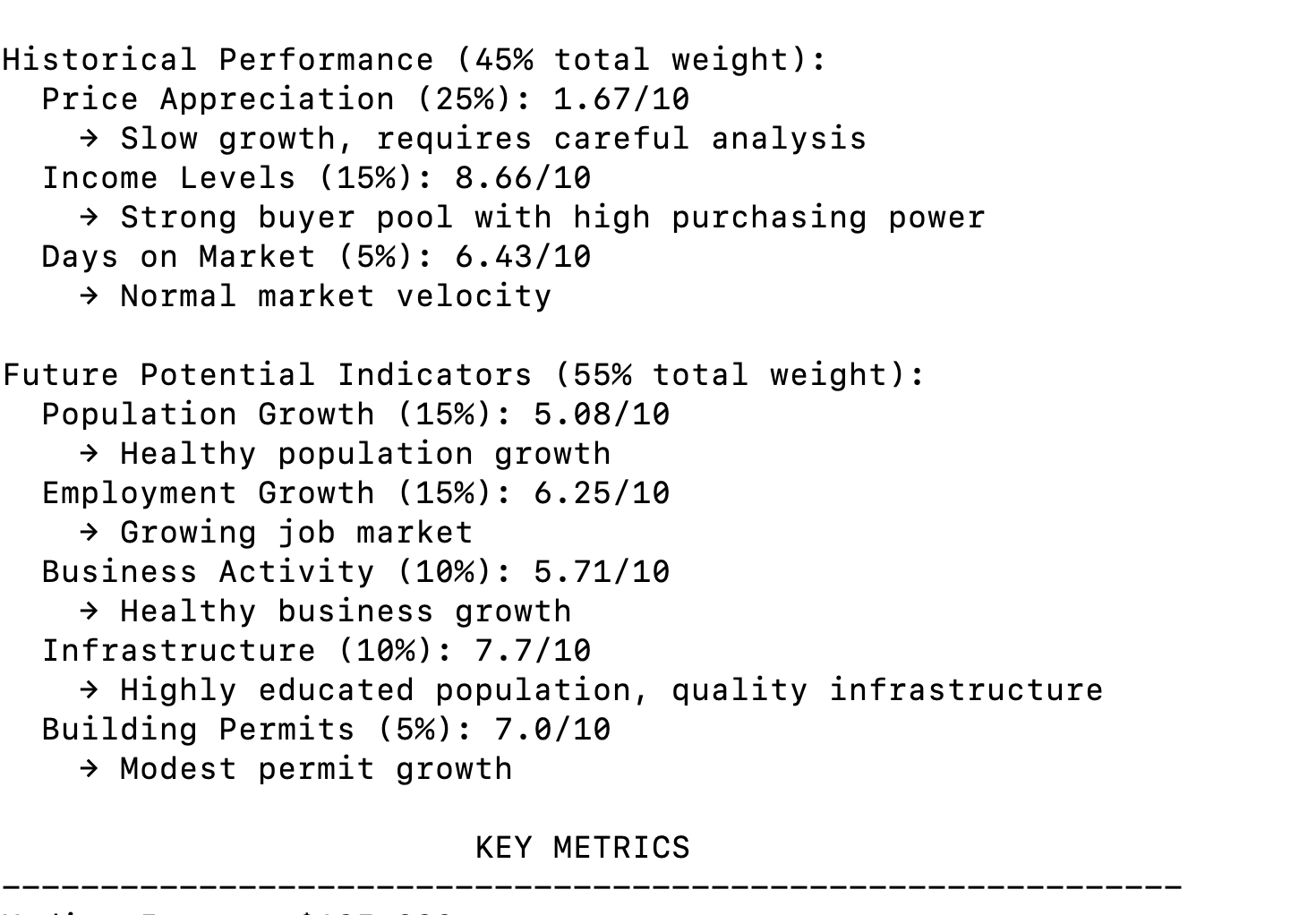 Zip Scoring Algorithm (Screenshot)
His own company Aion Holdings has already put it to the test, using the tool to assess neighborhoods, find properties, fix them up and sell them, he said.
For example, he purchased a property in Bridgeport that had been sitting on the market for a long time with no interest. He renovated the house and ended up selling it to a family that already had ties to the neighborhood, he said.
“I used the algorithm in the beginning just to see what kind of neighborhood it was,” he said. “That gave me enough confidence to do that deal.”
Now, by making the tool accessible to more people, anyone in the real estate and housing sector could use it to understand neighborhoods around the city and the potential they have to support housing.
“In the sense that this neighborhood or this area has been somewhat distressed, but there’s a good chance that things are moving forward,” he said.
While the tool gives professionals confidence that they’ll build and sell a home people will want to live in, the owners still face the challenge of maintaining those homes.
Accessing information to keep homes in shape
Eburuoh, co-founder of Fixa, grew up watching her real estate broker father help families find their first homes. She often witnessed them ask for help when repairs needed to be made, she said.
Based on this experience, Eburuoh and her cofounder Sophia Cabral launched Fixa, a web platform to help homeowners diagnose issues in their house and connect them to a contractor if needed.
“People purchase their homes and then post-closing, they had the issue of what to do when something went wrong,” she said. “No one gave those people the knowledge to [maintain] their home.”
For Eburuoh, the thought process behind Fixa is to provide information and access to resources to homeowners to make them more likely to take care of the home and be able to live there for longer, she said.
Fixa’s chatbot asks users to describe the issues they are facing and makes suggestions about what’s going on. It provides a step-by-step repair guide, reference videos and time and cost estimates. While users are talking to AI, the information being shared is filtered and monitored by a human on Fixa’s team, Cabral said.
If users don’t want to fix it themselves, the platform will suggest local contractors they can work with. The contractors also get a report of the issues, keeping everyone on the same page.
“We think about it as a platform for anybody with contractor anxiety,” Cabral said. “We really want to give that confidence [boost] if you are going to hire a pro or if you are going to do it yourself, to have a guide that is actually curated for that for home repair.”
All of these efforts are to ensure that once people get into homes, they can stay there for a long time, Eburuoh said. Stable, decent housing is tied to better health outcomes, and Philadelphia-based home repair efforts have also been linked to improvements in homeowners’ physical and mental health.
“We’re thinking about how to support people to not leave,” Eburuoh said, “to sustain the places that they’re living in, and what they need to know to take care of what they have.”