
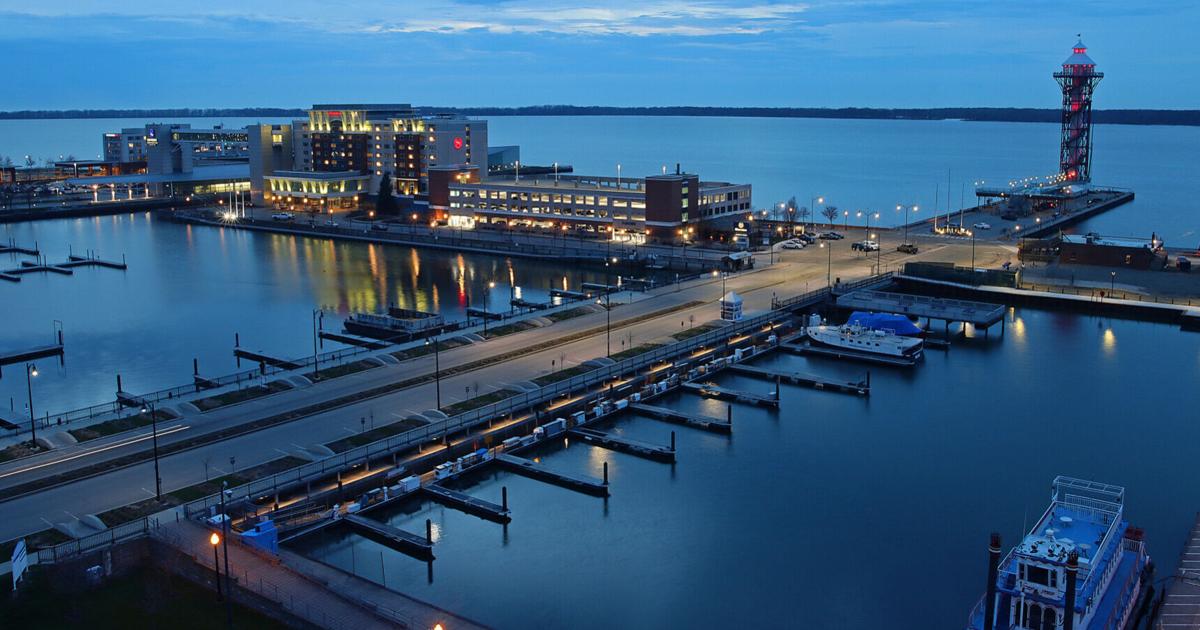

The bayfront of Erie, Pennsylvania is shown on April 2, 2026. At right is the Bicentennial Tower. In the background is Presque Isle Bay.
CHRISTOPHER MILLETTE | Gazette-Mail
ERIE, PA — Should your travel plans include a drive from the Charleston area to Pennsylvania’s only Great Lakes port city, you’re not likely to get lost: Just get on Interstate 79 and head north — the only option available from here — and keep driving until, 343 miles later, you run out of freeway.
Welcome to Erie, the city of about 92,000 at the northern terminus of I-79, and, as it turns out, a pretty decent place to spend a long weekend.
A sign over the northbound lanes of Interstate 79 for Erie, Pennsylvania is shown, on April 2, 2026, near Pittsburgh.
CHRISTOPHER MILLETTE | Gazette-Mail
Having lived and worked in Charleston during the era in which I-79 began snaking its way southward, section by section and decade by decade, past the Pennsylvania border and into the green, rolling hills of West Virginia, I have long wondered what things were like in the city with the strange — make that eerie — name at the north end of the interstate. Once the freeway was completed, I contemplated writing a story about what could be found in the city at the other end of I-79.
On several occasions over the years since the highway was completed, I had come within a few miles of Erie before diverting eastward on Interstate 90 at the outskirts of the town to visit friends in Niagara Falls or prospective colleges in upstate New York with my daughter.
But earlier this month, an opportunity arose to make a weekend visit to the Gem City, as Erie (along with at least five other U.S. cities) is nicknamed, with Gazette-Mail colleague and former 17-year Erie resident Christopher Millette to serve as a guide. I signed on for the trip and discovered that the city lived up to its nickname.
Erie, a haven for fishing enthusiasts
Dustin Finnegan of Millcreek Township, Erie County, fishes for steelhead, on April 2, 2026, in Walnut Creek in Fairview Township, Erie County, near Erie, Pennsylvania.
CHRISTOPHER MILLETTE | Gazette-Mail
The city’s main attraction, of course, is its location on the shore of one of the Great Lakes.
Soon after I-79 ends and morphs into the Bayfront Parkway, the city’s namesake looms into view. At 241 miles long and 57 miles wide, filling up the northern horizon, you can’t miss it, unless you’re arriving in town during one of the epic Lake-Effect winter storms, which dump, on average, 100 to 120 inches of snow on the town annually.
Growing up in such a wintry climate, followed by a career as a polar explorer, led former Erie resident Paul Siple to co-develop a formula — which he dubbed the wind chill factor — to better quantify how chilly temperatures feel to humans at certain wind speeds and humidities. Siple, who went on to establish a U.S. research station in Antarctica and have a mountain on that continent named in his honor, died in 1968 at age 59 — though it may have felt more like 89.
The history of Interstate 79
While Interstate 79 is now long established as a key link between Charleston and points north, it was originally designed to extend from its northern terminus at Erie, Pennsylvania, only as far south as Pittsburgh.
When the Dwight D. Eisenhower Interstate and Defense Highway System was authorized in 1956, a four-lane link extending southward from Erie was planned to end at Interstate 70 in Pittsburgh.
While plans were in the works at that time to bring two interstate highways through West Virginia — Interstate 77 extending between Parkersburg and Princeton and Interstate 64 from Huntington to White Sulphur Springs roughly along the path of U.S. 60 — there were no plans for an interstate to connect with the north-central portion of the state.
In late 1957, what was then the State Road Commission petitioned federal highway authorities to provide additional interstate mileage following the U.S. 19 corridor between Morgantown and Beckley. In 1959, Gov. Cecil Underwood told Federal Highway Administration officials that an interstate highway along the U.S. 19 corridor would provide greater freeway access for a majority of the state’s population and cut nearly two hours of driving time between Morgantown and Beckley.
But at that time, all but 340 miles of the original 41,000 miles allocated for the new interstate system had already been planned, meaning that the I-79 extension to Beckley had to vie with other requests — totaling 13,000 miles of freeway — from across the country.
As it turned out, Beckley did not meet a federal standard for being a terminus city on the interstate highway system. At that time, only cities with populations of at least 50,000 were being considered as endpoints.
So, in late 1961, federal highway authorities awarded West Virginia its I-79 extension request, but made Charleston, rather than Beckley, the southern terminus.
The first section of I-79 to open in West Virginia was in 1967. A 7-mile segment of the highway between South Fairmont in Marion County and Shinnston in Harrison County. The final segment in the state, from Elkview to I-77 in Charleston, opened in 1979.
To get an up-close look at the shoreline as well as a chance to see if steelhead trout were still making their annual spawning run from Lake Erie into a series of Pennsylvania tributary streams, we made a stop at Trout Run in Avonia Park in the Erie suburb of Fairview Township, Erie County. After exiting the car and stepping into the brisk winds blowing off the lake, I immediately discovered that the mid-70s temperatures we had experienced a few miles inland had dropped (shout-out to Siple) what felt to be 20 degrees or more.
While wind-whipped whitecaps crashed on the shoreline, a slow, steady parade of chunky, multi-pound steelhead stragglers for Lake Erie’s October-April spawning run could be seen moving up the shallow creek and attempting to leap over a series of concrete stairsteps.
Steelhead are a species of rainbow trout native to the Pacific Northwest, where they generally spend three to five years in the ocean before returning to the same streams in which they were born to spawn and continue the cycle of life. Steelhead in Pennsylvania’s relatively small section of Lake Erie are part of a strain imported from the state of Washington decades ago.
On April 2, 2026, a steelhead jumps out of the water in an effort to scale a fish ladder on Trout Run in Fairview Township, Erie County, near Erie, Pennsylvania. Trout Run is a spawing stream and off limits to fishing.
CHRISTOPHER MILLETTE | Gazette-Mail
Since spawning runs to the ocean are impossible from here, Pennsylvania’s year-old fingerling Lake Erie steelhead are stocked each winter through early spring in a dozen of the larger Erie-area creeks that empty into Lake Erie for “imprinting,” or familiarization with their host streams, enabling them to know where to return for their spawning runs — usually three years later — after enjoying several summers of bountiful life in the lake.
At nearby Walnut Creek — not a nursery water like Trout Run — a small line of anglers assembled at intervals starting a few hundred feet upstream from Lake Erie to try their hand at landing late-run steelhead. “They’re not an easy fish to like,” shouted one of the fisherman from across the stream after successfully reeling a muscular, bright-colored steelie to shore, citing the cold and wet time of year in which they make their inland runs and their “fishy taste.”
Close
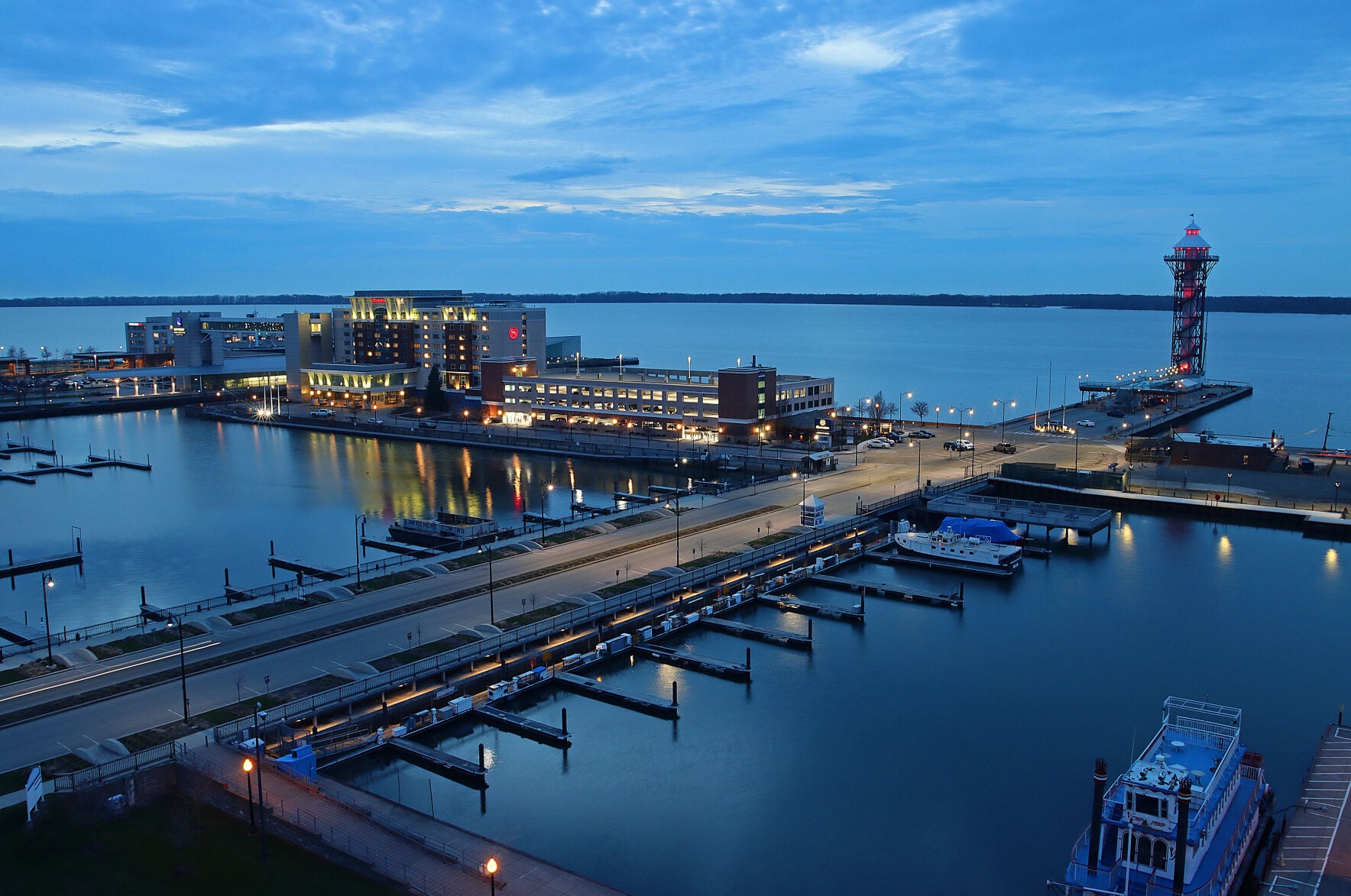
The bayfront of Erie, Pennsylvania is shown on April 2, 2026. At right is the Bicentennial Tower. In the background is Presque Isle Bay.
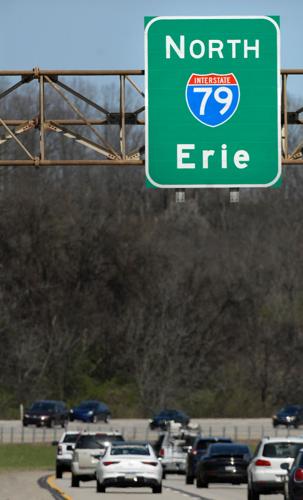
A sign over the northbound lanes of Interstate 79 for Erie, Pennsylvania is shown, on April 2, 2026, near Pittsburgh.
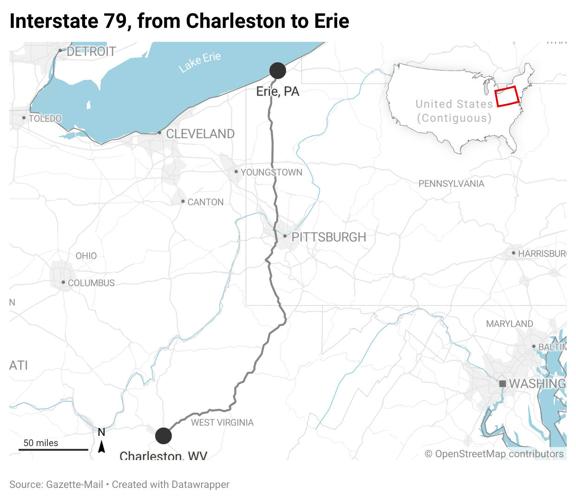
This map shows the route of Interstate 79, which begins in Charleston and ends in Erie, Pa.
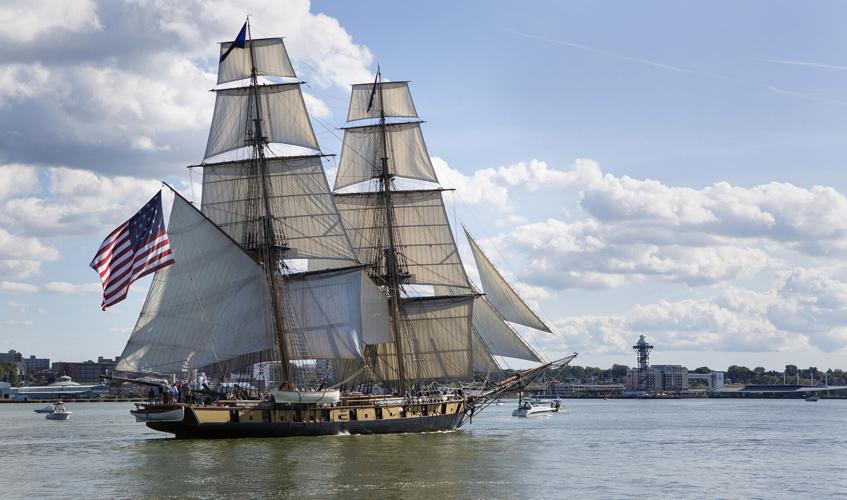
The U.S. Brig Niagara, the flagship of Erie, Pennsylvania, sails into Presque Isle Bay in this 2013 contributed photo. The Niagara is a replica of the tall sailing ship used by Commodore Oliver Hazard Perry against the British on Sept. 10, 1813 during the War of 1812. This fully-functioning tall ship is also a floating museum normally docked in Erie and serves as a working, floating museum for the Pennsylvania Museum Commission.
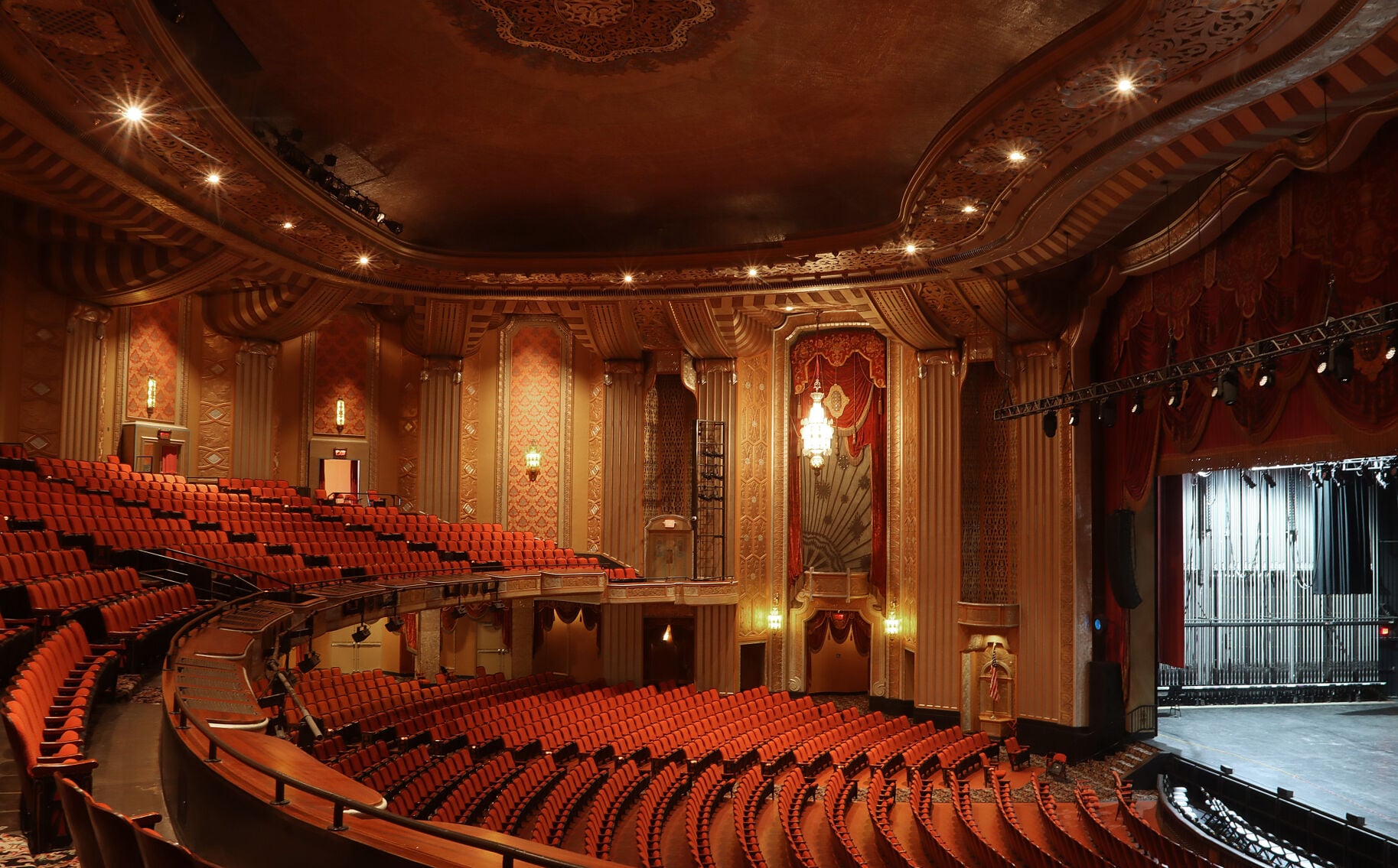
The auditorium of the historic Warner Theatre in Erie, Pennsylvania is shown on April 3, 2026.

Server Nicholas Keichel, 16, prepares two orange sherbet and vanilla ice cream twist cones, on April 3, 2026, at Sara’s Restaurant at the entrance to Presque Isle State Park in Erie, Pennsylvania.
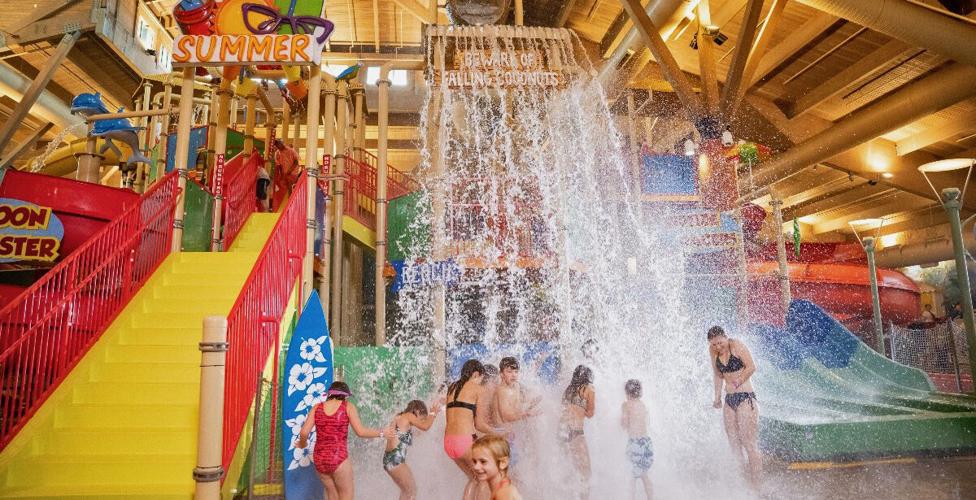
This is an undated interior view of Splash Lagoon, an indoor water park in Erie, Pennsylvania.
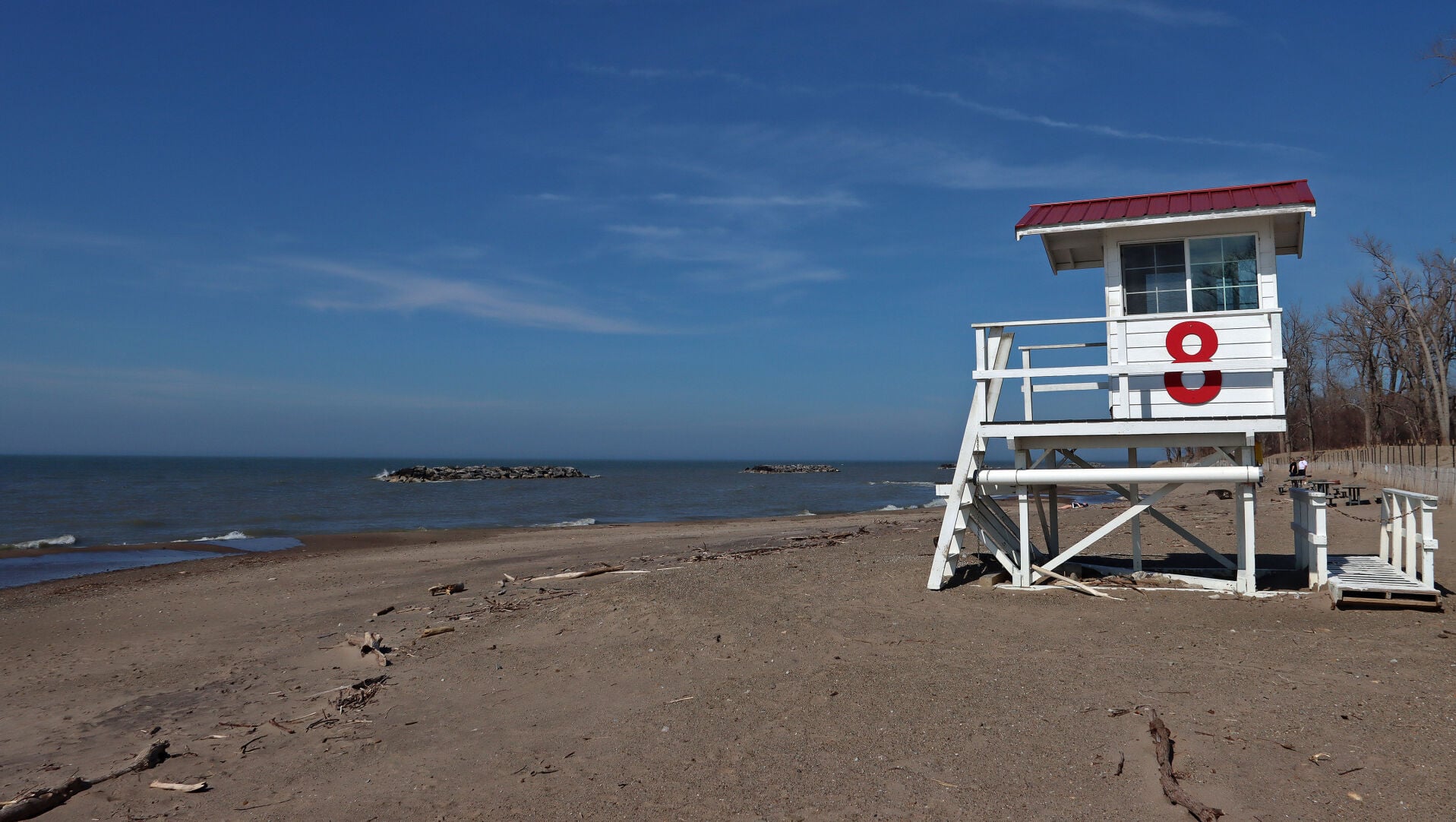
A lifeguard station at Beach 8 at Presque Isle State Park in Erie, Pennsylvania is shown on April 3, 2026.
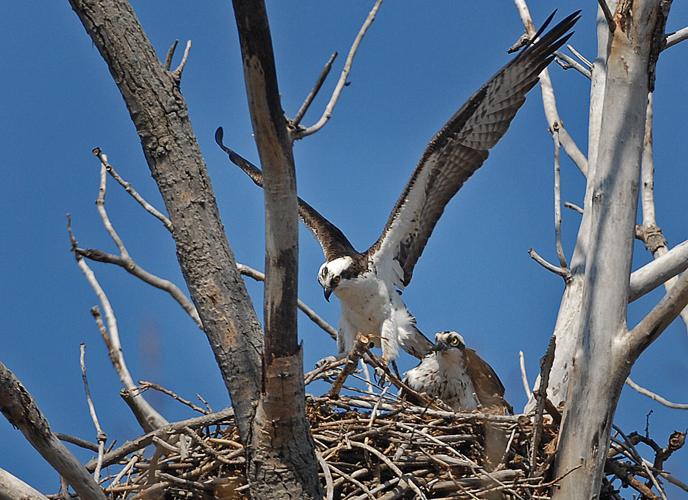
A nesting pair of osprey are shown on April 3, 2026, near Horseshoe Pond at Presque Isle State Park in Erie, Pennsylvania.
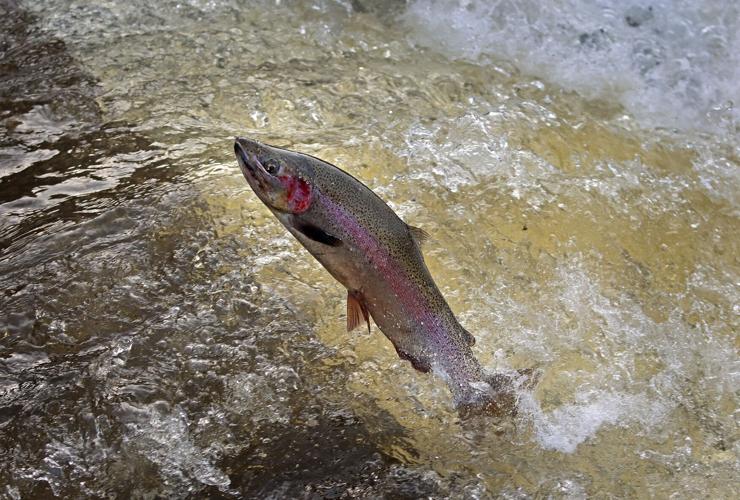
On April 2, 2026, a steelhead jumps out of the water in an effort to scale a fish ladder on Trout Run in Fairview Township, Erie County, near Erie, Pennsylvania. Trout Run is a spawing stream and off limits to fishing.

Nick Scott, Jr, vice president of Scott Enterprises in Erie, Pennsylvania, is shown, on April 2, 2026, at Oliver’s, a restaurant on top of one of Scott Enterprises’ hotels on Erie’s bayfront.
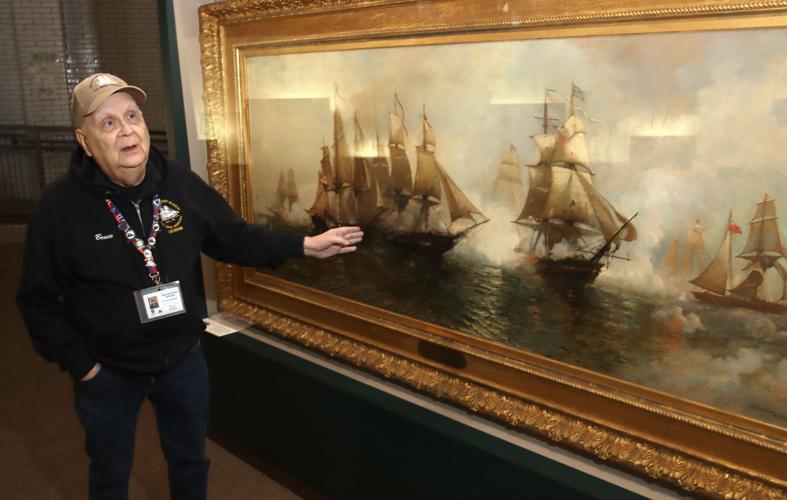
On April 3, 2026, museum guide Bruce Miller describes the Battle of Lake Erie, depicted in this painting at the Erie Maritime Museum in Erie, Pennsylvania. The Battle of Lake Erie took place on Sept. 10, 1813 in the western end of Lake Erie. A fleet of nine U.S. Navy ships — six of which were built in Erie — defeated a larger, better equipped fleet from the British navy.
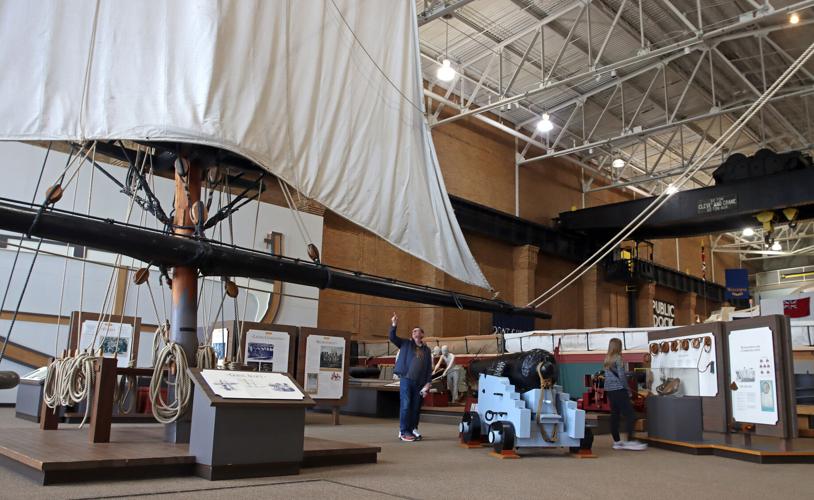
On April 3, 2026, John Frydryk (center) of Cleveland checks out the full-sized sail on display at the Erie Maritime Museum in Erie, Pennsylvania.

On April 3, 2026, James Hall, executive director of the Erie Maritime Museum in Erie, Pennsylvania, is shown in the workshop for the tall ship U.S. Brig Niagara, Erie’s flagship and a floating museum. The ship is a working, sailing replica of the flagship of the fleet that defeated the British navy in the Battle of Lake Erie on Sept. 10, 1813.
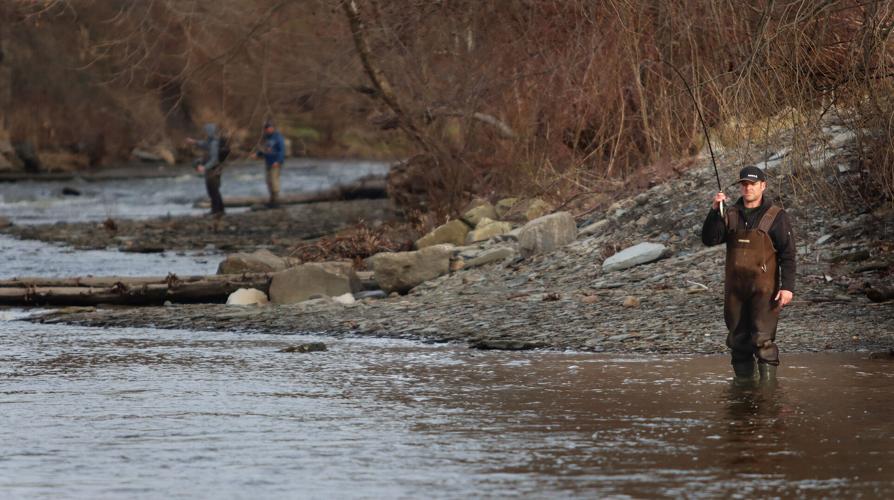
Dustin Finnegan of Millcreek Township, Erie County, fishes for steelhead, on April 2, 2026, in Walnut Creek in Fairview Township, Erie County, near Erie, Pennsylvania.
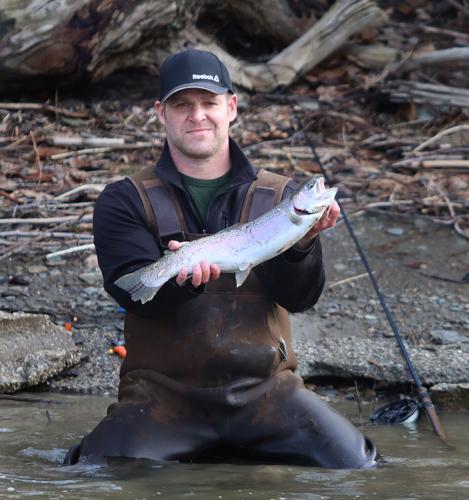
Dustin Finnegan of Millcreek Township, Erie County, shows off a steelhead he caught, on April 2, 2026, in Walnut Creek in Fairview Township, Erie County, near Erie, Pennsylvania.
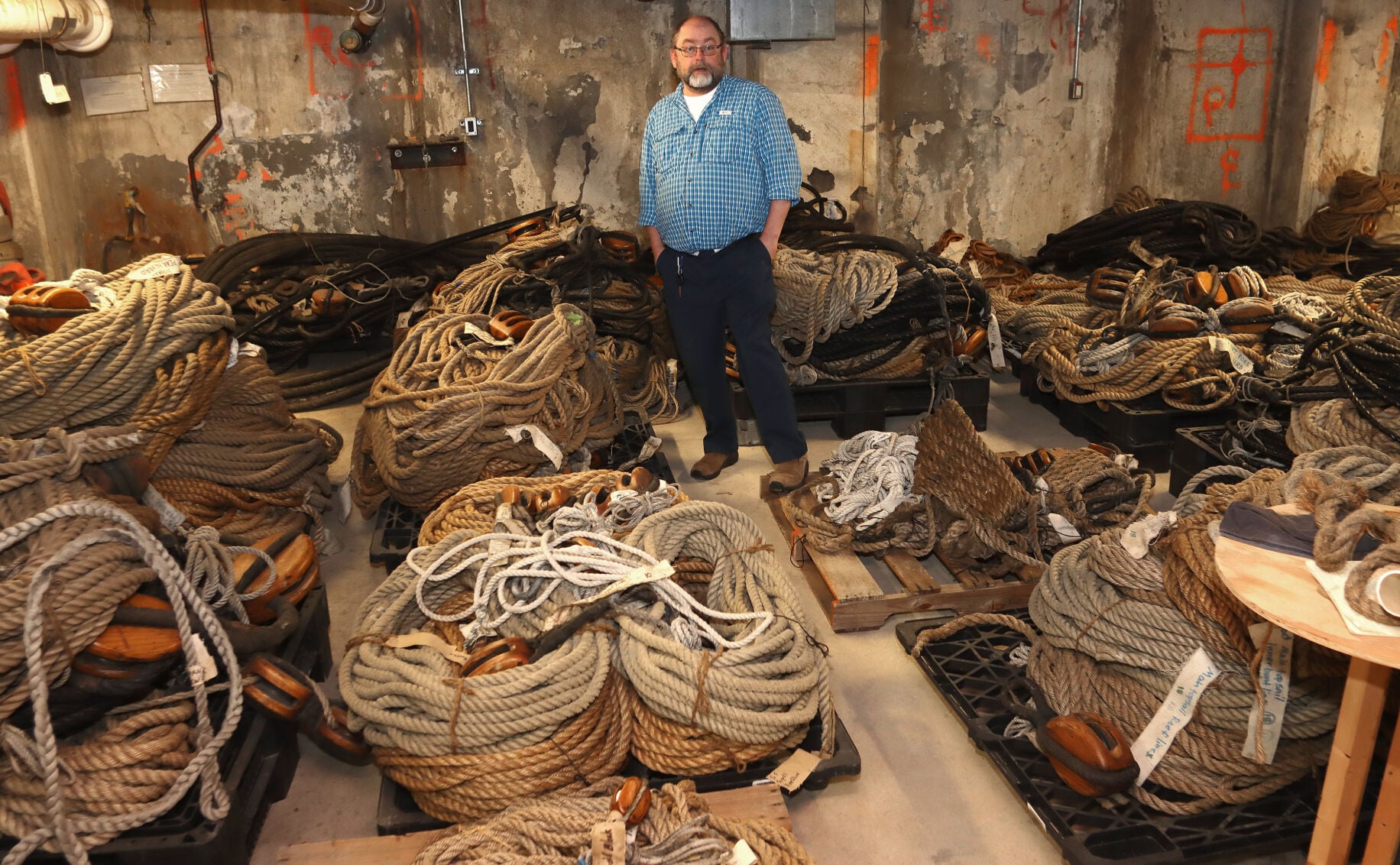
On April 3, 2026, James Hall, executive director of the Erie Maritime Museum in Erie, Pennsylvania, shows off some of the 13 miles of rope used on the tall ship U.S. Brig Niagara, Erie’s flagship and a floating museum. The ship is a working, sailing replica of the flagship of the fleet that defeated the British navy in the Battle of Lake Erie on Sept. 10, 1813.
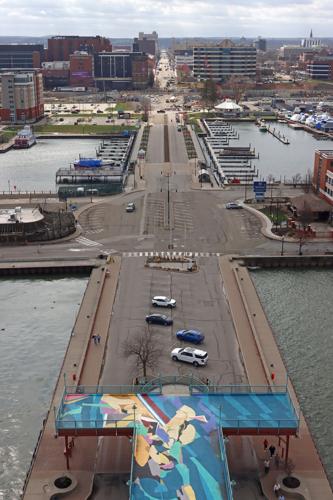
Dobbins Landing (foreground) and the skyline of Erie, Pennsylvania is shown on April 3, 2026, from the top of the Bicentennial Tower.
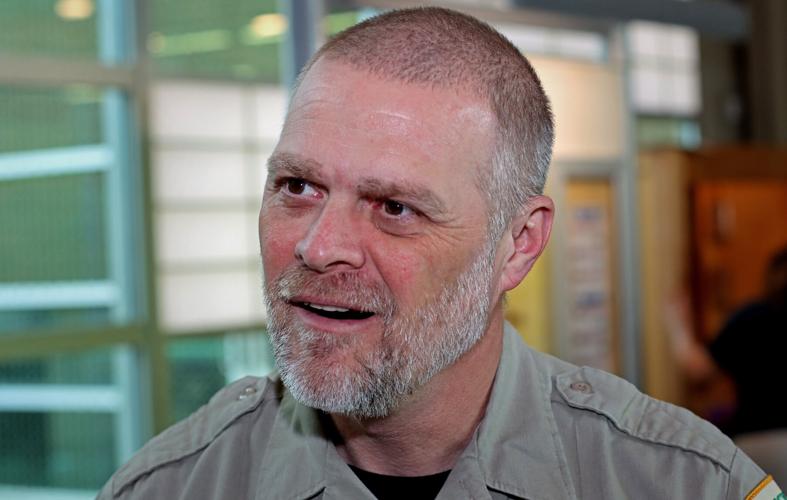
Matt Greene, operations manager for Presque Isle State Park in Erie, Pennsylvania is shown, on April 3, 2026, at the park offices at the Tom Ridge Environmental Center, near the park entrance.
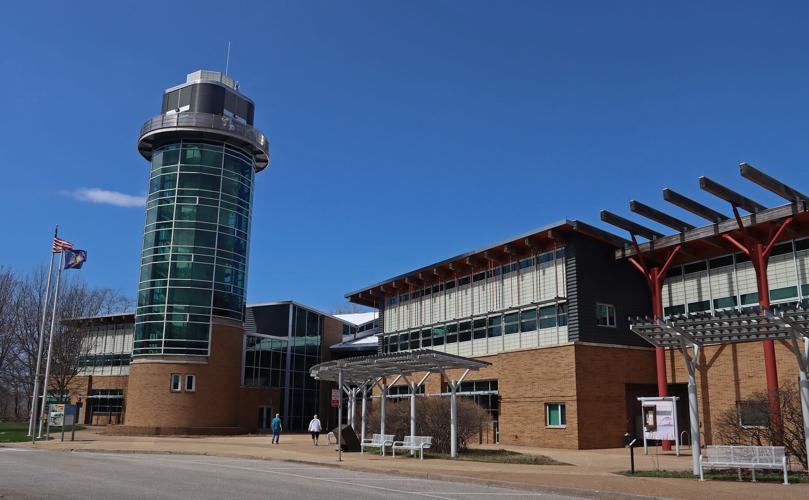
The Tom Ridge Environmental Center, located at the entrance to Presque Isle State Park in Erie, Pennsylvania, is shown on April 3, 2026.
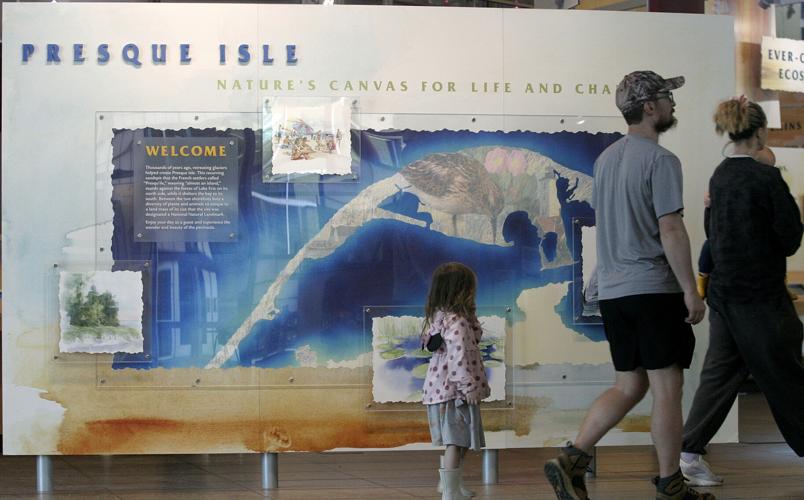
On April 3, 2026, visitors walk past a map of Presque Isle State Park on display in the Tom Ridge Environmental Center at the entrance to the park, located in Erie, Pennsylvania.
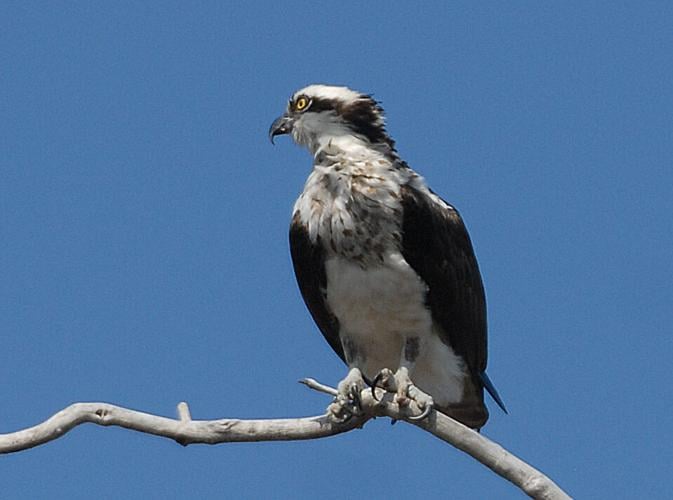
An osprey is shown near Horseshoe Pond at Presque Isle State Park in Erie, Pennsylvania on April 3, 2026.
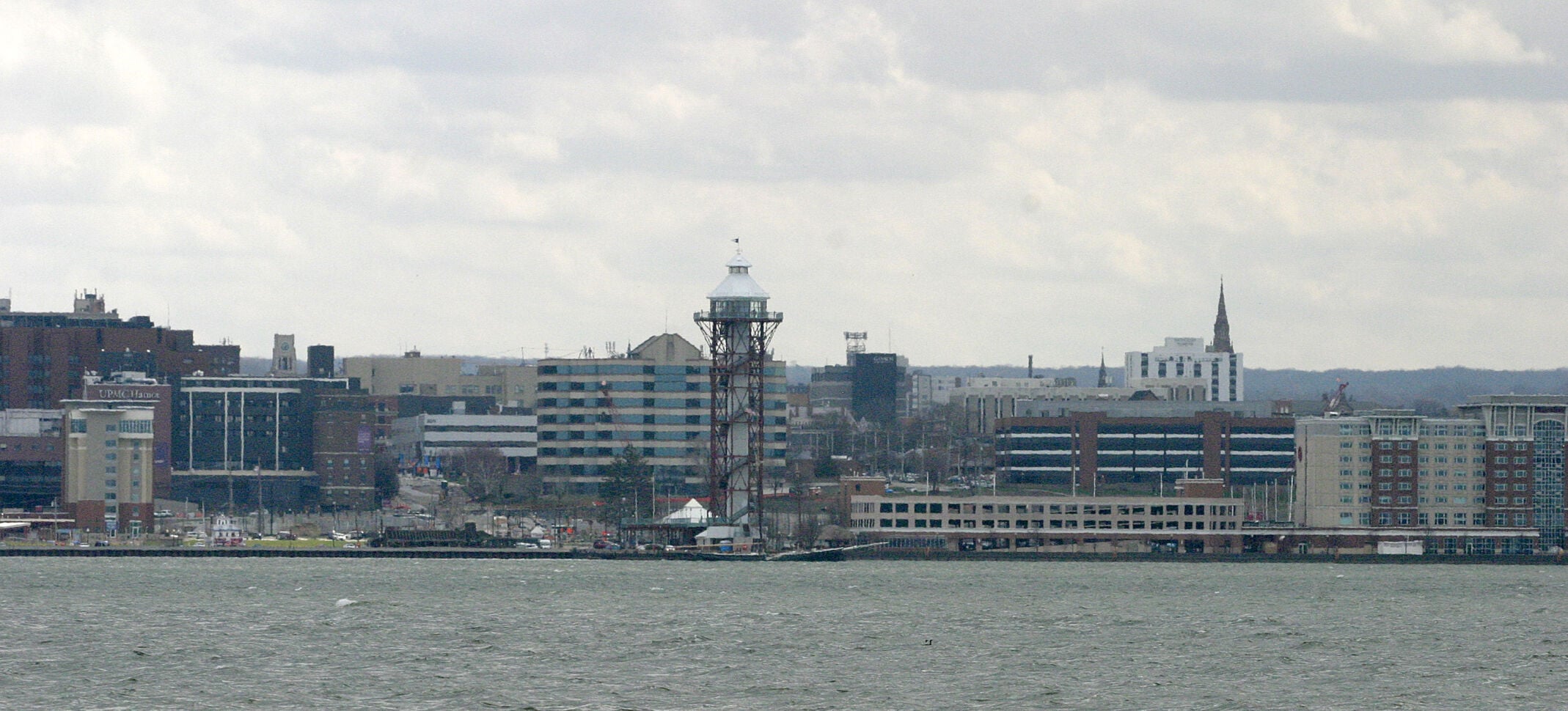
The skyline of Erie, Pennsylvania is shown on April 3, 2026, as seen across Presque Isle Bay (foreground) from Presque Isle State Park.
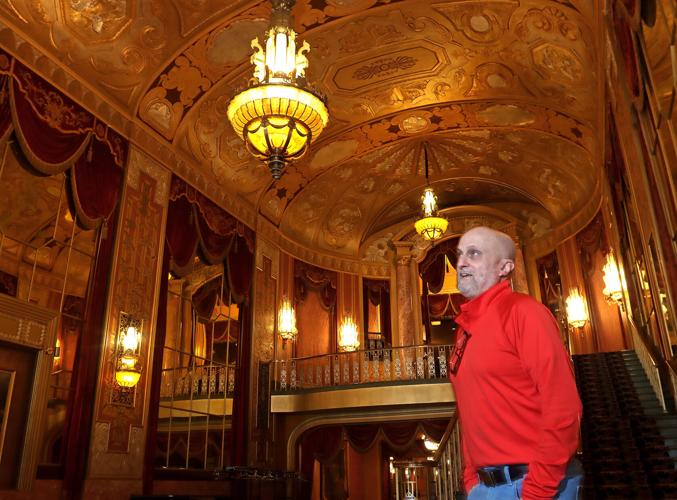
Barry Copple, general manager for operations, shows off the gold-gilded lobby of the historic Warner Theatre in Erie, Pennsylvania on April 3, 2026.
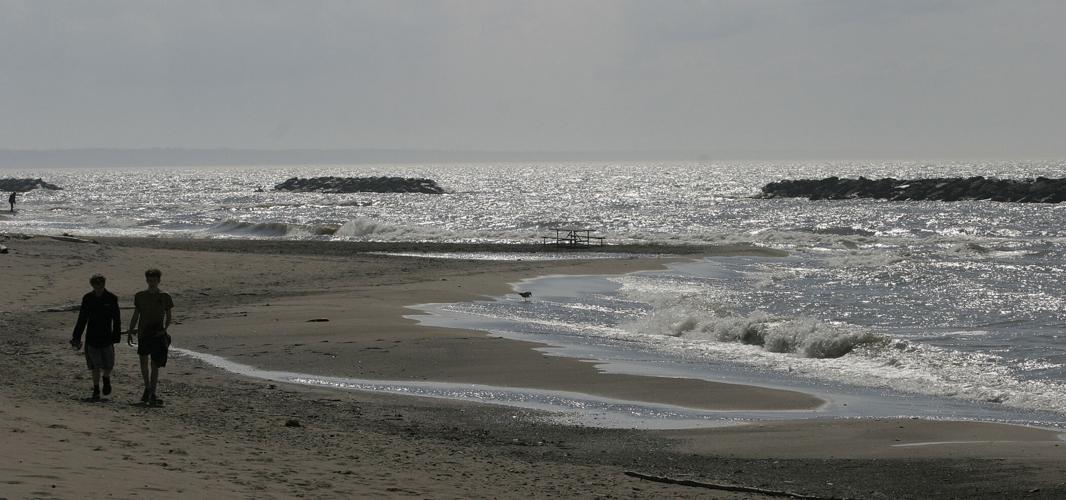
Visitors to Beach 8 at Presque Isle State Park in Erie, Pennsylvania are shown on April 3, 2026. In the background is Lake Erie.
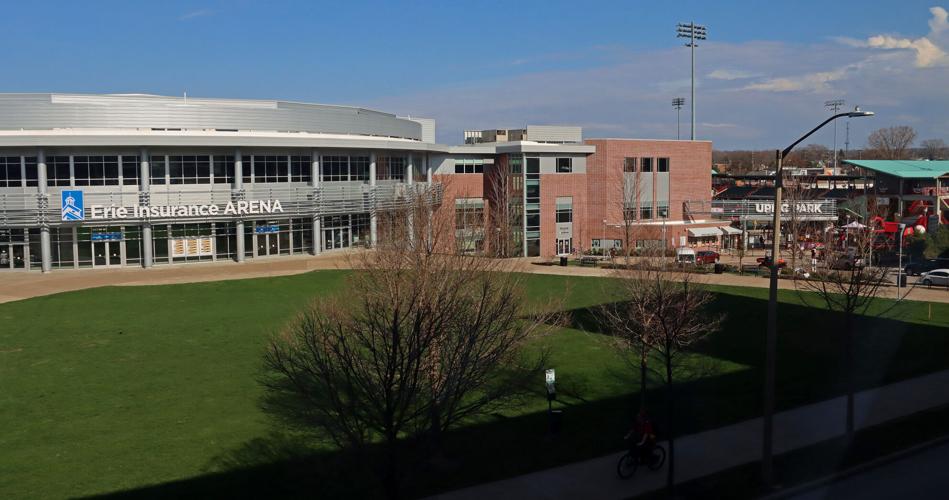
Erie Insurance Arena (at left) and UPMC Park (at right) are shown on April 3, 2026 in Erie, Pennsylvania.
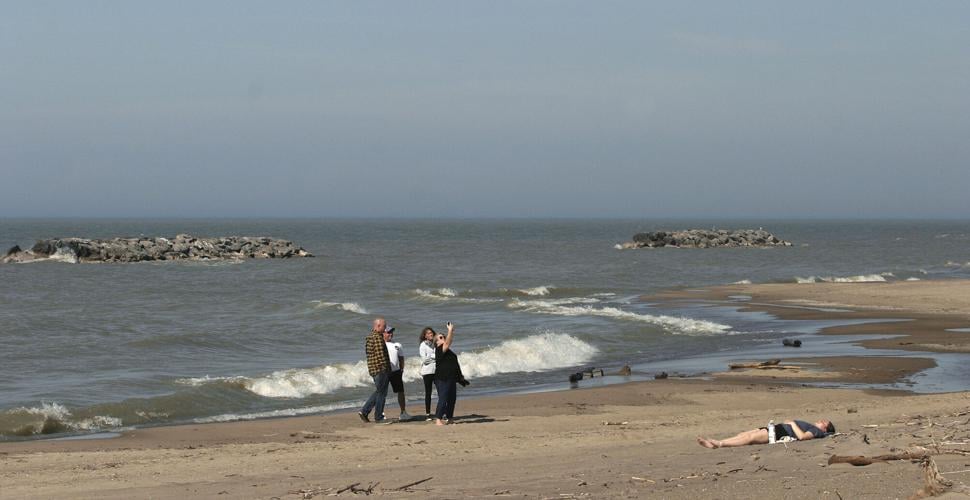
Visitors to Beach 8 at Presque Isle State Park in Erie, Pennsylvania are shown on April 3, 2026. In the background is Lake Erie.
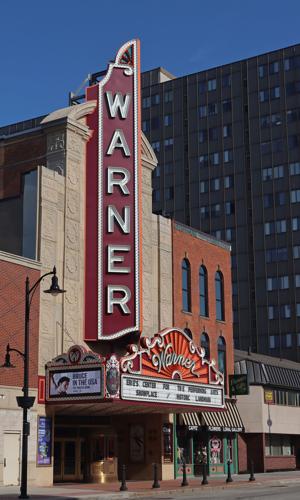
The facade and marquee of the Warner Theatre in Erie, Pennsylvania is shown on April 3, 2026.
“The steelhead fishing is better around here than any other section of the lake, mainly because Pennsylvania stocks more steelhead than Ohio and New York combined,” said Dan Pastore, founder of the Erie-based e-commerce fishing tackle supplier FishUSA, and a member of the Pennsylvania Fish and Boat Commission.
While Erie’s steelhead fishery has a strong following, it pales in comparison with the popularity of other sport fish species that thrive in the warmest, shallowest and most productive of the Great Lakes.
“During the peak of the summer walleye season, the marina parking lots are filled past capacity with boat trailers and vehicles from surrounding states, including West Virginia,” Pastore said. “The smallmouth and perch fishing here are phenomenal, too. Sometimes the day-long charter trips will return here after only a couple of hours after everyone on board catches their limit.”
At least 75 Lake Erie charter boats operate from docks in Erie County, according to the online travel fishing booking service FishingBooker, targeting walleye, smallmouth bass, yellow perch, steelhead and lake trout. Most Erie area charters are expected to begin operating in late April or early May.
Erie, the tourist destination
This is an undated interior view of Splash Lagoon, an indoor water park in Erie, Pennsylvania.
Courtesy photo
Erie’s rising tourism economy, including its $40 million a year sport fishing industry, was food for thought later that day, as I helped set a Gazette-Mail single-meal expense account record while tucking into a serving of parmesan herb-crusted walleye and taking in the view at Oliver’s Rooftop restaurant overlooking Erie’s bayfront.
“Erie has transformed itself from a tool-and-die industrial city to a tourism destination for the region where people can come and enjoy an incredible array of activities,” said Nick Scott Jr., whose family has had much to do with that transformation. “It’s only going to continue to grow,” he said.
Scott is president of Scott Enterprises, which owns Oliver’s Rooftop and the hotel on which it is perched, along with six other Erie hotels and restaurants, the city’s massive Splash Lagoon indoor waterpark (rated the nation’s second-best by a 2025 USA Today poll) and the Peek n’ Peak Resort, a ski area and golf course just across the border at Clymer, N.Y.
On April 3, 2026, visitors walk past a map of Presque Isle State Park on display in the Tom Ridge Environmental Center at the entrance to the park, located in Erie, Pennsylvania.
CHRISTOPHER MILLETTE | Gazette-Mail
Thanks to the presence of a 10-mile-long Presque Isle State Park peninsula, a narrow strip of sand beaches, in addition to wetlands and other natural areas that arcs north of the bayfront (and encompasses Pennsylvania’s most-visited state park), “Erie has the largest natural harbor in the Great Lakes,” Scott said. “In the summer, you can escape to cooler temperatures at a lakeshore resort town with miles of natural sand beaches that’s easy to get to. You don’t need to fly — just get on I-90 or I-79. We’re only about 100 miles from Pittsburgh, Cleveland or Buffalo, which is where most of our visitors come from — and we’re within 250 miles of another 10 to 15 million people. You can stay in great hotels and eat at great restaurants without paying big city prices.”
Tourism is now Erie’s third-largest industry, pumping more than $1.2 billion annually into the city’s economy, and accounts for — or contributes to — about 10% of all jobs, according to VisitErie, the city’s tourism agency. About two-thirds of all Erie visitors come from states other than Pennsylvania.
Erie, the welcoming, hungry city
In addition to welcoming tourists, Erie has also embraced the arrival of immigrants and refugees over the years, with more than 50 nationalities now represented in its population. Driving through town, I spotted numerous ethnic social clubs, including the Nuova Aurora Society, Slovak National Club, Polish Falcons and Siebenbuerger Singing Society. Also in evidence were an abundance of ethnic restaurants with roots outside the usual Chinese-Italian-Mexican Triangle, including those serving Afghan and Puerto Rican fare and more than a dozen others serving Greek, Middle Eastern and Indian entrees.
3 things to do near I-79 on the way to Erie
Exit 96, Weston, W.Va.: Trans-Allegheny Lunatic Asylum, 71 Asylum Drive, Weston. 304-269-5070, trans-alleghenylunaticasylum.com. Tour West Virginia’s lunatic asylum, which operated from the late 1850s until 1994.
Exit 45, Canonsburg, Pa.: 68 E. Pike St., Canonsburg. See the Perry Como singing statue (which doesn’t sing). 724-745-1812.
Exit 113, Grove City, Pa.: Grove City Premium Outlets, 1911 Leesburg-Grove City Road. 724-748-4770, premiumoutlets.com/outlet/grove-city. More than 120 brand-name outlets, including Coach, The North Face and Vera Bradley.
Being only 30 miles south of Canada as the gull flies, you wouldn’t expect a barbecue joint to be a big draw for Erie foodies. But the Federal Hill Smokehouse had attracted a down-the-floor, out-the-door lunch line of smoked meat lovers by the time we arrived. Even if the wait time had been long (it wasn’t, thanks to eatery’s efficient staff and relatively basic menu) it would have been worth it. The brisket was to die for — for the cow, anyway — and needed none of the three sauce options to enhance its hardwood-imbued flavor.
The restaurant is open only from 11 a.m. to 3 p.m., but frequently closes earlier when the smoked brisket, pork, turkey and shrimp sell out.
Erie, the historic city
The U.S. Brig Niagara, the flagship of Erie, Pennsylvania, sails into Presque Isle Bay in this 2013 contributed photo. The Niagara is a replica of the tall sailing ship used by Commodore Oliver Hazard Perry against the British on Sept. 10, 1813 during the War of 1812. This fully-functioning tall ship is also a floating museum normally docked in Erie and serves as a working, floating museum for the Pennsylvania Museum Commission.
ERIE MARITIME MUSEUM | Courtesy photo
Before taking in the smoky barbecue vapors at Federal Hill, we spent time steeping ourselves in local history at the Erie Maritime Museum. There was much to absorb, starting with Erie’s pivotal role in the War of 1812. At the outbreak of that war — over British interference with American maritime rights and the establishment of the Canadian border — the British had a naval and army presence on Lake Erie, and the Americans had neither.
To help rectify that situation, U.S. Secretary of the Navy Paul Hamilton in late 1812 ordered four gunboats to be built in the naturally protected harbor at Erie, where a makeshift crew of builders had been assembled from the sparse local population. In January 1813, the new Navy Secretary, William Jones, ordered the construction of two additional warships — the brig-rigged corvettes Lawrence and Niagara — to join the fledgling fleet. By late July, all six new vessels and three converted merchantmen had been armed and launched, and within the next month, had been manned by a motley assortment of Navy and militia personnel and civilian volunteers.
On Sept. 10, 1813, a British fleet of six warships was spotted on the lake, and the American fleet’s commander, Oliver Hazard Perry, gave the order to pursue and engage. After several hours of fierce fighting near Put-in-Bay, Ohio (at the west end of Lake Erie), the American force, though outgunned by the British, prevailed and retained control of Lake Erie for the duration of the war.
On April 3, 2026, James Hall, executive director of the Erie Maritime Museum in Erie, Pennsylvania, shows off some of the 13 miles of rope used on the tall ship U.S. Brig Niagara, Erie’s flagship and a floating museum. The ship is a working, sailing replica of the flagship of the fleet that defeated the British navy in the Battle of Lake Erie on Sept. 10, 1813.
CHRISTOPHER MILLETTE | Gazette-Mail
Perry, who had transferred from the badly damaged Lawrence to the Niagara early in the battle, took with him his personal pennant from the Lawrence — a flag bearing the motto “Don’t Give Up the Ship” hand-crafted by the women of Erie, which later became a U.S. Navy icon.
British casualties were 94 killed and 41 wounded, while the American losses totaled 29 dead and 96 wounded.
“To think what these young men, some of them as young as 13, had to do and had to endure — it’s hard to imagine,” said museum volunteer Bruce Miller.
A seaworthy replica of Perry’s Niagara flagship is currently in the process of completing a $7 million, multi-year upgrade in Maine, but will return to Erie on July 2, in time to take part in the city’s America 250 semiquincentennial celebration, according to James Hall, director of the Erie Maritime Museum. Later in the year, the Niagara will resume its schedule of educational excursions on the lake, which are open to the public.
“This city’s all wrapped up in this ship,” said Hall. “It’s a floating museum — the most historically accurate replica of a warship of its era on the continent.”
Erie, the home of Presque Isle State Park
A lifeguard station at Beach 8 at Presque Isle State Park in Erie, Pennsylvania is shown on April 3, 2026.
CHRISTOPHER MILLETTE | Gazette-Mail
While Erie’s floating monument to a bloody naval battle will soon return to the city, a much more peaceful scene awaits visitors across the bay at Presque Isle State Park.
Within its 3,200 acres, 13 miles of shoreline, seven miles of sandy beaches, 21 miles of trails, 13 miles of roads and countless opportunities for communing with nature exist.
“We get about 4 million visitors a year — about half of them dedicated local people who come here every day from the city to run, walk or ride their bikes, and the rest are people who come from across the region and the country,” said Presque Isle State Park Operations Manager Matt Greene.
A nesting pair of osprey are shown on April 3, 2026, near Horseshoe Pond at Presque Isle State Park in Erie, Pennsylvania.
CHRISTOPHER MILLETTE | Gazette-Mail
“To have a natural area like this so close to a population center is such a great attraction for Erie.” Greene said. “We’ve got an internationally important flyway here, used by 360 species of migrating birds that stop at our lagoons to feed and rest. We have 13 sandy beaches and it’s all free — with no sharks and no salt and the best sunsets on the lake.”
At the time of our visit, Presque Isle was also the nesting site for two bald eagle pairs and one pair of ospreys.
For a less-natural park experience, Erie is the home of Waldameer Park and Water World, which combines America’s sixth-oldest continuously operating amusement park with a large outdoor water park, making possible more than 100 rides, slides and water attractions. Waldameer, which opened in 1896, is home to five roller coasters, including Ravine Flyer II, the only coaster in North America to cross above a four-lane highway. The amusement park opens May 2 and the water park on May 23.