
Listen to article • 0:00 min
For more than a decade, authorities said, an entrenched drug ring held a Kensington block hostage.
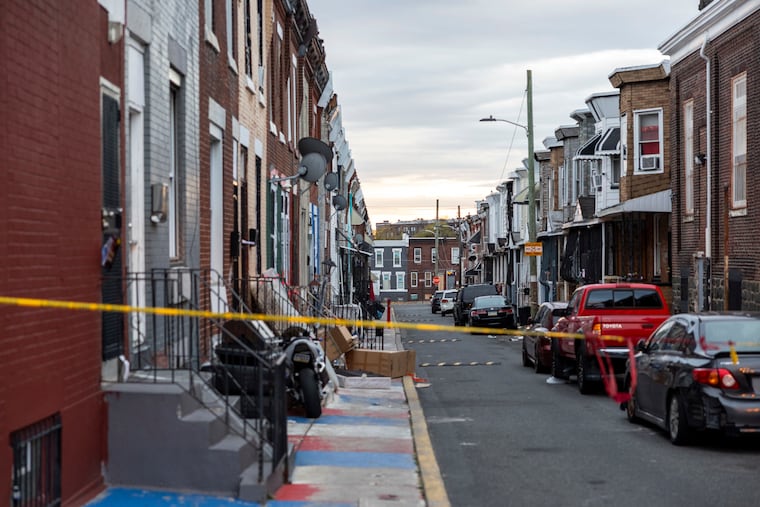
The Weymouth Street gang operated a sprawling criminal network, dealing fentanyl, heroin, and other drugs — until the feds swept in and made 24 arrests. The October raid, authorities said, decimated the gang’s stranglehold on the block and its residents.
Now, in a bid to help revitalize the struggling stretch of Weymouth Street, city officials are connecting residents with services and, in some cases, offering them money for minor car repairs, appliances, and other household needs.
In what Public Safety Director Adam Geer called a “drug market intervention pilot,” residents on the 3100 block of Weymouth Street have benefited from “micro-focused” attention in the aftermath of the raid. Staffers have directed them to the city’s rental assistance and home repair programs, pest removal services, and even help with property titles.
Most of those same services are available to Philadelphians citywide, Geer said at a recent City Council budget hearing. The particular focus on Weymouth Street, Geer said, is aimed at building trust on a block too-long ravaged by the drug trade.
He used a gardening analogy to describe the relationship between the drug enforcement operation and his department’s initiative.
Law enforcement, Geer said, will come in and “rip out the tree, rip out some of the stem. We’re coming in afterward and making sure we’re getting all those little seeds and bulbs that might grow into something we don’t want — and then replenishing it with some good soil.”
City Councilperson Jim Harrity, who lives in Kensington, said he understood Public Safety’s goals, but noted that the initiative had sparked concern among some of his constituents about help provided to residents there but not elsewhere.
“They are mad at me because there’s this thing about extras that Weymouth Street is getting that aren’t being done in other places,” said Harrity, who lives just blocks from Weymouth Street.
Geer, for his part, said 90% of the assistance offered to Weymouth Street residents was available citywide and that the additional financial support came from a “small amount of discretionary funds” budgeted for his office.
“A lot of that work was done to build trust with folks living in this tyrannical drug trade situation,” he said, referring to the appliance and car repairs.
Geer added that his office is planning a door-knocking campaign to help connect other Kensington residents with city services and public benefits.
Jennifer Crandall, a spokesperson for the Public Safety Office, said the Weymouth Street initiative is still a pilot and has not been replicated elsewhere. The office is documenting investments made in the neighborhood, she said, but no public report was available.
And Geer said his office sees the effort as something that could be deployed in other areas of the city, should law enforcement conduct another large-scale operation.
The Weymouth Street work is part of the city’s “focused deterrence” model, which directs social support to at-risk groups in an effort to curb violence rather than relying on law enforcement alone. Part of the goal in this case, a person familiar with the initiative said, is to keep drug activity from returning to the block.
The multiagency raid on Weymouth Street last fall was one of the most consequential drug enforcement operations in the city in a quarter century, drawing an appearance from FBI Director Kash Patel.
The gang it targeted ran a 24-hour, open-air drug market on the block and sold thousands of doses of the deadly synthetic opioid fentanyl and other substances, according to court documents.
The group’s leader, Jose Antonio Morales Nieves, “owned” Weymouth Street and charged drug dealers a fee to sell there, prosecutors said, and members of the gang used vacant homes to store or sell drugs.
Nieves, who lives in Puerto Rico, was charged with drug crimes. His arrest, along with many of his Philadelphia associates, eased the gang’s grip on Weymouth Street, authorities say.
Police have since had a notable presence on the block, and officers had at one point blocked it with crime tape as they checked the IDs of those who sought to enter it.
Now, city officials are hoping services and benefits will help residents return to a semblance of normal.
Harrity commended Public Safety’s effort, but emphasized that drugs continue to plague other neighborhoods in Kensington, home to what law enforcement officials have called the largest open-air narcotics market on the East Coast.
“I would just say be cautious with framing it in the way you framed it here, that [Weymouth Street residents] are held captive” to drug crime, Harrity told Geer at the Council hearing. “The whole neighborhood’s held captive … my neighbors are in bad shape, too.”