
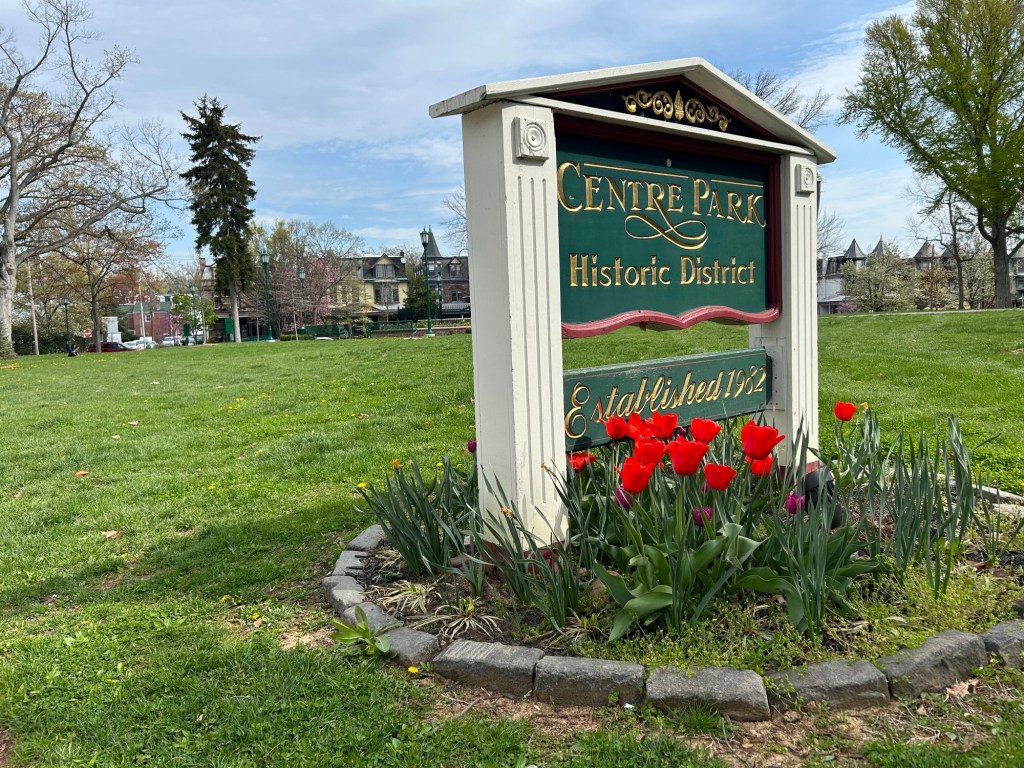
A revised approach to historic preservation in Reading could better protect the designated neighborhoods that have active owner support, while freeing up resources to tackle blight and spur redevelopment, the city’s director of community development said.
David Barr outlined the reworked strategy at a recent community interest meeting hosted by Centre Park Historic District Inc.
The neighborhood association headquartered at 705 N. Fifth St. is dedicated to promoting preservation in the northwest Reading district.
 David Barr, Reading director of community development
Barr, a Reading native who returned to the city last year after a federal career, framed the proposal as a practical response to shifting realities.
“We have a confluence of things that have happened over the last 50 years,” he told residents, pointing to economic pressures, a rise in absentee ownership, the declining capacity of homeowners to maintain historic properties and a dedicated staff stretched thin.
The result, he said, is a system that is struggling to keep pace with enforcement demands and the city’s broader development goals.
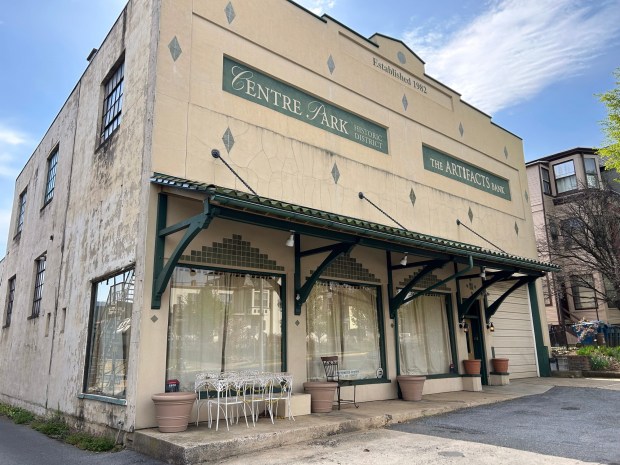 City Community Development Director David Barr outlined a reworked strategy for historic preservation in the city at a community interest meeting hosted by Centre Park Historic District Inc. at the organization’s headquarters at 705 N. Fifth St. (BILL UHRICH/READING EAGLE)
Barr said the updated proposal, revised from recommendations discussed previously, seeks to preserve what works, while easing burdens where historic controls have become difficult to sustain.
He described a more targeted model that would maintain protections in strong, engaged areas like Centre Park while scaling back in districts where historic integrity and community participation have eroded.
The approach echoes ideas raised by former city planner Frederic “Fritz” DeP. Rothermel Jr. in a recent presentation to City Council. Rothermel noted that Reading’s historic districts were created not by mandate but with grassroots support from residents who actively sought protections.
That level of engagement, both Rothermel and Barr said, is no longer consistent across all districts.
Under the evolving concept, Barr said, the city would likely maintain Centre Park as a full historic district, reduce the geographic scope of the Callowhill district to its most intact core and explore alternatives for preserving streetscape character without regulating every architectural detail in other designated areas.
The goal, Barr said, is a system that can be managed with a single staff position, freeing staff capacity to address more urgent citywide concerns, such as blight.
Two full-time positions and one unfilled part time position are presently allocated for preservation staff, he said, noting he is considering shifting some staff to support the city Redevelopment Authority’s efforts.
The reallocation of resources toward blight remediation is central to the proposal, he said, describing the direct and widespread impact of blight on property values throughout the city.
Reading is facing hundreds of blighted properties, Barr said, each requiring significant time and coordination to address.
“I feel it’s the responsible thing for me to do,” he said, “to allocate my resources to the higher priorities.”
Barr also said the recent collapse of the city’s Historical Architectural Review Board, which left the board without members, prompted a broader reassessment of the preservation process.
He proposes creating interim procedures to avoid delays in approvals while the system is restructured and the board is reestablished in a more workable form.
The city is seeking guidance from the Pennsylvania Historical and Museum Commission, which plans a two-month evaluation of Reading’s program, he noted.
Barr sees preservation reform as part of a larger push to make Reading more competitive for investment.
He cited overly complex planning requirements and inconsistent processes as barriers to development, noting the city is working to simplify approvals and encourage reuse of vacant properties.
Ongoing initiatives include maintaining a vacant property registry with escalating fees to discourage long-term vacancy, requiring pre-sale inspections to ensure buyers understand property conditions and implementing recommendations from a 2019 blight plan.
“These aren’t sexy things,” Barr said, “but they will incentivize developers to come into town. That creates tax base.”
Barr stressed that no decisions are final and that community input will shape the outcome.
“We’ve not reached any conclusions,” he said. “There’s plenty of opportunity to influence this.”