
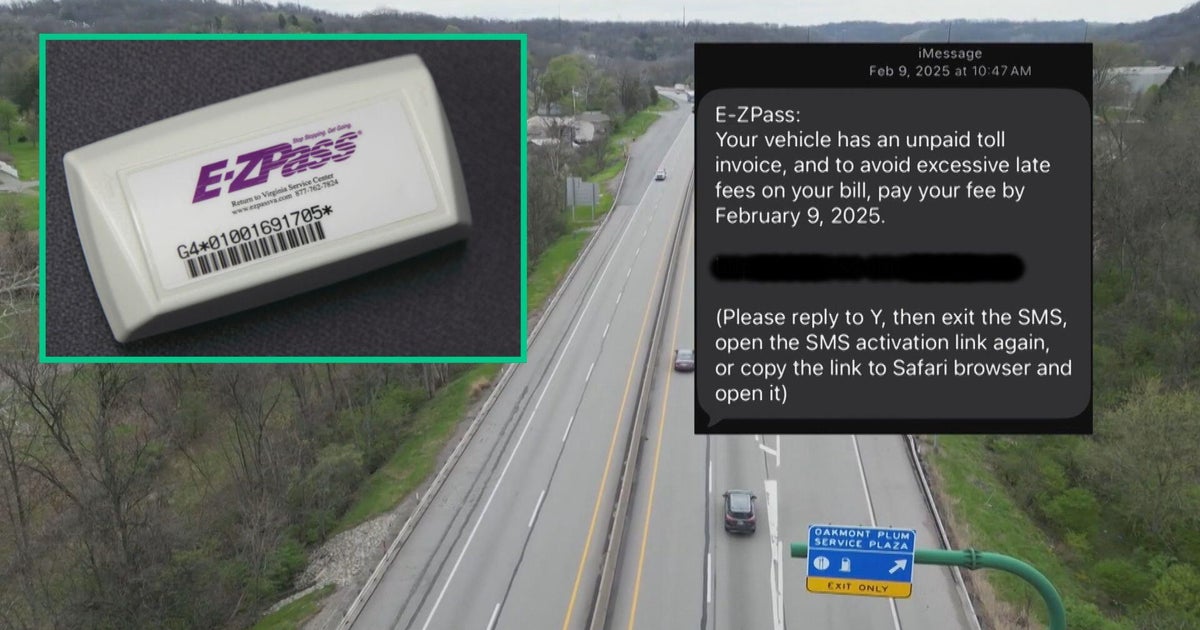
Text messages about unpaid tolls have long been considered a red flag for scams. Soon, they may become legitimate, at least some of the time.
The Pennsylvania Turnpike Commission says it plans to begin texting drivers about unpaid tolls as part of a pilot program launching this summer. The goal, according to agency officials, is to collect payments faster and reduce the number of accounts sent to collections.
But the move comes as scam texts impersonating toll agencies, courts and banks are surging nationwide.
What the Pennsylvania Turnpike says
Turnpike officials told CBS News Philadelphia they plan to be proactive in letting customers know what to expect.
That includes explaining what legitimate messages will say, when they will be sent and the official phone number they will come from. Officials say other tolling agencies that use text alerts have seen improved payment rates before accounts go to collections.
Even so, consumer advocates worry scammers could exploit the change.
Scam texts are becoming harder to spot
Scams that once looked obvious are now increasingly convincing, according to Ron Kerbs, CEO of Philadelphia-based cybersecurity firm Kidas.
Kerbs recently joined CBS News Philadelphia’s In Your Corner podcast, where he explained how artificial intelligence is accelerating fraud. Scammers can now collect personal information, impersonate trusted agencies and reach thousands of people at once, automatically.
How AI is supercharging scam text messages | In Your Corner Podcast, Ep. 19 by
CBS Philadelphia on
YouTube
That scale makes even small-dollar scams profitable.
“They can scam people for thousands of dollars,” Kerbs said. “But typically, on average, it’s $50, $60, $70.”
Many victims don’t report those losses, he said, because the amount feels too small to pursue.
“If you do it to enough people, it adds up,” Kerbs said.
Why toll-related scams work
Text messages claiming drivers owe money for tolls are especially effective because many drivers have experienced legitimate toll issues, particularly when traveling between states.
That familiarity can lower skepticism, especially when messages pressure recipients to act quickly.
Cybersecurity experts say urgency and fear are powerful tools that can override caution, even when something feels slightly off.
Using AI to fight back
Kerbs says artificial intelligence isn’t just part of the problem but could also be part of the solution.
His company and others are developing tools that use machine learning to analyze language, behavior and patterns to determine whether a text, call or voice message is likely a scam.
Unlike traditional spam filters that rely on known phone numbers, these systems look at how messages are written and how conversations unfold, similar to how antivirus software detects threats.
How to protect yourself
Experts recommend staying especially alert during predictable times when scams spike, including tax season, holidays and peak travel periods.
Other tips:
Be skeptical of urgent requests for payment or personal information.Avoid clicking links in unsolicited messages.Verify claims by contacting agencies using official websites or known phone numbers.Remember, most agencies do not demand immediate payment by text.
Even as legitimate agencies change how they communicate, experts say one rule still applies: pause and verify before paying anything.
You can hear the full discussion on the latest episode of the In Your Corner podcast. Each week features a different guest expert. You can find new episodes posted every Wednesday on the CBS Philadelphia YouTube channel.
Looking for help with a consumer issue? Click here to submit your complaint to In Your Corner.