
Wikimedia Commons
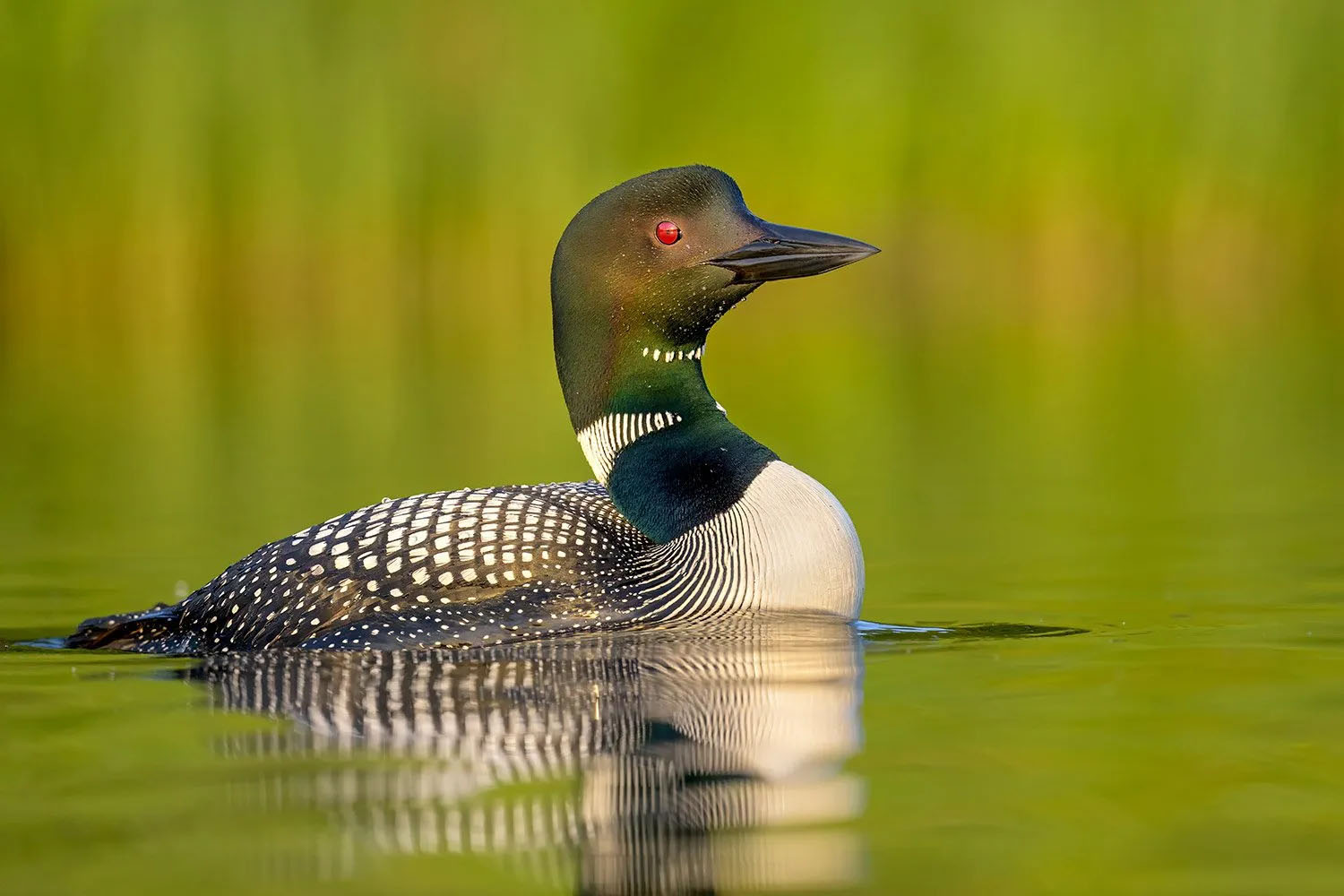
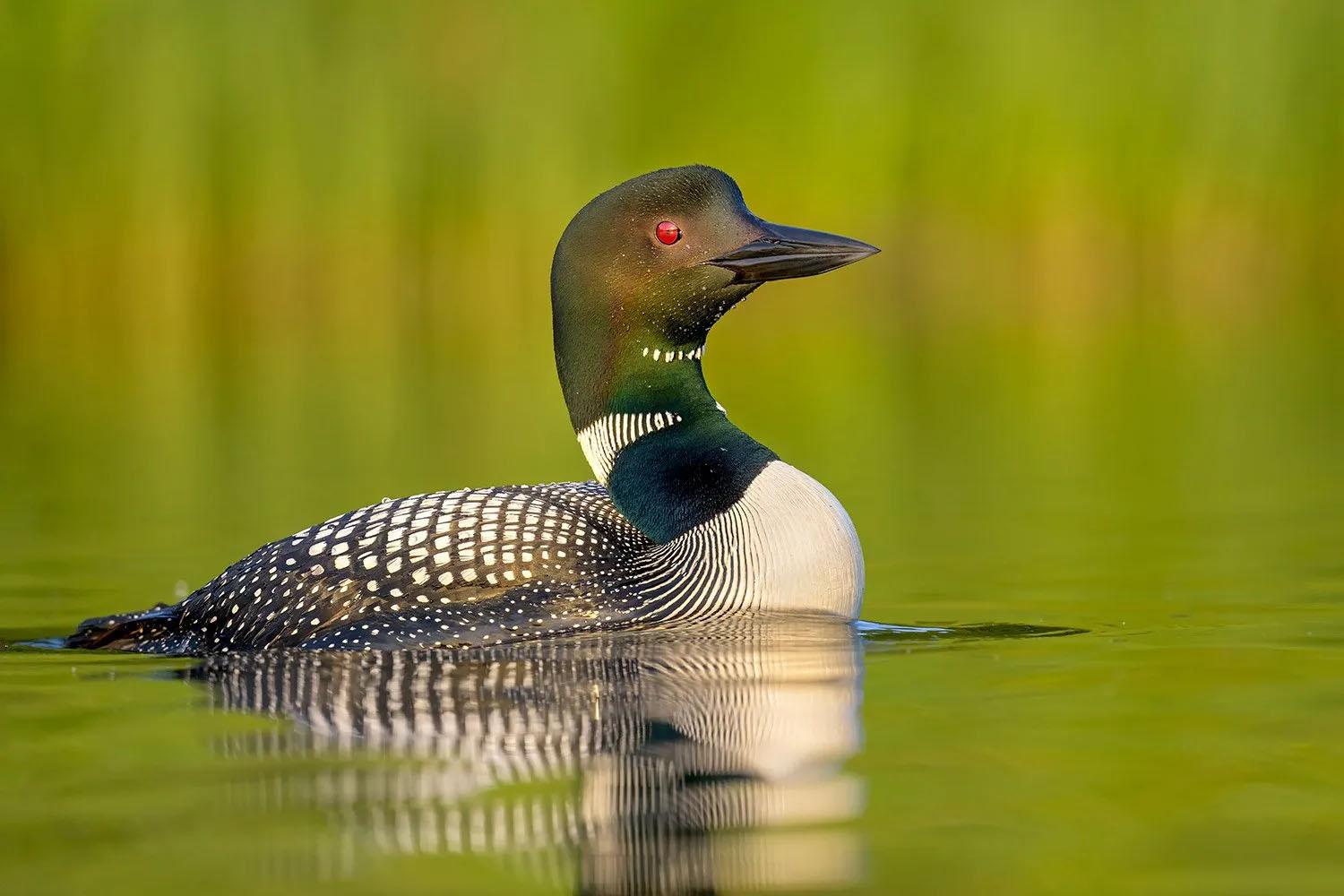
The Common Loon feels anything but common – their haunting call, their coloration that looks like a painting, their baby-wearing behavior – this unique bird grace Erie birders with their presence for a brief window. Try to spot one while you have the chance.
The haunting calls of the Common Loon will get your attention. Described as “low, melancholy yodeling or wailing cries” by David Sibley in his eponymous field guide, loon calls have been known to frighten people who do not know what they are listening to. But if you do know, it is enchanting.
One of my very favorite waterbirds, Common Loons nest farther north and winter farther south of Erie and migrate through our waters in the spring and fall. Our window to enjoy them is small, making April a great month to find one on the lake or bay.
In spring, loons are molting into their breeding plumage (also called alternate plumage) so any you see here in Erie may look different from each other because they are transitioning from one type of plumage into another. During the breeding season, they sport a fully black head, a black and white striped neck and a checkerboard pattern of black and white on their mantle (back). Their sleek plumage has crisp delineation between black and white parts, giving them a sophisticated quality. Intimidating red eyes complete the ensemble. As they head south to winter and molt back into their non-breeding (basic) plumage they take on a softer look with gray/brown upperparts, white underparts, and dark eyes.
Loons are excellent swimmers and divers and spend most of their time on the water. They are masters of the deep dives with documentation recording dives to over 200 feet. They use their large webbed feet to propel them down, and compress their feathers and expel air from their lungs and air sacs. And it’s while they are on the water that they carry that air of sophistication.
But on land? Not so much. With legs set very far back on their bodies, a loon’s weight is not evenly distributed and walking on land can look, well, awkward. They do a slide-hop movement with legs splayed and rowing on either side of their bodies. Watch one video of this and you’ll quickly understand that loons were made for water, not land.
Typically, the only time loons come ashore is to nest and they bravely endure the difficulty of walking to ensure the next generation of loons can succeed. When the chicks hatch, they are well-developed and don’t stay in the nest long. Once ready, a parent leads them to water and they swim away from land into the liquid paradise that they prefer. When chicks are tired, they climb up on a parent’s back, which is perhaps the sweetest thing you’ll ever see.
Unfortunately, they don’t nest here and Erieites never get to see the chick taxi. It’s on my bucket list to see, because I’m loony for loons and don’t mind being called that.
How you can help a loon or other waterbirds
Common Loons and other water birds who have set back feet like grebes, cannot take off from the ground and need a long “runway” in the water to do so. Sometimes, these birds mistake an icy road, driveway, or parking lot for a body of water. Once on the ground they are trapped there, unable to fly.
If you should encounter a bird in this situation, there are ways to help. You can call:
Wildlife in Need at 814-414-4224. Wildlife in Need is an all-volunteer network for capturing and delivering injured, sick and orphaned wildlife within the Commonwealth of Pennsylvania. It was started in Erie and Crawford counties by Sue DeArment.
Tamarack Wildlife Center at 814-763-2574 Tamarack Wildlife Center specializes in the rehabilitation and treatment of raptors but is also equipped to treat a wide range of animals, including adult songbirds, rabbits, opossums, squirrels, turtles, snakes, and more. Tamarack is a non-profit organization licensed by state and federal governments, and entirely funded by private donations and grants.
PA Game Commission at 833-742-4868 (Northwest Region) or 833-PGC-WILD (State wide, 833-742-9453)
For all of these organizations, you may have to leave a message and someone will call you back.
To learn about the dos and don’ts of wildlife assistance visit these educational resources: rescuingwildlife.net and tamarackwildlife.org/help-i-found/
Mary Birdsong is the lead shorebird monitor for Erie Bird Observatory. Learn more at eriebirdobservatory.org. Mary can be reached at mbirdsong@eriereader.com