
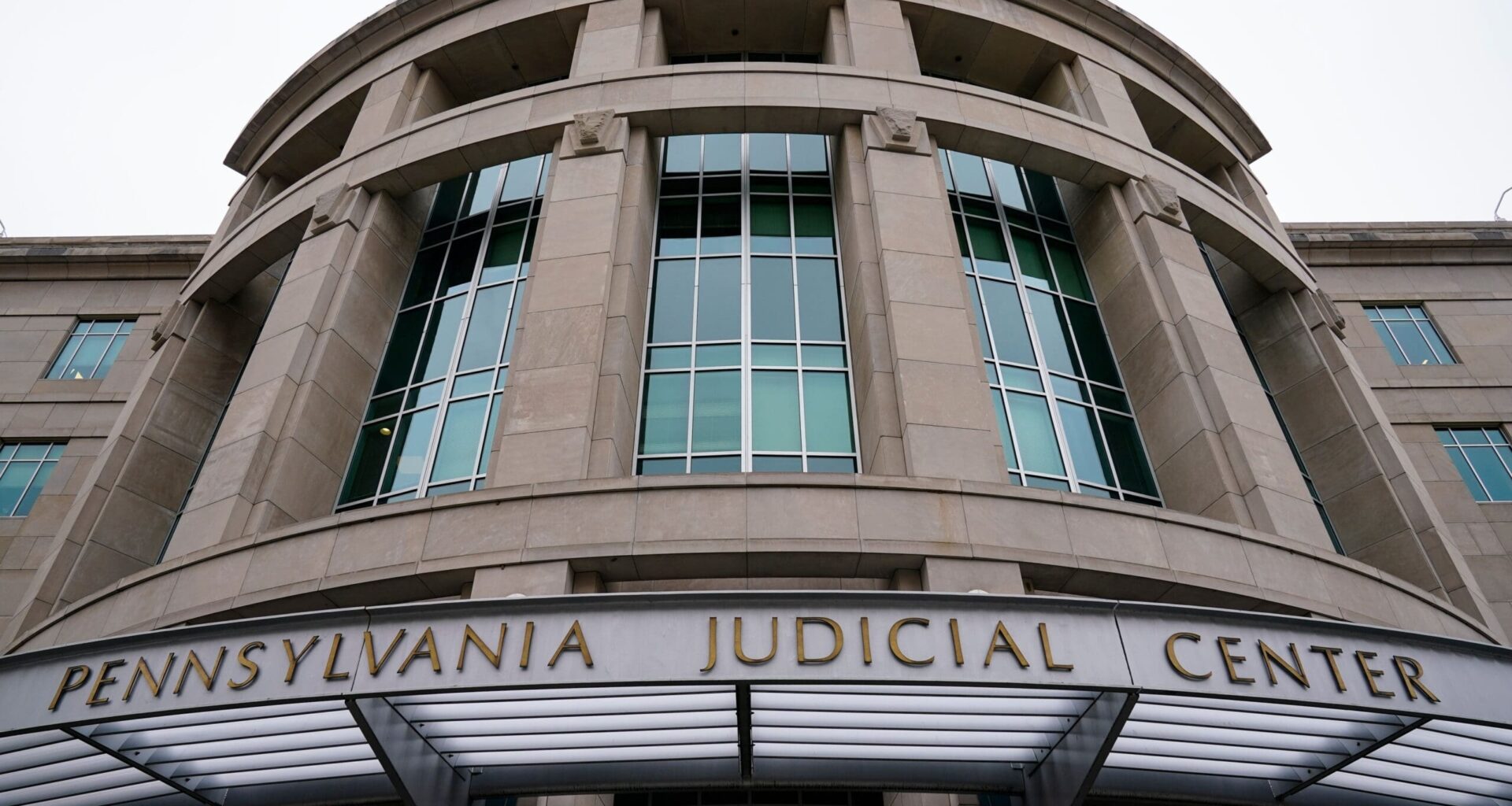
A Pennsylvania appellate court ruled 4-3 on April 20 that the state’s ban on public funding of abortion, first instituted in 1982, is unconstitutional.
The ruling came in a case that was initiated in 2019 when a group of Pennsylvania abortion providers filed suit in the Commonwealth Court of Pennsylvania against state officials on the grounds that the ban on public funding violated provisions of the state constitution prohibiting discrimination based on sex and protecting reproductive autonomy. The court dismissed the case in 2021, but in 2024, the state Supreme Court overturned the dismissal and remanded the case back to the lower court.
Judge Matthew Wolf of the Commonwealth Court, writing for the majority, said the judges “conclude that the Coverage Exclusion violates the Equal Rights Amendment in Article I, Section 28 of the Pennsylvania Constitution. Further, we conclude that Article I of the Pennsylvania Constitution guarantees a fundamental right to reproductive autonomy, that the Coverage Exclusion does not operate neutrally with respect to that right and is not properly justified in doing so.”
“Today’s ruling stops a discriminatory law that has harmed generations of Pennsylvanians. The Commonwealth Court today recognizes that the guarantees of equality in our state Constitution would be a hollow promise if women and birthing people did not possess the ability to control their destiny. Today, the Court recognizes that the right to reproductive autonomy is the right to self-determination,” Susan J. Frietsche, executive director of the Pennsylvania nonprofit legal organization Women’s Law Project, said in a statement.
The Pennsylvania Abortion Control Act of 1982 made it illegal for public funds to be used to pay for abortion care “except where necessary to avert the death of the woman or where necessary to terminate pregnancies initiated by acts of rape or incest.”
Wolf wrote: “We agree with Providers that recognizing this fundamental right, as the plurality [of Supreme Court justices] did, is necessary to restrict state government to its proper sphere, thus protecting our liberty. This will mean that the state will face judicial scrutiny of its attempts to coerce reproductive choice. … Those choices are the People’s, not the government’s.”
“State constitutions and state courts matter, now more than ever. With the U.S. Supreme Court abandoning a right to abortion, it is up to states to protect abortion rights and justice, which is exactly what Pennsylvania did this week,” David S. Cohen, a law professor and an attorney representing the providers, said in an email sent to the American Independent.
“‘Defunding’ Planned Parenthood would be catastrophic to communities, put countless lives at risk, and wreak havoc on our public health system,” Alexis McGill Johnson, president and CEO of Planned Parenthood Action Fund, said in May 2025 after Republican House Speaker Mike Johnson said a goal of President Donald Trump’s One Big Beautiful Bill Act budget legislation was to defund Planned Parenthood. “Federal Medicaid funds don’t pay for abortion except in rare exceptions, but that’s not stopping these lawmakers from going after Planned Parenthood. They’re set on depriving patients — particularly people who already have the hardest time getting health care — of access to affordable cancer screenings, birth control, STI testing and treatment, and many other essential reproductive health care services.”
Abortion opponents were quick to criticize the ruling.
Michael Geer, president of the Pennsylvania Family Institute, an anti-abortion “family values” organization, said: “By declaring a sweeping constitutional ‘right to reproductive autonomy’ and mandating taxpayer-funded abortion through Medicaid, the court has overstepped its authority, ignored the plain text of our state constitution, and forced millions of Pennsylvanians who believe life begins at conception to subsidize the killing of unborn children.”.”
Gov. Josh Shapiro expressed his support of the ruling, writing on X, “I’ve long opposed this unconstitutional ban, and as Governor, I did not defend it — because a woman’s ability to access reproductive care should never be determined by her income.”
The Associated Press reported that the office of Pennsylvania’s Republican Attorney General David Sunday was reviewing the case, but had not said whether it would appeal the ruling.