
The State College and Altoona areas received mixed grades for air quality in the American Lung Association’s 2026 “State of the Air” report card.
Released Wednesday, which was Earth Day, the annual report uses federal air quality data to assess how counties, states and metropolitan areas are doing when it comes to ozone levels and particle pollution.
“There’s good news and bad news,” said Kevin Stewart, director of environmental health with the American Lung Association.
On the positive side, he said year-round levels of fine particle pollution continue to improve.
“In this part of the country — certainly in the eastern part of the United States — we see, for instance for the State College, Altoona areas, the best-ever that we’ve seen for that measure of air pollution,” Stewart said. “So that’s good news.”
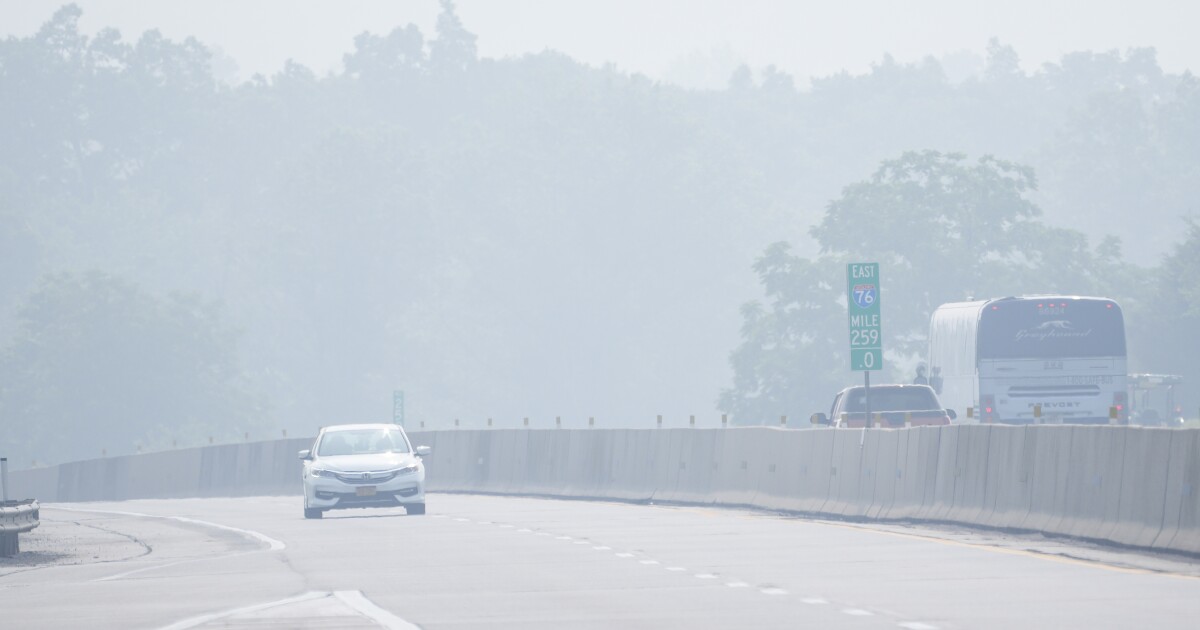
At the same time, Centre and Blair counties both got “D” grades for short-term particle pollution days, measured over the three-year period from 2022 to 2024. That’s in part from the Canadian wildfires.
The Philadelphia and Pittsburgh areas both got “F” grades for ozone smog and particle pollution. Tioga County in northern Pennsylvania, on the other hand, got “A” grades.
American Lung Association
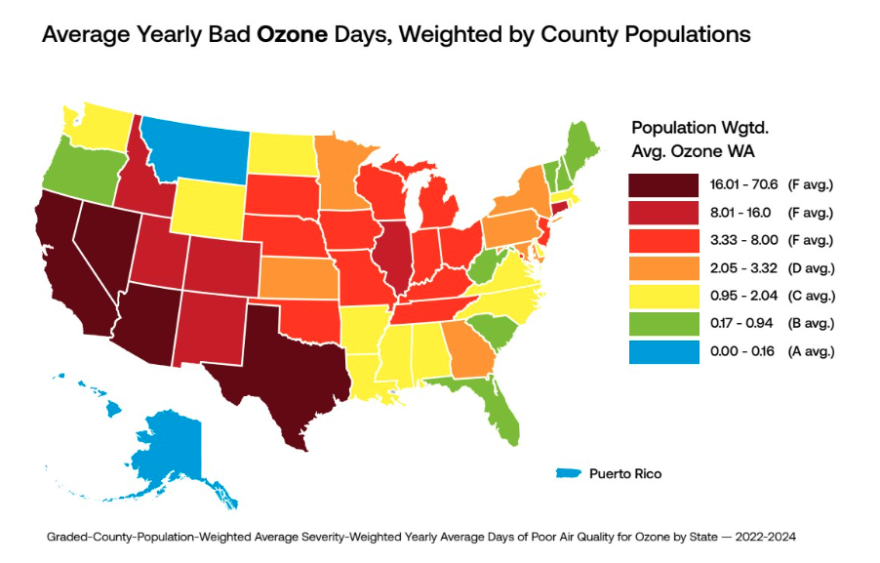
The American Lung Association’s 2026 “State of the Air” report includes
Stewart said in past years, State College area got “A” grades for air days, then it slipped to a “B” and then to a “D” last year and this year. Likewise, the grade for ozone went from an “A” to a “B” last year and this year. Blair County also got a “B” for ozone days.
“Past performance is not a guarantee of future success,” he said. “Air quality gains are fragile and certainly can be affected by either local air pollution sources or even sources that are a thousand miles away, especially those that are exacerbated by climate change.”
Stewart said air quality is especially important for people in at-risk groups, including children, senior citizens and people with chronic lung or heart disease.
“Even one bad air day can be one bad air day too many for someone who’s in one of these sensitive at-risk groups,” he said.