
From Philly and the Pa. suburbs to South Jersey and Delaware, what would you like WHYY News to cover? Let us know!
The corner of Diamond and 33rd streets in the Strawberry Mansion neighborhood of Philadelphia was once a hot spot for illegal dumping.
The barren site surrounded by a rotten fence was filled with logs, stones and bricks. Trucks drove by on a regular basis to toss everything from construction debris to sofas.
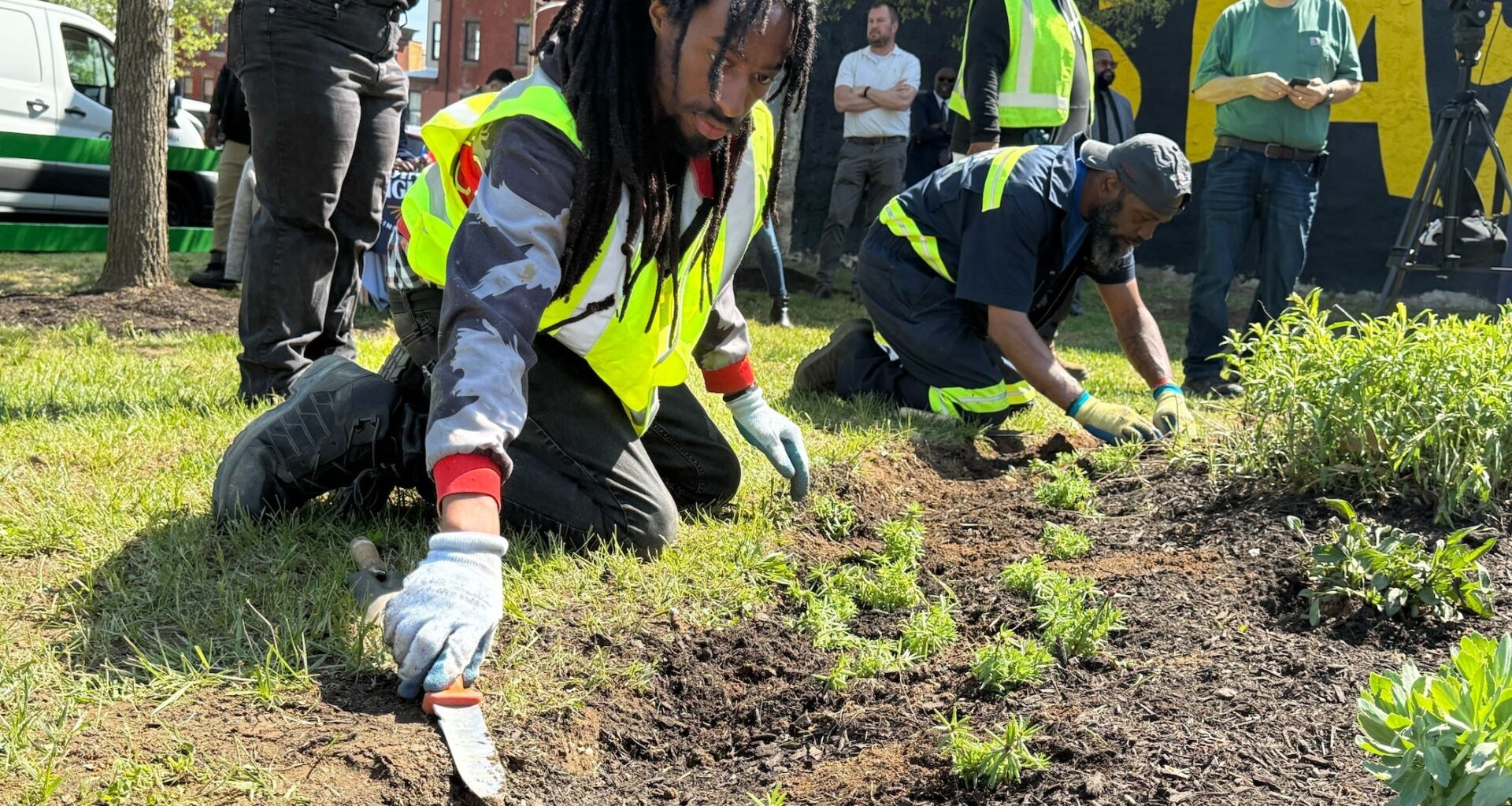
Today, a freshly painted green fence surrounds a lush community space with pollinator plants waiting to bloom.
The site is one of 10 publicly-owned vacant lots throughout Philadelphia slated to be transformed into community spaces as part of the city’s new pilot program, “Lotscapes.”
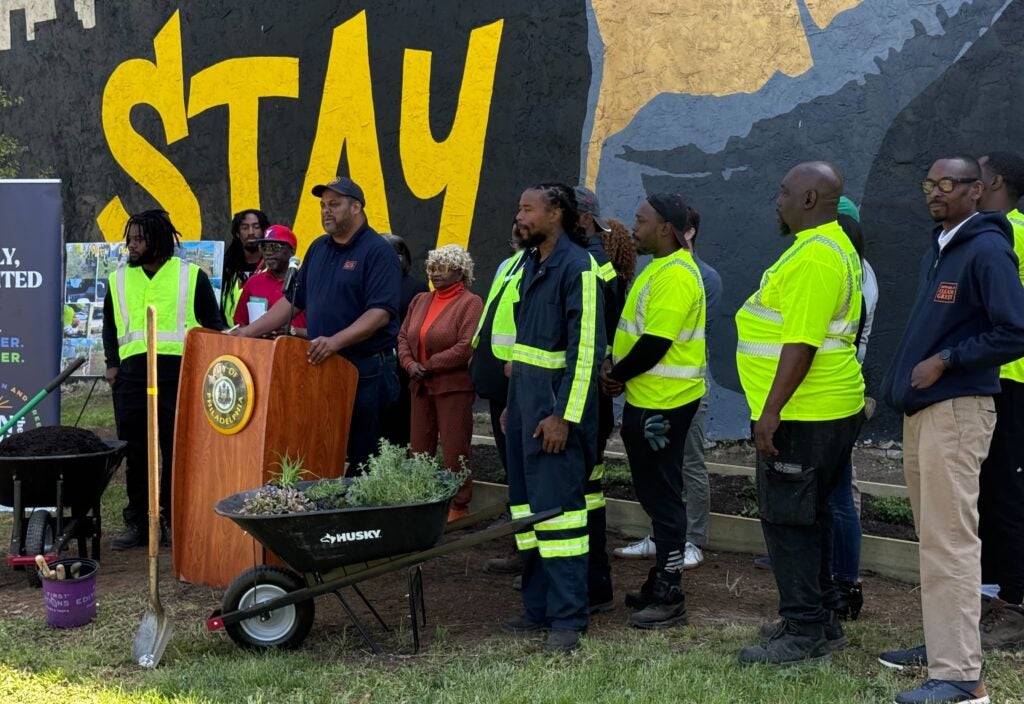 The City of Philadelphia announced a new pilot program called “Lotscapes” that aims to convert vacant lots into green spaces. (Zoe Read/WHYY)
“I think one of the great things about this project is that over the next two to three weeks, you’re going to see those pops of color. These plants are going to start flowering,” said Gerald Bright, assistant director of the city’s Office of Clean and Green Initiatives. “With some maintenance, it’ll come back year after year, and spread. It’ll fill in so much that it’ll keep the weeds out.”
There are about 40,000 vacant lots throughout Philadelphia, according to city officials, and about 20% of those are publicly owned. Strawberry Mansion has the highest concentration of vacant land in Philadelphia as a result of racist housing policies like redlining, as well as disinvestment and demolitions during the 1960s.
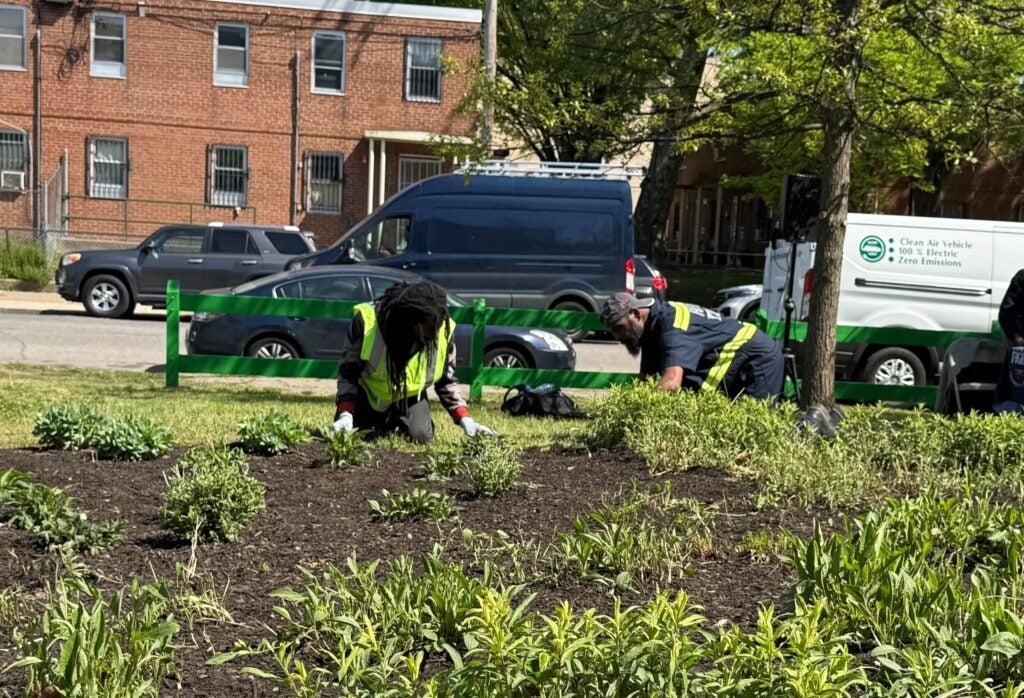 Trainees from the city’s Fast Track workforce development program helped to transform a once vacant lot in Strawberry Mansion into a community green space. (Zoe Read/WHYY)
“We always remember that some of these lots represent families. There was a family, there were houses on this parcel,” said Tonnetta Graham, executive director of the nonprofit group Strawberry Mansion Community Development Corporation.
“Through a lot of deterioration, a lot of other things that are faults of our own and faults of the system, we lost a lot of families. We lost them because the houses were just dilapidated. Now, we have so much opportunity for growth in the neighborhood.”