
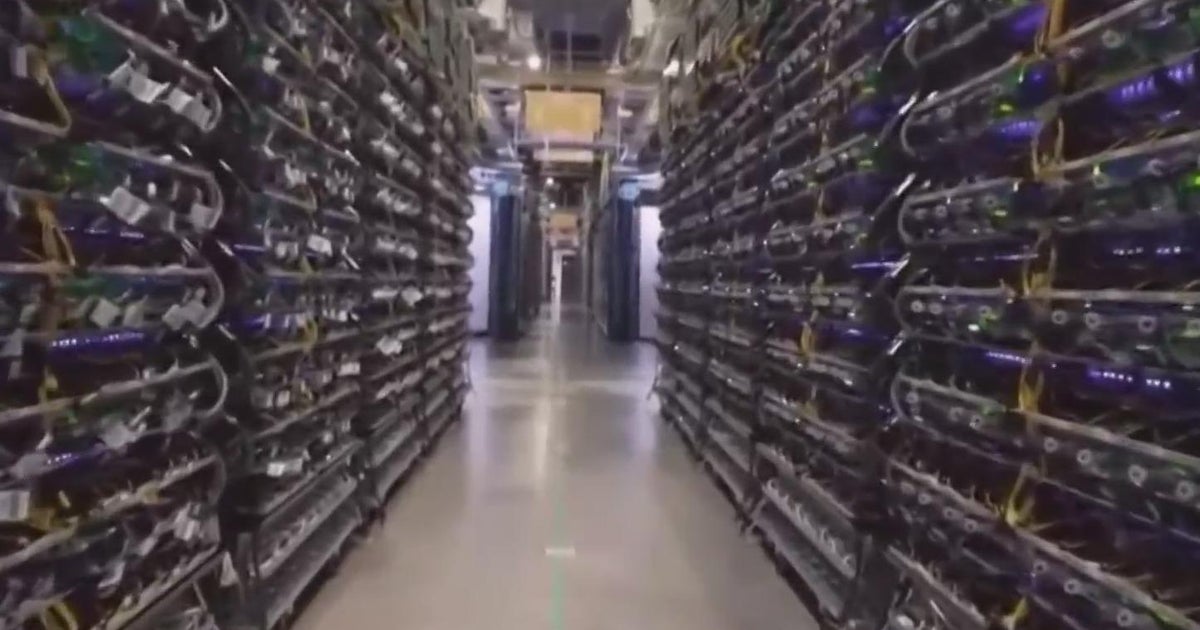
As more plans for data centers are being proposed throughout Pennsylvania, many questions remain unanswered surrounding what impact those data centers could have on things like electric and utility bills.
Steve DeFrank, chairman of the Pennsylvania Public Utility Commission, said he sees both sides of the issues and that the concerns surrounding the topic are legitimate.
It’s easy to look at the promises of an incoming data center and only see dollar signs.
“A multi-billion dollar facility going into your neighborhood is going into your local tax base and that money is going to your local community and local government there,” DeFrank said.
But DeFrank also says there’s a right way and a wrong way to go about it.
“It’s challenging, don’t get me wrong, but this has to be well planned, well thought,” DeFrank said. “And if we do that, if we do it the right way, it could be very prosperous. Conversely, if we don’t get this right, it could be disastrous.”
DeFrank says that data centers absolutely need a lot of electricity to operate, and with that comes a need for separation and protection.
“We have to separate that load demand out, that energy demand for data centers,” DeFrank said. “Otherwise, you have grandma competing with Google over the same electron, economically. And that’s what we have to make sure we protect.”
One solution, DeFrank says, is that data centers may need to bring their own electricity generation.
“If you have this onset of generation coming in, you will meet that load,” DeFrank said. “You will meet that need.”
DeFrank says that ultimately, data centers will use 10% to 12% of all electricity consumption and that separation is critical, so the demand doesn’t impact already rising energy bills.
“We protect rate payers and we help encourage that data center development at the same time, because again, we can do both,” DeFrank said.
That protection is coming, but it’s not here yet.
Meanwhile, because Pennsylvania is on a regional grid system with neighboring states, DeFrank says that if the data center is built somewhere else, Pennsylvania power will still help feed it anyway, potentially impacting rate payers without out state reaping the financial benefits of hosting the center.
DeFrank doesn’t discount or criticize other concerns surrounding data centers that extend beyond the cost of power like water, light, and noise, but he says the entities wanting to build the centers have deep pockets. With proper planning, the issues can be negotiated to help minimize the negative impacts.