
Two bags of tiny pink balls — trout eggs that would, within three months, become 2‑ to 3‑inch fingerlings — arrived at St. Ignatius Loyola Regional School in the second week of January.
That’s when the Trout in the Classroom project, an idea planted last spring, suddenly became real.
For months, the 55‑gallon aquarium in the entryway of the Spring Township parochial school had been nothing more than a chilled tank of lifeless water. Teachers spent that time learning how to create the right conditions for trout to survive.
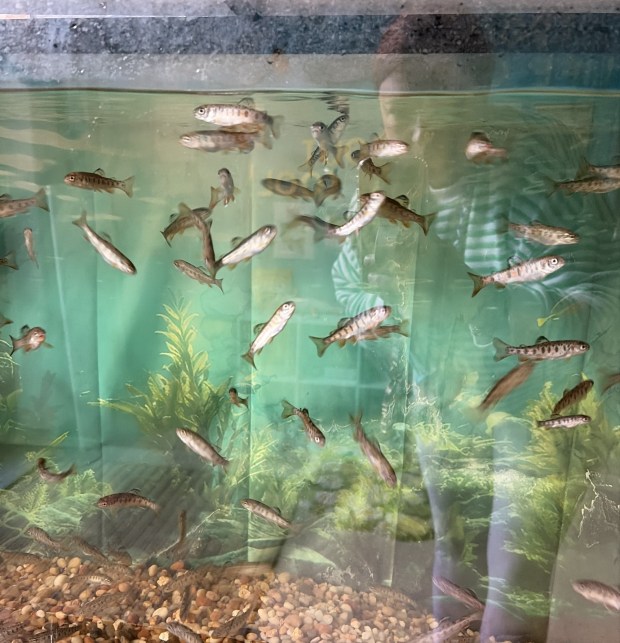
Courtesy of Michelle Thomas
Most of the nearly 150 trout hatched from eggs in the fish tank in St. Ignatius Loyola Regional School grew into fingerlings sturdy enough to be released into a trout-stocked waterway. (Courtesy of Michelle Thomas)
“It took us about three months to learn how to get the water right with the right chemicals,” first-grade teacher Michelle Thomas said. “You basically have to create a little ecosystem — getting the nitrates right, the ammonia right, everything.”
Just before the eggs arrived, the teachers added a few feeder fish to make sure the water was safe.
“They literally sent us two bags of around 150 eggs that just looked like tiny pink balls,” Thomas said. “The kids were so excited. They couldn’t wait.”
Thomas learned about Pennsylvania Trout in the Classroom from a friend who teaches in a public school. The interdisciplinary environmental program — open to kindergarten through 12th grade — connects students to local watersheds by raising trout from eggs to fingerlings.
“When I heard about it, I was like, ‘Oh, I really want to do this program,’” Thomas said.
Building a program from the ground up
The school’s Home School Association purchased the chiller and other startup equipment. Thomas said the fish are free, but the specialized setup is not.
Principal Emilia Ward said first, second, and third grades are participating this year. She credited Thomas and fellow teachers Jordyn Tackett and Lee Covell for doing the early research and attending the required training.
The teachers divided responsibilities by grade level:
• First grade learned about trout habitats, life cycles and basic needs.
• Second grade practiced measurement skills by tracking the fish’s growth.
• Third grade learned to test water quality, checking chemical levels and matching colors on test kits.
“We learned a lot this year,” Thomas said. “Next year, our first-graders will move up already knowing the basics, so we can push the academic part further, especially into conservation and how humans affect ecosystems.”
Ward said the project has strengthened the school community.
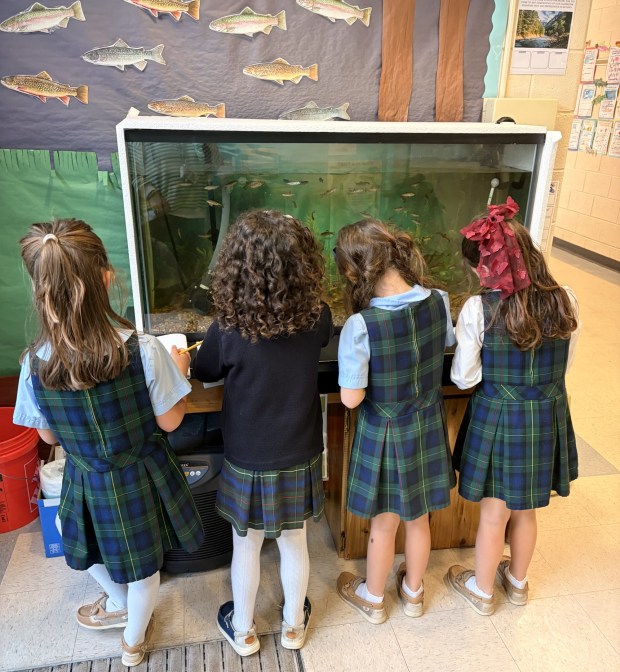
Courtesy of Michelle Thomas
Students at St. Ignatius Loyola Regional School record their observations of the baby trout this winter as part of the school’s participation in the Pennsylvania Trout in the Classroom program. (Courtesy of Michelle Thomas)
“Watching their growth has been such a unique experience for our students and teachers alike,” she said a week before Wednesday’s release date.
Students kept journals with written observations and drawings. Staff members formed an assembly line to heat‑press 120 T‑shirts for release day, featuring fish swimming in the shape of a cross under the words “We are all in the same school.”
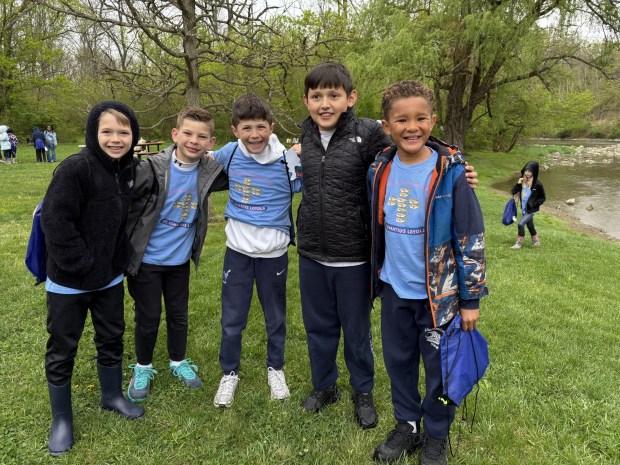
STEVEN HENSHAW – READING EAGLE)
Jacob Rebilos, left, joins classmates Adam Kreitz, Christian Tiedeken and Valentino Flores, third-graders at St. Ignatius Loyola Regional School, as they arrive at Blue Marsh Lake for a field trip to release more than 120 trout fingerlings raised from eggs in an aquarium at their Spring Township school. (STEVEN HENSHAW – READING EAGLE)
Some students even named individual fish.
“They feel like they’re more than a pet,” Thomas said. “We took care of them and helped them grow. It’s like we’re the trout moms and they’re all the trout brothers and sisters.”
Small fundraisers helped pay for shirts and backpacks for the field trip to Blue Marsh Lake Recreation Area. The HSA also donated aerated coolers to transport the fish.
Only a few trout died — an accomplishment Thomas said is far better than what some schools experience. Still, there were tense moments. A clogged filter last weekend sent nitrate levels soaring, forcing teachers to replace much of the water by hand, bucket by bucket.
Release day at Blue Marsh
The final step came Wednesday — Earth Day — when students arrived at the Blue Marsh Stilling Basin in Bern Township, where water from the dam flows into Tulpehocken Creek.
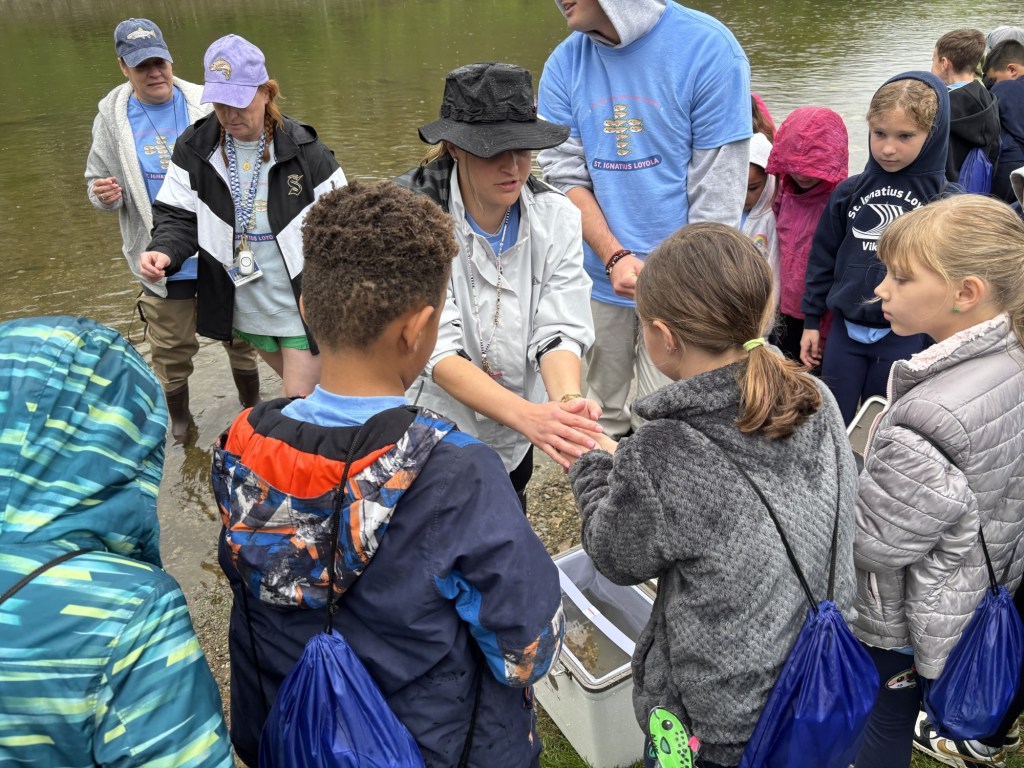
After Ward led a prayer asking God to provide the trout with what they need to survive, teachers in waders reached into the coolers to retrieve the fingerlings.
Third‑graders received a fish in their palms, transferred it to a plastic cup and gently tilted it into the creek.
Some of the students expressed confidence that they fish were well-prepared to transition to the adult phase.
“We learned about how they get to use everything in the water for life,” third grader Christian Tidedeken said.
One of his classmates, Adam Kreitz, indicated their future is in their creator’s hands.
“We hope God gives them all the food to survive and they don’t get eaten by a predator,” he said.