
Fourteen years ago, Jennifer Franks started noticing palpitations in her chest.
An active, 37-year-old mother of three children in elementary school at the time, she headed to her doctor to make sure everything was all right.
It wasn’t.
She was diagnosed with heart failure caused by dilated cardiomyopathy, a type of heart muscle disease that causes the heart chambers to thin and stretch, growing larger.
Franks’ heart function was so low that she qualified to have a defibrillator installed in her chest.
“It really just came out of nowhere,” the Robeson Township woman said. “It was scary. Those first six months after being diagnosed I was afraid to take a walk.”
Franks’ condition left her wondering what her future would hold. Would she still be able to exercise, to keep up with her energetic kids? Would she be able to travel, to enjoy all of the activities she had came to love?
Doctors treated Franks’ heart failure with medication, and for more than a decade it worked well. It allowed her to return to the life she knew before her diagnosis.
“It took about a year for me to accept it,” she said. “But then, things got back pretty much to normal.”
‘Transplant territory’
But last year, that changed.
Franks’ original diagnosis was for damage to the left side of her heart. But over time, the over-stressed right side became damaged, too.
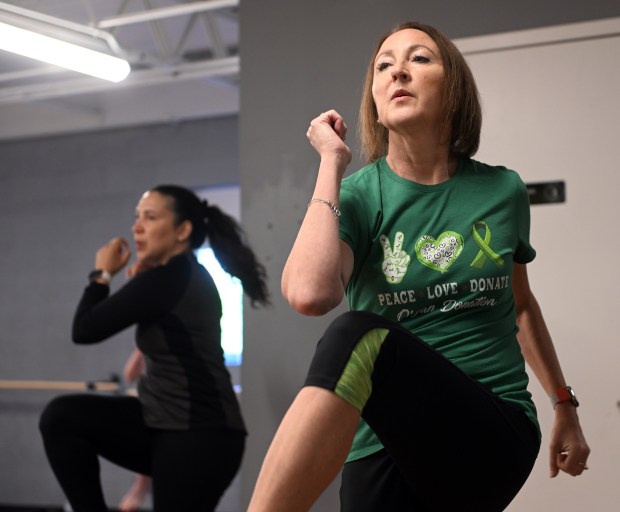 Jennifer Franks of Robeson Township initially was to undergo heart valve surgery, but that plan changed when it was determined her heart was beyond fixing. (BILL UHRICH/READING EAGLE)
She was on a cruise when she started retaining fluid in her legs. At first, she figured it might just be due to salty foods served on the ship.
But when she got home, the swelling remained.
She went to the hospital, where doctors said her heart function was down to about 15%.
“I remember getting the phone call at work and I knew right away it was transplant territory,” she said.
Initially, the idea was to perform heart valve surgery, but that plan quickly had to be adjusted. She was at the Hospital of the University of Pennsylvania by herself — her visiting family had just headed home for the day — when she was told her heart was beyond fixing.
“It was hard to believe,” she said of hearing the news. “I was at (a football game at) Penn State four days before walking up stairs to get my seat.
“It was terrifying. I had had a great day visiting with family. It was just shocking.”
Franks spent the next 29 days in the hospital, undergoing all sorts of tests to make sure she was a viable candidate for a transplant.
“They want to see that you’re going to take care of your body,” she said.
Because Franks’ blood type is AB, making her a universal recipient, she was able get to a donor heart quickly. Just under a month after learning she would need a transplant, she found herself prepping to received a new heart on a morning in September.
“I was thankful my wait was going to be over,” she said. “But there was a huge sense of guilt, too. I’m wishing for a heart, and that means someone has to die.”
The surgery went well, and Franks woke from the procedure with a new lease on life.
It was a strange experience, she said, knowing that someone else’s heart was beating in her chest.
“I could hear and feel it beat,” she recalled. “It was so much stronger than the one I had before. I wasn’t used to it.”
Franks’ recovery went quickly. Within a week she walked for the first time with a walker and air provided through a mask. Only a few days later she was walking on her own.
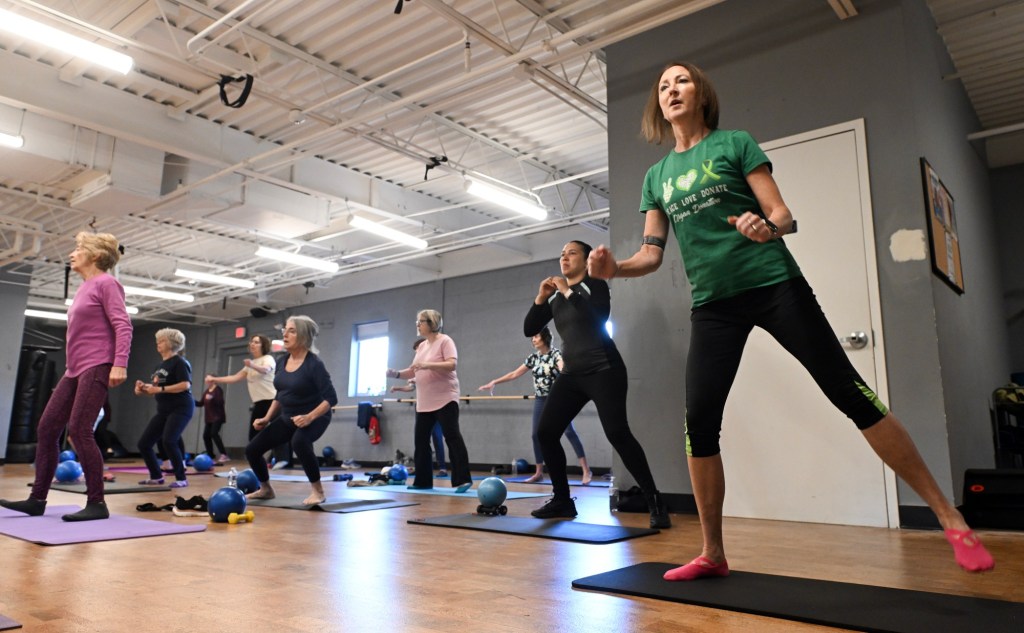
Now, just seven months after her transplant, the 51-year-old Franks’ life looks a lot like it did before. She runs errands, she works out at the gym, she’s begun to travel a bit.
“I’m trying to get back to normal as soon as possible,” she said.
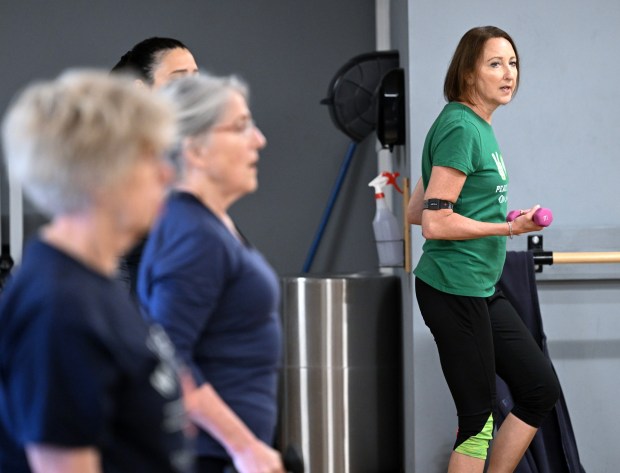 Seven months after her heart transplant, Jennifer Franks’ life looks a lot like it did before. She runs errands, works out at the gym and has begun to travel. (BILL UHRICH/READING EAGLE)
And every step of the way, she said, she thinks about the gift she was given by a stranger.
“I’ve written to their family, I told them I’m sorry for their loss and expressed my gratitude,” she said. “And I promised to take care of it.
“This person is going to be with me as long as possible. I plan to travel the world, and they’re coming with me.”
An invaluable gift
Franks shared her story with the Reading Eagle to help recognize National Donate Life Month, which is dedicated to highlighting the power of organ donation and the importance of educating the public about donating.
Her experience, she said, shows the impact that becoming an organ donor can have.
“Checking that box on your driver’s license can literally save someone’s life,” she said. “It really does, in fact the data shows it saves eight lives.”
And lifesaving gifts are needed by thousands of people across the country.
Kendall Bunch, media relations coordinator for Gift of Life Donor Program, said there are 100,000 people around the U.S. awaiting transplants. About 4,500 of those are in the greater-Philadelphia region that includes Berks County.
“Thirteen people in the U.S. die each day waiting for an organ,” she said. “It’s definitely a critical issue right now, it’s an urgent issue.
“We want to make sure that people get that second chance at life. We want to see a day where no one is on that wait list.”
Bunch said April serves as time to double down on efforts to spread the word about the importance of donation. That includes encouraging people who have decided to donate to let their loved ones know about their choice.
“Make sure that you share your wishes with your family if your are listed as a donor,” she said. “You want to have them equipped with the right information.”
 Gift of Life is the organ procurement organization the works with Reading Hospital.
“A lot of people just don’t know,” she said. “They don’t know what to expect or how it works. That’s why we’re here, that’s why we’re sharing these stories.”
Bunch also said Gift of Life strives to make sure people get true information about donation.
Bunch said a common misconception about donation, one that prevents many people from signing up, is that if a patient is listed as an organ donor doctors won’t work as hard to save their lives.
“That’s couldn’t be further from the truth,” she said.
Bunch explained that the medical team working to treat a patient is completely separate from the Gift of Life team. The hospital team’s number one job is to treat the patient, and often aren’t even aware of their donor status.
“It’s only after someone is declared brain dead that the hospital team calls us and we start looking into the donation process,” she said.
It is important that people have their questions about donation answered, and their fear allayed, Bunch said, because the act of giving is one of the most impactful things a person can do.
“Organ donation is really a selfless decision, and it saves lives,” she said.
For more information on organ donation, visit donors1.org.