
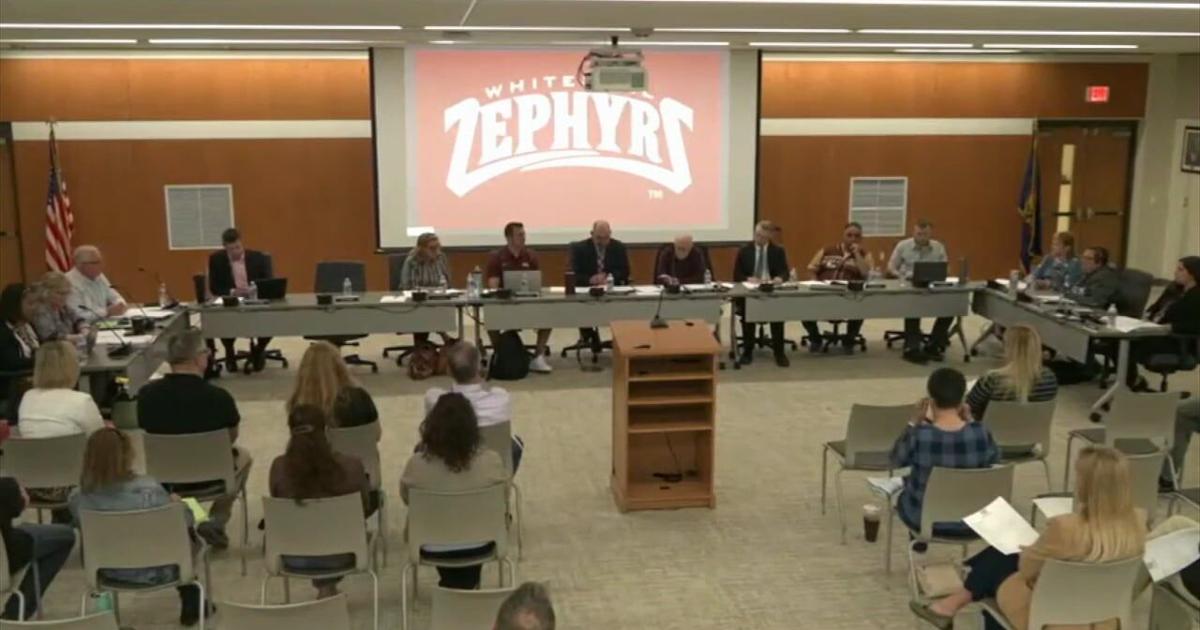
WHITEHALL TWP., Pa. – Whitehall-Coplay School District leaders say major financial challenges could mean both higher taxes and staffing cuts next school year. The proposed budget includes a significant property tax increase as officials work to close a multimillion-dollar deficit.
District leaders say even with the proposed 4.7% property tax increase, which is the maximum allowed under the state’s Act 1 Index, difficult decisions, including layoffs, may still lie ahead as they work to balance the 2026-27 budget.
The Whitehall-Coplay School District says it’s facing serious financial hurdles as it works to close a roughly $6 million shortfall with its proposed budget.
The more than $110 million spending plan includes a hefty property tax increase for property owners across the district. For some residents, that’s becoming increasingly difficult to accept.

The district will seek a 4.7% tax increase to address a roughly $6 million deficit in its $110.7 million spending plan.
“They keep on increasing. And do I have any choice? Probably not,” said resident Rakesh Narayan. “Since I moved in this area, it increased quite a bit. Everything has increased quite a bit. The water tax, water bills, house tax — everything is increasing.”
Superintendent Christopher Schiffert says while raising taxes may help, it won’t entirely solve the district’s financial problems.
“We are now in a position where we must consider a significant organizational restructuring,” Schiffert said.
That restructuring could include layoffs as the district looks for ways to pass a balanced budget by the end of June.
“These reductions will unfortunately impact many of our more recently hired staff,” Schiffert said. “These decisions are being made with a heavy heart, we recognize that reducing staff and programs will have a negative impact on the student experience and the high standards we have set for Whitehall–Coplay.”
Some homeowners say district leaders should focus more on spending control before asking residents to pay more.
“I came from New York where taxes were bad, and I feel like I’m going right back into it,” said resident Chris Anglestein. “I just hope that they listen to what people are saying because it’s going to come to the point where you’re going to just overtax, and people aren’t going to be able to do it. You’re going to see foreclosures; people are going to leave, there’s going to be bankruptcies.”
District leaders are expected to present a formal reorganization plan in May, with final budget approval required by June 30.