
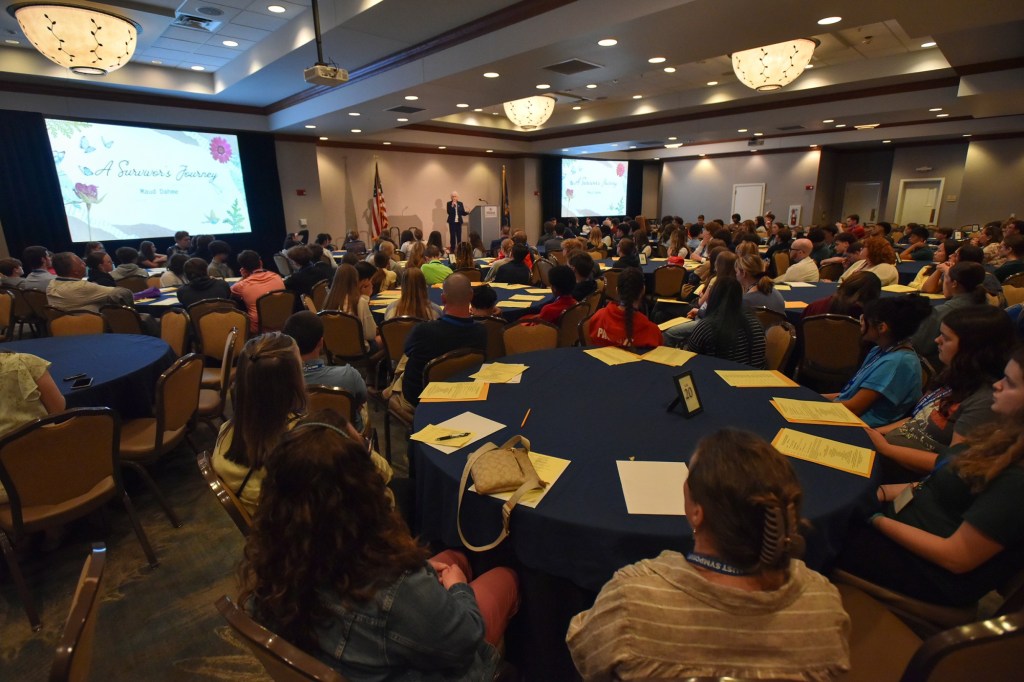
SCRANTON — Maud Dahme was 4 years old in May 1940 when Nazi Germany invaded her home country of the Netherlands and her world changed.
A few years later, her mother told her and her sister Rita they would be going to a farm. The owners of that farm, and others, hid the two Jewish girls from the Nazis for the next three years.
Dahme, now 90, told her story of surviving the Holocaust to hundreds of middle and high school students from across Northeast Pennsylvania on Tuesday morning during the 38th annual Teen Symposium on the Holocaust at the Hilton Scranton and Conference Center.
The symposium, coordinated by the Holocaust Education Resource Center, part of the Jewish Federation of Northeastern Pennsylvania, included speeches from 14 Holocaust survivors and descendants of survivors, as well as videos, all of which were designed to teach the young students about the horrors of that time period and the people who helped those persecuted by the Nazis. Tuesday was the first day of the symposium, which concludes Wednesday.
Before an audience of more than 100 teens, Dahme, who lives in Flemington, New Jersey, detailed how she had a happy life as a child in Amersfoort until Adolf Hitler rose to power in Germany. As he did, many Jewish people, including her grandfather, fled Germany to the Netherlands. But when the country was invaded, she noticed restrictions put on Jewish people like her, including having to register, not being allowed to own a car, having to wear a yellow star with the word “Jood,” or “Jew,” on it, restricted hours at places like grocery stores, and not being allowed to attend public school, go to public places like movie theaters or use public transportation.
In 1942, when Dahme was 6½, her parents arranged for her and her sister to stay with a Christian family, who hid them and changed their names. The sisters ended up staying with several other families during the war until the country was liberated in 1945 and they were reunited with their parents — who survived the war by hiding with another Christian family.
Dahme also described how, during her time in hiding, she witnessed the killing of six Jews and the family that hid them, and endured starvation in the winters of 1944 and 1945.
She said she never spoke about her experiences after the war ended until 1981, when she saw comments on a “60 Minutes” profile of Raoul Wallenberg — a Swedish diplomat who saved thousands of Jews during the Holocaust — claiming that Jews didn’t die in gas chambers and the chambers were war propaganda.
Dahme ended her presentation with a slideshow of family photos, including relatives who died in the Holocaust, and concluding with photos of her four children and nine grandchildren. She said if it hadn’t been for people like the family she stayed with, she wouldn’t be here.

The shadow of Holocaust survivor Maud Dahme is cast on the wall as she speaks to local high school students during the Teen Symposium on the Holocaust at the Hilton Scranton & Conference Center in Scranton Tuesday, May 5, 2026. (SEAN MCKEAG / STAFF PHOTOGRAPHER)
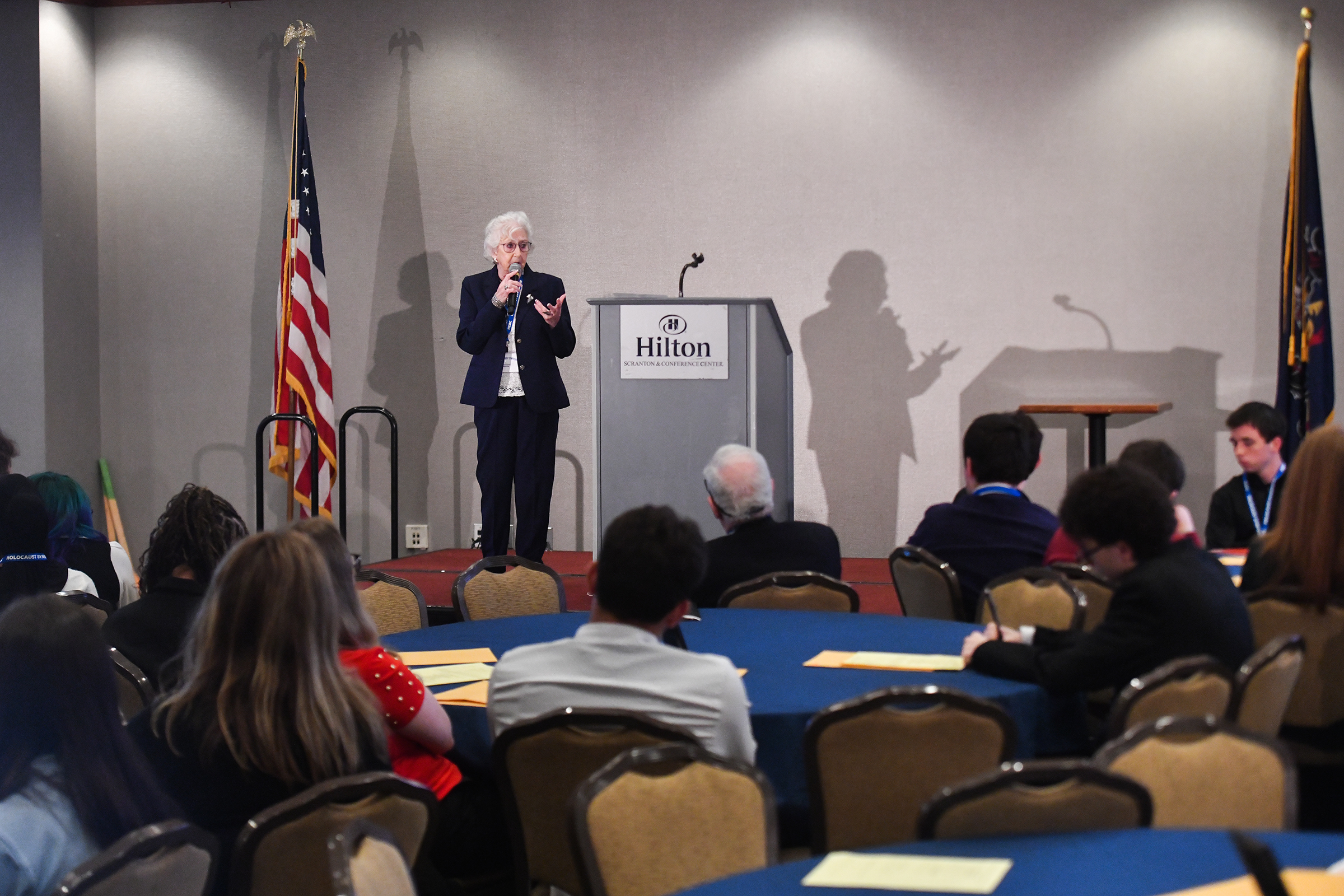
Holocaust survivor Maud Dahme speaks to local high school students about her experience growing up in the Netherlands during the Nazi rise to power in the Steamtown Ballroom at the Hilton Scranton & Conference Center in Scranton during the Teen Symposium on the Holocaust Tuesday, May 5, 2026. (SEAN MCKEAG / STAFF PHOTOGRAPHER)
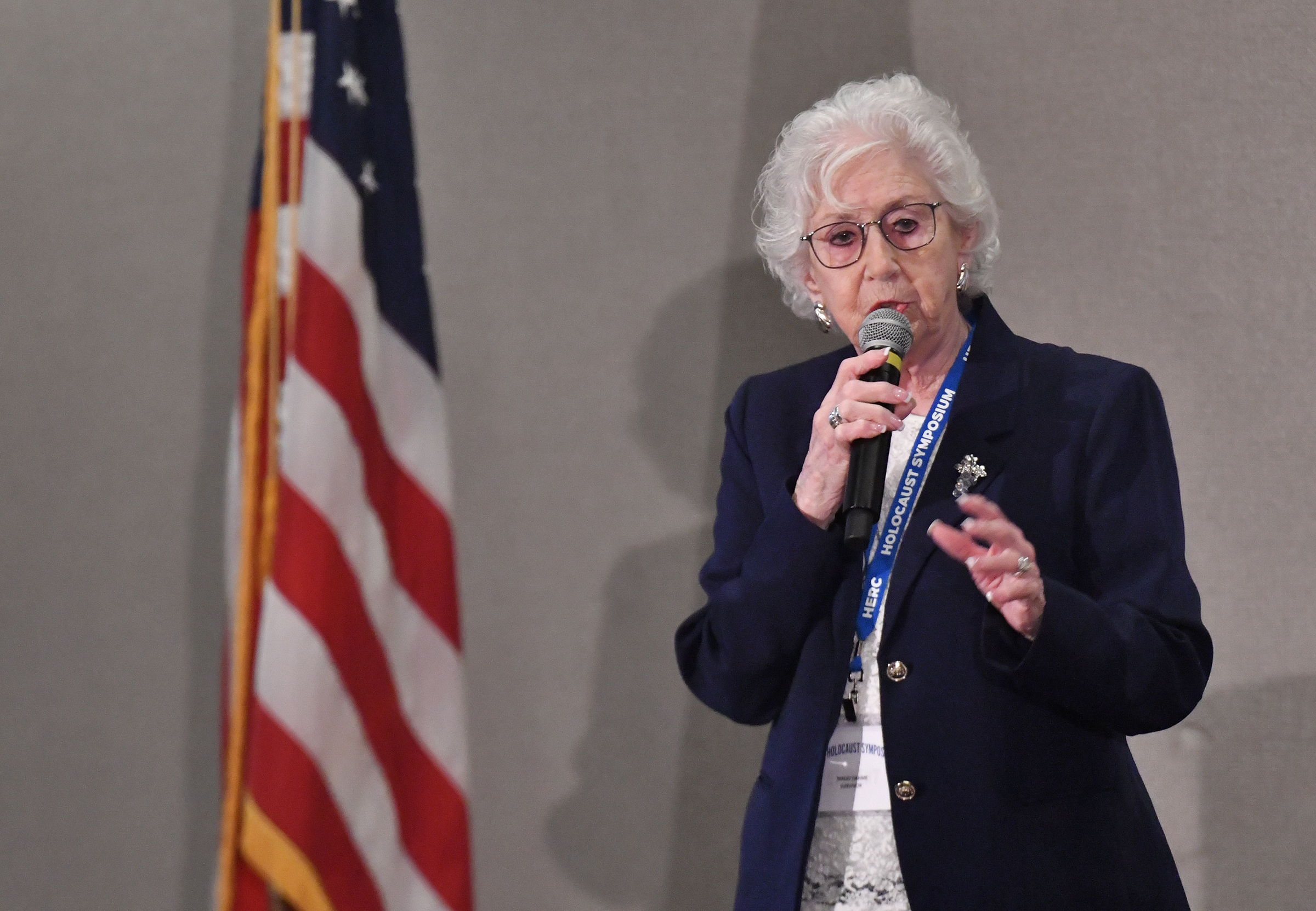
Holocaust survivor Maud Dahme tells her story during the Teen Symposium on the Holocaust at the Hilton Scranton & Conference Center in Scranton Tuesday, May 5, 2026. (SEAN MCKEAG / STAFF PHOTOGRAPHER)
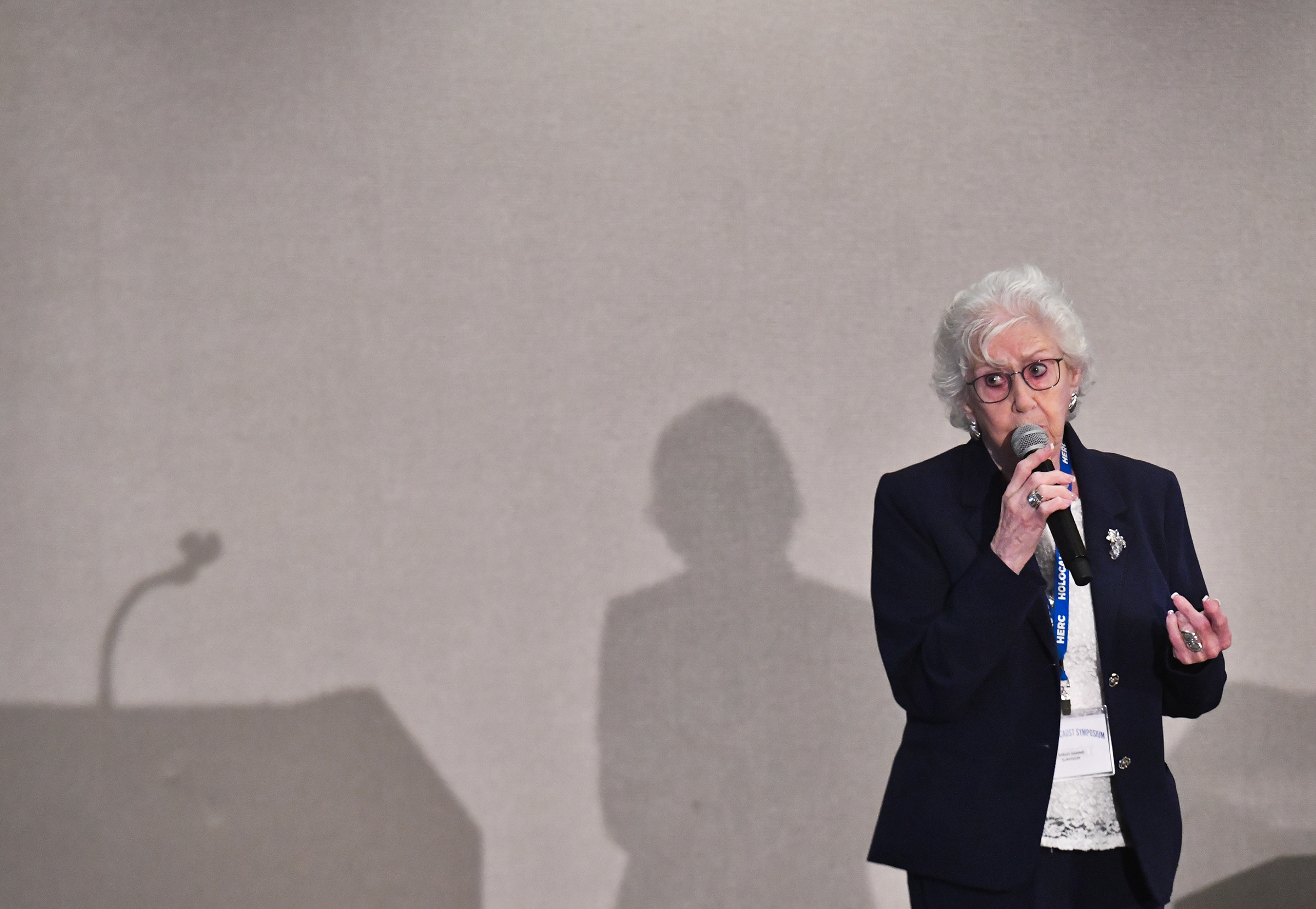
Holocaust survivor Maud Dahme tells her story of growing up during Nazi Germany’s rise to power in World War II during the Teen Symposium on the Holocaust at the Hilton Scranton & Conference Center in Scranton Tuesday, May 5, 2026. (SEAN MCKEAG / STAFF PHOTOGRAPHER)
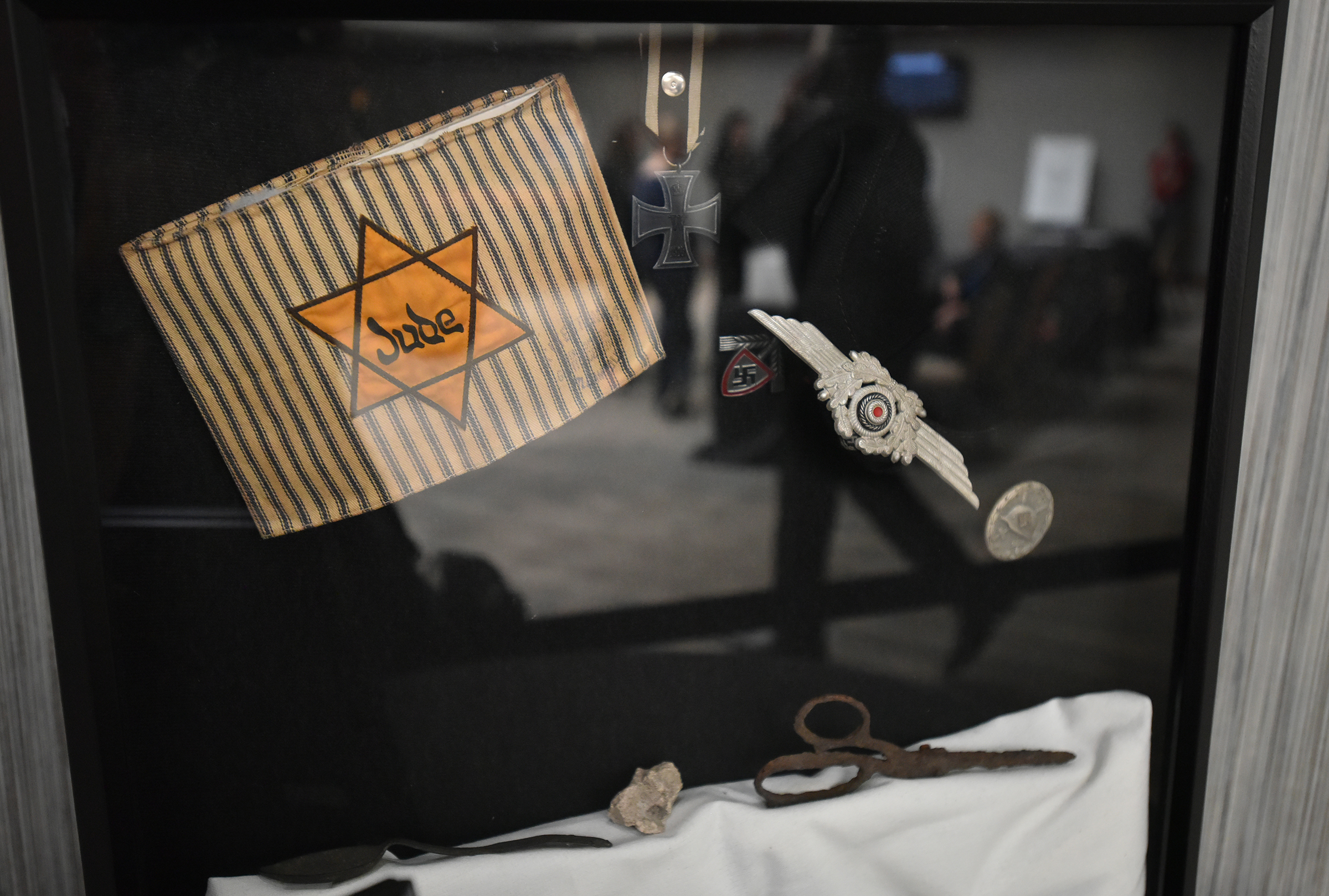
Holocaust artifacts are presented in a case during the Teen Symposium on the Holocaust at the Hilton Scranton & Conference Center in Scranton Tuesday, May 5, 2026. (SEAN MCKEAG / STAFF PHOTOGRAPHER)
Show Caption
1 of 5
The shadow of Holocaust survivor Maud Dahme is cast on the wall as she speaks to local high school students during the Teen Symposium on the Holocaust at the Hilton Scranton & Conference Center in Scranton Tuesday, May 5, 2026. (SEAN MCKEAG / STAFF PHOTOGRAPHER)
“I’m forever grateful,” Dahme said.
She moved to the United States in 1950, wrote about her story in a book, “Chocolate, The Taste of Freedom,” and last year was knighted by King Willem-Alexander of the Netherlands for her work in Holocaust education.
She said after her talk that she wants children to see what good people did, risking their lives to save others. Dahme also wants kids to learn to respect one another and stand up against hate.
Students who attended said hearing stories from survivors, as well as the children and grandchildren of survivors, was meaningful and made what they learned about in school come to life.
“When we’re learning about it in school, you know it’s bad, but you don’t really realize how bad,” said Paige Douglas, an eighth grader at North Pocono Middle School.
Wayne King, a senior at East Stroudsburg High School North, came away from the morning sessions with a message to stand up against evil.
“There’s bound to be a lot of evil in the world but it’s up to each person to try and fight that and not let that take over the whole world,” he said.
Wayne’s teacher, James Ware, who teaches English at the high school and has brought students to the symposium for 13 years, said it provides a strong message for his students that he hopes they take with them.
“I just hope they take away the important message that is delivered here every year and really learn the firsthand accounts about the atrocities of the Holocaust,” he said. “It’s a unique learning experience that students always seem to benefit from.”
Mary Ann Answini, the symposium’s coordinator, said she hoped the young attendees take away an understanding of the consequences of hate and the importance of standing up to it.
“It’s our hope that they will treat everyone like they want to be treated, you know, with respect to stand up for what’s right,” she said.