May 6, 2026, 4:58 a.m. ET
Pennsylvania’s Department of Environmental Protection (DEP) runs a suppression program to control black fly populations.Black flies, also known as biting gnats, returned to the state’s waterways after the Clean Water Act improved water quality.Treatment is necessary for public health, tourism, and to prevent negative economic impacts on outdoor activities.
If you’ve ever encountered dozens of tiny flying bugs buzzing around your head on your early morning walk, you’ve probably encountered one of Pennsylvania’s biggest pests.
Black flies have become such a nuisance over the past 40 years in York, Adams and 33 other counties, the Commonwealth’s Department of Environmental Protection (DEP) developed a spraying program to keep them under control.
The Pennsylvania Black Fly Suppression Program began its treatment of rivers and streams in April and will continue to do so until Labor Day in September in an effort to keep the little pests under control.
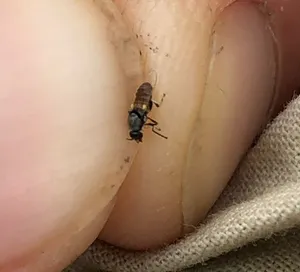
DEP Black Fly Suppression Program Manager Doug Orr said that a black fly is the proper name for a biting gnat, which is a huge nuisance in the Commonwealth in areas where rivers and streams are prevalent.
Biting gnats
“These biting gnats require clean, fast-flowing water,” Orr said. “Pennsylvania has 85,000 miles of stream. We have a lot of water that produces black flies in tremendous amounts.”
MORE: How this homeless woman came to live in a shuttered York Twp. Rite AidMORE: Cold snap could reduce York County’s pick-your-own strawberry season
Native black flies made a comeback after the enactment of the Clean Water Act in 1972, when many of Pennsylvania’s rivers and streams were cleaned up.
“They’re just expanding every year,” Orr said. “This year, we actually added another 100 miles of streams and rivers that have been cleaned up from acid rain and thermal pollution from a power plant. It’s a pretty big problem here in Pennsylvania.”
Conewago Creek in Adams and York counties; Yellow Breeches Creek, which is on the border between York and Cumberland counties; and the main stem of the Susquehanna River in York County are treated during black fly season.
A biologic product, not a pesticide, is used to keep them under control, Orr said. Application of Bacillus thuringiensis israelensis, more commonly known as Bti, began on April 16 in York and Adams counties. It is a bacterial larvicide, not a chemical, and is the only product used in Pennsylvania’s waterways for black fly suppression.
“It’s an amazing product,” Orr said. “It’s amazingly effective when done correctly. The great thing is, this program has been running for 40 years now, and we have very good biologists who understand the process from A to Z.”
He said 90 to 95% of the black fly population is eliminated when Bti is applied.
Black flies lay eggs in fast, flowing water and spend three-quarters of their lives in water. That’s why the waterways are treated, Orr said. When they come out as adults, they can fly up to 20 miles.
“We have to control large sections of the river before they come out,” he said. “Once they’re out, there is no controlling black flies like we could control mosquitoes in a neighborhood with a nighttime spraying.”
The Bti treatment is done every 7 to 14 days, depending on the water temperature. Orr said Bti is an organic material that only kills black flies and mosquitoes.
“It is very safe to put into the environment. It photodegrades, so the sun destroys it once we put it in and doesn’t accumulate in the environment,” Orr said. “Black flies eat that and they die.”
>> Want to stay up to date on the latest news? Sign up for our newsletters.
DEP determines when and where to spray through sampling the water from streams and rivers.
“We send out our biologists to sample all these streams weekly,” Orr said. “The samples are sent to a lab, our Vector Management Laboratory in Harrisburg, to identify if the target species is there and whether numbers of the target species are high enough to decide to treat it.”
There are 53 species of black fly in Pennsylvania, but Orr said they only go after the ones that target humans.
“That cuts it down to four species and one group that comes after humans,” he said.
If an area doesn’t have those target species, Orr said DEP doesn’t treat those waters.
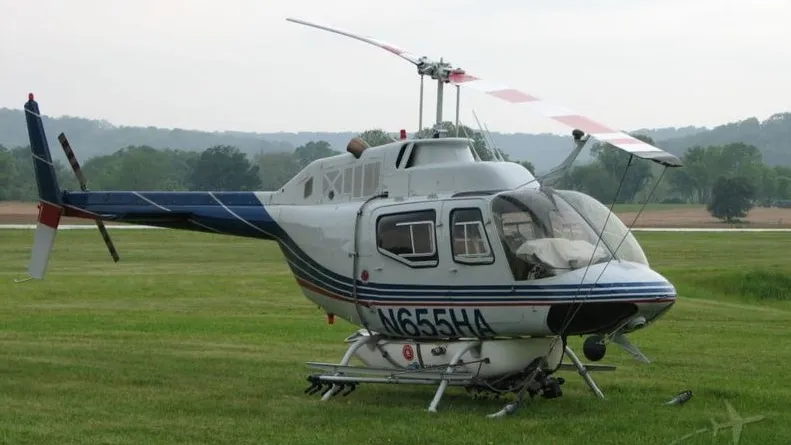
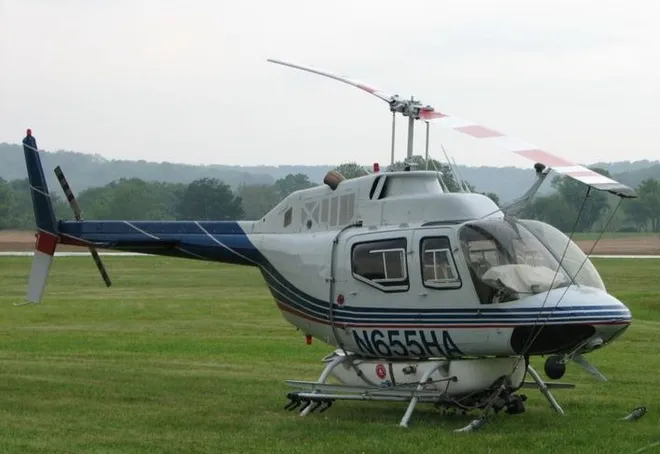
“If we find the target species in moderate to high numbers, we find out how many streams in the area have the target species, then we’ll put them altogether into a package and treat for a day or two to control streams within 15 miles of each other or maybe 100 miles of each other,” Orr said. “With a helicopter, you can cover a lot of territory in a day.”
A smaller creek, like the Yellow Breeches, is usually treated by hand because a large canopy of trees makes aerial spraying difficult.
The species are prolific in their reproduction, Orr said.
Please consider subscribing to support local journalism.
When the flies are most active
“It’s not like we can treat once and walk away,” he said. “It only takes a few females, who can up to 500 eggs. Even if we knock the population way back, it only takes a small portion of the population to regenerate and repopulate the stream. It’s an ongoing thing.”
Black flies are very sensitive to temperature and humidity, so their activity, or when they bite you, depends a lot on that, Orr said.
“If you are ever outside on a hot summer day and there is a thunderstorm warning, you will see that black flies are super active,” he said.
Other than on those occasions, Orr said they are most active in the early morning and early evening, and they don’t fly after dark.
“Once it gets super-hot, they are so small the sun can dry them up real quick. It’s very harmful to them,” he said. “That’s why on a hot sunny day, you won’t see them most of the time.”
MORE: Finding gas below $4 per gallon is getting harder in York CountyMORE: YAIAA track and field meet, tournament dates set for spring sports
While there are biting varieties of black fly, they don’t bite everyone, Orr said.
“Certain body types are susceptible to them,” he said.
Orr says when they bite him, his ears will bleed and get really hard.
“There are 3 reasons we control black flies in Pennsylvania,” Orr said. “First, a certain amount of the population is very sensitive to them and are allergic to them and get golf-ball-sized welts on them. For most people, it is just annoying. They can bite. They’re in their hair. When you have a swarm of about 100 around your head, it’s very uncomfortable.”
The second reason DEP treats for black flies is so visitors to Pennsylvania are able to enjoy the outdoors without being harassed by those pests.
The third reason DEP treats for black fly, Orr said, is an economic one.
“If you can’t have a Little League or a soccer game or you can’t have the Little League World Series, which is on the west branch of the Susquehanna and where black flies are prolific, or you go to a winery for an outdoor event or an outdoor wedding, there can be huge economic impacts that can be involved,” he said.
If you have a complaint or questions about DEP’s Black Fly Spraying Program, go to their website for more information.