
It started with a conversation with Benjamin Franklin, as many great Philadelphia sites do.
Prior to opening a private practice in the city, Thomas Bond trained to be a physician in Europe, where he encountered the voluntary hospital movement. It was a new way of taking care of people who were both poor and sick.
In the early 18th century, the colonies had Almshouses, shelters that offered clothing, food, and care for those experiencing poverty or illness in exchange for labor. Many relied on family medicinal “recipes,” like drinking hot broth or tea when feeling unwell. Seeing an actual physician required a paid house call. As Bond observed, a lot of people could not afford to hire one, leaving afflictions untended.
A hospital could provide people care in their communities, while also offering aspiring doctors a place to train.
The idea of building a hospital in Philadelphia garnered interest but no financial contributions, until Franklin, one of Bond’s friends and an influencer of his time, endorsed the project. “People inquired what Franklin thought of the idea. Bond didn’t think his friend had an interest in medicine,” said Stacey Peeples, lead archivist and curator of Pennsylvania Hospital’s archives. “As we know, everything was Franklin’s interest.” Serving as a hospital co-founder with Bond, Franklin made connections to get the funding.
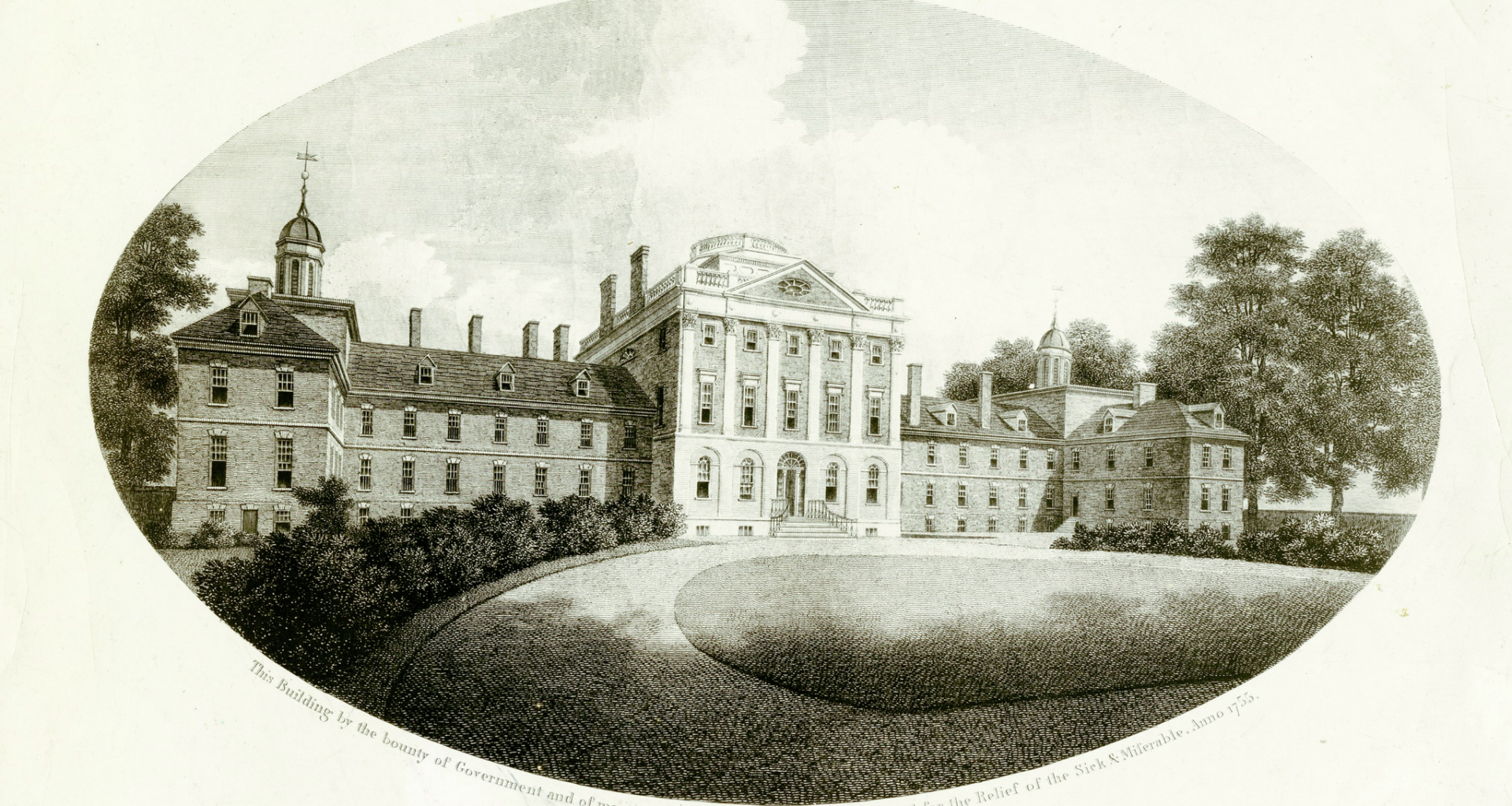
Pennsylvania Hospital was chartered on May 11, 1751, with its home in a rented house on Market Street until land was purchased in 1755. On a half block of 8th and Pine Street, once considered a rural region, the Pine Building opened its doors in 1756. The first of three sections—now referred to as the east wing—it provided men’s and women’s wards to address physical and mental health.