
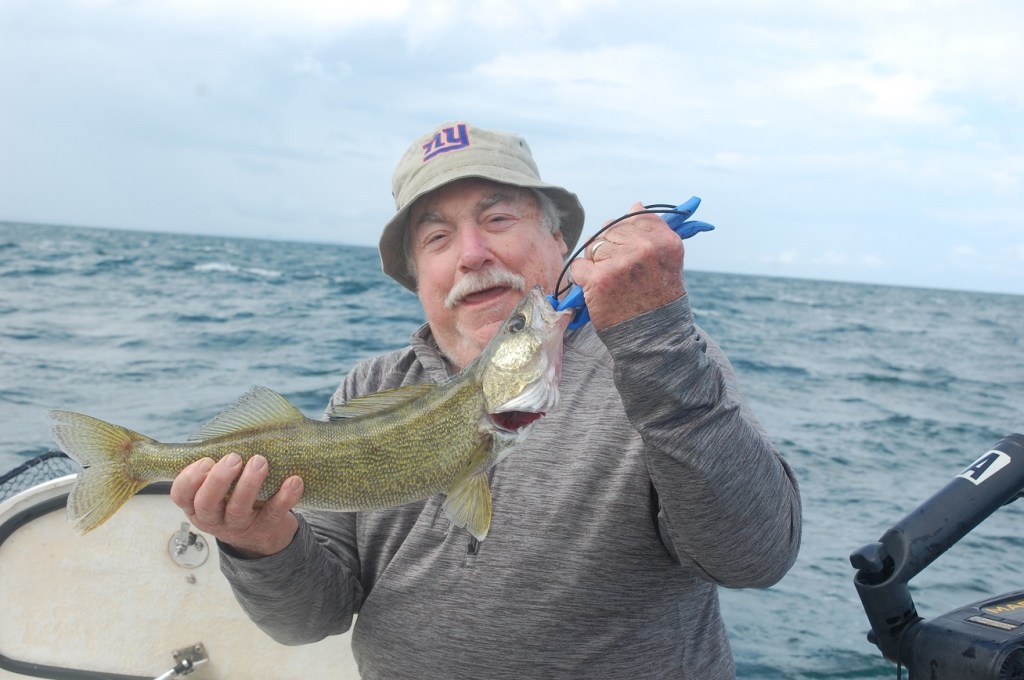
No matter if booking a charter or fishing from a private boat, the drive of 6-to-7.hours to fish for walleye on Lake Erie remains time well spent.
Last spring several members of the Pennsylvania Outdoor Writers Association learned that for themselves when the organization held its annual conference in Erie. Those who elected a walleye charter as their activity were rewarded in spite of less-than-ideal fishing conditions. One of the reasons the fishery is so productive is through the efforts of an organization called SONS of Lake Erie – which is an acronym for Save our Native Species.
SONS is an Erie-based organization founded in 1981 that is focused on improving fishing, advocacy for regulations and stocking, particularly in Pennsylvania waters.
A 501(c)(3) nonprofit fishing club, SONS has grown to nearly 3,000 members since its founding in 1981, and is primarily dedicated to improving the fishery of Presque Isle Bay and Lake Erie through a combination of habitat restoration, fish stocking and public advocacy.
Operating an all-volunteer hatchery established in 1985, SONS annually produces and stocks approximately 1 million walleye and 2 million yellow perch into Presque Isle Bay, as well as steelhead and brown trout. It advocates for free public fishing and boating access, and a major achievement was the $747,000 Liberty Pier project, which created a permanent public fishing area.
SONS partnered with the Pennsylvania Fish and Boat Commission to build and place more than 200 artificial structures in Presque Isle Bay to replace lost natural spawning areas. In addition, it successfully advocated for the elimination of gill netting in Pennsylvania waters and supported regulations promoting native species growth over non-native salmon.
Community and safety initiatives include youth and veteran programs, providing hands-on fishing experiences for more than 600 children annually through clinics and equipment lending programs. They also host regular fishing trips for disabled veterans and individuals with traumatic brain injuries.
A proponent of water safety, SONS donated nearly 100 life rings for Presque Isle shores and funded training and gear for the Erie Fire Department’s Water Rescue team. It also co-sponsors live webcams at popular fishing spots like Trout Run, Walnut Creek, and Lampe Marina to help anglers check conditions before heading out.
In no small way the work of AONS has allowed the PFBC to announce that 2026 daily creel limits for Lake Erie yellow perch and walleye are unchanged for recreational anglers. Lake Erie yellow perch will continue with a creel limit of 30 per day and the creel limit for walleye will stay at six per day.
The PFBC Lake Erie Research Unit evaluates the populations of yellow perch and walleye in Lake Erie annually. If populations reach critically low levels, a management process is followed to reduce harvest and rebuild the numbers of yellow perch and walleye in the Lake.
“Our assessment in 2025 showed that both yellow perch and walleye populations in the Pennsylvania waters of Lake Erie remain at levels that don’t necessitate regulation changes,” said Mark Haffley, PFBC Lake Erie Unit Leader. “Based on these findings, the 2026 creel limits are being maintained at the standard limits.”
Yellow perch and walleye populations in Lake Erie are maintained strictly by natural reproduction. Good “hatches” and survival of young fish are necessary to provide fish for sport and commercial fisheries.
Based on a 2025 abundance estimate of 57.6 million walleyes age two or older, the walleye population has declined about 26.6% from 2025 and approximately 8% of the walleye abundance will be two-year-old fish averaging approximately 14 inches. It takes two to three years for Lake Erie walleye to fully grow to the 15-inch minimum size limit.
PFBC’s objective is to keep harvest limits at conservative levels without being too restrictive to fisheries, but also be able to act promptly if walleye or yellow perch populations reach critically low levels. The PFBC adopted a regulation in 2012 which established flexible creel limits for walleye and yellow perch based on the annual quotas established by the LEC, which consists of fisheries managers from Pennsylvania; Ohio; New York; Michigan; and Ontario, Canada.
(Dietz is a member of the Pennsylvania Outdoor Writers Association. Contact the writer: outdoors@republicanherald.com)