
Following a Caribbean getaway during his cancer battle, Pete Bossow Jr. set out to provide others with a similar opportunity.
Marci Schankweiler, founder and CEO of the Plymouth Meeting-based For Pete’s Sake Cancer Respite Foundation, noted her late husband continually thought of others even as his own health deteriorated.
“He kept talking about being able to do the same thing for people who may not have a lot of support,” she said.
Schankweiler recalled trips to Lake Winola in Wyoming County toward the end of Bossow’s life, where he outlined his goals for the venture. More than two decades later, officials from For Pete’s Sake and Woodloch Legacy Resort Collection broke ground Thursday on “Pete’s Dream,” a new, $25 million, 32-acre cancer respite center in Lackawaxen Twp., Pike County, which will serve about 4,400 patients and their families each year. Current program capacity allows the organization to provide a respite opportunity to approximately 700 people each year, officials said.
“During that time, Pete really put forth his vision of being able to begin a respite center,” Schankweiler said. “Before he passed away, he actually kind of set it in motion. And here we are today, going back to the promise we made to Pete and constructing the nation’s first-of-its-kind respite center and doing it right in this community, which is amazing.”
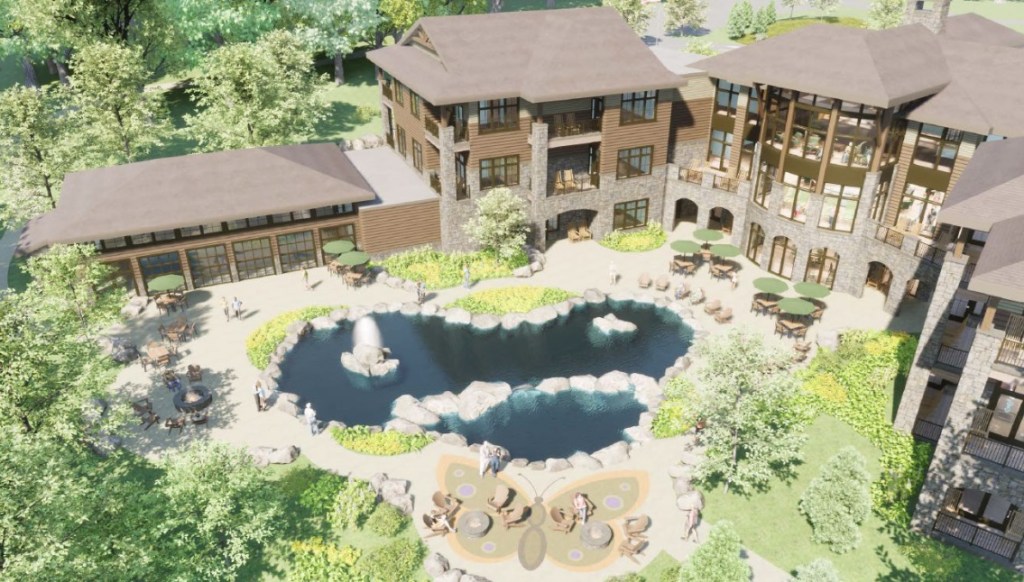
The facility will feature a pool for therapeutic healing, a chapel, an art room, a family game room, and a dining room that will serve 60,000 meals a year, Schankweiler said. The center will also include immersive outdoor experiences for adults and children.
“It’s the first of its kind in such a comprehensive approach for young families battling cancer of all types,” she said. “We found the right partner in Woodloch. They’re experts in hospitality and we’re experts in respite. We’re bringing two amazing groups together to really effectuate the success of this center. I truly believe it’s sacred ground because what’s going to happen within the doors of this facility and within these walls is going to give families a chance to recognize that no matter what happens in this cancer journey, love really binds them.”
The shape of the building — designed to look like outstretched arms — also has a symbolic meaning.
“We want families to know that no one walks this journey alone,” Schankweiler said. “We’re walking along with them.”
Bob Kiesendahl, owner and food and beverage director for Woodloch, envisions welcoming the first families to the 20-room, 32,000-square-foot center by the fall of 2027.
“It’s almost like a boutique hotel, and they’ll also have access to all the Woodloch amenities and facilities,” Kiesendahl said.
After Bossow’s death, Schankweiler left her job as an attorney and launched the foundation, which has served more than 12,000 people.
“My husband, Pete, was diagnosed with (testicular) cancer at the age of 29, and he passed away at the age of 30,” she said. “During that time period, our friends, not really knowing what to do for such a young person who had advanced-stage cancer, threw us a beef and beer, a Philadelphia tradition, and raised money to help with the financial strain.”
However, Bossow pitched another idea for the couple to use the donations, Schankweiler said.
“He wanted to take the money and go away on respite to remove ourselves from the trials and tribulations of what I would call ‘cancer chaos’ — the appointments, the tests, the uncertainty — and just be able to rest, reset and reconnect, recognizing that no matter what happens with the outcome of this cancer journey you always have the base of love in everything you do.”
For Pete’s Sake provides transformative respite experiences to cancer patients ages 21-55, their caregivers, and their children, officials said. Oncology professionals refer patients to the program.
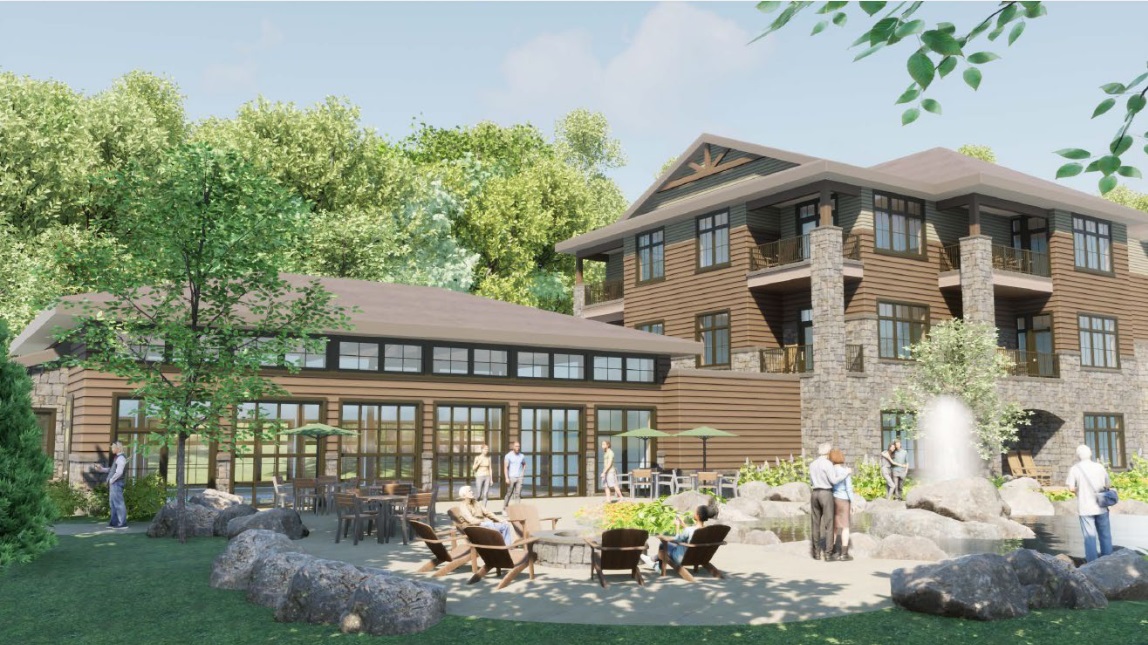
A rendering of a new cancer respite center designed by For Pete’s Sake being built adjacent to Woodloch Springs in Pike County. (Courtesy For Pete’s Sake)

A rendering of a new cancer respite center designed by For Pete’s Sake being built adjacent to Woodloch Springs in Pike County. (Courtesy For Pete’s Sake)
Show Caption
1 of 2
A rendering of a new cancer respite center designed by For Pete’s Sake being built adjacent to Woodloch Springs in Pike County. (Courtesy For Pete’s Sake)
Kiesendahl understands the impact of cancer firsthand.
Diagnosed with leukemia 27 years ago, Kiesendahl required a lifesaving bone marrow transplant in Seattle, he said.
“My cancer story led to meeting Marci because one of our guests at Woodloch knew Marci and Pete,” Kiesendahl said. “He approached me and said, ‘You need to talk to Marci — she’s great, she’s a dynamo.’”
The first conversation between Kiesendahl and Schankweiler 14 years ago started a positive partnership.
“As soon as we talked, there was a common purpose and a bond,” Kiesendahl said. “At that moment, I just leaned over and said, ‘Marci, we’re in.’ We became one of the destinations that welcomed For Pete’s Sake families in 2014. Over time, we became the exclusive destination where For Pete’s Sake were sending their families.”
Then, around 2020, Schankweiler approached Kiesendahl about creating the nation’s first cancer respite center of its type at Woodloch, he said.
“After a discussion with my family, we decided to move forward with that mission,” Kiesendahl said. “We gifted a portion of the property to the For Pete’s Sake organization. We carved out 32 acres — adjacent to Woodloch Springs — that is now owned by For Pete’s Sake.”
Woodloch will operate and provide the hospitality portion of the facility, Kiesendahl added.
Schankweiler believes the new facility will offer a serene setting for people navigating a stressful, troubling time in their lives.
“Cancer, in a young family, is devastating,” she said. “We’re a glimmer of hope and joy amidst a journey that is a crisis for these families. The medical world does an amazing job of treating the physical body; we’re treating the emotional, the mental, the spiritual, and the psychosocial side of cancer, which is so critical in being successful and to thrive with the disease.”