
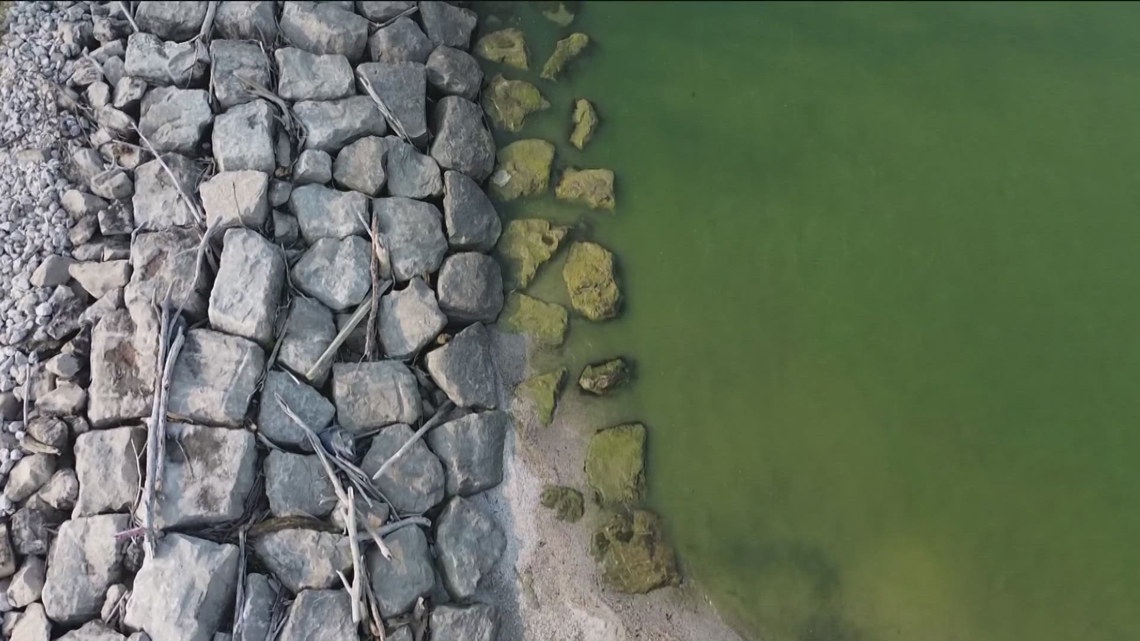
The bloom is expected to be more severe than last year. Severity is determined by the amount of bioavailable phosphorus during the ‘loading season.’
TOLEDO, Ohio — Researchers with the National Centers for Costal Ocean Science released last week its early season projection for western Lake Erie’s harmful algal blooms, which are forecasted to be “moderate” this year, though researchers note that level could change.
According to the NCCOS bulletin released on May 7, the harmful algal bloom severity range is predicted to be between a 2 to a 5.5, indicating likely moderate bloom conditions. This bloom would be similar to conditions in 2022 and 2024, but would be likely more severe than last year’s 2025 bloom.
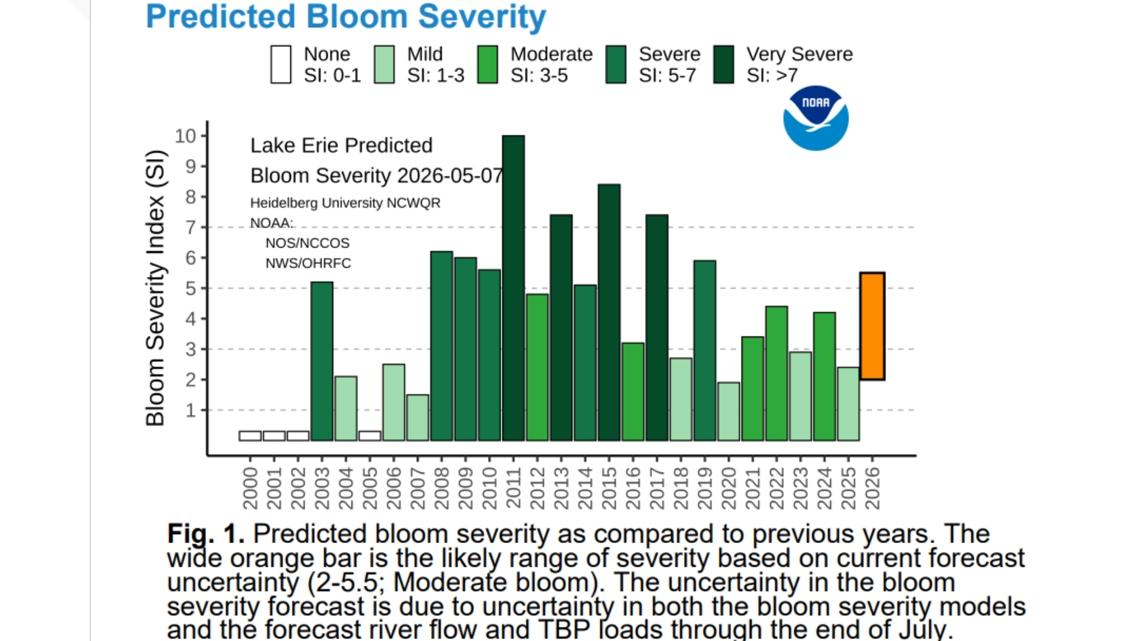
Early projection: What could change?
Spring 2026 has been exceptionally rainy. Thus far, northwest Ohio has seen more than 12 inches of rain since March 1. Precipitation is correlated with bloom severity, as Microcystis – the bacteria causing the bloom – feed off of phosphorous in Lake Erie’s water. Phosphorous is readily available in agricultural fertilizer and enters the lake as runoff when it rains.
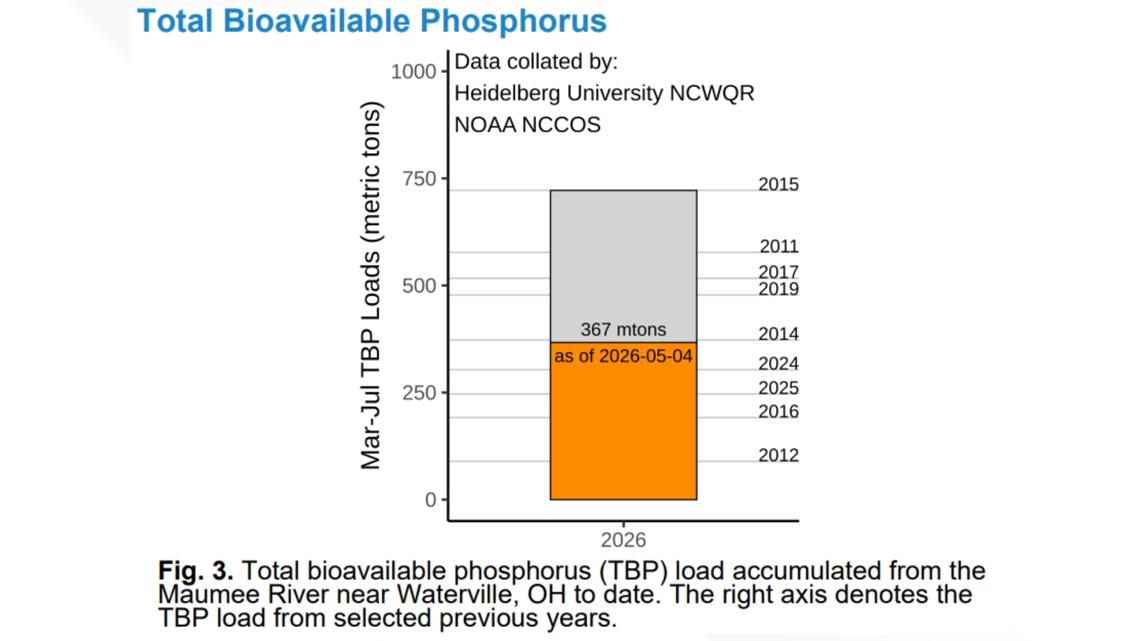
As of May 4, 367 metric tons of bioavailable phosphorous had accumulated in the Maumee River near Waterville.
NCCOS said if high precipitation and associated loads continue, there is a small chance of a bloom up to 5.5, which would be similar to 2010. But if precipitation stops and is less than normal for the rest of spring and early summer, the bloom could be much milder.
It won’t be until June 25 that NCCOS releases its comprehensive seasonal forecast.
Impacts on northwest Ohio
Harmful algal blooms affect northwest Ohio summers. The health risks posed by microcystin can cause cities to close beaches, preventing and limiting boating, fishing and swimming tourism. According to researchers, Lake Erie tourists spend more than $15 billion dollars annually, generating $1.9 billion in state taxes. It also supports over 100,000 tourism-related jobs.