
ARCHBALD — The developer of the Project Green Mountain data center campus wants to bring its first buildings online in two years.
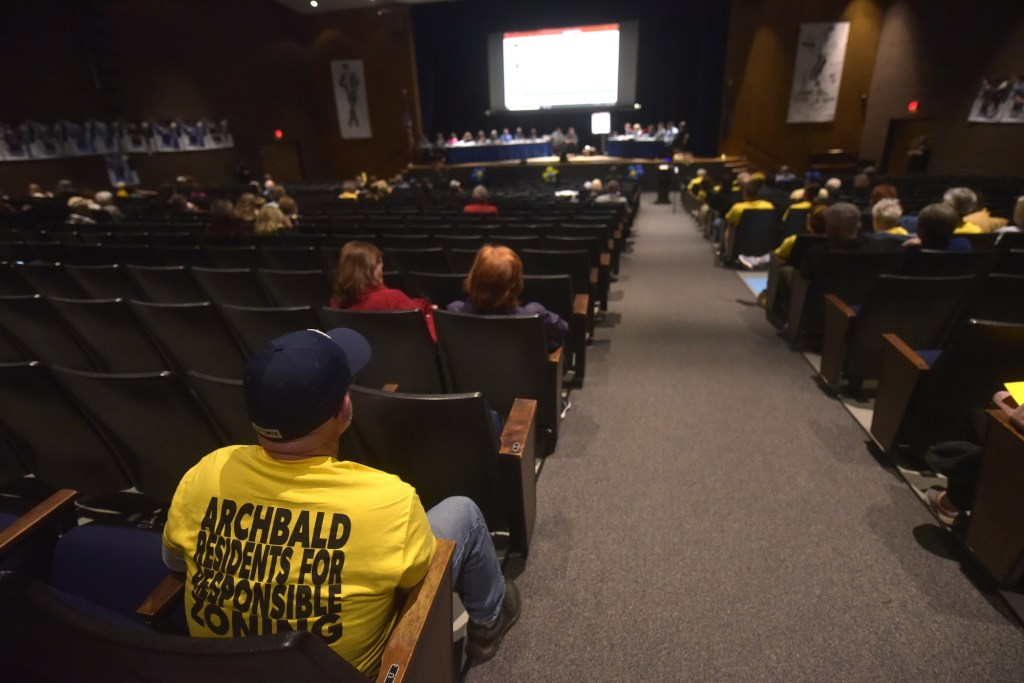
Borough council held its second conditional use hearing Monday on Project Green Mountain, a proposal to build seven two-story data centers, each 65-feet-tall with a 138,000-square-foot footprint, across an L-shaped campus east of the Casey Highway off Salem Road. More than 100 residents and local officials attended the hearing inside the Valley View High School auditorium.
Green Mountain 6 LLC, a firm linked to the developer of the extremely similar Project Gravity data center campus on Eynon Jermyn Road, applied with Archbald on Jan. 26 to develop Project Green Mountain across a nearly 271-acre tract of land around the Stavola Quarry.
The developer aims to construct its first four data centers by spring 2028, bringing them online in the second quarter of that year, said Brett Littlejohn, a civil engineer with engineering firm Kimley-Horn. The remaining three data centers would be built and operational by the end of 2029, he said.
Monday marked the first time that a complete, fundamentally restructured Archbald Borough Council has presided over a data center hearing. All seven council members attended Monday’s hearing: President Louis Rapoch, Vice President Joseph Altier III, Erin Owen, Madonna Munley, Larry West, Lisa Osborne and council’s newest member, Larry Marchetti.
The majority of current council members were not yet on council when the borough held its first hearing for Project Green Mountain on March 19. Munley, West, Osborne and Marchetti replace former council members Tom Aniska, who resigned March 27 immediately after voting to deny an 18-data-center campus; and former council President Dave Moran, Vice President Richard Guman and Councilwoman Marie Andreoli, who resigned simultaneously on April 15. The resignations of Moran, Guman and Andreoli coincided with a petition signed by 800-plus borough residents calling for the resignations or removal of multiple borough officials over accusations they violated public trust for their dealing with data centers. Moran was the only council member named in the petition.
Altier was also appointed to council in January following the resignation of former Councilman John Shnipes III.

Tamara Misewicz-Healey, co-founder of Stop Archbald Data Centers, asks questions during an Archbald Borough Council meeting at Valley View High School on Monday, May 11, 2026. (CHAD SEBRING/STAFF PHOTO).
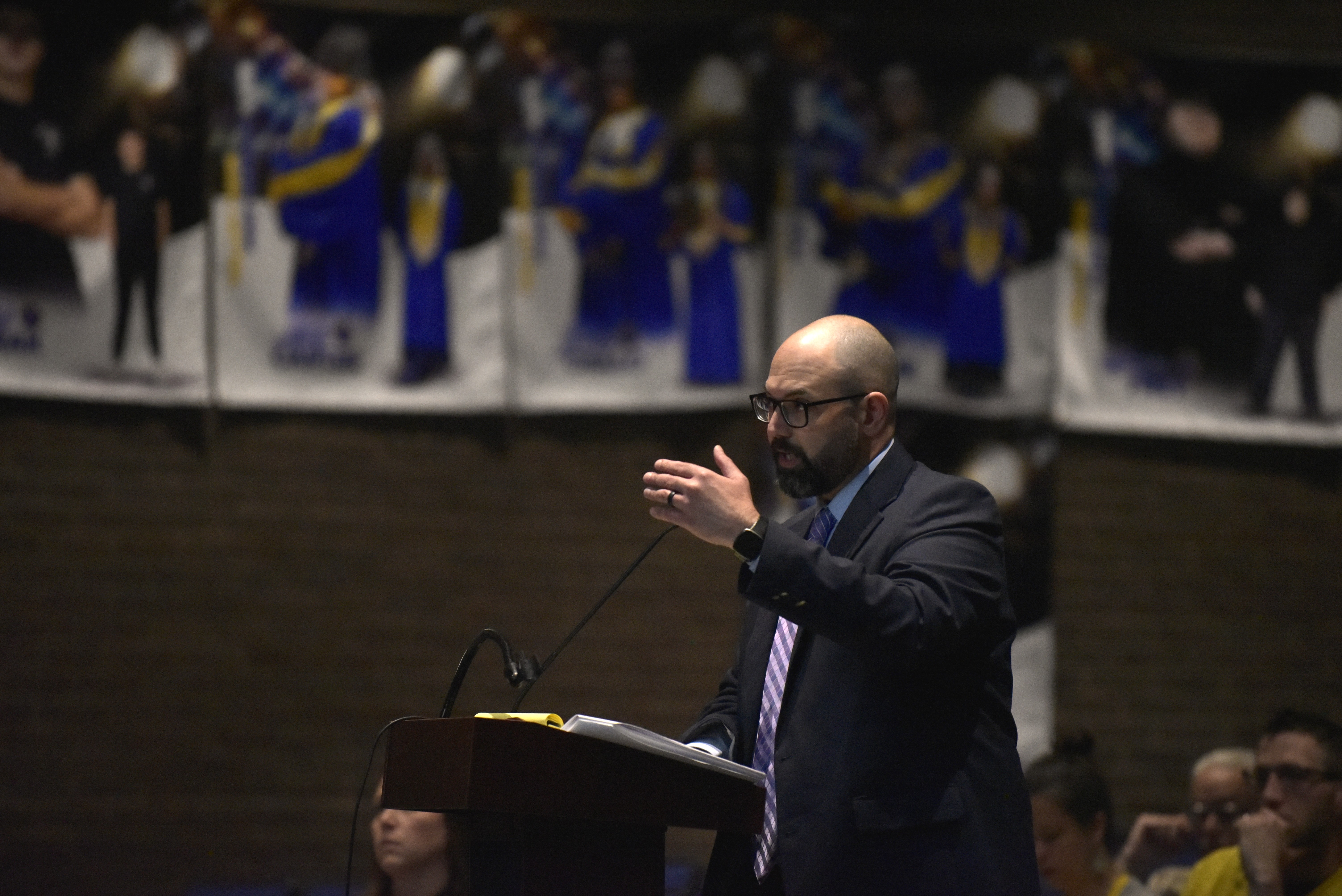
Stop Archbald Data Centers attorney Justin Richards addresses officials during an Archbald Borough Council meeting at Valley View High School on Monday, May 11, 2026. (CHAD SEBRING/STAFF PHOTO)

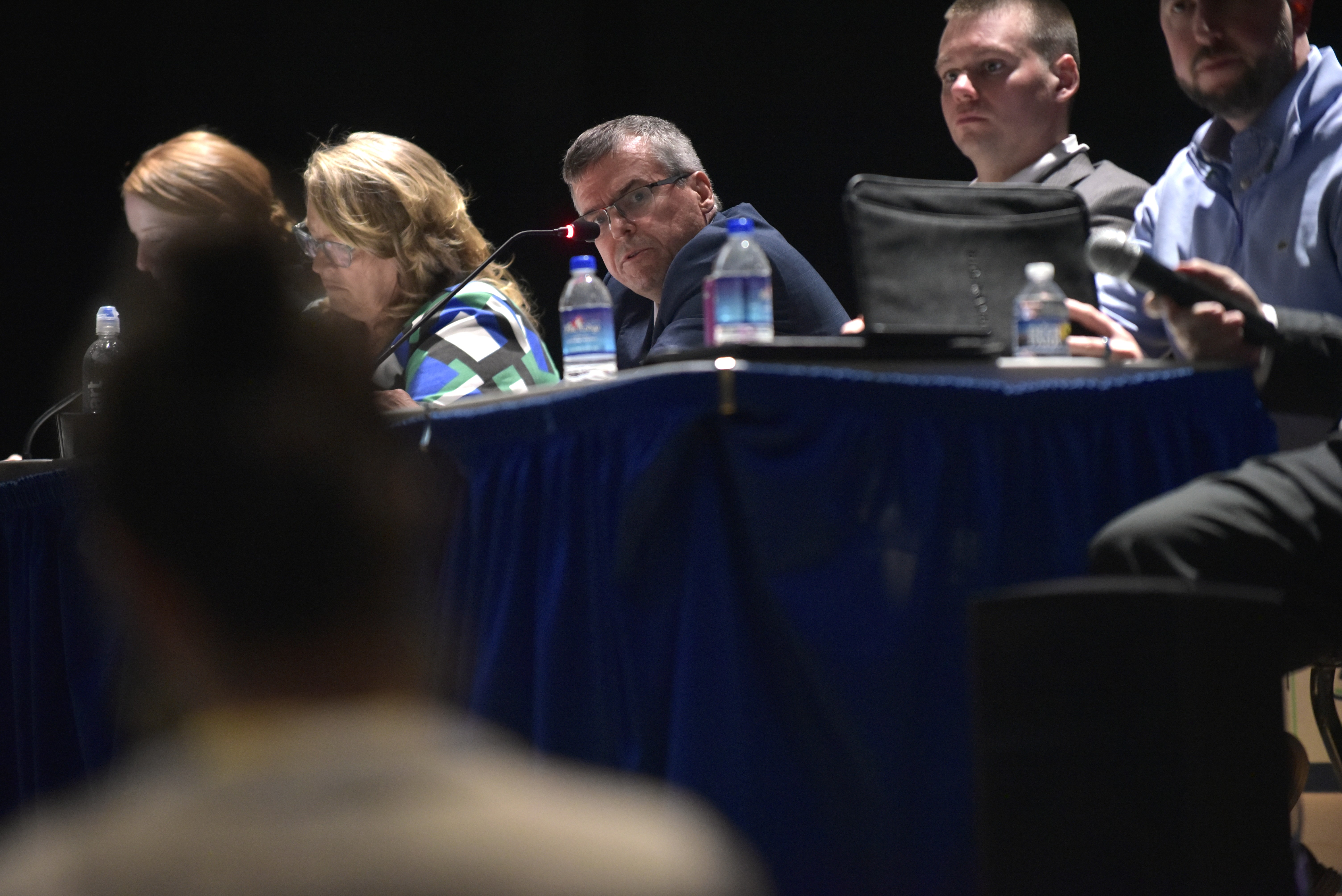
Heidi Rous, permitting and compliance lead with Kimley-Horn and an air quality expert, center, answers a question during an Archbald Borough Council meeting at Valley View High School on Monday, May 11, 2026. (CHAD SEBRING/STAFF PHOTO).
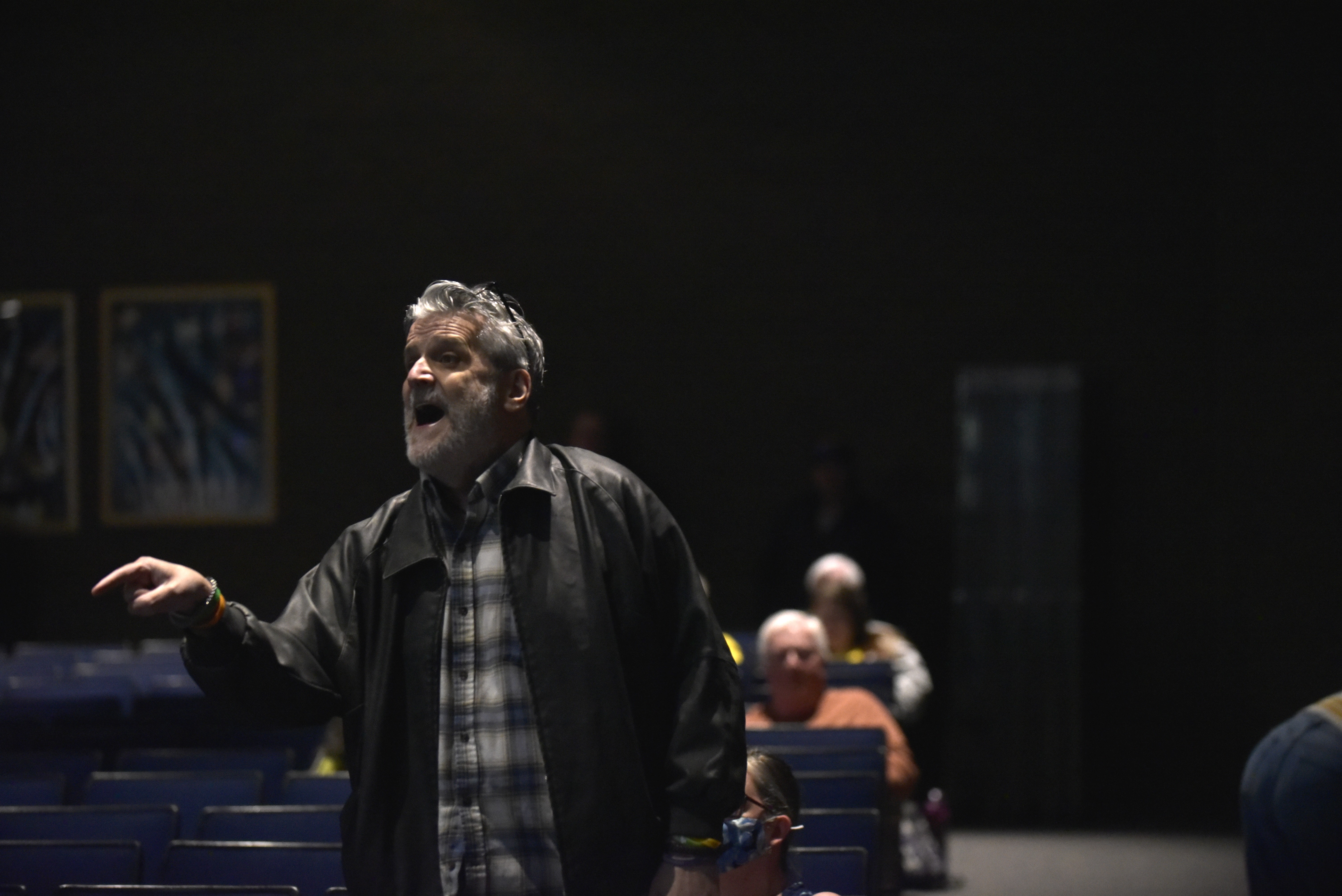
A man shouts from the audience listens during an Archbald Borough Council meeting at Valley View High School on Monday, May 11, 2026, on a proposed data center. (CHAD SEBRING/STAFF PHOTO)
Project Green Mountain Attorney Jeffrey Wilhelm of Pittsburgh-based Reed Smith LLP, center, answers a question during an Archbald Borough Council meeting at Valley View High School on Monday, May 11, 2026. (CHAD SEBRING/STAFF PHOTO).
Show Caption
1 of 5
Tamara Misewicz-Healey, co-founder of Stop Archbald Data Centers, asks questions during an Archbald Borough Council meeting at Valley View High School on Monday, May 11, 2026. (CHAD SEBRING/STAFF PHOTO).
Expand
About Green Mountain
Project Green Mountain is one of six proposed data center campuses in Archbald, totaling 51 individual data centers, plus a 400-megawatt natural gas power plant. Throughout Lackawanna County, there are at least 13 proposed data center projects, amounting to about 90 individual buildings.
Monday’s hearing focused on air emissions and traffic.
During the first hearing in March, project representatives testified about Project Green Mountain’s utility demands and economic benefits. The campus would use 525 megawatts of power — 75 megawatts per building — and up to 14,000 gallons of water daily for domestic purposes like toilets and sinks. The data centers would use a closed-loop cooling system containing a mix of water and glycol — antifreeze — that would be hauled in by truck, according to the March testimony.
Project Attorney Jeffrey Wilhelm of Pittsburgh-based Reed Smith LLP called two witnesses on Monday: Heidi Rous, the permitting and compliance lead with engineering firm Kimley-Horn, who discussed air emissions from the 196 diesel generators that would power the data centers during an outage, followed by civil engineer Brett Littlejohn, who testified about the project’s traffic and its work with the state Department of Transportation preparing to conduct a traffic impact study.
Much of the three-hour hearing focused on the campus’ 196 backup diesel generators, which could store up to 10,000 gallons of diesel fuel per generator, adding up to 1.96 million gallons of diesel fuel potentially stored onsite.
Rous, who said she has worked on about 20 data center projects, testified that the campus would need an air quality operating permit from the state Department of Environmental Protection, governed by the federal Clean Air Act, because of its emergency generators. Each data center would have 28 generators in the event of a power outage, producing about 2.7 megawatts per generator, Rous said.
Each generator would be limited to 50 hours per year of runtime for monthly maintenance and testing, she said. To test and inspect the generators, they will turn on each generator individually once per month, running it for “15 minutes, 30 minutes, maybe an hour each month,” Rous said. Generators can run for up to 200 hours in the event of an emergency, Rous said, explaining it is a highly regulated process by the DEP.
Project Green Mountain selected diesel generators because the fuel can be safely stored on site, is easily procured locally with redundant suppliers, and diesel engines generate fewer greenhouse gasses than natural gas-fired generators, she said, pointing to the use of diesel backup generators at hospitals, prisons, schools and senior centers.
Rapoch stopped Rous in the midst of her testimony at one point to ask why she was reading her remarks from a paper.
Wilhelm interjected, “Do you have an actual substantive question, Mr. President?”
“Why are we just sitting here listening to your performance?” the council president replied. “If someone asked me in my business a question, and I didn’t know it and had to read for it, I’d be questioned very, very quickly.”
Rapoch’s inquiries were the first of a lengthy discourse on the generators, with questions posed by all seven council members throughout the night; the borough’s special counsel Attorney Brett C. Flower; Attorney Justin Richards, who is representing borough residents fighting data centers; and Tamara Misewicz-Healey, a mother of three and co-founder of the 11,000-plus-member Stop Archbald Data Centers.
Borough Solicitor Jay O’Connor announced the conclusion of the meeting shortly after 8 p.m., scheduling the next hearing for June 18 at 5 p.m. at the Valley View High School auditorium, 1 Columbus Drive, Archbald.
Project Green Mountain plans to present testimony from its noise expert. Residents will then have the chance to testify when the developer concludes its testimony prior to any votes from council to approve or deny the project.
Check back for updates.